Security plays an important role in controlling who can access your business premises. Traditional keys are easy to lose, copy, or misuse, and relying on outdated locks often creates blind spots in your security.
As unauthorized access and internal risks continue to challenge businesses, having a smarter way to manage entry is a necessity.
A well-designed key card door entry system offers a more secure and organized approach. It allows you to manage access centrally, limit entry to sensitive areas, and keep track of who enters and exits without the daily hassle of physical keys.
In this guide, we’ll walk you through the best key card door entry systems available today, how it works, and alternatives to key card entry system for businesses.
What is a Key Card System for Access Control?
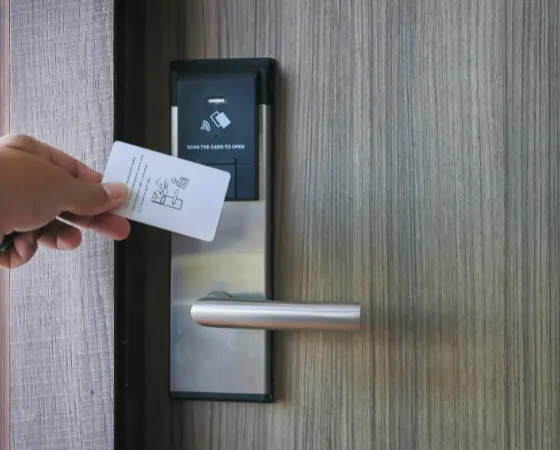
A key card entry system is a modern way to control who can enter a building, room, or restricted area. The system includes a card reader at the door, card credentials, and electronic locks.
When someone presents their card to the reader, the system checks the card’s details and decides whether to unlock the door or keep it closed based on the access rights linked to that card.
Its access verification makes the key card system safer compared to traditional locks. Each card is programmed with specific permissions. For example, a secretary may be allowed into the main office but not the server room.
This makes an office key card entry system much safer than physical keys, which can be copied or lost without any easy way to track or revoke them.
How Key Card Door Entry Systems Work
A key card entry system may look simple on the surface, but several components work together behind the scenes to control access. Each part plays a clear role in keeping doors secure and access controlled.
Card Credential (RFID, NFC, Magnetic Stripe)
Many key card door entry systems use RFID or NFC cards, which allow users to tap or hold the card close to a reader. Some setups still rely on magnetic stripes that need to be swiped. Each card contains unique user details, so the system identifies the user and what areas they are allowed to enter.
Card Reader and Door Hardware
Next is the card reader installed near the door. When a user taps or swipes their card, the reader captures the card’s data and sends it for verification. The reader works with electronic door hardware, which physically locks or unlocks the door based on the system’s decision. This is the visible part of a key card door entry system that most people interact with daily.
Access Control Panel or Cloud Controller
The controller receives the card data from the reader and checks it against a stored database. This controller can be a physical access control panel on-site or a cloud-based controller. Many businesses prefer a cloud-based key card entry system for business use because they are easier to manage across multiple locations.
Software for User and Permission Management
Software ties everything together. It allows admins to create users, assign access levels, set time-based permissions, and track access logs. An office key card entry system becomes far more flexible with this software, since changes can be made without replacing cards or locks. It also helps businesses monitor usage and manage security more efficiently.
What Happens During an Access Attempt (Step-By-Step)
When someone tries to enter a secured area, the system follows a clear flow:
- The user taps, swipes, or presents their key card to the reader.
- The reader captures the card’s data and sends it to the controller.
- The controller checks the data against stored permissions in the database.
- If access is allowed, the door unlocks instantly.
- If access is denied, the door stays locked, and the attempt can be logged or trigger alerts.
Some systems add extra security, such as a keypad for a PIN code, to protect sensitive areas. While the key card entry system cost depends on features like these, many organizations find the added control and visibility well worth the investment.
How Coram's Key Card System Works?
Coram’s key card entry system is built to make access control simple, flexible, and reliable for modern workplaces. The system runs on the cloud, giving businesses an easier way to manage doors, users, and permissions from anywhere.
When someone tries to enter a secured area, they can authenticate using a key card, a mobile app, or Bluetooth. The card reader at the door captures the credential and sends it to Coram’s access control board. This board handles the verification process and communicates with the cloud to confirm whether the user has permission to access that space.
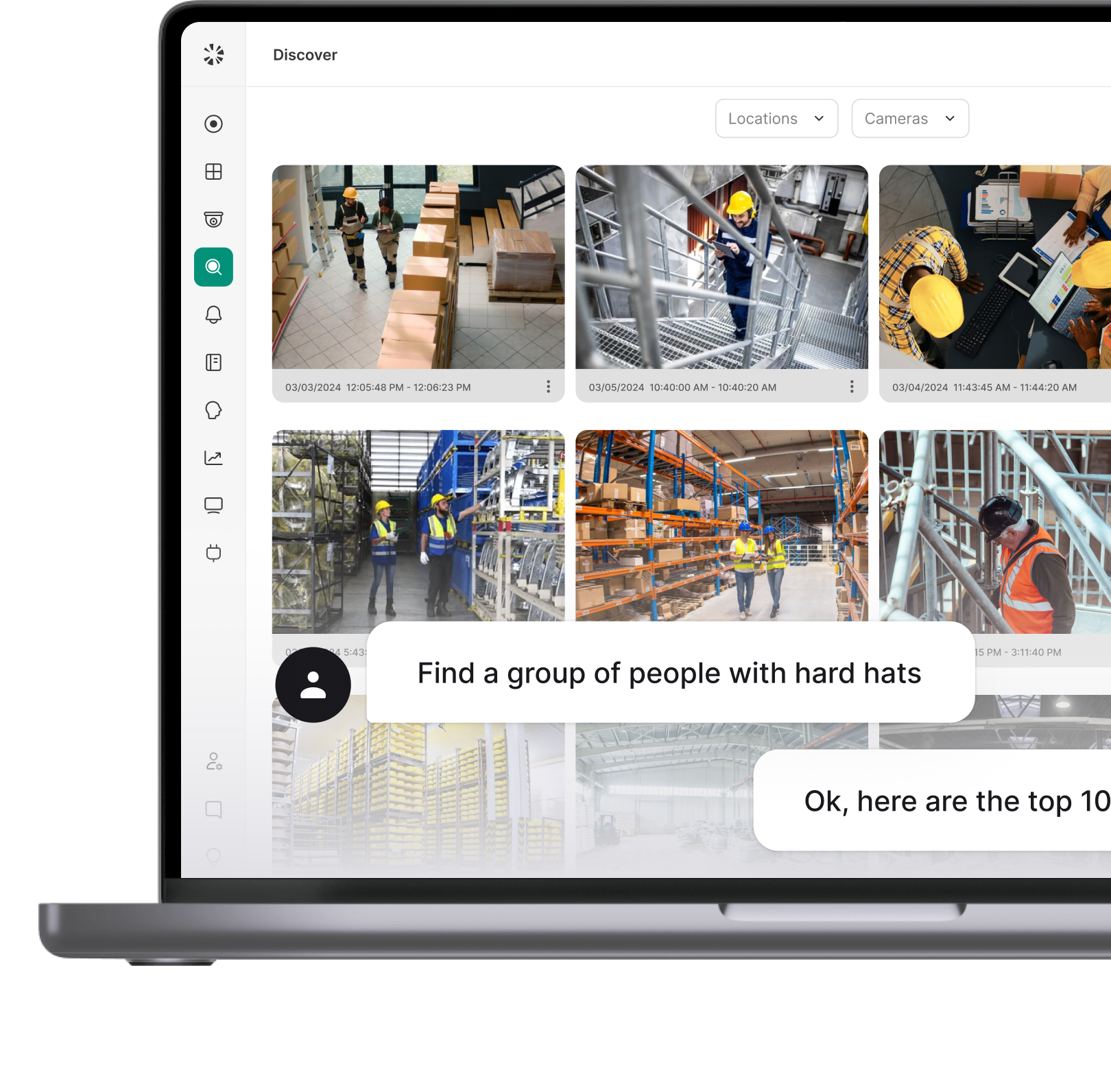
The system checks the access permissions stored in the cloud and decides instantly whether to unlock the door or keep it closed. Every access attempt (successful or not) is recorded. Security teams can view these logs in real time through Coram’s web dashboard or mobile app, making it easy to monitor activity.
If the internet connection drops, the local control board keeps working using stored permissions, so doors continue to function uninterrupted. Battery backups also help the system stay active during power outages. For businesses comparing key card entry system cost and long-term value, this level of uptime makes Coram a dependable choice.
Benefits of Key Card Door Entry Systems
Key card access systems are widely used in offices, hotels, and commercial buildings. While they may not be the newest security technology on the market, a key card entry system still delivers strong benefits that make it reliable for many organizations.
Cost-Effective
The cost of installing and maintaining key card door entry systems is cheaper, making them a cost-effective option. If a card is lost, access can be disabled instantly and the card replaced. There’s no need to change locks or recut keys, which can be expensive.
Better Security Control
A key card entry system for business helps control exactly who can enter a building or restricted area. Each card is programmed with unique access rights, allowing only authorized users to gain entry. This is more secure than shared keys, where access can easily spread beyond the intended users.
Centralized and Simple Management
Most systems can be managed from one dashboard, even across multiple doors or locations. This makes it easier to enforce consistent security protocols and respond quickly when access changes are needed. Central control saves time and reduces the chance of errors.
Clear Access Tracking and Visibility
One major advantage of a key card entry system for business is activity tracking. The system records who enters and exits, and when it happens. This data can help organizations detect unusual activity, investigate incidents, or review access logs for audits. Many companies also use these records for visitor monitoring or basic time tracking.
Flexible Access Management
As teams expand or employees are changed, access needs change too. Key card systems make updates easy. Administrators can grant, limit, or remove access in minutes without changing locks. Cards can also be set to expire automatically after a specific period, which is useful for contractors, temporary staff, or visitors.
Faster and Easier Access
Key cards make daily access simple. A quick tap or swipe is all it takes to open a door. You don’t need to carry multiple keys or struggle with locks. In busy workplaces, an office key card entry system keeps foot traffic moving smoothly while still maintaining security.
Alternatives to Key Card Entry Systems
A key card entry system works well for many businesses, but it’s not the only way to control access. Depending on your security needs, budget, and how people move in and out of your building, other keyless options may be a better fit.
Biometric Access Control
Biometric systems rely on physical traits such as fingerprints, facial, or iris scans. Since these features are unique to each person, biometric access offers a very high level of security. It’s often used in sensitive environments like data centers or government facilities.
Keypad Access Control
Keypad systems allow users to unlock doors by entering a unique PIN code. The company can decide to change this PIN code anytime for tightened security. This makes keypad systems a practical option for small teams or areas where a key card door entry system may feel unnecessary.
QR Code Access Control
QR-based access control stores credentials in a QR code format that can be scanned at the door. This method works well for visitor access. Businesses can send QR codes by email or app and set them to expire after a specific time. For offices that host frequent guests, this can reduce the need for issuing temporary cards in an office key card entry system.
Mobile Access Control
Mobile access systems use smartphones, smartwatches, or tablets as digital credentials. Users simply present their device near a reader or unlock doors through an app. Many businesses prefer this option because people are less likely to forget their phones than key cards.
Mobile credentials also benefit from built-in security like passcodes or facial recognition, making them a strong upgrade for a key card entry system for business.
Final Takeaway
Selecting the right key card door entry system gives your business stronger control over who can access your space and when. Instead of worrying about lost keys or unauthorized entry, you gain clarity, accountability, and a more secure working environment.
With the right system in place, your team enjoys faster access, administrators get better oversight, and security becomes easier to manage as your business grows. These systems are no longer a luxury; they are becoming a standard for offices that value safety and efficiency.
Many organizations are already upgrading their access control to keep up with modern security expectations. Clients, employees, and partners all expect professional, secure environments, and outdated locks can quietly undermine that trust.
The good news is that upgrading doesn’t have to be disruptive. Many key card systems work with existing doors and hardware, allowing you to improve security gradually instead of all at once.
By understanding your options and choosing the right solution, you can build a safer, more manageable access setup that supports your operations today and scales with you tomorrow. Coram can help you achieve this for free.




.png)