%20(48).webp)
Shopping centers are no longer just retail hubs, they've become high-risk zones for theft, vandalism, and organised crime. In 2024, U.S. retailers lost an estimated $45 billion to shoplifting alone. For shopping centers, this means more than lost merchandise.
With large crowds, multiple access points, and vast inventories moving every day, these environments demand more than locks and alarms. That’s where shopping center video security comes into play - offering real-time visibility, live video monitoring, and rapid incident response across the facility.
In this shopping center video security guide, let’s further explore
- Why shopping center video security is necessary,
- The best security systems with live video monitoring,
- What features matter most when choosing the right security solution,
- Best practices to boost safety and control at your retail centre.
Why Shopping Center Video Security is Important?
A Strong Deterrent Against Crime
Shopping centers attract large crowds and operate with multiple entry and exit points, making them natural targets for shoplifting and property damage. The visible presence of cameras acts as a deterrent for most offenders. When potential criminals know they are being watched, they’re far less likely to take the risk.
Modern shopping center security solutions go beyond simple recording. Live operators can watch footage in real time and take action the moment something seems off. Whether it’s suspicious loitering near a parking lot or unusual activity after hours, early detection allows intervention before any loss occurs. This level of surveillance reduces crime while also giving shop owners and customers a sense of safety while on the premises.
Real-Time Response for Faster Action
Traditional security patrols can only cover so much ground at once. With shopping center live video monitoring, trained operators can oversee the entire property at any given moment. When an alert is triggered; for example, a break-in attempt, an altercation, or a parking lot disturbance; security staff can immediately assess the situation, speak through on-site audio systems, or contact local law enforcement. This immediate, coordinated response prevents incidents from escalating.
Safer and More Confident Customer Experience
For visitors, safety is part of the shopping experience. People tend to stay longer, spend more, and return more often when they feel secure. By implementing shopping center video security, management can create an atmosphere of confidence and comfort.
Live surveillance also improves emergency response for non-criminal incidents. If someone collapses or an accident occurs, remote operators can immediately alert on-site staff or emergency services. Cameras in parking areas and hallways can even help locate lost children or identify hazards before they cause harm.
Cost-Effective and Scalable Protection
Hiring and maintaining large teams of on-site guards can be expensive. With shopping center real-time surveillance, one remote monitoring team can manage multiple locations at once. This setup cuts down on staffing costs while still improving overall security coverage.
Additionally, insurers often view monitored properties as lower-risk, leading to potential savings on premiums. The technology also helps prevent false claims by providing verifiable footage for incidents, which reduces unnecessary payouts or disputes. And because modern systems from Coram are cloud-based, adding more cameras or expanding to new areas is simpler; without any major rewiring or on-site upgrades needed.
Smarter Operations and Comprehensive Coverage
Beyond deterring theft, modern shopping center video security systems also improve day-to-day operations. Management teams can use recorded footage to analyze visitor flow, identify high-traffic zones, or evaluate staff performance. These insights help optimize layouts, parking management, and crowd control during busy weekends or events.
Meanwhile, remote video systems cover every corner; entrances, food courts, corridors, parking lots, and loading zones, eliminating blind spots that traditional patrols might miss. With 24/7 access to live feeds from any device, managers can check in on the property from the office, home, or even while traveling.
3 Best Shopping Center Video Security Systems in 2026
Coram
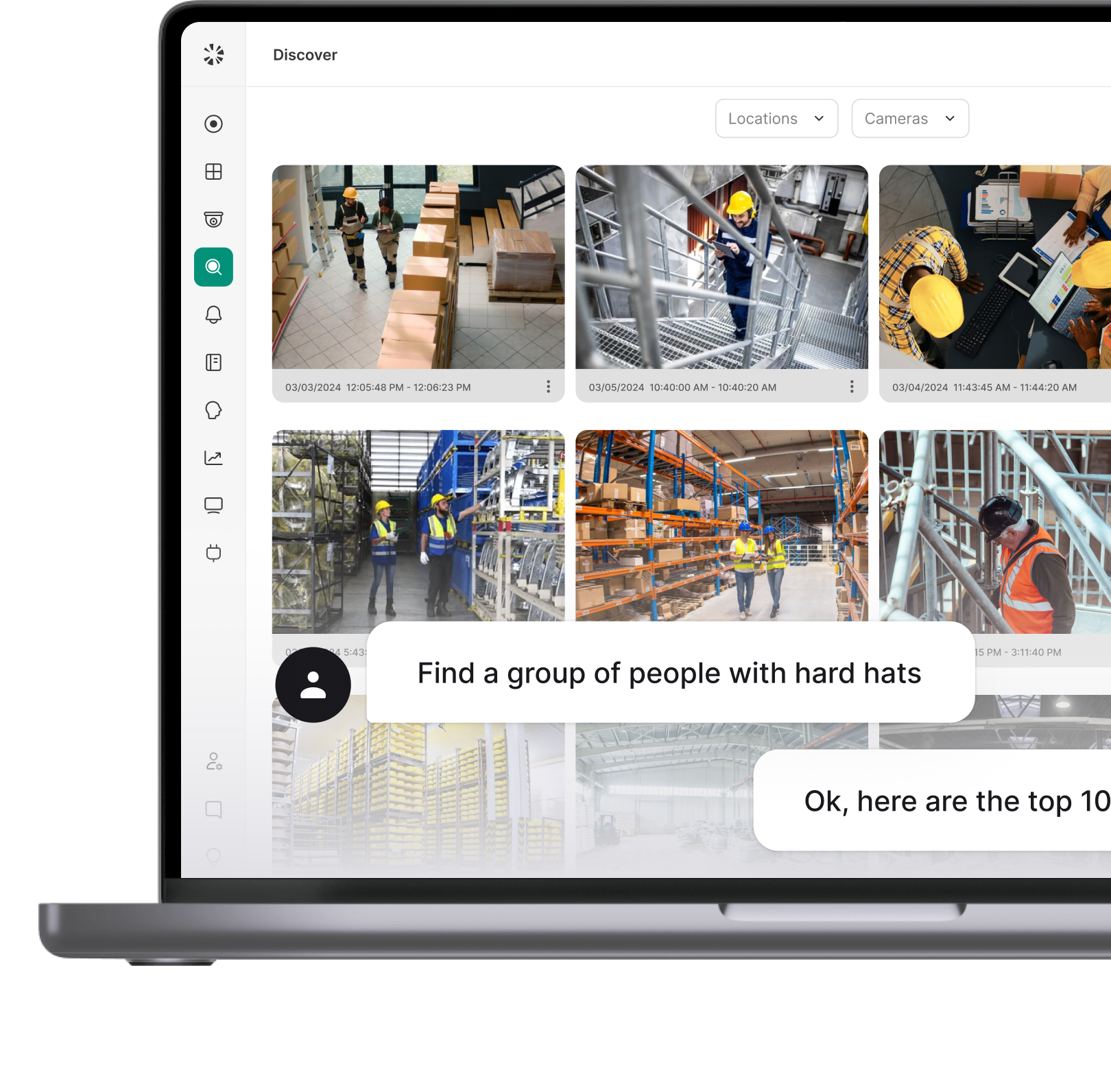
Coram offers one of the most advanced and adaptable shopping center security solutions available today. Built to work with any existing IP camera system, Coram integrates live video monitoring, AI analytics, and access control into a single unified platform, making it ideal for busy retail complexes and large shopping centers.
Its wide range of IP cameras is designed to provide crystal-clear coverage, day or night. All cameras are NDAA and ONVIF compliant, meaning they work seamlessly across devices with no vendor lock-in. Whether you’re monitoring entrances, parking lots, or shop corridors, Coram’s cameras capture every detail with precision and reliability.
AI Video Search & Real-Time Monitoring
- Coram’s Discover tool removes manual video scrubbing by letting teams type natural queries like “person in red jacket” or “blue SUV.”
- Journey tracks people or vehicles across multiple cameras in real time.
- Smart indexing delivers instant results with secure cloud storage and easy clip sharing.
Real-Time Gun Detection & Instant Alerts
- Coram identifies firearms within seconds using multiple AI models to reduce false positives.
- Security teams receive immediate alerts and can track suspects through Journey for coordinated response.
Intelligent Safety Alerts
- Detects trespassing, loitering, crowds, and boundary breaches.
- Works with existing cameras, allowing easy deployment without new hardware.
License Plate Recognition & Vehicle Tracking
- Turns any IP camera into an LPR tool.
- Tracks vehicles in real time and supports searches using full or partial plate numbers.
Operational Productivity Tools
- Absence detection, asset idle alerts, and automated pallet counting improve staffing and workflow efficiency.
Rhombus Systems
As shopping centers grow more connected and technology-driven, flexibility and scalability have become key to modern security. Rhombus Systems redefines shopping center video security through a secure, cloud-native platform that simplifies everything from setup to monitoring. It replaces traditional NVRs and on-premise hardware with an intuitive cloud-based system that’s designed for real-time visibility and effortless scalability. With cameras, sensors, and alarms all managed through a single interface, security teams can remotely monitor large retail properties, from a single store to an entire mall network, with just a few clicks.
Smart Cloud Management for Real-Time Control
- Security teams can review footage, manage incidents, and share evidence from any device through a unified cloud dashboard.
- Cloud access removes the need for physical servers, making large malls easier to manage.
AI-Driven Analytics for Faster Decisions
- Onboard analytics process video at the edge, reducing bandwidth and delivering sharper real-time footage.
- Cameras detect unusual activity, such as loitering, unauthorized entry, or vehicle movement, with higher accuracy and fewer false alarms.
- Integrations with smart devices create automation across the center.
Effortless Setup & Low Maintenance
- Cameras connect via PoE and go live within minutes.
- Automatic updates keep systems up to date without manual effort.
- Enterprise-grade hardware with a long warranty offers reliable long-term value.
Cloud Performance That Scales
- Uses up to 50% less bandwidth and delivers lower latency for smooth surveillance across large retail sites.
Avigilon
Known for its advanced AI-powered IP cameras and robust ecosystem, Avigilon brings precision, clarity, and control to modern shopping center video security. Built for 24/7 monitoring, Avigilon cameras help security teams detect, verify, and respond to incidents faster, giving shopping centers the awareness they need to keep customers, employees, and property safe.
AI-Powered Smart Surveillance
- Uses advanced analytics to give security teams real-time awareness across parking lots, entrances, hallways, and storefronts.
- The system identifies unusual behavior, loitering, or vehicle activity and alerts operators early.
- Appearance Search lets teams locate a person or vehicle across multiple cameras within seconds, speeding up investigations.
High-Performance Cameras for Every Zone
- Avigilon offers dome, bullet, box, panoramic, PTZ, and specialty cameras built for different shopping center environments.
- With resolutions up to 10K, wide dynamic range, and IR illumination, footage remains clear in low light and challenging conditions.
Durable, Secure, and Scalable
- Cameras are weatherproof and vandal-resistant, ideal for busy retail spaces.
- They integrate with shopping center video security systems like access control, intrusion detection, and sensors.
- Both NVR and cloud storage options support easy scaling without major hardware changes.
Unified Security Management
- A single platform lets teams oversee video, access control, and incidents, improving coordination and overall situational awareness.
Key Features to Look for in a Shopping Center Security System
Shopping centers are vibrant spaces that attract thousands of visitors every day and with that foot traffic comes a complex mix of safety challenges. The right shopping center video security system should not only protect people and property but also make daily management easier and more efficient. Here are the key features that define a reliable and modern system:
AI-Powered Threat and Suspicious Behavior Detection
- Uses intelligent analytics to detect loitering, crowding, or restricted-area access.
- Helps security teams act before incidents occur, reducing theft, vandalism, and disruptions.
- Minimizes the need for manual monitoring while improving response accuracy.
AI-based monitoring gives shopping centers proactive protection, turning passive cameras into active crime deterrents.
Cloud Storage and Remote Access
- Access live or recorded video from any device, anywhere.
- Eliminate bulky hardware and local storage limitations.
- Easily scale across multiple properties under a single platform.
With shopping center live video monitoring, managers and security teams can review footage, receive alerts, and manage systems remotely, making oversight simpler and faster than ever.
License Plate and Face Recognition Analytics
- Identify vehicles entering or exiting parking areas using License Plate Recognition (LPR).
- Detect and track persons of interest with real-time facial recognition.
- Strengthen accountability and streamline investigations.
These intelligent analytics provide precise visibility into who enters your premises, improving both access management and incident tracking.
Integration with Access Control and Emergency Systems
- Connects seamlessly with alarms, entry systems, and intercoms.
- Displays related video footage the moment an alert is triggered.
- Enhances coordination between security teams and emergency responders.
Integrated shopping center security solutions create a single, unified network that strengthens control and speeds up decision-making when every second counts.
Real-Time Alerts and Mobile Notifications
- Instant alerts for unusual movement, unauthorized entry, or crowd formation.
- Notifications sent directly to mobile devices or security dashboards.
- Faster incident response, even when operators are off-site.
Real-time alerts give your team the agility to handle issues the moment they happen, preventing minor disruptions from turning into major security concerns.
Best Practices for Effective Shopping Center Security
Strong Access Control and Visitor Management
Controlling who enters and exits is the foundation of any effective security system. Shopping centers should combine technology and human oversight to regulate access to restricted zones such as management offices, stockrooms, and service corridors. Modern access systems using
- key cards,
- mobile credentials, or
- integrated ID verification
make it easier to track movement and prevent unauthorized entry. Clear visitor protocols also help maintain accountability without disrupting the customer experience.
Emergency Preparedness and Response Planning
Every shopping center should have a well-documented emergency plan tailored to real-world risks like fire, medical emergencies, or active threats. Conducting regular drills, setting up clear evacuation routes, and training staff in communication protocols can make a huge difference when seconds matter. Coordination with local police and emergency responders ensures that everyone knows their role when an incident occurs.
Routine Security Audits and System Maintenance
Security is never a “set it and forget it” investment. Regular audits help identify weak points in both human procedures and equipment performance. An independent assessment every few months, combined with ongoing maintenance of cameras, alarms, and lighting, keeps the system reliable. Even small issues, like a broken light or an outdated camera feed, can compromise overall security if left unchecked.
Staff Training and Awareness Programs
Security systems are only as effective as the people using them. All personnel, from guards to retail staff, should be trained to recognize suspicious behavior, handle conflicts calmly, and report incidents efficiently. Periodic refresher courses, first-aid training, and simulated scenarios build confidence and consistency across the entire team.
Collaboration with Law Enforcement and Community Partners
Working with local authorities, nearby businesses, and community groups strengthens situational awareness. Police departments can provide real-time threat updates and guidance on best practices, while community organizations can help educate employees and visitors about personal safety. Collaboration builds trust and extends security beyond the shopping center’s walls.
Leveraging Predictive Intelligence and Behavioral Analysis
New-age surveillance systems can go beyond recording incidents to predicting them. By analyzing behavioral patterns, AI-powered analytics identify unusual actions, like a person pacing near exits or vehicles loitering after hours. Predictive insights allow teams to intervene early, reducing risks before they escalate. It’s not about replacing people but giving them smarter tools to make faster decisions.
Strengthening Digital and Network Security
With more systems connected online, cybersecurity is now a vital part of physical security. Shopping centers should protect their networks using firewalls, encryption, and regular vulnerability testing. Securing internal communication between security teams and emergency services also prevents external interference and keeps sensitive data safe.
How Live Remote Video Monitoring Improves Response Time?
In busy retail spaces like malls and shopping centers, every second counts when responding to potential threats. A delayed reaction, even by a minute can mean the difference between preventing a loss and managing the aftermath. That’s where live remote video monitoring transforms how modern properties handle security.
Unlike traditional security setups that rely on patrols or manual observation, shopping center video security powered by remote monitoring connects real-time camera feeds to trained professionals who oversee multiple sites simultaneously. This setup ensures that suspicious activity never goes unnoticed, no matter the time of day.
Here’s how live monitoring makes response faster and smarter:
- Instant Incident Detection: Cameras equipped with motion analytics and behavioral tracking identify unusual movement or activity immediately, flagging security personnel in seconds.
- Remote Verification: Instead of waiting for on-site staff to confirm an alarm, remote operators verify threats instantly using live feeds, cutting down false alarms and unnecessary delays.
- Direct Communication: Monitoring teams can communicate directly with on-site guards or law enforcement, providing clear context about the situation before they arrive.
- Audio Intervention: Operators can issue real-time voice commands through speakers to deter intruders or de-escalate situations even before security personnel reach the scene.
- Centralized Monitoring for Multiple Sites: For multi-location shopping centers, one remote command center can oversee all properties at once, ensuring uniform response standards and faster coordination.
With shopping center real-time video monitoring, teams move from passive observation to active prevention. The ability to detect, verify, and act in real time drastically shortens response windows, minimizing risk and loss.
Conclusion
In an age when security challenges are growing and customer expectations are higher than ever, shopping center video security provides a proactive, efficient way to protect assets, people, and reputation. It offers more than just footage - it brings control, visibility, and peace of mind.
Here are the best shopping center security systems with live video monitoring:
- Coram
- Rhombus Systems
- Avigilon
Investing in the right shopping center security solutions today means fewer losses, stronger tenant relationships, and a safer environment for everyone tomorrow. Real-time monitoring




.png)