You go looking for footage from three nights ago and it isn't there. The DVR only holds two weeks of recordings, an alert came in buried under fifty others you'd already learned to ignore, or you just opened a second location and realized there's no way to check both from one app. Any one of these is usually the moment a Lorex system stops being enough.
Lorex works well for a single site with straightforward needs, and it's often where businesses that eventually move to Coram get their start. It's a DIY prosumer kit: a DVR or NVR box, a set of cameras, and an app built around one location. That's a reasonable starting point. But as a business adds sites, cameras, and staff, the box stops keeping up, and managing it becomes someone's job instead of something that just runs in the background.
This guide covers when that shift makes sense, what actually replaces your DVR, whether your existing cameras can come with you, what the switch tends to cost, and how the migration itself works.
Signs You've Outgrown a Lorex Setup
A handful of signs consistently show up once a business outgrows Lorex. It's a solid fit for many small businesses just starting out, but growth tends to expose the same walls. Any of the following are worth treating as a signal to look at a managed platform.
- You've opened a second location and there's no simple way to check both without switching between separate apps or logins.
- You needed footage after an incident, only to find it had already been overwritten, wasn't recorded, or took far too long to locate.
- Your DVR or NVR keeps running out of storage, and sizing recordings has become your problem instead of somebody else's.
- You're spending time troubleshooting camera connections, installing updates, or replacing failed drives.
- You get so many motion alerts that you've started ignoring them.
- Adding a camera or a new site feels like replacing parts of your existing system instead of simply growing with your business.
What Actually Changes When You Move to a Managed Platform
Here's the part most upgrade guides get wrong. Moving off a Lorex DVR doesn't mean there's no longer a recorder on site. It means the recorder stops being yours to babysit.
Coram replaces the Lorex DVR with a Coram Point, an on-site appliance that records your cameras locally and connects them to the cloud. Footage stays on your premises. The cloud handles viewing, AI search, alerting, user permissions, and multi-site access. Coram patches and monitors the appliance remotely.
Four things change immediately:
- Recording gets redundant and monitored. Coram Point stores footage locally on RAID, so a single failed disk doesn't cost you evidence, and the system stays available while that disk is swapped. Coram's monitoring flags disk problems proactively, often before you'd notice anything. Optional cloud backup covers the cameras that matter most.
- Retention stops being a guessing game. Continuous recording with retention set between 30 and 90 days, and longer on request, instead of whatever two weeks of drive space happens to allow. Clips worth keeping get archived to the cloud rather than overwritten.
- Every location shows up in one place. Each site gets its own appliance, and all of them roll into a single console in the browser or on your phone, with role-based access. No VPN, no per-site login.
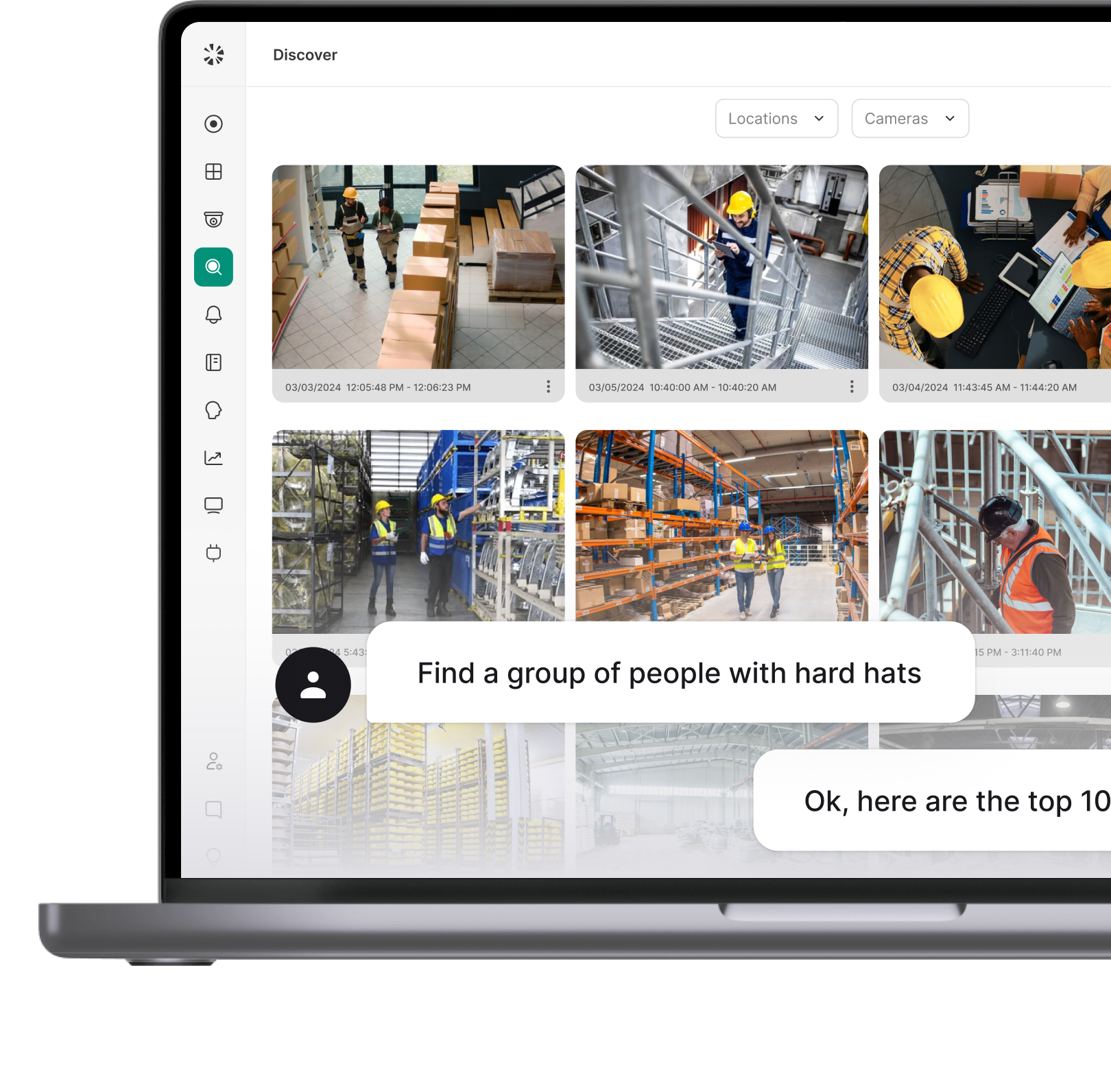
- Finding footage gets fast. You search in plain language for something like a person entering the stockroom after 9 p.m. instead of scrubbing hours of recordings, and detection runs on every connected camera rather than the two newer ones that happened to ship with it.
In practice, the difference comes down to how much of your week the security system asks for.
Lorex vs. a Managed Platform: Quick Comparison
Both can protect a business, but they're built for different stages of growth.
What Happens to Your Existing Cameras
This is where Coram works differently from platforms that require you to buy their cameras. Coram Point connects to IP cameras over ONVIF and RTSP, including fixed-lens, PTZ, fisheye, and multi-sensor models, so the cameras already on your ceiling usually stay there.
Lorex IP cameras are generally in scope. ONVIF is enabled on them, and Coram documents the specific settings that work best once they're connected. Recording moves to the Coram Point rather than a server you have to supply or maintain.
Analog cameras wired into a DVR are the exception. They don't produce an IP stream, so they can't be onboarded the same way and typically need replacing.
So before planning anything, find out which of your cameras are IP models and which are analog units running back to the DVR. That single distinction determines how much of your current setup carries over.
What It Costs to Upgrade (and How to Think About It)
A Lorex system is essentially a one-time hardware purchase, and after that everything is your labor. Coram is an appliance purchased upfront plus a subscription that covers the software, the AI, the cloud layer, ongoing updates, and support. Comparing the two on sticker price alone misses what you're actually buying.
The final number depends on:
- How many cameras you need, since appliance capacity is sized to camera count.
- Whether you're covering one location or several, since each site gets its own appliance.
- How long you need to keep recordings.
- Whether your existing cameras can be reused or need replacing.
- Whether you want cloud backup on some or all cameras.
Rather than working from a fixed price list, get a quote based on your current setup and what you want the new system to do. That way you're paying for the coverage, retention, and features your business actually needs.
How the Switch Works, Step by Step
Every migration follows roughly the same path, even when the specifics differ business to business.
1. Assess Your Current Setup
Count your cameras, identify the locations you want to cover, and note what's failing today. Camera count, sites, and retention needs are what size the system.
2. Sort Reusable Cameras from Replacements
An installer checks which cameras are IP models that can be onboarded over ONVIF or RTSP and which are analog units tied to the DVR. This is what determines how much new hardware you actually need.
3. Plan the Transition
Once the system is designed, the Coram Point is scheduled to go in while your Lorex system keeps running. You're never choosing between upgrading and staying protected.
4. Connect Cameras and Go Live
The Coram Point is installed on site, existing IP cameras are discovered and onboarded, and any replacement cameras go in alongside them. Setup takes minutes, not weeks, and no firewall or VPN work is required. From there you're viewing live video, recordings, and alerts from one console on your phone or browser.
5. Retire the Lorex DVR
Once every camera, alert, and recording is confirmed working on the new appliance, the old Lorex DVR comes out. The recorder on your wall changes hands: the box you maintained is replaced by one Coram maintains for you.
Where Coram Fits
Coram is an AI native unified physical security platform that unifies video, access, visitors, and emergency response in one system. It fits once a business outgrows a single-location DIY setup, whether that means expanding to new sites, spending too much time managing recordings, or simply wanting a system that runs reliably without constant attention.
It replaces the Lorex DVR with a managed Coram Point and adds what a DIY kit can't: natural language video search, real-time AI detection, and access control for managing doors alongside cameras, all from one login. Coram is SOC 2 Type II and HIPAA compliant, holds a 4.9/5 rating on G2, and works with the cameras you already have instead of asking you to start over.
What's Next
Once you switch, you stop thinking about your security system entirely. That's the real measure of the upgrade, not the feature list. Start by counting what you have: how many cameras, how many sites, which cameras are IP and which are analog, and what's actually failing today. From there, request an assessment from Coram to see real cost and coverage before committing to anything.




.png)