.webp)
Manufacturing facilities are no longer protected solely by locked doors and perimeter fencing. Today’s plants operate with high-value machinery, sensitive processes, connected systems, and a constant flow of employees, contractors, and materials. A single weak point can lead to safety incidents, production delays, financial losses, or operational downtime.
Here, a security system is not just about preventing break-ins or watching entrances. Its real role is to protect people, processes, assets, and sensitive operations without slowing production.
This guide outlines the core criteria for choosing a security system that fits manufacturing realities, helping decision-makers build protection that supports safety, continuity, and long-term operations.
Manufacturing-Specific Threats and Risk Factors
Internal Risks (Employee Theft, Tailgating, Process Tampering)
Manufacturing facilities face some of their most serious risks from inside their own operations.
- Employee theft extends beyond tools or materials to include intellectual property, inventory manipulation, payroll fraud, and procurement abuse, all of which affect margins, trust, and production continuity.
- Tailgating is a common but underestimated threat in busy plants, allowing unauthorized individuals to enter restricted areas such as production floors, storage areas, or control rooms without detection.
- Process tampering can create serious operational and safety issues, where small changes to machinery or workflows lead to failures, defects, recalls, or injuries.
- Technology exposure increases when physical access is compromised, allowing bad actors to interfere with IT or OT systems.
External Risks (Perimeter Breaches, Yard Theft, Vandalism)
External threats often target the physical boundaries of manufacturing facilities, especially those with large outdoor areas and limited visibility.
- Perimeter breaches happen when fencing, gates, or entry points are weak or poorly monitored. Large sites and isolated locations make it easier for intruders to slip in unnoticed.
- Yard theft targets outdoor storage areas holding raw materials, tools, or finished goods. These assets are high-value and often easy to resell, making them attractive targets.
- Vandalism ranges from graffiti to deliberate damage to vehicles, equipment, or infrastructure, often posing safety risks, causing downtime, and incurring repair costs.
- Unauthorized access may involve former employees, contractors, or fake delivery personnel, sometimes entering to scout operations for future theft or sabotage.
Safety and Operational Risks on the Production Floor
The production floor is where manufacturing risk becomes real. Every shift, movement, and process decision directly affects output, safety, and continuity.
- Tightly coupled operations: Manufacturing lines are interconnected, so a single delay or error can quickly ripple across the entire workflow, disrupting overall output.
- Process blind spots: Small setup or handling deviations may go unnoticed at first but can slowly affect quality, efficiency, and compliance.
- Human reliability under pressure: High workloads, repetitive tasks, and shift changes increase the chance of errors, especially during peak hours.
- Safety exposure in active environments: Moving equipment, forklifts, and automated systems creates constant risk if situational awareness drops or procedures are bypassed.
- Harsh internal conditions: Heat, dust, vibration, and poor airflow issues strain both equipment and workers, leading to failures or safety incidents without consistent monitoring.
Contractor, Vendor, and Visitor Access Risks
As manufacturing operations grow more interconnected, third-party access has become one of the most underestimated risk areas.
- Temporary access becomes permanent exposure: Vendors, contractors, and service technicians' short-term access often stays active longer than intended, increasing exposure over time.
- Combined physical and digital risk: External partners may need entry to production areas, control rooms, or connected systems, creating parallel security and cyber concerns.
- Inconsistent security practices: Third parties follow their own security practices, making it harder to align expectations around safety, data handling, and system usage.
- Shared liability: Any breach or incident involving a third party still impacts the manufacturer’s compliance, reputation, and operations.
Core Security System Selection Criteria
Manufacturing environments operate differently from offices or commercial spaces. They involve restricted production zones, hazardous areas, valuable assets, and a constant flow of employees, contractors, and visitors, all of which create unique security risks tied directly to daily operations.
Selecting the right security system goes beyond choosing cameras or access readers. It requires understanding how the plant functions, where risks truly exist, and how security choices affect safety, uptime, and compliance. Below are clear, structured factors to consider to select the suitable security system.
1. Manufacturing-Specific Risk Mapping
Before technology comes strategy - start by defining what needs protection and why. A security system must align with how production actually runs.
- Identify restricted production zones, hazardous areas, and IP-sensitive processes
- Map the material flow from raw inputs to finished goods
- Understand shift patterns, contractor access, and visitor movement
- Pinpoint areas where downtime, safety incidents, or sabotage would cause maximum impact
- Factor in location risks such as isolated plants, shared industrial parks, or public-facing zones
Facilities that skip this step often protect the wrong areas and miss critical vulnerabilities.
2. Industrial-Grade Hardware & Environmental Resilience
Manufacturing environments are hostile to consumer-grade security equipment. Security systems should be evaluated for:
- Tolerance for dust, vibration, heat, moisture, and chemical exposure
- Stable operation near heavy machinery and automation lines (robots, welders, conveyors, and high-voltage systems)
- Performance continuity during power fluctuations or network interruptions
- Low-maintenance hardware that does not disrupt production
Office & retail-grade systems often fail under these conditions, leading to blind spots, frequent downtime, and maintenance overhead that disrupts operations.
3. Unified Visibility Across People, Assets, and Activity
Security incidents rarely occur in isolation. Understanding what happened requires context across time, location, and personnel movement. An effective system should provide:
- Unified view of access events, movement, and on-floor activity
- Clear timelines showing who was present, where, and when
- Faster investigations without manual data correlation
- Ability to reconstruct incidents involving people, equipment, or materials
This integrated visibility shortens investigations and allows teams to respond confidently during operational disruptions or safety incidents.
4. Access Control and Visual Verification
Access control plays a critical role in manufacturing, especially where safety zones, clean rooms, or sensitive equipment are involved. However, manufacturing access control must go beyond badge logs. Systems that combine access control with visual confirmation help:
- Visual confirmation of tailgating and credential misuse
- Role-based access tied to shifts, job functions, and safety rules
- Immediate detection of unauthorized presence in hazardous or restricted zones
- Stronger audit trails for compliance and incident reviews
5. Scalability and Long-Term Adaptability
Manufacturing facilities evolve through expansion, automation, and regulatory change. Security systems must grow alongside these changes without requiring constant redesign.
- Easy expansion across new buildings, lines, or yards
- Support for automation upgrades without operational disruption
- Ability to handle increasing data volume from cameras and sensors
- Compatibility with future technologies and integrations
Systems that lack flexibility often force facilities into costly replacements or parallel setups. Planning for future expansion from the start reduces long-term disruption and avoids security gaps during growth phases.
6. Measurable Operational and Financial Impact
Security decisions in manufacturing must be tied to business outcomes. Beyond preventing theft, effective systems must support productivity. Well-chosen systems help:
- Shorten the incident investigation time
- Reduce downtime caused by security-related disruptions
- Improve response coordination during emergencies
- Lower indirect costs tied to insurance claims or compliance failures
7. Cyber-Physical Security and Network Protection
Modern manufacturing security systems are connected to IT and OT networks. Cameras, access control, and sensors can become entry points for cyber threats if not appropriately secured. This is especially important for facilities using automation, robotics, or connected machinery. Select system which has the ability to:
- Protect video and access data from unauthorized access
- Secure authentication, encryption, and role-based permissions
- Separation between corporate IT and operational systems
- Regular updates without disrupting production
8. Compliance, Audits, and Regulatory Readiness
Manufacturers often operate under strict safety, labor, and quality regulations. The best systems are those with the:
- Ability to generate audit trails and incident records
- Video-backed proof for safety, access, and process violations
- Support for industry standards and internal compliance policies
- Easy reporting for inspections or investigations
Security systems should support compliance, not create extra work during audits. Strong documentation protects both people and the organization.
Access Control Requirements for Manufacturing Facilities
Manufacturing environments are dynamic, high-risk spaces where access control plays a direct role in safety, compliance, and operational continuity. Access control systems must secure entry points without slowing down daily operations.
1. Secure Every Entry Point Without Complexity
- Control access across doors, gates, elevators, yards, and specialty entry points
- Support both single-site plants and multi-location operations
- Continue functioning during network or power outages to avoid downtime
2. Centralized, Scalable Management
- Manage users, credentials, and schedules from one cloud-based platform
- Scale access as teams, shifts, and facilities grow
- Eliminate the need for multiple tools or on-site IT support
3. Visibility Beyond the Door
- Pair every access event with video for instant context
- View who entered, when, and what happened next
- Quickly verify forced entry, propped doors, or denied access attempts
4. Role-Based Access and Smart Scheduling
- Grant access by role, shift, or task
- Issue temporary credentials to contractors or vendors
- Get alerts for tailgating or unusual access behavior
5. Real-Time Awareness Across Facilities
- Monitor doors, users, and alerts from anywhere
- Respond faster with a unified command-center view
- Maintain consistent security standards across all locations
Video Surveillance Capabilities That Matter in Industrial Environments
Industrial facilities demand far more from video surveillance than basic recording. Here, surveillance systems must deliver speed, visibility, and actionable insight without adding complexity to daily operations. What truly matters is how quickly teams can detect issues, understand what’s happening, and respond with confidence.
- Real-time visibility with intelligent alerts: In manufacturing, delays cost money and compromise safety. Security systems must deliver instant alerts for issues such as unauthorized access, loitering, safety breaches, or weapon detection. These alerts should work with existing IP cameras and notify teams instantly, without relying on third-party tools or manual monitoring.
- High-definition and low-light performance: Clear visuals are non-negotiable on the shop floor. High-definition cameras deliver sharp, detailed footage that helps accurately identify people, actions, and incidents. Low-light and night-vision capabilities maintain visibility during night shifts, power fluctuations, or in poorly lit zones, supporting round-the-clock monitoring.
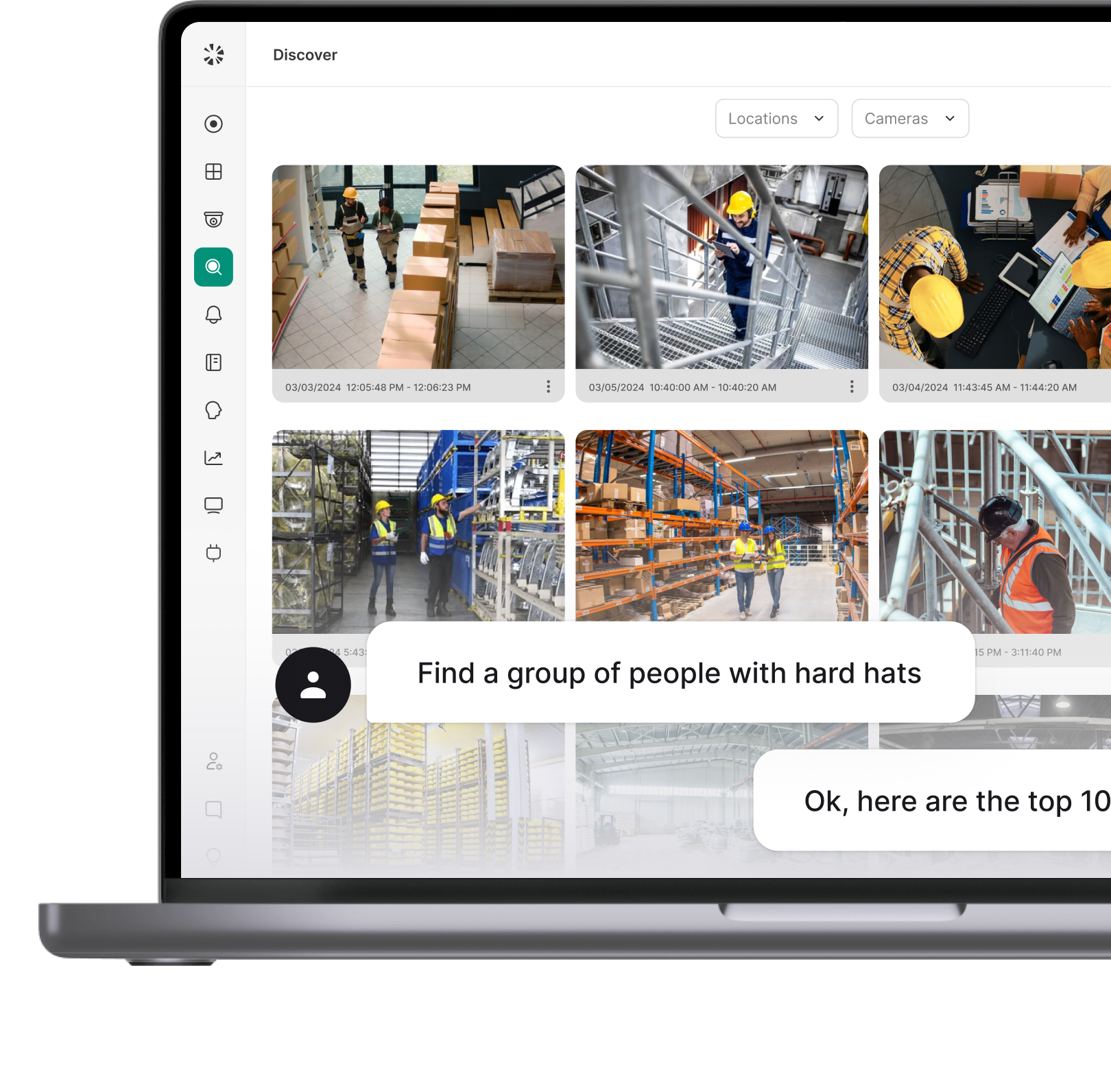
- AI-powered video search and investigation: Industrial teams cannot afford to scrub through hours of footage. Coram's advanced AI search lets teams find clips easily using simple descriptions, such as a person carrying a box or a specific vehicle. Cross-camera tracking shows how people, vehicles, or assets move across the site, significantly reducing investigation time.
- Operational insight beyond security: Surveillance systems should support daily operations. Dashboards that track movement, asset usage, line crossings, or idle zones help identify inefficiencies, improve accountability, and reduce downtime. Cameras become operational tools, not just security devices.
- License plate and vehicle monitoring: For yards, loading docks, and parking areas, license plate recognition adds control and visibility. IP cameras must track vehicle entry and exit, flag vehicles of interest, and support fast searches using partial plate data or vehicle descriptions.
- Incident reporting and collaboration: Industrial incidents often involve multiple teams. A modern system should provide fast clip downloads, secure sharing, and built-in incident reports (combine video, timelines, and notes). This simplifies audits, investigations, and coordination with external agencies.
- Secure, scalable architecture: Industrial surveillance must protect sensitive data. On-prem AI processing, encrypted storage, and strong cybersecurity controls keep footage private while allowing unlimited cloud archiving and seamless integration with access control and sensors as facilities grow.
Final Takeaway
Manufacturing environments demand security decisions that are practical, resilient, and aligned with how operations actually run. With constant movement on the shop floor, high-value equipment, strict safety expectations, and growing digital exposure, security systems must support productivity while reducing risk, not add friction.
A strong security system selection framework focuses on:
- Manufacturing-specific risk mapping
- Industrial-grade hardware built for harsh environments
- Unified visibility across people, assets, and activity
- Access control paired with visual verification
- Scalability for growth and change
- Measurable operational and financial impact
- Cyber-physical security and network protection
- Compliance and audit readiness
Coram addresses these needs through integrated video surveillance and access control designed for manufacturing facilities. By combining real-time awareness, scalable architecture, and unified visibility, Coram helps manufacturers build security that strengthens operations today and stays ready for what comes next.




.png)