Security once meant locks, cameras, and guards at the door. In 2026, that definition no longer holds. Today’s organizations rely on cloud systems, connected devices, mobile workforces, and AI-driven tools, which means security failures now impact both physical spaces and digital infrastructure.
- A stolen badge can open a door
- A compromised login can shut down an entire operation
The numbers tell the story. A large share of breaches now start with stolen credentials, ransomware remains a daily threat, and physical security incidents still cost businesses billions in lost revenue and downtime.
As offices, campuses, and commercial buildings become smarter, the attack surface grows just as fast. Older, siloed security approaches struggle to keep up with this reality.
That’s where modern security technology comes into the picture. Organizations now need systems that adapt as risks change, scale as operations grow, and work across physical spaces without driving up complexity or cost.
Hence, today, security decisions are less about adding more tools and more about choosing technology that stays relevant as environments, teams, and threats evolve.
In this guide, let’s look at what’s changing in security technology, why older approaches fall short, and which trends in 2026 actually help teams reduce risk, respond faster, and stay operational in a connected world.
What Is Security Technology?
Security technology is the combination of tools, systems, and policies used to protect people, property, and information from harm. In practical terms, it’s what helps organizations control who gets in, detect when something is wrong, respond quickly to incidents, and document what happened afterward.
In 2026, security technology goes far beyond cameras and locks. It spans both physical and digital environments, covering on-site facilities as well as remote operations. A single security gap can expose assets, disrupt operations, or create safety risks, which is why understanding how these systems work together matters.
Common examples of physical security technology include:
- Access control systems and intrusion detection
- Electronic and wireless locks
- Credentials such as key cards, fobs, and mobile devices
- Environmental and motion sensors
- Alarm systems and emergency response tools
When these components are poorly integrated or outdated, they weaken the entire security strategy. When designed well, they reinforce each other and support safer, more resilient operations.
What Are The Components Of Security Technology?
Modern security technology is built around four core components that work together to reduce risk and limit impact when incidents occur. Today, the strength of a security system is defined less by any single device and more by how well these components function as a connected whole.
- Prevention: Prevention focuses on reducing exposure before a threat appears. This includes strong access control policies, secure credential management, and clear separation of public, restricted, and high-risk areas. Multi-factor authentication, role-based permissions, and controlled entry points help limit who can access people, systems, and sensitive spaces. The goal is simple: fewer opportunities for something to go wrong.
- Deterrence: Deterrence influences behavior. Visible security measures such as cameras, access readers, lighting, and alarms signal that activity is monitored. This often stops incidents before they start. In physical environments, deterrence remains one of the most effective and cost-efficient ways to reduce theft, vandalism, and unauthorized access.
- Detection: Detection is about speed and accuracy. The faster a threat is identified, the smaller the impact. In 2026, detection relies heavily on AI-driven video analytics, smart sensors, and behavioral monitoring that can flag unusual activity in real time. Early detection allows teams to act before a situation escalates into downtime or harm.
- Response: No system prevents every incident. Response capabilities determine how quickly and effectively teams can act when something does happen. Integrated alerts, clear workflows, and real-time visibility help security and operations teams coordinate actions, contain issues, and restore normal operations with minimal disruption.
Top Security Technology Trends of 2026
Most organizations are already familiar with the basics of physical security. Cameras, alarms, and access control systems are standard across offices and commercial buildings. What’s changing in 2026 is not whether these tools exist, but how they work together, scale, and adapt to modern operations. Below are the trends shaping how physical security is actually being used today.
Cloud-Based Surveillance Becomes the Default Operating Model
Cloud-based surveillance is no longer an emerging concept in 2026. It has shifted from a “nice-to-have” feature to an operational backbone. Instead of being tied to control rooms or on-site servers, security teams can now monitor, manage, and respond to incidents from anywhere.
Key shifts driving cloud adoption include:
- Multi-site visibility: A single dashboard to monitor offices, campuses, or facilities across regions
- Remote access: Live and recorded footage available through browsers or mobile devices, not just on-prem systems
- Simpler maintenance: Real-time alerts for camera failures, storage limits, or connectivity issues
- Faster scaling: New cameras or locations added without redesigning infrastructure
These capabilities directly address long-standing challenges with traditional on-prem video systems, which were costly to scale, difficult to maintain, and dependent on local infrastructure at every site. Cloud-managed surveillance removes those constraints by centralizing control and reducing hardware complexity.
This model is especially important for multi-site organizations. Instead of juggling separate NVRs and site-level systems, teams get centralized visibility across all locations. Camera failures, storage gaps, or system issues surface immediately, reducing blind spots common in legacy setups.
At the same time, cloud adoption raises accountability. As video, access logs, and alerts move off local servers, strong encryption, identity controls, intrusion monitoring, and tight integration with access and alerting systems become non-negotiable.
Video Surveillance Becomes an Intelligence Layer
Video surveillance is no longer owned by security teams alone. In 2026, it functions as a shared intelligence layer across safety, operations, facilities, and compliance. The change is less about features and more about how video is used.
- Real-time awareness, not delayed review: Systems automatically surface unusual behavior, safety risks, or policy violations without someone watching a screen all day.
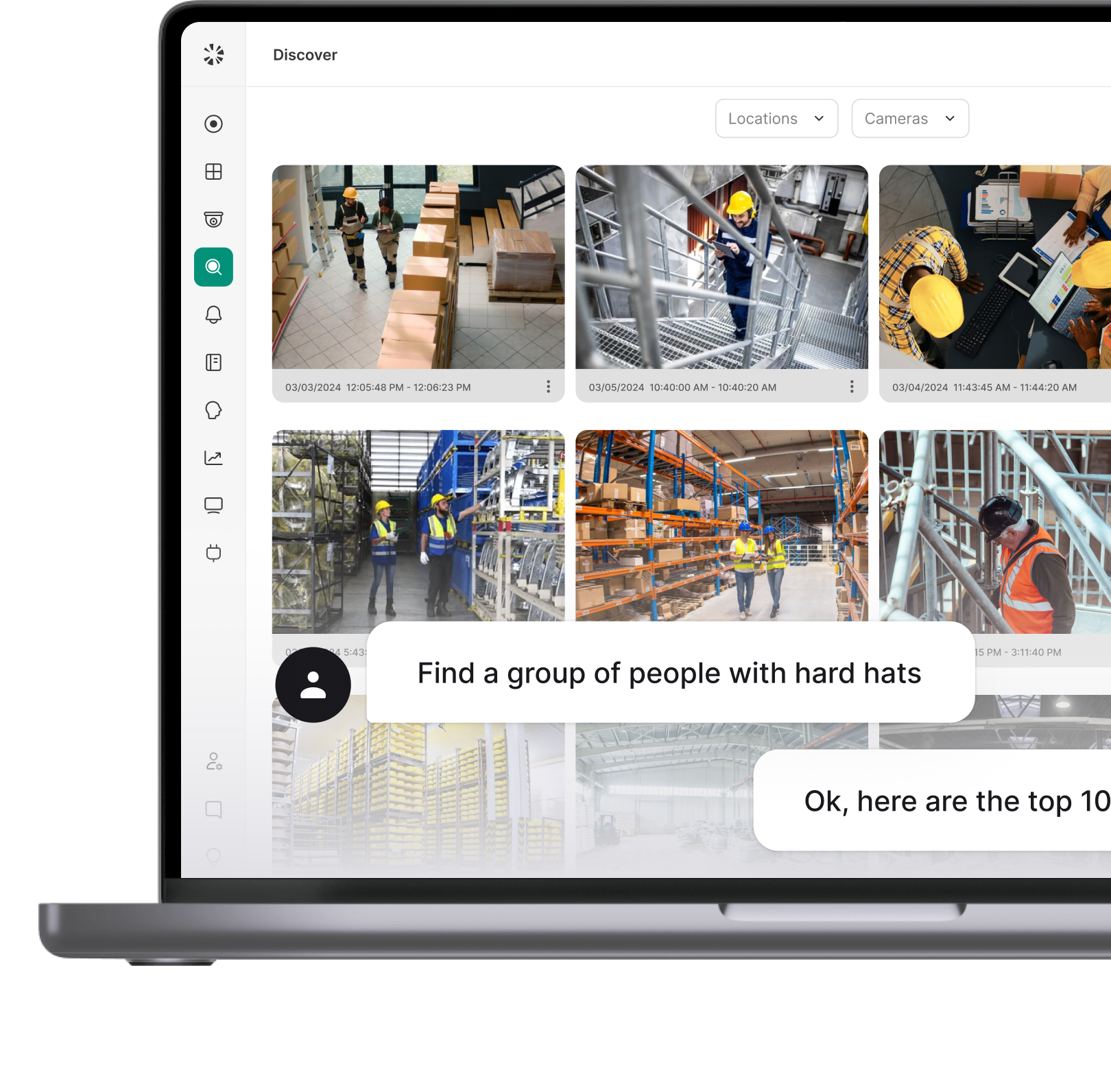
- Faster investigations: Instead of scrubbing through hours of footage, teams can search video using simple descriptions and quickly track people, vehicles, or assets across locations.
- Operational visibility expands: Video helps confirm incidents, reduce downtime, validate reports, and understand inefficiencies that affect daily operations.
- Security context becomes unified: Video is linked with access control, sensors, and emergency workflows, giving responders visual clarity when alerts are triggered.
Coram’s video surveillance reflects this shift by working with existing cameras while layering AI search, incident reporting, and integrations into one system. Footage becomes easier to access, share, and retain without jumping between tools.
So, the bigger change is mindset. Video is no longer just evidence after something goes wrong. It’s a live source of context that helps organizations spot issues earlier, respond with confidence, and make informed decisions across the business.
Access Control Evolves Into Identity and Policy Management
From the badge-and-reader setups most organizations started with, access control is far beyond just opening a door. It’s about confirming who someone is, what they’re allowed to do, when access should apply, and how risk levels change in real time.
- Mobile credentials replacing physical cards: Smartphones and wearables reduce lost badges, sharing, and friction at entry points.
- Role-based and time-based permissions: Access aligns with job function, shift schedules, and temporary assignments rather than static credentials.
- Tight integration with identity systems: Connections to HR platforms, SSO tools, and Zero Trust frameworks help automate onboarding, offboarding, and access reviews.
- Event-driven enforcement: Access rules can change instantly during alerts, investigations, or lockdowns, limiting movement when it matters most.
This shift matters because access failures today carry wider consequences. A shared credential, an overlooked contractor, or a former employee with lingering permissions can create safety risks, compliance gaps, and operational disruption. Access control has become a living system that adjusts as people, policies, and risk change.
AI Video Analytics Turn Cameras Into Real-Time Intelligence
AI video analytics in 2026 are defined by how deeply machines now understand visual environments, not just record them. Modern systems can identify people, vehicles, objects, and movement patterns automatically, reducing the need for constant human monitoring and cutting response times dramatically.
What sets this shift apart is event discovery. Instead of reviewing footage after an incident, teams receive alerts as conditions emerge. Searches are no longer timeline-based but descriptive, allowing teams to locate moments of interest in seconds.
Key capabilities that have matured include:
- License plate recognition, supporting controlled vehicle access, parking automation, and investigation of suspicious vehicles
- Person and object tracking, reconstructing movement paths across multiple cameras without manual effort
- Weapon and threat detection, identifying visible risks early enough to change outcomes
- Unattended object detection, helping teams respond quickly to abandoned items in public or sensitive spaces
- Behavioral analysis, spotting patterns like loitering, tailgating, or unusual movement before incidents escalate
AI is also shaping decisions beyond security. Analytics like people counting and dwell time offer insight into space usage and congestion, supporting better planning without adding new systems.
At the same time, these tools handle sensitive data at scale. That reality has pushed organizations to focus on edge processing, strict access controls, and limiting data retention. The strongest deployments use AI to surface insight, while trained teams retain decision authority.
Centralized Security Platforms Replace Fragmented Systems
One of the most visible shifts in 2026 is the move away from siloed security tools toward centralized platforms.
Historically, organizations deployed separate systems for access control, cameras, alarms, intercoms, visitor management, and emergency response. Each required its own interface, training, and maintenance. During incidents, teams were forced to manually correlate data across systems, slowing response.
Centralized platforms change that model. They bring physical security, communications, sensors, and alerts into a single operational view.
- Access events link directly to video
- Panic alerts surface live camera feeds
- Incident timelines build automatically
This convergence streamlines response and lowers overhead. Teams manage policies centrally, reduce training effort, and avoid vendor sprawl. Further, open platforms matter most, allowing integration with existing systems instead of costly replacements, while making it easier to scale without rebuilding security from the ground up.
Predictive Security Analytics Shifts Security From Reaction to Prevention
Another shift is how security teams think about time. Instead of responding after something happens, predictive analytics help teams act before risk escalates. Predictive security systems analyze patterns across:
- Historical incident data
- Real-time camera and sensor inputs
- Access activity trends
- Behavioral anomalies
- External threat intelligence
The goal is not to predict crime with certainty, but to identify risk signals early. For example, repeated access attempts outside normal patterns, changes in movement behavior near sensitive areas, or environmental shifts that correlate with past incidents.
This helps teams focus on the highest-risk areas instead of spreading attention thin. For leaders, it reframes security reporting around avoiding downtime, lower incident impact, and faster recovery, not just how many incidents occurred.
Cyber-Physical Security Convergence Becomes Operational Reality
Physical security and cybersecurity are no longer separate conversations. Today, they are deeply intertwined.
Every modern physical security device is a networked endpoint. Cameras, readers, sensors, and controllers all interact with enterprise networks. This creates a shared risk surface where a cyber breach can trigger a physical incident and vice versa.
Organizations are responding by:
- Hardening physical devices like IT assets
- Segmenting networks that support security systems
- Applying identity-based access to physical commands
- Monitoring device behavior for anomalies
This convergence also changes team structures. Physical security leaders increasingly collaborate with IT, SOC, and risk teams. Joint incident response plans are becoming standard.
Zero Trust Expands Into Physical Access and Device Control
Zero Trust principles are reshaping how access is granted and maintained, not just digitally but physically. Instead of static permissions tied to a badge or role, access decisions are now contextual. Time, location, device status, and behavior all influence whether access is granted.
In practice, this means:
- Credentials that expire automatically
- Access that adjusts by shift or risk level
- Continuous verification of readers and controllers
- Alerts when access behavior deviates from norms
Zero Trust reduces the blast radius of compromised credentials and insider threats. Even if access is stolen, movement is limited. Today, it is becoming a baseline expectation for modern access control strategies.
Emergency Management and Panic Response Become Integrated Workflows
For years, emergency response tools lived in silos. Panic buttons sent alerts, cameras recorded footage, and access systems locked doors. Each worked on its own, often leaving teams to piece together what was happening while an incident was already unfolding.
That model no longer works. Now, emergency management systems are built around connected workflows, not isolated actions. A single trigger now sets multiple systems in motion at once, removing guesswork when seconds matter. Modern panic and response platforms can:
- Notify the right internal teams and first responders immediately
- Share precise location details without manual input
- Pull live and recorded video for instant context
- Adjust access control in real time, including lockdowns
- Create a live incident timeline as events unfold
Coram’s Emergency Management Systems reflect this shift by treating emergency response as an end-to-end process. Detection can start from cameras or manual triggers. Alerts reach the right people instantly, even overriding Do Not Disturb. Teams coordinate through shared video, chat, and updates in one place instead of scattered calls.
Once resolved, every action is logged automatically, turning incidents into learning moments rather than paperwork exercises.
Smart Sensors Extend Awareness Beyond Line of Sight
Cameras cannot see everything, and in some areas, they should not. Smart sensors are filling these gaps by detecting sound, air quality, motion, vibration, and environmental changes without capturing video. This is especially important in privacy-sensitive or operationally complex spaces.
Common use cases include:
- Detecting aggression or distress sounds
- Monitoring air quality and chemical presence
- Identifying vaping or smoking in schools
- Sensing glass break or impact events
When integrated with centralized platforms, sensor alerts automatically pull nearby video, notify responders, and trigger workflows.
Implementing Security Trends Into Practical Action
Start with real risk, not hype
Run a detailed risk assessment across physical sites, networks, and workflows. Identify the top threats that could disrupt safety or operations.
- Remote workforce heavy? Cloud and identity security matter most
- Public-facing locations? Access control and surveillance take priority
Plan for scale, not just today’s needs
Choose systems that can grow with the business. Consider future locations, users, integrations, and maintenance requirements before committing to any upgrade.
Align technology with mitigation goals
Map each major risk to a clear response. Review existing systems and policies first before replacing hardware.
- AI analytics may improve current cameras without full replacement
- Process gaps may require workflow changes, not new devices
Understand true deployment costs
Factor in installation complexity, integration effort, downtime risk, and ongoing support. Structural changes, specialist labor, and system training can significantly affect total cost.
What the Future of Security Technology Looks Like?
In 2026, the gap between organizations that talk about security and those that operate securely is becoming obvious. The difference is not access to technology, but how thoughtfully it’s applied. No longer built around single tools or one-time upgrades, instead, strong security programs are shaped by ongoing decisions, clear ownership, and alignment across teams.
- One of the biggest shifts ahead is accountability. Security can’t sit only with IT or facilities anymore. Risk touches HR, operations, compliance, and leadership. When these groups share visibility and responsibility, security stops being a blocker and starts supporting day-to-day work instead of slowing it down.
- Another defining factor is restraint. Adding more tools does not automatically reduce risk. Mature organizations are simplifying, consolidating, and asking harder questions about what actually gets used during real incidents. Systems that integrate well, surface context quickly, and reduce manual steps tend to outperform complex setups that look impressive on paper but fail under pressure.
- Finally, the future favors adaptability over perfection. Threats will keep changing. Workforces will stay fluid. Buildings and campuses will continue to get smarter. Security strategies that allow for change without constant rebuilds are the ones that last.
For leaders planning beyond 2026, the goal is to build a security foundation that can absorb new risks, support growth, and help teams respond calmly when things don’t go as planned. That’s what modern security technology is really moving toward.
Final Thought
Security technology in 2026 is being shaped less by trends on paper and more by day-to-day operational pressure. How people work, how buildings function, and how threats evolve have all changed at the same time. As a result, security systems are expected to do more, adapt faster, and connect across environments that were once separate.
Here are the top security technology trends of 2026:
- Cloud-Based Surveillance Becomes the Default Operating Model
- AI Video Analytics Turn Cameras Into Real-Time Intelligence
- Video Surveillance Becomes an Intelligence Layer
- Access Control Evolves Into Identity and Policy Management
- Centralized Security Platforms Replace Fragmented Systems
- Predictive Security Analytics Shifts Security From Reaction to Prevention
- Cyber-Physical Security Convergence Becomes Operational Reality
- Zero Trust Expands Into Physical Access and Device Control
- Smart Sensors Extend Awareness Beyond Line of Sight
- Emergency Management and Panic Response Become Integrated Workflows
Platforms like Coram’s security technology support this shift by bringing video, access, sensors, and emergency response into one connected system that scales with real-world complexity.
And now, the next step isn’t adding more tools. It’s choosing technology that works together, adapts over time, and helps teams respond with clarity when it matters most.




.png)