Video surveillance is a strategic investment that affects security, operations, compliance, and even long-term scalability. The platform you choose today can determine how easily you adopt AI analytics, manage multiple locations, protect sensitive data, and respond to incidents in real time.
With rising security risks, stricter privacy expectations, and growing reliance on cloud infrastructure, organizations are being forced to think beyond price tags and start asking smarter questions about flexibility, intelligence, and future readiness.
As a result, platforms like Verkada, Ubiquiti, and Coram have become leading options for modern cloud-based video surveillance. While all three operate in the cloud video surveillance space, they take very different approaches to architecture and ecosystem design. We’re exploring all that in this article; read on.
Quick Snapshot
Verkada: A closed, all-in-one cloud video surveillance platform known for simplicity, hardware–software integration, and strong enterprise adoption.
Ubiquiti: A cost-efficient, hardware-driven ecosystem that appeals to IT teams and SMBs looking for on-prem–leaning control with optional cloud management.
Coram: An open, AI-first video security platform built to work with third-party cameras, offering advanced analytics, flexibility, and faster innovation at scale.
How Cloud Video Surveillance Has Evolved?
The journey from analog CCTV to today's intelligent cloud platforms represents one of the biggest technology shifts in enterprise security. Understanding this evolution provides essential context for evaluating modern solutions.
From Analog to Network Video Recorders
Traditional surveillance relied on analog cameras connected to Digital Video Recorders (DVRs) via coaxial cables. These systems required dedicated infrastructure, offered limited scalability, and provided no remote access.
The introduction of IP cameras and Network Video Recorders (NVRs) between the late 90s and early 2000s brought digital recording and network connectivity. But it still demanded substantial on-premises hardware and IT expertise.
The Cloud Revolution
The emergence of cloud-based Video Surveillance as a Service (VSaaS) restructured the economics and capabilities of video security. Organizations could suddenly access footage from anywhere, scale deployments without purchasing servers, and receive automatic software updates.
However, early cloud solutions faced bandwidth limitations, latency concerns, and questions about data security and sovereignty.
The Hybrid Cloud Architecture Emerges
Now, the industry has largely converged on hybrid architectures that combine the best of both approaches. Modern platforms store video locally (on-camera or on edge devices) for immediate access and continuous recording.
Then they selectively upload to the cloud for long-term archiving, remote access, and advanced analytics. This distributed computing model has become the established standard, as it maximizes speed and storage efficiency while reducing bandwidth strain and addressing regulatory concerns about data residency.
Verkada vs Ubiquiti vs Coram - Key Overview
Understanding the positioning and architecture of each platform provides the foundation for comparison. These three solutions represent distinctly different approaches to video surveillance, each optimized for specific organizational priorities and constraints.
Verkada
Company Background and Positioning
Founded in 2016 by Stanford computer scientists and security specialists, Verkada has established itself as the premier cloud-based physical security platform for enterprise deployments.
Based in San Mateo, California, the company serves thousands of organizations worldwide across education, healthcare, retail, government, and corporate sectors. Verkada positions itself as the comprehensive, integrated solution for organizations seeking simplicity, reliability, and unified management across all physical security domains.
Architectural Philosophy
Verkada operates on a hybrid-cloud architecture with proprietary hardware. Every component is designed, manufactured, and integrated by Verkada specifically for swift operation within the Command platform.
This approach delivers exceptional plug-and-play functionality and a unified user experience, but requires organizations to purchase Verkada hardware exclusively.
The platform employs edge-based video processing, with sophisticated AI chips embedded in cameras.
Video is stored locally on each device for the license period, with optional cloud backup for extended retention. The Command software platform provides centralized management, accessible from any browser or mobile device, with no on-premises servers required.
Core Value Proposition
Verkada's promise is simplicity at enterprise scale. Organizations receive a complete physical security solution (video, access control, environmental sensors, alarms, visitor management, and analytics) managed through a single, intuitive interface.
The system is designed for quick deployment with minimal IT involvement, automatic updates ensure continuous improvement without manual intervention, and ten-year warranties reduce long-term replacement costs.
For organizations willing to commit to the Verkada ecosystem and accept the premium pricing, the platform delivers unmatched integration depth and operational simplicity. The tradeoff, however, is vendor lock-in and limited flexibility to integrate third-party hardware or preserve existing cameras.
Target Customers
Verkada primarily serves small, mid-sized, and large enterprises with multiple locations and strong security requirements.
Typical deployments include corporate campuses, retail chains, school districts, universities, healthcare sectors, and government facilities that value unified management and are willing to standardize on a single vendor platform.
Coram
Company Background and Positioning
Coram is a cloud-native platform designed to solve the challenge organizations face when modernizing legacy surveillance infrastructure. It transforms existing IP cameras into intelligent AI endpoints through cloud-based processing, without hardware replacement.
The platform serves Fortune 500 companies, educational institutions, healthcare facilities, manufacturers, and multi-site businesses seeking advanced AI capabilities without infrastructure disruption.
Architectural Philosophy
Coram's architecture is open, hardware-agnostic, and AI-first. The platform connects to any ONVIF-compliant IP camera through Coram Point, which is equipped with the latest NVIDIA edge AI.
Unlike systems with AI processing distributed across individual cameras, Coram centralizes intelligence at the Point device, which can support multiple cameras. This centralized AI approach offers several advantages. Organizations aren't locked into specific camera hardware; existing cameras are preserved, and AI capabilities improve.
Video is stored both locally and in the cloud, depending on retention requirements, with smart bandwidth management to optimize cloud upload costs.
Core Value Proposition
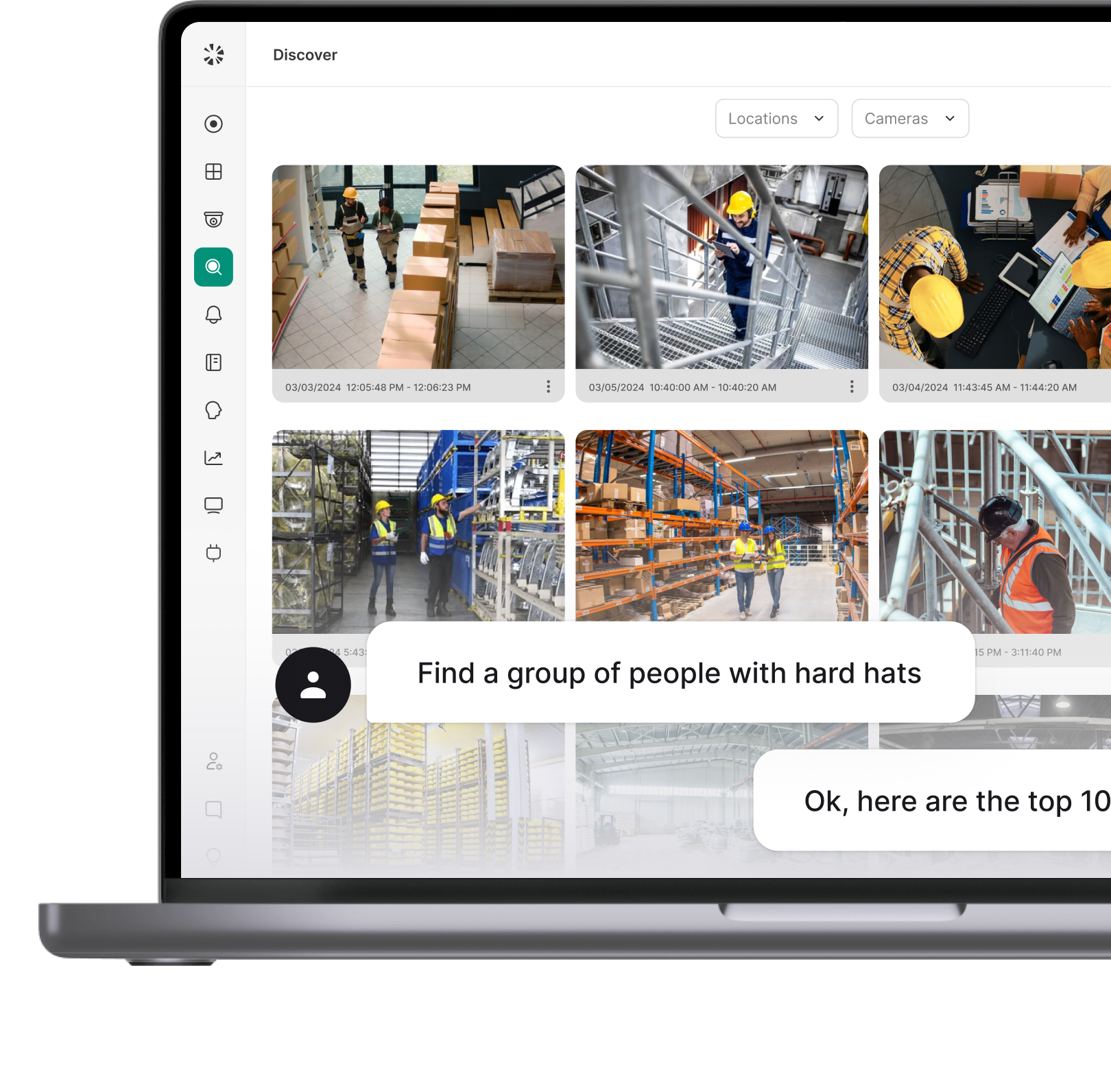
Coram's promise is modern AI-powered intelligence without hardware lock-in. Organizations receive advanced features like firearm detection, slip-and-fall alerts, license plate recognition, facial recognition, natural language video search, and behavioral analytics.
The platform integrates seamlessly with leading access control systems (Brivo, Openpath, Mercury) and offers its own cloud-based access control solution. Coram also provides a comprehensive Emergency Management System for coordinating responses during critical incidents.
If your business has complex or aging camera infrastructure, Coram offers the fastest path to AI-enhanced surveillance without the disruption and expense of complete system replacement.
Target Customers
Coram primarily serves organizations with existing camera infrastructure, complex multi-site deployments, or specific AI requirements.
Typical use cases include K-12 schools and universities, hospitals and healthcare facilities, warehouses and manufacturing, and enterprises seeking to modernize gradually.
Ubiquiti (UniFi Protect)
Company Background and Positioning
Ubiquiti, founded in 2005, built its reputation on high-performance enterprise networking equipment at disruptive price points. The UniFi ecosystem has become popular among technically proficient users, managed service providers, and cost-conscious organizations.
UniFi Protect is the video surveillance application within this ecosystem, emphasizing local control, privacy, and subscription-free operation.
Architectural Philosophy
UniFi Protect operates as an application within the UniFi OS, running on UniFi Cloud Gateways (routers) or dedicated Network Video Recorders. This architecture is different from pure cloud solutions; hence, video storage is entirely local by default, with optional cloud connectivity for remote access and management.
The hybrid approach provides cloud-like convenience without requiring continuous cloud connectivity or subscription fees. Video never leaves the local network unless actively streamed by an authorized user, addressing privacy and data sovereignty concerns that plague cloud solutions.
The system leverages edge AI processing in newer camera models for person detection, vehicle tracking, and smart motion zones.
Core Value Proposition
UniFi Protect supports professional-grade surveillance without recurring fees or cloud dependency. Organizations pay once for hardware and receive unlimited users, unlimited retention, automatic firmware updates, and long warranties.
There are no per-camera licenses, no mandatory subscriptions, and no third-party cloud providers with access to footage. If your organization already invested in the UniFi ecosystem, Protect integrates with networking infrastructure, access control, and telecommunications, all managed through a unified interface.
The tradeoff is a steeper learning curve, more hands-on IT involvement, and the requirement to use UniFi hardware.
Target Customers
UniFi Protect primarily serves technically proficient organizations, IT-managed deployments, and cost-sensitive environments, prioritizing one-time capital expenses over operational subscriptions.
Typical deployments include small-to-medium businesses with in-house IT staff, managed service providers serving multiple clients, educational institutions with limited budgets but strong IT teams, residential and multi-family properties, and privacy-conscious organizations requiring local data storage.
Side-by-Side Feature Comparison Table
Access Control & Security Ecosystem Explained
Verkada's Integrated Approach
Native Access Control Platform
Verkada offers a proprietary access control system designed specifically for seamless integration with Command's video platform. The hardware lineup includes door controllers (AC12, AC42, AC62), readers (AD34, AD64), the AF64 Access Station Pro with biometric facial authentication, and the AL54 wireless lock. All devices come with 10-year warranties and automatic firmware updates.
Integration Capabilities
The platform provides real-time video-access correlation out of the box. When an access event occurs (whether a successful entry, a denied access, or a forced door), Command automatically pulls up the corresponding video footage.
Security teams can set automated alerts for specific scenarios (repeated failed attempts, door held open beyond threshold, access during restricted hours) that trigger notifications and video recording.
Verkada supports integration with Schlage (Allegion) and ASSA ABLOY wireless locks, enabling access control expansion without rewiring doors. The system accommodates any Wiegand or OSDP-based readers, allowing organizations to retain existing badge readers while upgrading control infrastructure.
Ecosystem Lock-In
The tradeoff for this integration is vendor dependency. Organizations using Verkada access control must maintain active licenses for both video and access components.
While the integration depth is unmatched, enterprises cannot easily migrate to alternative access systems without disrupting the video correlation capabilities that make the integration valuable.
Coram's Flexible Integration Strategy
Open Platform Philosophy
Coram distinguished itself through platform openness. It integrates with market-leading systems, including Brivo, Openpath (Avigilon Alta), Mercury boards, and any access control platform with a publicly available API.
This allows organizations to select access control based on their specific needs while maintaining video integration benefits.
Native Access Control Option
Coram introduced its own cloud-based access control system for organizations seeking a unified platform.
The Coram Access Control solution is compatible with existing Wiegand and OSDP readers, offers full mobile access capabilities, and integrates with Coram's video intelligence platform.
Every door event automatically pairs with video footage, supporting real-time monitoring and incident investigation.
Emergency Management Integration
Coram's most distinctive capability is its Emergency Management System (EMS). This platform enables security directors to trigger, manage, and resolve emergencies directly from their security interface.
During critical incidents, EMS coordinates panic buttons, surveillance feeds, door management, and communication systems from a single interface.
The integration between video, access, and emergency response provides layered situational awareness. If firearm detection triggers an alert, the system can automatically initiate lockdown procedures, notify first responders with live video feeds, and provide security teams with real-time intelligence about threat location and movement.
Ubiquiti's Ecosystem Integration
UniFi Access Control Platform
UniFi Access operates as another application within the UniFi ecosystem, managed through the same console that controls networking and video surveillance. The platform includes access control hubs (UA-Hub), readers (Reader Pro), UA-Lite (Reader Lite), and integration capabilities with third-party wireless locks and readers.
Video-Access Correlation
UniFi Protect integrates natively with UniFi Access, enabling automatic video capture of access events. When someone unlocks a door via badge, PIN, or mobile credential, the associated camera records the event and links it in the timeline.
Security teams can review access logs with corresponding video, set up automated recording rules, and monitor door status alongside live video feeds.
Ecosystem Advantages and Limitations
For organizations fully invested in UniFi infrastructure, the integration provides exceptional value. A single console manages networking, WiFi, surveillance, access control, and telecommunications with a consistent user experience.
However, UniFi's integration capabilities outside the ecosystem remain limited. Corporations using non-UniFi access control systems face challenges in achieving the same correlation depth. The platform is optimized for those willing to standardize on UniFi across all physical security and networking domains.
Pricing & Total Cost of Ownership
Pricing is a core differentiator but “cheap” cameras can cost more in operations. Focus on TCO components, not just purchase price.
Cost Buckets To Evaluate
- Hardware Capex: Cameras, mounts, NVRs, PoE switches. Ubiquiti’s model pushes costs here (you buy hardware once). Verkada combines modern devices but typically has higher per-camera device pricing. Coram can reduce hardware capex by leveraging existing cameras.
- Software/Licensing: Verkada requires cloud licenses; enterprise licensing and multi-year subscriptions are common. Coram typically sells multi-year licenses or custom subscription tiers based on number of video feeds, cameras, and doors. Ubiquiti Protect has no camera licensing fees, shifting cost predictability toward hardware and maintenance.
- Bandwidth & Storage: Cloud-first platforms incur egress and storage costs for retained video and cloud analytics; local platforms shift this to on-prem storage and management. Consider bandwidth for live monitoring and cloud uploads.
- Operations & Maintenance: Firmware updates, lifecycle replacements, and monitoring. Vendor-managed cloud platforms reduce local OS/hardware maintenance but add vendor dependency; local platforms require stronger in-house ops.
- Integration & Migration: Consider the cost to bridge legacy cameras (Verkada Command Connector, Coram’s software overlay) vs full hardware replacement.
Final Verdict
There’s no one-size-fits-all winner in 2026; each platform excels in different environments based on priorities, scale, and risk tolerance. Verkada is best for small, medium, and large enterprises that want a turnkey, cloud-managed system with integrated security tools.
Coram stands out for organizations looking to modernize their existing camera infrastructure with advanced AI and flexible, camera-agnostic deployments. Ubiquiti (UniFi Protect) is ideal for teams prioritizing local control and zero recurring camera license fees.
The right choice depends on whether you value simplicity, flexibility, or ownership most in your long-term security strategy.




.png)