In the United States alone, the video surveillance market is projected to grow from around $11.27 billion in 2024 to $18.06 billion by 2030. This is driven by rising commercial and public safety investments and the adoption of advanced technologies such as AI and cloud-based monitoring.
That growth reflects a larger truth: businesses recognize that outdated or one-dimensional systems leave vulnerabilities exposed, slow response times, and make centralized security management nearly impossible as organizations scale.
The stakes are especially high for multi-site enterprises, retail chains, campuses, and regulated industries where threats and compliance requirements continue to evolve. In this comparison guide between Lorex, Hikvision, and Coram, we’ll help you understand and decide which security solution matches your operational needs and security strategy.
What is Lorex?
Lorex is a well-known mass-market CCTV brand focused on home and business security. Historically, Lorex products centered on easy-to-install NVR/DVR systems, cameras, video doorbells, and consumer-friendly features (mobile apps and cloud backup options).
Lorex’s product DNA is rooted in hardware-first, wired and wireless solutions that are friendly to DIY or small-site installs.
What is Hikvision?
Hikvision is a global producer of video surveillance hardware and security solutions across many verticals. It sells IP cameras, NVRs, DVRs, and analytics-enabled devices, access control controllers and terminals, and enterprise VMS software (HikCentral/Hik-Connect).
Compared with consumer-focused brands, Hikvision offers:
- more device variety
- on-device analytics (including advanced models for LPR and face recognition)
- professional platform tools intended for installers and integrators
That makes it common in enterprise CCTV rollouts that are still hardware-led. However, some governments and federal institutions have flagged national security and data privacy concerns with certain China-linked video equipment vendors, including Hikvision.
These discussions have affected procurement choices and compliance planning in public-sector contexts. Consider this risk factor when planning installs.
What is Coram?
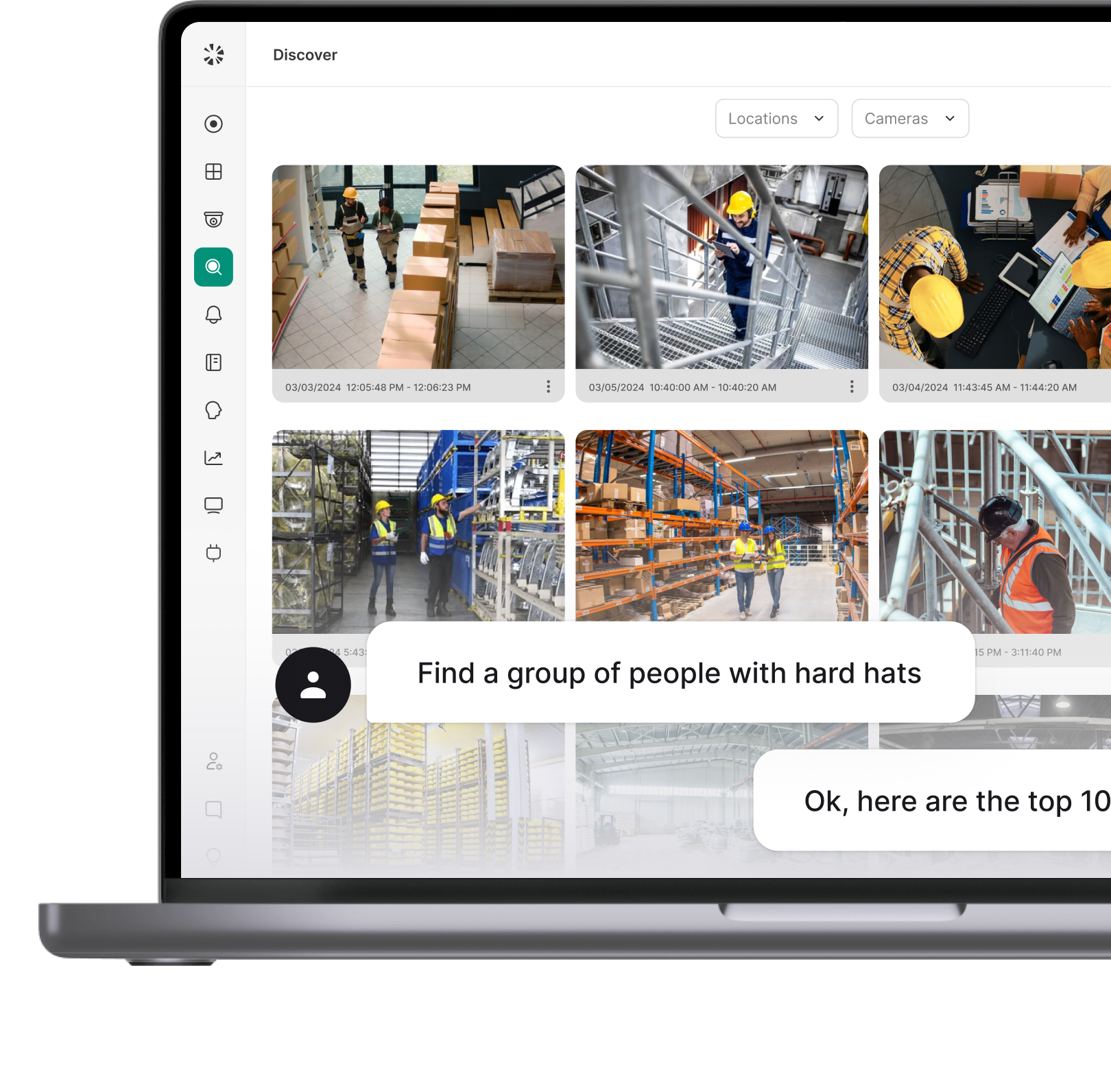
Coram is a cloud-first, AI-native physical security platform that unifies video, access control, and emergency management into a central cloud dashboard.
The platform connects existing IP cameras and door hardware, manages doors and users from the web or phone, and offers cloud storage, AI-powered alerts, and centralized multi-site administration.
Coram emphasizes easy rollout, mobile-first management, and the ability to phase upgrades without ripping and replacing every camera.
Lorex vs Hikvision vs Coram: Product Scope Comparison (Table)
Below is a decision-focused snapshot that maps typical buyer concerns (hardware, cloud services, enterprise features, access control).
Deployment Models Compared: Consumer CCTV vs Hardware-First vs Cloud-First
Consumer CCTV
Consumer CCTV solutions like Lorex are designed for simplicity: pre-paired cameras, NVRs/DVRs, and an app for remote viewing and control. This model minimizes upfront complexity and installation costs for homeowners and businesses.
Because storage and management live at the recorder (local HDD or SD card), these systems give direct control of footage and can be robust for single-location setups. They can, however, become brittle when you try to centralize or scale across multiple buildings.
Hardware-First Surveillance
Hardware-first surveillance, such as Hikvision, provides professional-grade devices with analytics and often rich integration with access control or alarm systems through the integrator.
These solutions are solid on a per-site basis and for complex cameras. But scaling many sites typically requires per-site recorders/head-ends, network engineering, and often manual configuration changes at each location, which increases operational overhead.
Cloud-First Security Platform
Coram is a cloud-native security platform built to help organizations modernize legacy surveillance systems without ripping out and replacing existing hardware. It upgrades current IP cameras into AI-powered endpoints using cloud-based processing.
Coram boasts an open, hardware-agnostic, and AI-first architecture. Through Coram Point (equipped with NVIDIA edge AI), the platform connects seamlessly to any ONVIF-compliant IP camera. It centralizes intelligence at the Point device, which can support multiple cameras simultaneously.
This model removes hardware lock-in, protects existing camera investments, and allows AI capabilities to continuously evolve over time. Video data can be stored locally, in the cloud, or both, based on retention needs, while built-in bandwidth ensures cloud storage and upload costs are optimized.
Access Control Capabilities: Lorex vs Hikvision vs Coram
In access control, the differences between Lorex, Hikvision, and Coram are clear and closely tied to their respective designs. Lorex remains firmly focused on video surveillance and does not position itself as an access control platform. So businesses requiring unified door management or credentialing will quickly outgrow what Lorex can offer.
Hikvision, by contrast, provides a well-established access control ecosystem that includes controllers, card readers, and biometric terminals managed through software like HikCentral Access Control. This makes it suitable for SMBs and enterprises that want video and door systems within the same hardware-centric environment. However, it requires a professional setup.
Coram embeds access control directly into its cloud-first platform, offering mobile credentials, compatibility with standard OSDP and Wiegand readers, centralized scheduling, and automated door events natively linked to video. It positions access control as a core cloud service.
Which Security System Scales Beyond a Single Location?
Lorex
Lorex is great for a single home or business. Once you introduce multiple locations, you run into separate NVRs, separate management apps, and inconsistent retention policies. This model scales poorly from an operational perspective.
Hikvision
Hikvision can support large deployments, and many enterprises run hundreds of cameras on its hardware. However, scaling with Hikvision is largely a physical process rather than a software-led one.
Each new site typically requires its own cameras, recorders, and supporting infrastructure, all of which must be configured, maintained, and updated locally. Centralized visibility is possible through platforms like HikCentral.
But this usually involves setting up on-prem servers and relying on system integrators or in-house IT teams to manage firmware updates, storage, networking, and ongoing maintenance. For organizations that already have the technical resources to manage multiple locations, Hikvision can scale effectively, but that scalability comes with higher operational effort and long-term system management responsibilities.
Coram
Coram is designed for scale from the ground up. Multi-site centralized management, cloud storage and analytics, unified access control, and the ability to onboard cameras without a complete overhaul make cloud-first platforms a smoother operational fit when you expect growth or need multiple endpoints managed centrally.
Lorex, Hikvision, or Coram: Which Security System Is Right for You?
If you’re a homeowner or running a solo storefront or a small business with limited IT support and a tight budget, the priority is usually simplicity. You want something:
- easy to install
- with the hardware you need
- that stores footage locally without ongoing complexity
In this scenario, Lorex makes practical sense. Its systems are designed to be straightforward, with predictable upfront costs and minimal reliance on integrators or ongoing technical management, which matches single-location, low-maintenance environments.
For campuses or large facilities where control and on-site performance are non-negotiable, the requirements differ. Here, the focus is on high-performance cameras, advanced on-device analytics, and full control over the security infrastructure, often for operational, compliance, or privacy reasons.
Hikvision surveillance solutions can be a strong fit, as long as the organization is prepared to handle firmware management, system updates, and the coordination that typically comes with integrator-led deployments.
Businesses planning a multi-site rollout or managing a growing chain usually care more about centralized control. In these environments, consistent user management, unified policies, cloud-based analytics, and low per-site maintenance become critical.
Coram’s cloud-first architecture is designed for exactly this use case. It allows teams to onboard new locations quickly, manage doors and users from a single interface, and receive unified alerts across all sites.
There are also buyers with hybrid needs, such as organizations that already have legacy cameras but want to modernize without replacing current infrastructure. In these cases, Coram works since it supports existing IP cameras so modernization can happen.
Final Verdict
There’s no single “winner”; only the best fit for your operational needs.
- Choose Lorex if you want a hardware-centric, price-conscious solution with local recording and a consumer-grade app. It’s straightforward, but not designed for enterprise access control or centralized multi-site management.
- Pick Hikvision if you need a deep hardware portfolio and are building a professional surveillance solution with integrator support. It scales, but scaling often means more hardware and a heavier systems-integration and lifecycle commitment. Also evaluate vendor provenance and procurement implications for regulated environments.
- Choose Coram if your organization is growing across sites, requires unified video and access control, and values centralized cloud management with modern workflows. Coram minimizes per-site maintenance and is purpose-built for centralized operations and modern access control use cases.




.png)