In 2026, most businesses don’t struggle with camera quality. Almost any modern system can deliver clear footage. The real challenge comes up when a security setup that worked perfectly at one location is expected to work just as smoothly across two, five, or twenty sites. That’s usually when teams realize why the existing solutions won’t scale as they probably assumed.
In fact, that’s a familiar situation for growing organizations. A new site opens, another NVR is added, access is set up again, and monitoring becomes slightly more fragmented than before. With that, the security needs constant coordination between on-site staff, IT teams, and operations rather than something that simply runs in the background.
That’s why it gets important to compare and see how and where the leading solutions like Reolink vs Hikvision vs Coram fit for your use cases. This article focuses on those differences to help you decipher how they handle day-to-day management and long-term operational effort.
What Reolink is Built For?
Reolink is mainly designed around simplicity and individual control. Its infrastrcture focuses on homeowners and small, self-managed properties where security needs are limited in scope and complexity.
In these environments, the platform gives a practical and accessible way to monitor a single location without requiring ongoing technical involvement. Since the system is structured around independent setups, it performs best when security is managed by one person and does not need to align with broader organizational processes.
This makes Reolink a comfortable fit for residential use, rental properties, or small sites where ease of use and predictable costs are more important than centralized oversight.
However, as business requirements grow, it would need operating each site separately, with limited coordination between them. While this approach is sufficient for homeowner use, it does not support the centralized visibility or operational consistency that large/distributed organizations need.
So, if we see its suitability in that context, Reolink is more suitable for individual properties with minimal complexity, but it is not structured as a security platform for organizations planning to scale across locations or teams.
What Hikvision is Built For?
Hikvision is built for environments where security is seen more as infrastructure. Its systems are designed around dedicated hardware, on-premise control, and structured deployments that can handle higher camera counts and not typical consumer setups. For many years, this approach has worked well for large facilities where operations run within a defined physical boundary.
Another noteworthy aspect here is how, as its core, Hikvision follows a hardware-first surveillance model:
- Cameras, NVRs, and on-site servers form the backbone of the system.
- Video stays local, configurations are handled at the site level, and performance is tightly coupled with the hardware installed.
For organizations that prefer direct control over their data and are comfortable managing physical infrastructure, this model feels familiar and dependable.
Hikvision systems also scale in a very specific way. How? By adding more hardware. If you need to cover a larger area or add a new building, simply deploy additional cameras, storage, and local configuration.
From a technical standpoint, this works just fine. But from an operational perspective, this simply means more components to manage, maintain, and standardize across locations. That’s exactly where things get increasingly complex as the footprint expands.
This is why Hikvision fits best in hardware-centric environments where security teams or integrators are already set up to handle ongoing configuration, maintenance, and upgrades.
What Coram is Built For?
Coram is primarily built for organizations where security needs to be managed across more than one location and by more than one team. Its design reflects environments where visibility, access, and response are handled centrally, even though physical operations are spread across sites.
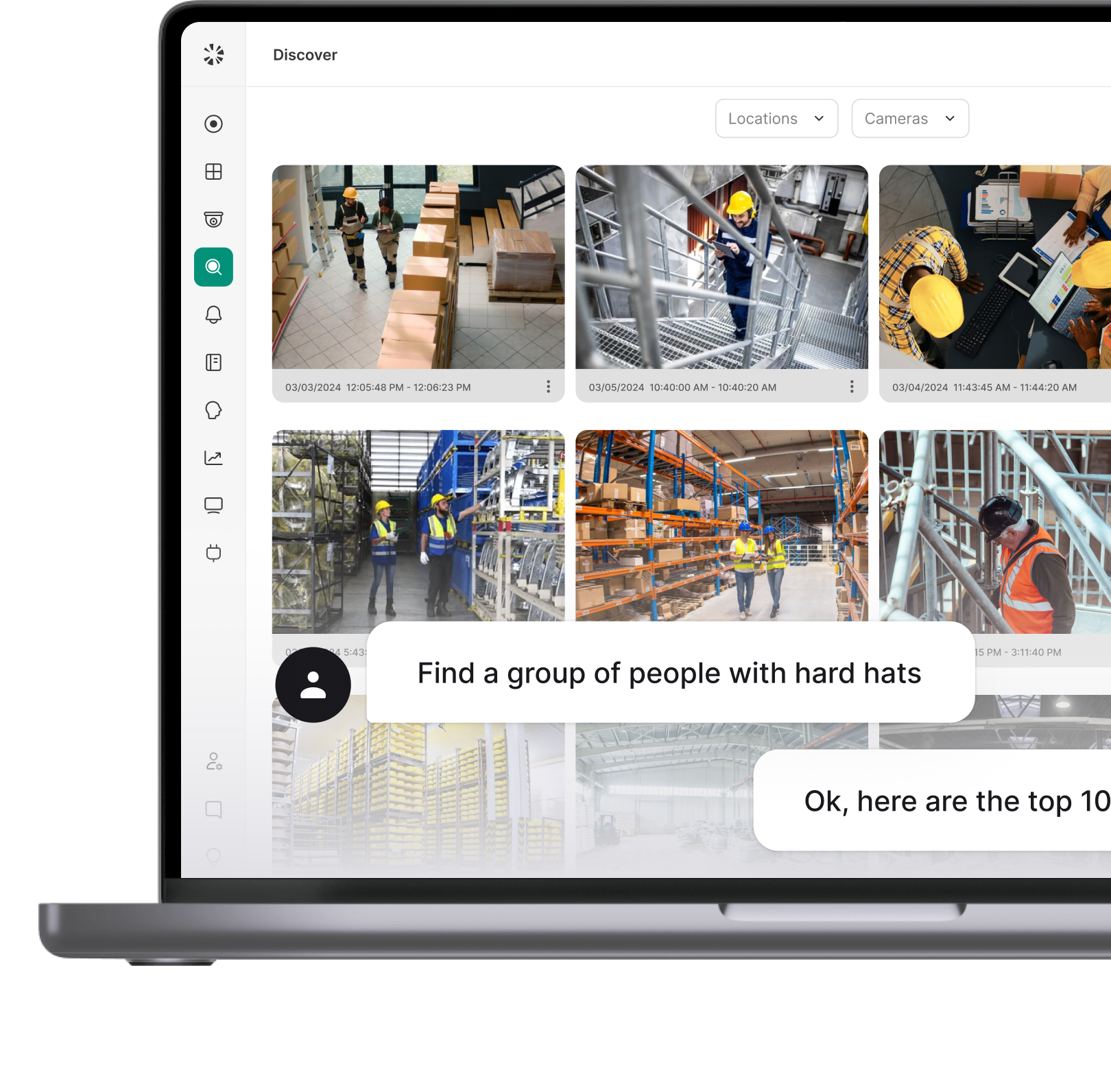
At a system level, Coram operates as a cloud-based security platform. Its video feeds, system settings, and alerts are accessible through a single interface, which allows you to maintain oversight without being tied to individual facilities. As you add new locations, they are incorporated into the same operating environment.
So essentially, it’s ideal if you:
- Manage security across multiple locations
- Rely on central teams for monitoring and oversight
- Expect locations, users, or policies to change over time
Coram also brings together video monitoring and access-related activity within the same operational view. This allows teams to review incidents, investigate events, and manage permissions without switching between disconnected systems. Over time, this structure reduces fragmentation as security operations expand.
From an operational angle, this supports:
- Consistent security practices across locations
- Centralized review of events and incidents
- Easier onboarding of new sites into an existing setup
Since Coram works with existing IP camera infrastructure, it allows organizations to adopt centralized management while continuing to use deployed hardware. This supports gradual modernization without requiring a complete system change at once.
Reolink vs Hikvision vs Coram - Architectural Differences
Although these platforms are often evaluated side by side, they are built on very different assumptions. Reolink is structured around standalone camera setups. Hikvision extends traditional CCTV into larger, hardware-driven deployments.
Coram approaches security as a centrally managed system that spans locations and functions. These underlying design choices shape how each platform behaves once it moves beyond basic monitoring.
To make these differences clearer, this section looks at three core areas that matter most in these evaluations:
Video Surveillance Capabilities Compared Table
At a surface level, all three platforms support video surveillance. However, the differences become clear when you look at how video is managed, accessed, and scaled, rather than just how it is captured. Here’s a table comparing their video surveillance capabilities:
From this comparison, it becomes evident that Reolink optimizes for simplicity at the camera level, Hikvision optimizes for robust, on-premise surveillance environments, and Coram organizes video as part of a broader, centrally managed security system. Eventually, these design choices directly influence how manageable the system remains as surveillance needs expand.
Access Control and System Expansion
The access control you get with a security platform tells how it is designed to grow. Here’s how this compares across all three platforms:
This comparison shows how access control either remains peripheral, grows alongside surveillance infrastructure, or becomes part of a broader security platform. Eventually, this influences how easily the system adapts as your requirements increase and change.
Multi-Site Management and Scalability
If we talk about multi-site management, the differences in all three platforms emerge mainly from how each of them is structured to handle growth:
- Reolink’s design supports incremental expansion at the device level, which works well when security remains localized and limited in scope. But as locations increase, management tends to remain distributed across individual setups.
- Hikvision accommodates larger deployments through its established hardware ecosystem. Multi-site environments can be supported, but expansion typically involves additional on-premise infrastructure and site-specific configuration.
- Coram offers a model where centralized oversight across locations is expected. Its cloud-based structure allows multiple sites to be brought under a single operational view, supporting consistency as organizations expand.
Taken together, these differences tell us how multi-site capability is eventually about how easily systems adapt as complexity increases. Understanding this distinction helps organizations choose a platform that aligns with how they expect their operations to change over time.
Which Platform is the Right Fit?
Finally, when it comes to choosing the right fit, the choice depends on your use case. Each platform reflects a different way of thinking about security, as in who manages it, how often it changes, and how closely it needs to align with broader business operations.
Choose Reolink if You…
- Are securing a single commercial location
- Manage security locally with limited operational complexity
- Do not require centralized oversight across sites
- Expect security requirements to remain largely unchanged
Choose Hikvision if You…
- Operate in hardware-centric environments
- Have on-site teams or integrators managing security infrastructure
- Require on-premise surveillance and structured deployments
- Expand security through site-by-site additions
Choose Coram if You…
- Manage security across multiple or distributed locations
- Rely on centralized teams for visibility and policy control
- Expect security needs to change as the organization grows
- Want consistency across sites without increasing operational overhead
Ultimately, the right fit depends on how security is expected to function within the organization.
Final Verdict: Cameras vs Platforms
Although these platforms are often compared as camera systems, they are not designed at the same level. The distinction lies in whether security is structured around devices or around broader operational needs. Here’s how:
- Reolink: With Reolink, security remains camera-only at its core. The system is built around individual devices, with management and monitoring tied closely to each setup. While this keeps things straightforward, security remains limited to video surveillance, and expansion largely means adding more cameras.
- Hikvision: It extends this model further by building access control and related capabilities around its CCTV infrastructure. Video remains the foundation, and additional security functions are layered on through hardware and on-site configuration.
- Coram: It takes a broader view by treating video, access, monitoring, and oversight as parts of a unified security platform. This allows security to be managed centrally across locations, with systems expanding through configuration and policy rather than additional infrastructure at each site.
Ultimately, the difference comes to how security functions as complexity increases. Camera-centric systems focus on devices and locations. Platform-based approaches focus on consistency, visibility, and control across the organization. If your setup’s security needs are expected to grow and evolve, a unified platform approach provides a clearer path forward.




.png)