%20(43).webp)
Warehouses today look nothing like they did just a few years ago. Smart robots now move products across floors, cameras track every item in real-time, and AI technologies take stock of your inventory before you run out.
This is the result of AI in warehouse management, and it's already transforming warehouse management. If you're managing a warehouse or overseeing logistics operations, you're likely facing rising labour costs, pressure to ship orders faster, inventory accuracy issues, and the constant need to safeguard workers.
Traditional approaches can only take you so far. But with AI technology, you automate repetitive tasks, gain instant visibility into your operations, and make better decisions based on real data. In this article, we'll walk through the practical applications of AI in warehouse management and the benefits you can expect.
What is AI in Warehouse Management?
AI in warehouse management refers to the use of technologies like computer vision, machine learning, and robotics to help warehouse facilities operate with more intelligence and less manual effort.
Instead of relying solely on human judgment or traditional systems, AI analyzes live data from cameras, sensors, and warehouse equipment to guide decisions and automate routine processes.
With computer vision, AI can “see” what’s happening on the warehouse floor, including tracking item movement and monitoring worker behavior. Machine learning helps the system recognize patterns, predict issues before they escalate, and continuously improve accuracy over time.
Robotics then brings these insights to life by automating tasks such as sorting, picking, routing, and security monitoring. Together, these capabilities give warehouses predictive insight into their operations.
Artificial intelligence can identify potential risks early, optimize routes for people and vehicles, and automate security tasks that previously required constant human attention. The result is a smarter, safer, and more efficient warehouse environment that runs on data-backed decision-making.
Core Applications of AI in Warehouse Management
AI in warehouse management is modernizing how companies operate every day. Here's how it's making a real difference across key areas of warehouse management.
Warehouse Automation and Robotics
AI-powered robots are taking over repetitive tasks that used to require manual labor. These smart machines can pick items from shelves, pack up boxes, and move products around your facility without needing human supervision.
Compared to traditional robots that follow set paths, AI robots learn and adapt. They can handle obstacles, select the best routes, and work together with your team safely. When order volume spikes during busy seasons, these systems scale up to handle the load without the delays of hiring and training new staff.
The use of AI in warehouse management means your robots get smarter over time. They learn which items are picked together most often and position themselves to reduce travel time. This cuts down on order fulfillment time and helps you ship products faster.
Real-Time Inventory Visibility
Knowing exactly what you have and where it is becomes simple with AI in warehouse automation. Artificial intelligence systems track every item as it moves through your facility using cameras, sensors, and scanning technology.
These systems spot problems immediately, such as items in the wrong location or stock running low, and alert your team before it affects operations. You get accurate counts without shutting down for physical inventory checks.
AI also predicts when you'll run out of popular items based on sales patterns and seasonal trends. This means you can reorder at the right time, avoiding both stockouts and excess inventory sitting on your shelves.
Worker Safety and Compliance
Artificial intelligence oversees your warehouse floor to keep your team safe. Smart cameras detect hazards like spills, blocked exits, or forklifts operating too close to workers. The system sends instant alerts so you can fix problems before accidents happen.
The technology also monitors whether workers are wearing required safety gear and following proper procedures in high-risk areas. This involves preventing injuries and complying with safety regulations.
AI in warehouses can analyze accident patterns and near-misses to identify areas that need better safety measures. You can see which zones have the most incidents and make targeted improvements.
Vehicle and Dock Management
Artificial intelligence streamlines the chaos at your loading docks. It schedules truck arrivals to prevent long wait times and bottlenecks. Drivers get notified when their dock is ready, and your team knows exactly which trucks are arriving at a specific time.
Inside the warehouse, AI tracks forklifts and other vehicles to optimize traffic flow. It prevents congestion in narrow aisles and suggests better routes for moving goods. This reduces idle time and gets products where they need to be faster.
The technology also monitors vehicle maintenance needs, notifying you before equipment breaks down. This preventive approach keeps your operations running smoothly and extends the life of your expensive machinery.
How Coram's AI Enhances Warehouse Management
AI is becoming non-negotiable for warehouses due to its automation abilities, visibility, improved security, and faster decision-making.
Coram takes this a step further with an AI platform that combines video analytics, access control, safety intelligence, and emergency response into one unified system. Here’s how it enhances day-to-day warehouse management.
Real-Time Visibility Through AI Video Analytics
Coram turns any existing IP camera in your warehouse into a smart, AI-powered sensor. These cameras stream every event into a single dashboard, detecting and alerting warehouse managers on critical events like unauthorized people, unexpected vehicles, or motion anomalies.
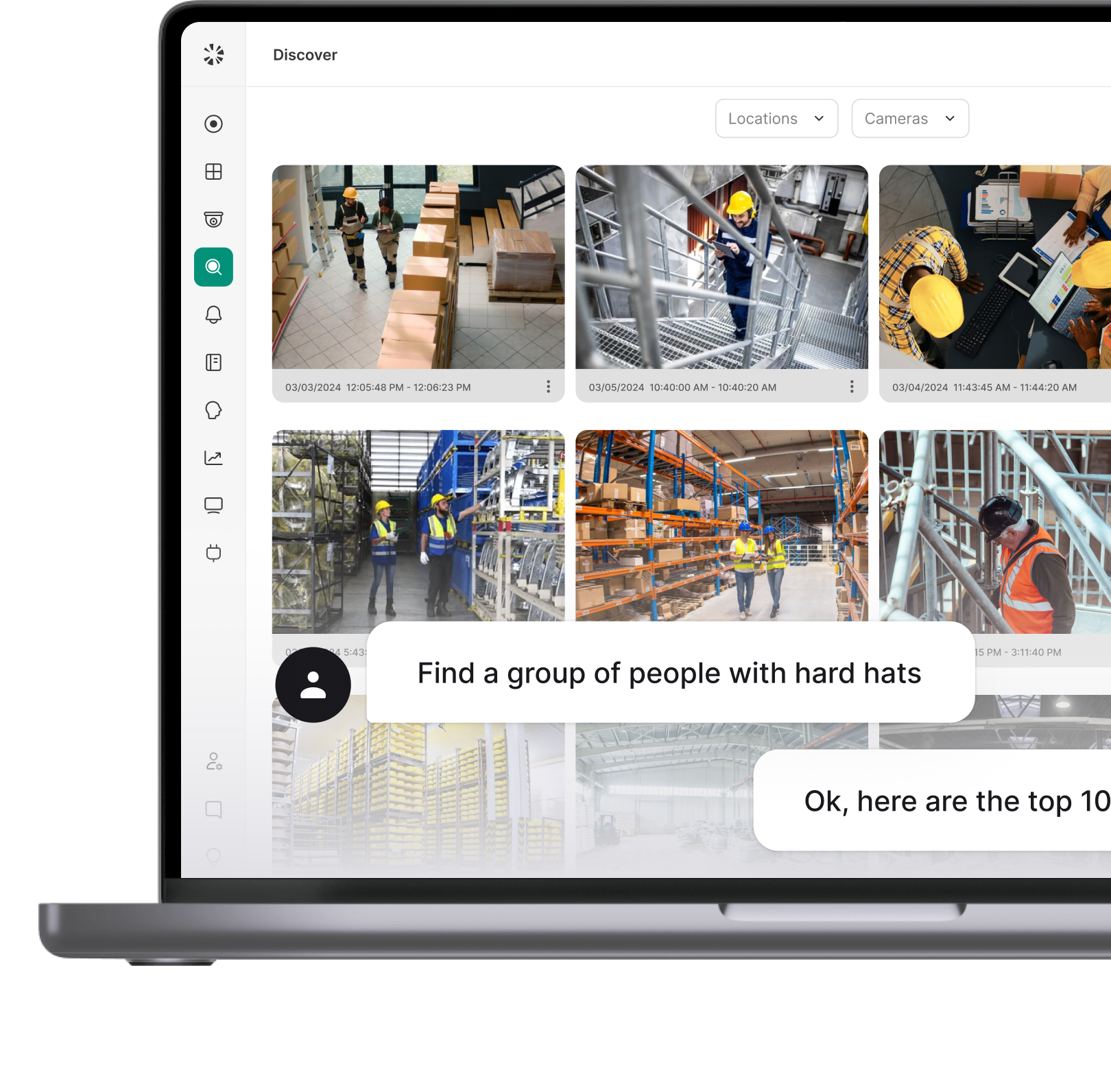
Because Coram stores video in the cloud, warehouse operators can quickly review historical footage from any location. Its “Discover” search feature supports plain-language queries, helping you search clips and individuals with precision. For instance, you could search for something like “girl in blue dress with a brown box” and instantly see the relevant result.
This level of visibility helps security teams respond faster and enables operations leaders to spot inefficiencies or risky behaviors, such as unauthorized access to restricted zones or irregular movement patterns.
Smarter Access Control for People and Vehicles
Coram’s system integrates access control with its AI-powered cameras, giving you full oversight of who and what is entering or exiting your facility. It supports the Wiegand and OSDP readers while also allowing mobile access, so you can manage permissions centrally via the cloud.
AI vision models also detect license plates, enabling automatic license plate recognition (LPR). This makes vehicle tracking easy: you can log every inbound or outbound truck, flag unwanted ones, or generate alerts for known “wanted” plates.
Combined, these capabilities help prevent unauthorized access and better manage logistics traffic. Whether it's delivery trucks, contractor vehicles, or staff cars, Coram ensures you have eyes on every entry point and minimizes security gaps.
Worker Safety and Compliance Monitoring
One of Coram’s most transformative strengths in a warehouse context is its safety-compliance alerting. Artificial intelligence can detect whether workers are wearing required PPE in high-risk areas.
If any staff violates, the system can send real-time alerts to warehouse operators, prompting immediate intervention. This reduces injury risks and ensures regulatory or internal safety standards are met.
Furthermore, the platform supports AI agents that can identify slip-and-fall incidents and firearms. These proactive alerts help with post-incident investigation and facilitate a preventive safety culture.
Streamlined Emergency Response
When something goes wrong (whether a medical incident, security breach, or other emergencies), Coram’s platform makes it easier to coordinate and respond.
The technological solution includes a built-in Emergency Management System (EMS) that lets teams trigger, manage, and resolve crises from a unified interface. It features:
- long-range wireless panic buttons
- real-time messaging
- detection and emergency response through a centralized app
Also, Coram’s January 2025 update introduced interactive, shareable floor plans. This means warehouse owners can share floor plans and activities with first responders or internal stakeholders for faster coordination during crises.
Unified Dashboard for Operations and Security
Coram uses a single, cloud-based dashboard that bridges security and operations. From this unified view, you can monitor live camera feeds, search any video footage, manage access, and handle emergencies. All these can be done without juggling multiple siloed systems.
Analytics on that dashboard provides people-counting, vehicle counters, and other operational metrics. These insights help warehouse managers make informed decisions about staffing, traffic flow, and resource allocation.
Because everything is centralized and accessible via web or mobile, teams across different locations or shifts can stay in sync, respond faster, and maintain a consistent security posture, even across multiple warehouse sites.
Benefits of AI in Warehouse Management
The use of AI in warehouse management delivers measurable improvements that directly impact your business. Here are the key benefits you can expect when implementing AI solutions in your facility.
Smarter Inventory Planning
AI in warehouse systems helps you predict exactly what you'll need and when you'll need it. The technology studies your past sales, seasonal patterns, promotional events, and market changes to forecast demand with impressive accuracy.
This means you can stock the right amount of products; not too much, not too little. You'll spend less money on excess inventory sitting in storage and avoid losing sales because items are out of stock. Your purchasing decisions now become data-driven.
Less Equipment Downtime
AI constantly monitors your forklifts, conveyors, and other warehouse equipment through sensors. It spots small problems before they escalate into costly breakdowns. Instead of fixing machines after they fail, you can schedule maintenance when it's actually needed.
This approach saves money on emergency repairs and keeps your operations running smoothly. Your equipment lasts longer, and you avoid the delays associated with unexpected failures during busy periods.
Faster Order Processing
AI in warehouse automation speeds up how quickly orders get out the door. During busy times like holiday sales, the system automatically focuses on your best-selling items first.
It groups orders that contain products stored near each other and creates the shortest picking routes for your team.
This intelligent coordination reduces congestion in your aisles and helps you ship orders faster. Your customers get their products sooner, and your team accomplishes more in less time.
Robots That Actually Help
Modern AI-powered robots can move around your warehouse safely, find specific items, and handle picking and packing tasks with precision. These aren't the old-style robots; they adapt to changes and work alongside your human team.
The robots handle repetitive tasks so your employees can focus on work that requires human judgment and problem-solving. This combination increases your overall productivity while reducing mistakes in order fulfillment.
Track Inventory
AI tracking systems give you a complete, up-to-the-minute picture of your inventory. Cameras and sensors follow items as they move through your facility, so you always know exactly what you have and where it is.
When something's in the wrong spot or running low, you get an instant alert. With this, you can fix problems immediately instead of discovering them during order fulfillment. This visibility means fewer delays and more accurate inventory counts without manual checking.
Better Use of Your Team
Artificial intelligence analyzes how your workers perform different tasks and helps distribute work more effectively. It can assign the right jobs to the right people based on their skills and experience.
During rush periods, your best pickers get assigned to the most demanding orders, while newer team members handle simpler tasks.
This balanced approach keeps everyone productive without overwhelming anyone. Your team gets more done, and you reduce the bottlenecks that slow everything down.
Safer Work Environment
AI in warehouse operations actively protects your employees. The technology monitors for safety hazards, tracks whether proper procedures are being followed, and can even take over dangerous tasks entirely.
Wearable sensors and smart cameras watch for risky situations and alert supervisors immediately. By automating high-risk jobs, you reduce injuries and create a safer workplace. Fewer accidents mean lower insurance costs and a healthier, more reliable workforce.
Smarter Use of Space
Artificial intelligence figures out the best place to store each product based on how often it's ordered and its size. Fast-moving items go in easy-to-reach spots, and products that are frequently ordered together get stored near each other.
This intelligent organization reduces the distance your team travels when picking orders. You make better use of every square foot in your warehouse, which can delay or eliminate the need for expansion.
Lower Energy Costs
The use of AI in warehouse management extends to your utility bills. AI systems monitor energy usage throughout your facility and identify where you're wasting power. They can adjust lighting, heating, and cooling based on actual needs rather than running everything at full capacity all the time.
These efficiency improvements cut your energy costs and reduce your environmental impact, which matters to both your budget and corporate sustainability goals.
Final Takeaway
AI in warehouse management gives you better control over your inventory, faster order fulfillment, safer working conditions, and lower operational costs. These are competitive advantages that separate efficient operations from those struggling to keep up with customer demands and rising costs.
Warehouses that implement AI in automation today will be one step ahead in the industry. Your competitors are already exploring these technologies, and customer expectations for faster, more accurate fulfillment continue to rise.
Getting started, however, doesn't mean overhauling your entire operation overnight. AI solutions, like Coram's platform, work with your existing infrastructure. This makes adoption more practical and less disruptive than you might expect. To get started, try Coram for free now.




.png)