Renewal time is when you actually look at how your alerting setup has been working. And when you go back through real incidents, a pattern usually emerges: alerts went out after someone noticed the issue and triggered them. That flow works, and AlertMedia handles it well.
But this is also where a more practical question surfaces. Where is the delay actually happening — in sending alerts, or in noticing the incident? If you've seen cases where something wasn't picked up in time, improving notification speed won't fix it. The gap is earlier. Some systems can detect incidents as they happen and trigger alerts automatically. Others are built to communicate faster once a person has already identified the problem.
This guide covers 9 strong AlertMedia alternatives across both approaches. Some are emergency notification platforms built for faster communication; others are physical security platforms built for earlier detection. The breakdown below helps you match the right tool to what you're actually trying to fix.
TL;DR: Best AlertMedia Alternatives in 2026:
- Large global enterprises with travel risk: Everbridge, OnSolve
- Schools and public safety: Rave Mobile Safety, Coram
- Healthcare systems: Everbridge, Alertus
- SMB/mid-market corporate communications: Regroup, DialMyCalls
- Warehouses, multi-site operations, and facilities with physical risk: Coram
- Government, defense, and large organizations: BlackBerry AtHoc
- Manufacturing and large corporate offices: InformaCast (Singlewire)
Why Teams Look for AlertMedia Alternatives
AlertMedia is built to distribute information efficiently, and it does that well. But the system starts working after someone identifies a problem and triggers an alert. Detection and verification still happen outside it, through cameras, security staff, employee reports, or separate monitoring tools. That gap is fine when your biggest risk is communication speed. It becomes a real problem when the delay is happening before anyone hits send.
Two things typically push teams to look elsewhere. First, the detection bottleneck: if incidents aren't being noticed fast enough, a faster notification tool doesn't help. Second, the coordination overhead: many organizations are running detection in one system, verification in another, and alerts through a third. At some point the friction of managing those handoffs outweighs the value of having best-of-breed tools in each category.
Neither problem is a flaw in AlertMedia. They're signals that the organization's requirements have grown past what a notification-only platform is designed to solve.
AlertMedia Alternatives: Quick Comparison
9 Best AlertMedia Competitors in 2026
If you're comparing AlertMedia alternatives, most tools in this space fall into one of two categories: platforms that help you communicate faster once an incident is known, and platforms that close the gap between when something happens and when someone knows about it. The nine options below span both, organized to help you identify what category fits your situation.
1. Everbridge
Everbridge is a mass notification and critical event management platform built for large organizations that need to coordinate emergency communication across regions, time zones, and workforce populations. It serves government, healthcare, finance, and critical infrastructure, sectors where reaching the right people quickly, at scale, is the baseline requirement, not a nice-to-have.
AlertMedia handles notification well. Everbridge goes further, layering in risk intelligence, geo-targeting, and two-way communication designed for organizations managing distributed populations rather than single-site incidents. Its global infrastructure covers 200+ countries with data residency controls, which matters for multinationals with compliance requirements tied to where data lives. That depth comes at a cost: the same governance and configuration requirements that make Everbridge powerful for enterprise deployments also make it slower to adapt and more resource-intensive to run day-to-day than AlertMedia.
Strengths:
- Global infrastructure across 200+ countries with regional data residency controls
- Advanced geo-targeting and audience segmentation for precise, situation-specific messaging
- Two-way communication to confirm recipient status and track response in real time
- Risk intelligence feeds that surface threats before they require manual escalation
Limitations:
- Complex governance and configuration make the platform harder to manage than AlertMedia
- Setup is time-intensive; detailed data mapping and system configuration required upfront
- Overkill for organizations without distributed, international populations to manage
Best for: Large global enterprises managing travel risk or crisis events across multiple countries.
Pricing: Custom quotes based on module selection, user count, contact database size, deployment scope, and contract term.
2. OnSolve (Now Part of Crisis24)
OnSolve, now part of Crisis24, is a mass notification platform used by enterprises and government agencies to manage both emergency and day-to-day operational communication. It's designed to handle a wide range of scenarios, from weather events and IT incidents to large-scale crises, while keeping the right people informed through automated workflows and location-based targeting.
OnSolve's advantage over AlertMedia is automation depth. Its workflow engine triggers alerts based on predefined conditions and routes communication without requiring manual intervention at each step (useful when incidents are complex and span multiple response teams). Its global reach (nearly 30,000 customers including Fortune 100 companies) gives it enterprise credibility. The flip side is a platform that can feel unintuitive and slow to onboard. Organizations that need something fast to deploy and straightforward to operate will likely find OnSolve overbuilt for what they need.
Strengths:
- Automated workflows that trigger and route alerts based on predefined conditions, without manual handoffs
- Location-based alerting for targeted, situation-specific messaging during emergencies
- Handles both crisis communication and day-to-day workforce coordination in one platform
Limitations:
- Navigation and UX draw consistent complaints; steeper learning curve than AlertMedia
- Documentation and feature complexity slow onboarding for new administrators
- Better suited to large enterprise deployments than mid-market teams
Best for: Large global enterprises with travel risk and complex operational communication requirements.
Pricing: Contact team for pricing.
3. Coram
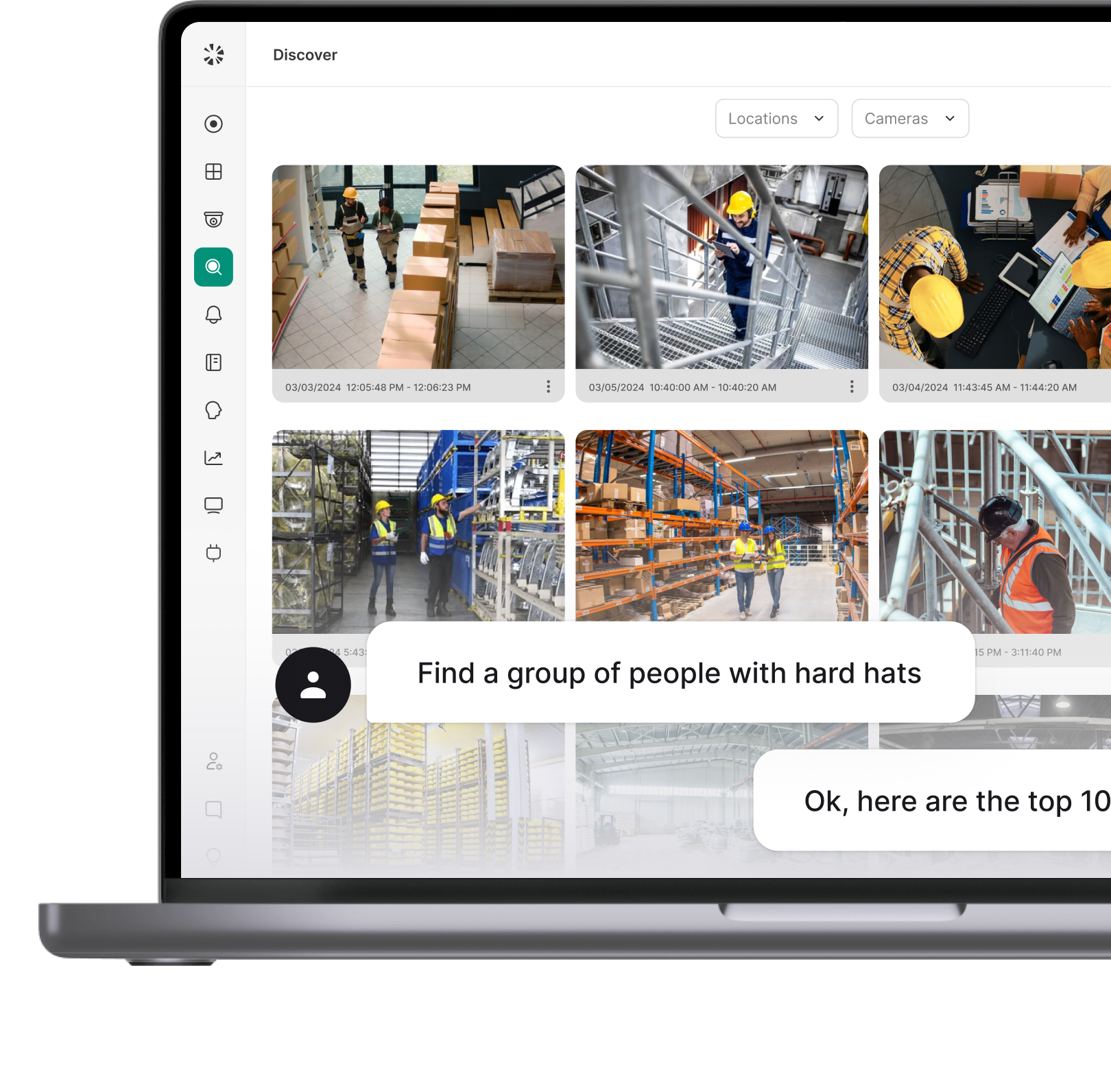
Coram is an AI-native emergency management platform that detects physical security incidents from existing camera feeds and triggers alerts automatically, without requiring a person to notice the incident first. It works with 1,000+ ONVIF-compatible IP camera models, which means organizations can add automated detection and alerting on top of the cameras they already have.
The practical difference from AlertMedia is where the process starts. AlertMedia starts working after someone triggers an alert. Coram identifies the incident directly from camera feeds — an intrusion, a weapon, a slip-and-fall — and triggers the alert without human initiation. When an event is detected, it embeds a live video clip into the alert and opens a dedicated response channel, so the team receiving the notification has immediate visual context rather than a text description. It can bypass Do Not Disturb on mobile devices and escalate to 911 through pre-configured emergency workflows. For environments where the delay is happening before alerts are sent, that's a meaningful structural difference from any notification-only platform.
The limitation is fit. Coram is purpose-built for physical locations with existing camera infrastructure. If your alerting needs are primarily about reaching a distributed workforce — remote employees, travel risk, weather events — it's the wrong tool. AlertMedia remains the better fit for those scenarios.
Strengths:
- Detects incidents from existing camera feeds and triggers alerts automatically, no manual initiation required
- Embeds live video clips into alerts so responders have immediate visual context
- Bypasses Do Not Disturb and supports 911 escalation through pre-configured workflows
- Works with 1,000+ ONVIF-compatible IP camera models; no hardware replacement required
- SOC 2 Type II and HIPAA certified
- G2: 4.9/5 rating, 9.5/10 ease of use, 9.6/10 ease of administration
Limitations:
- Requires existing camera infrastructure; not a fit for distributed workforce or travel risk scenarios
- Complex workflow automation requires upfront configuration and a structured rollout
- Newer platform than AlertMedia; shorter track record may affect enterprise procurement decisions
Best for: Schools, campuses, warehouses, and multi-site operations that already have cameras and want detection-driven alerting without replacing existing infrastructure.
Pricing: Quote-based.
4. Rave Mobile Safety
Rave Mobile Safety is a mass notification and critical communication platform built for schools, universities, and public safety organizations. It enables administrators to send alerts across a wide range of channels: IPAWS, public address systems, social media, digital signage, and SMS, while keeping contact databases current through automatic syncs with HR and student information systems.
Rave's edge over AlertMedia is vertical depth in education and public safety. It integrates with the specific data systems those organizations run (student information systems, safety databases) and includes features like anonymous tip reporting and geo-targeted polling built for the campus security workflow. The limitation is usability: template creation and delivery method configuration are consistently flagged as friction points, and non-technical staff often find the configuration layer adds overhead that AlertMedia doesn't require.
Strengths:
- Automatic contact database sync with HR, SIS, and safety management systems
- Broad channel support: IPAWS, public address systems, social media, digital signage, and SMS
- Anonymous tip reporting and geo-targeted polling built for campus security workflows
- Available in US, UK, and Canada
Limitations:
- Interface and template creation less intuitive than AlertMedia
- Delivery method configuration can be confusing without technical familiarity
Best for: Schools and public safety organizations that need deep integration with education-specific data systems.
Pricing: Quote-based SaaS.
5. Alertus
Alertus is a mass notification platform focused on physical coverage within a facility, serving campuses, hospitals, and enterprise buildings where simultaneous, building-wide alerting is the priority. It unifies desktops, IP speakers, digital signage, and fire panels into a single platform, activating them all at once through one-touch alert initiation.
AlertMedia is built to reach people on their phones across distributed locations. Alertus solves a different problem: getting an alert to everyone inside a specific building simultaneously, through every channel available at once. Healthcare facilities use it because layered, room-level coverage is operationally necessary during a lockdown or evacuation. A text to a phone is not enough when staff may be away from their devices. The limitation is scope. Alertus is a within-facility tool; multi-site coordination and mobile-first workflows are not where it's designed to perform. Integration and software reliability have also been flagged by users as areas that affect confidence in the system.
Strengths:
- Unifies desktops, IP speakers, digital signage, and fire panels into one platform
- One-touch activation triggers alerts across the entire connected ecosystem simultaneously
- Multi-layered notification combining voice, visual signals, text, and graphics
- Present in 2,500+ organizations across 40+ countries
Limitations:
- Primarily a within-facility tool; not designed for multi-site or mobile-first coordination
- Integration and software reliability issues reported by users
- Interface is not intuitive; alert setup requires managing multiple interconnected components
Best for: Healthcare facilities and campuses that need simultaneous, multi-channel in-building alerting.
Pricing: Request a demo for the quote.
6. Regroup Mass Notification
Regroup is a mass notification platform for organizations that need a straightforward way to send alerts across teams without complex configuration. It covers SMS, email, desktop alerts, and IPAWS, with built-in geofencing and automated weather alerts for location-based triggers, and includes tools like polling and survey messaging for broader communication scenarios.
Regroup trades depth for simplicity. Where AlertMedia is built for complex, multi-step incident response workflows, Regroup is designed to reduce the barrier to sending an alert. For mid-market organizations with modest notification needs and limited IT bandwidth, that's often the right tradeoff. The gap shows up in feature maturity: messaging channel control and the mobile app experience draw recurring complaints, and initial setup can be more cumbersome than the platform's positioning would suggest.
Strengths:
- Multi-channel support: SMS, email, desktop alerts, and IPAWS
- Built-in geofencing and automated weather alerts for location-based triggers
- Polling, surveys, and unlimited contact groups and templates
- Available in US, Canada, and India
Limitations:
- Messaging channel control and mobile app experience consistently flagged as weak points
- Initial setup more complex than the platform's simple positioning implies
- Less feature depth than AlertMedia for organizations with multi-step incident workflows
Best for: SMB and mid-market corporate communications teams that need reliable multi-channel notification without a heavy configuration burden.
Pricing: Request a quote.
7. DialMyCalls
DialMyCalls is a mass notification platform used by more than 40,000 organizations across the US and Canada, built around one thing: sending calls, texts, and emails fast. It's been running automated outbound calling systems for over 10 years, with a fully web-based interface that requires no hardware. Organizations like Kellogg, Goodwill, and YMCA use it for straightforward, high-volume broadcast communication.
Compared to AlertMedia, DialMyCalls wins on price and simplicity. Plans start at $7.49/month, and the workflow is basic by design: upload contacts, write a message, send. No incident management, no workflow automation, no integration ecosystem to configure. For a 50-person organization that needs to tell everyone about a snow day, that's exactly right. Reliability is the caveat. Message delivery issues and unclear failure reporting are consistent user complaints, and the initial number verification process creates friction for new users.
Strengths:
- High-volume broadcasting: thousands of calls or texts per minute
- Fully web-based with no hardware required; quick to deploy
- Supports voice, SMS, and email with simple recording and sending workflows
- Rated 4.8/5 from 1,500+ reviews across Capterra, G2, and similar platforms
Limitations:
- Frequent message delivery issues and lack of clarity around failed texts
- Initial setup and number verification confusing for new users
- Minimal integrations; not designed for multi-step incident workflows
Best for: Small organizations with straightforward, high-volume broadcast needs and limited budget.
Pricing: Starting at $7.49/month (contact-based plan); the most commonly used plan is $9.99/month with 150 credits.
8. BlackBerry AtHoc (Formerly Send Word Now)
BlackBerry AtHoc is a critical event management platform built for government agencies, defense organizations, and large enterprises where alert reliability, audit trails, and structured incident workflows are non-negotiable. It consolidates alerts, personnel status, maps, and system data into a single operational view and runs incidents through predefined, structured workflows rather than relying on manual coordination at each step.
The distinction from AlertMedia is what the platform is optimized for. AlertMedia is built to be fast and accessible. AtHoc is built to be auditable and resilient specifically under the conditions where most systems fail: large-scale, high-stakes incidents where every alert needs to be logged, tied to a user, and tracked through delivery and acknowledgment. It integrates with Microsoft Teams, ServiceNow, and CylanceGUARD, and is built for environments that need to demonstrate compliance with standards like FedRAMP, CJIS, or FISMA. More setup investment is required than AlertMedia, and the price reflects its enterprise-grade capabilities.
Strengths:
- Federated situational awareness: alerts, personnel status, maps, and system data in one operational view
- Structured workflows guide detection, notification, coordination, and recovery at each step
- Built for mission-scale resilience; maintains performance during large-scale, high-demand incidents
- FedRAMP, CJIS, and FISMA compliant; integrates with Microsoft Teams, ServiceNow, and CylanceGUARD
Limitations:
- Setup and configuration complex, especially for large-scale deployments
- Higher cost than AlertMedia and most alternatives on this list
- Designed for organizations with dedicated security and IT teams to manage it
Best for: Government agencies, defense organizations, and large enterprises with mission-critical compliance and audit requirements.
Pricing: Custom quote based on organization size, contact volume, and required features.
9. InformaCast (Singlewire)
InformaCast is a unified notification platform used by more than 5,000 customers across 81 countries, supporting 1.3 million users with 99.99% uptime. It integrates with existing on-site infrastructure: IP phones, overhead speakers, desktops, digital signage, and mobile devices, delivering audio, text, and visual alerts simultaneously through a single activation.
The difference from AlertMedia is physical reach. AlertMedia is built for reaching people on phones and computers. InformaCast is built for reaching people wherever they are in a building, including environments where mobile coverage is unreliable or where overhead audio is operationally necessary (manufacturing floors, warehouses, large office complexes). Its Wearable Alert Badge adds a wireless panic button with room-level location accuracy, a capability AlertMedia doesn't offer. Advanced features can be complex for smaller teams and the interface benefits from structured onboarding, but for organizations with significant on-premises infrastructure, InformaCast integrates with systems AlertMedia simply doesn't reach.
Strengths:
- Unified audio, text, and visual alerts across IP phones, speakers, desktops, signage, and mobile from one platform
- Wearable Alert Badge: wireless panic button with room-level location accuracy and silent alerting
- Supports full incident lifecycle: alerting, live coordination, and post-incident reporting in one system
- 5,000+ customers across 81 countries; 99.99% uptime
Limitations:
- Interface and setup require training; not designed for non-technical administrators
- Advanced features can feel complex for smaller teams with simpler needs
- Primarily on-premises; less suited to distributed, mobile-first organizations than AlertMedia
Best for: Manufacturing facilities and large corporate offices with significant on-premises device infrastructure.
Pricing: Request a demo for a custom quote.
Matching an AlertMedia Alternative to Your Situation
Most tools in this space look similar until you map them against your actual incident flow. The right choice depends less on feature lists and more on where things break in your current setup (specifically, whether your problem starts before alerts are sent or after).
"We're a School District and Want One Platform for Panic Buttons, Mass Alerts, and Cameras."
Rave Mobile Safety is the right starting point if your alerting process already works and the challenge is reaching people faster across channels. It handles multi-channel communication quickly and integrates with the student and staff data systems schools already run.
If your cameras are already in place and you want the system to detect incidents before anyone has to notice and act, Coram connects detection, alerting, and response into a single flow. A number of school districts use it specifically because it removes the dependency on someone catching an incident in real time.
"We're a Fortune 500 with Global Offices and Need Travel Risk Coverage."
Everbridge and OnSolve are the right fit here. Both combine global threat intelligence, location-based targeting, and large-scale communication infrastructure. If your operations span multiple countries and you need consistent coverage without adding regional coordination overhead, either platform handles that in a way AlertMedia isn't designed to.
"We're a 50-Person Company That Just Needs to Reach Everyone Fast."
DialMyCalls or Regroup are the right tools for this. Upload contacts, write a message, send across SMS, calls, or email. No workflow configuration, no complex role management, no integration overhead. For a small team with straightforward notification needs, simpler is better, and the cost difference is significant.
"We Run a Warehouse or Multi-Site Operation and Already Have Cameras."
Coram is the right AlertMedia alternative here. Most warehouse and multi-site camera setups are used for reviewing incidents after they happen, not catching them as they occur. That gap, between when something happens and when someone notices, is where a notification tool alone won't help. Coram uses existing camera feeds to detect events and trigger alerts automatically, which makes alerting consistent across all sites rather than dependent on who's watching which feed at any given moment.
"We're a Hospital or Healthcare System."
Alertus is the right fit for in-facility coverage: desktops, speakers, signage, and fire panels activated simultaneously. For broader coordination across multiple facilities or external communication, Everbridge scales to that. If you want to connect physical security (cameras, access control) with alerting and incident response in one system, Coram handles that integration.
"We Need Something Government-Grade or Defense-Compliant."
BlackBerry AtHoc is the standard choice for FedRAMP, CJIS, or FISMA environments. It's built around controlled access, predefined workflows, and the audit trail requirements those standards demand, with every alert logged, tied to a user, with delivery and acknowledgment tracked. Everbridge serves this space as well when the requirement extends across multiple regions. Start by mapping your actual compliance obligations before evaluating either platform.
AlertMedia vs. Coram: When Each Is the Right Call
Both platforms help during emergencies. They solve different parts of the process, and the right call depends on where your current setup breaks.
Choose AlertMedia if your priority is fast, reliable communication after an incident is identified. It's built to reach people quickly once something is known, across multiple channels, with response tracking and delivery confirmation. This works best when you already have a detection or reporting process in place (security staff, monitoring systems, employee reports), and when incidents are distributed across geography: travel risk, weather events, workforce communication. The core risk these organizations face is not catching incidents too slowly. It's communicating about them too slowly.
Choose Coram if the delay is happening before alerts are sent. Coram changes where the process starts. It detects incidents from existing camera feeds (intrusions, weapons, safety violations) and triggers alerts automatically, with live video embedded in the notification. That eliminates the window between when something happens and when someone has to notice it and decide it's worth escalating. It's the right fit for physical locations with existing camera infrastructure (schools, warehouses, campuses, healthcare facilities) where the gap isn't communication speed. It's awareness.
Choosing the Right AlertMedia Alternative
Look at your last three incidents. Where did things slow down — in getting the alert out, or in recognizing something was worth alerting on? That answer tells you more than any feature comparison. If the delay was downstream, in communication, AlertMedia and most of the platforms here will help. If the delay was upstream, before anyone knew what was happening, the tool you need starts at detection, not notification. Pick accordingly.




.png)