.webp)
According to the K-12 School Shooting Database, there have been 233 shootings in 2025. These incidents have pushed schools to rethink how they approach safety in emergencies and everyday operations. For many administrators, cameras offer a practical way to keep an eye on large campuses, manage incidents more efficiently, and create a sense of accountability.
However, this shift brings a different set of questions. When students are constantly being monitored, where do we draw the line between safety and privacy? And more importantly, does simply installing cameras actually solve the problem, or just create a perception of control?
This is why the discussion needs a closer look at the extent to which cameras in schools are effective for surveillance. This article looks at the current state of adoption, best practices to follow, and what role AI plays here.
The Current State of Camera Adoption in Schools
The use of cameras in schools has become a widely adopted practice across education systems. In fact, recent data shows that over 90% of public schools now use some form of video surveillance, which is a sharp rise from around 61% just a decade ago. This growth shows how cameras have now become a part of the default setup in most schools.
So, what’s driving his increase?
It’s a mix of pressure and practicality. Schools are dealing with increasing safety expectations, both from parents and governing bodies, while also trying to create more accountable environments. At the same time, technology has become easier to deploy and manage. Falling costs and simpler systems have made it feasible for even large campuses to install and expand surveillance infrastructure.
And where are cameras typically used?
In most schools, cameras are placed where they can offer maximum coverage without crossing obvious privacy boundaries. Some of these common areas include entrances, exits, hallways, and shared spaces like playgrounds and parking zones.
Alongside this, the technology itself is evolving. Schools are gradually moving beyond basic CCTV setups toward more advanced systems, including AI-based monitoring and integrated security tools.
Do Security Cameras in Schools Actually Work?
Security cameras do contribute to school safety, but not in the way they are often assumed to. Their actual contribution is in preventing incidents outright and improving how schools understand and respond to situations. Here’s how this plays out:
1. Bringing a basic level of behavioral accountability
Students are generally more cautious in hallways, entrances, or common areas where visibility is high. This doesn’t eliminate issues, but it can reduce the frequency of smaller incidents like casual bullying, conflicts, or property damage simply because actions are more likely to be noticed and traced back.
2. They improve situational awareness during incidents
When an incident happens, the biggest challenge is the lack of clarity. Cameras help fill that gap by showing what is happening, where it started, and how it is progressing. This doesn’t prevent the incident, but it allows schools to respond with more context and less guesswork.
3. They create a reliable record of events
One of the most consistent benefits of cameras is what happens after an incident. Here, recorded footage introduces a level of objectivity by:
- Verifying what actually happened
- Reducing ambiguity in disciplinary actions
- Addressing complaints with more confidence
In many cases, this is where cameras deliver their most tangible value by clarifying events.
So, where do cameras fall short?
1. They don’t actively prevent incidents
Cameras are often perceived as a preventive tool, but in practice, they function more as a recording system. Unless someone is actively monitoring the feed, there is no immediate intervention. This creates a delay because by the time footage is reviewed, the incident has already occurred.
2. Their effectiveness depends heavily on human monitoring
A camera system is only as effective as the attention it receives. In most schools, continuous monitoring is difficult due to limited staff and competing responsibilities. As a result:
- Feeds are checked periodically, not continuously
- Critical moments may go unnoticed in real time
- Response often begins after the situation has escalated
This reliance on manual monitoring creates gaps, especially in larger campuses where coverage is wide but attention is limited.
3. They have limited influence on serious or planned threats
For more severe incidents, especially those that are intentional or premeditated, the presence of cameras alone is unlikely to act as a deterrent. In such cases, cameras become a tool for documentation rather than prevention. This highlights an important limitation that they can support a safety strategy, but they cannot define it.
So, do cameras in schools actually work?
Yes, but only within a limited scope. They improve visibility, support response, and bring clarity after incidents. But on their own, they don’t create a fully secure environment.
Privacy Concerns: Student, Staff, and Legal Perspectives
When it comes to surveillance at schools, the same systems that improve visibility also introduce continuous monitoring into spaces meant for learning and interaction. This makes privacy less of a side concern and more of a central part of the discussion.
Student Perspectives
Here are a few aspects to consider from the students’ perspective:
1. Continuous Monitoring and Its Impact on Behavior
For students, school is not just a controlled environment but also a space where they interact, express themselves, and develop socially. Constant surveillance can subtly influence this behavior because when students know they are always being recorded, it may lead to:
- More cautious interactions
- Reduced openness in discussions
- A sense of being constantly observed rather than guided
While this may improve discipline in some cases, it also raises the question of whether excessive monitoring changes the nature of the learning environment itself or not.
2. Limited Awareness and Transparency
In many cases, students and even parents are not fully informed about how surveillance systems operate. There is often limited clarity on:
- What exactly is being recorded
- How long footage is stored
- Who has access to it
This lack of transparency creates discomfort, not necessarily because cameras exist, but because their usage is not clearly communicated.
3. Data Collection and Long-Term Risks
In schools, video footage also works as a form of personal data. It captures identities, behavior patterns, and interactions over time. At the same time, this brings up important concerns:
- How securely is this data stored?
- Can it be accessed or shared beyond the school?
- Does it become part of a student’s long-term record?
Without clear policies, it can lead to potential misuse or unintended exposure.
Staff Concerns
From the staff’s perspective, the following concerns may arise:
1. Constant Observation in Professional Spaces
While cameras are often justified for student safety, they also monitor teachers and staff throughout the day. In some cases, especially where cameras extend into classrooms, this can feel like continuous performance tracking rather than security. This may lead to:
- Increased pressure during teaching
- Hesitation in experimenting with teaching methods
- A shift from a comfortable workspace to a monitored one
2. Impact on Trust and Work Culture
Over-surveillance can also unintentionally affect workplace dynamics. When monitoring becomes excessive, it may signal a lack of trust rather than support. Of course, this doesn’t mean cameras shouldn’t exist, but it highlights the need to define their role clearly, so they support safety without affecting autonomy.
Legal and Policy Perspective
When it comes to cameras in schools, there are laws and regulations that apply, but none of them were designed specifically for school surveillance. Instead, schools operate within a mix of data protection laws, education policies, and internal guidelines, which is why things often feel unclear in practice. Here are some key laws that indirectly govern school surveillance:
- In the U.S., the Family Educational Rights and Privacy Act (FERPA) protects student education records.
- In the European context, the General Data Protection Regulation (GDPR) treats video recordings as personal data if individuals can be identified.
- In India, the Digital Personal Data Protection Act, 2023, introduces rules around consent, purpose limitation, and data security.
So, yes. The laws exist, but they regulate data, not specifically camera usage in schools.
Best Practices for Balancing Safety and Privacy
Once cameras are part of the system, it often becomes a challenge to use them responsibly. This balance usually comes down to a few practical decisions that schools can actively control.
1. Be Clear and Transparent About Surveillance
A major source of discomfort around cameras is not their presence, but the lack of clarity around their use. When students and staff don’t know what is being recorded, how long it is stored, or who can access it, surveillance starts to feel uncontrolled, even if the intent is safety. To avoid this, schools should clearly communicate:
- The purpose of installing cameras (safety, incident review)
- The exact areas under surveillance
- Who is authorized to access footage, and under what conditions
This way, it can lead to reduced suspicion and build a sense that surveillance is controlled, not arbitrary.
2. Limit Surveillance to Purpose-Driven Areas
Trying to cover every corner of a school with cameras may seem like a strong safety measure, but it often creates more concerns than benefits. In most cases, cameras are most effective in:
- Entry and exit points (to track movement in and out)
- Hallways and corridors (where interactions are frequent)
- Shared spaces like playgrounds or parking areas
For instance, a school might install cameras at all entrances and corridors to monitor movement and manage incidents, but intentionally avoid placing them inside classrooms. This ensures that safety is maintained in high-risk or high-traffic areas, without turning everyday learning spaces into monitored zones.
3. Define Clear Access and Data Retention Policies
When it comes to capturing footage, the bigger question is what happens after it is recorded. Without clear rules, video data can easily be over-accessed, stored longer than necessary, or used beyond its original purpose. This is where structured policies become critical, where you should ideally define:
- Who is allowed to access footage?
- In what situations is access permitted?
- How long is footage retained before automatic deletion?
This approach reduces misuse and ensures that surveillance remains purpose-driven.
4. Focus on Structured Monitoring, Not Constant Observation
There is a common assumption that more monitoring equals better safety. In reality, trying to watch every camera feed all the time is neither practical nor effective. It often leads to fatigue, missed events, and inefficient use of staff time. Instead, it is better to have a structured monitoring, where attention is focused on the right moments and areas. This can include:
- Prioritizing live monitoring during peak activity times (arrival, dismissal, breaks)
- Assigning responsibility for specific zones instead of all feeds at once
- Using footage primarily for quick verification rather than continuous observation
During school entry hours, staff may actively monitor entrance cameras to manage crowd flow and identify any immediate concerns. Outside of these periods, feeds are not constantly watched but are checked when needed or reviewed if an issue is reported. In other words, the goal should always be to ensure that the system supports timely action when it actually matters.
The Role of AI in Modern School Camera Systems
If we talk about the role of AI in modern school camera systems, the difference can be better understood in contrast with the old setups. Traditional cameras have always provided visibility, but they rely heavily on someone watching or reviewing footage later. AI changed this scenario by reducing that dependency and making the system more responsive in real time. Here’s how:
1. Finding Footage Without Guessing the Time
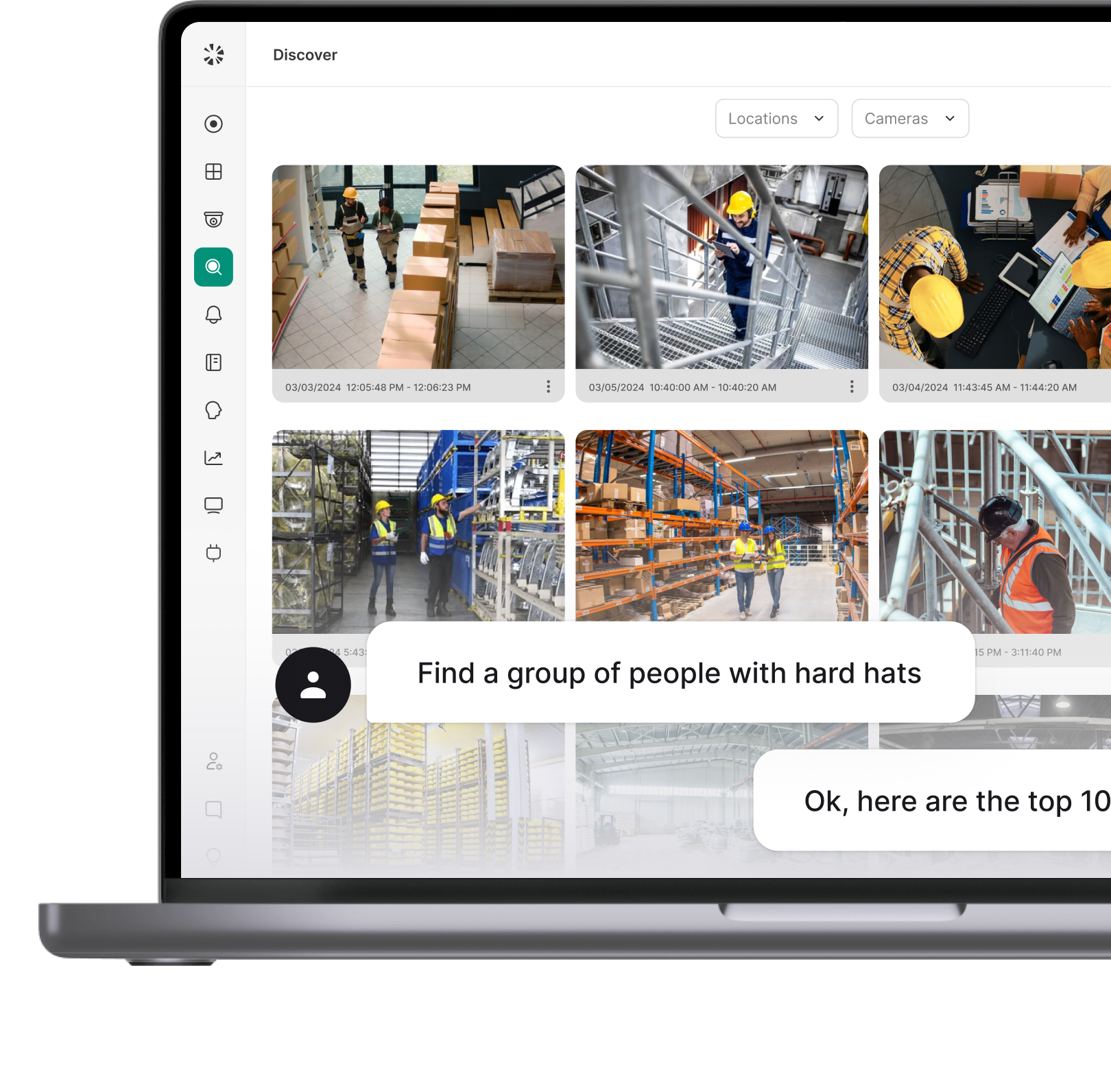
In most camera systems, footage is stored by time. So the first step is always guessing when something happened, and then scrolling through recordings to find it. Coram’s AI-enabled CCTV cameras remove this dependency on time and allow you to search based on what happened in the scene. This lets you locate the right moment without trial and error.
2. Understanding Incidents Without Switching Between Cameras
Once footage is found, the next problem is understanding it fully. In schools, incidents often move across spaces, so one camera view is rarely enough. AI helps organize related footage across cameras, so the sequence becomes easier to follow. This reduces the effort needed to piece together events.
3. Not Missing What Needs Attention
Another gap is that most systems depend on someone actively watching screens. In reality, that doesn’t happen consistently. Here, AI helps by flagging activity that needs attention, which ensures that important moments are not going unnoticed due to limited monitoring. As a result, the staff don’t have to watch everything and would only respond when something is highlighted.
4. Handling Incidents Without Multiple Steps
Even after identifying an issue, there’s still work involved in finding clips, exporting them, sharing them, and documenting what happened. AI-based systems bring these steps into one place, which ensures that there are no disconnected steps in handling incidents. This ensures that the process becomes simpler and more consistent.
Conclusion
School surveillance is a sensitive space as it involves students, educators, and environments that are meant to feel safe, not controlled. That’s why cameras in schools need to be approached with balance and sensibility, not just as a security measure but as something that directly affects daily experience.
As we’ve seen, cameras do add value, but their effectiveness depends on how they are used, how easily footage can be accessed, how clearly situations can be understood, and how responsibly data is handled. This is where Coram AI reduces the effort to find footage, improving clarity across cameras and helping you respond faster without any complexity.
Ultimately, this helps in building systems where both are considered together and applied with intent.




.png)