Axis Communications makes excellent cameras. The problem most teams run into isn't quality. It's that pricing gets complicated fast. What starts as a per-camera cost quickly expands: storage duration, resolution, feature requirements, and licensing all factor in differently, and each combination produces a different number. Planning a real deployment across 20, 50, or 200 cameras becomes a spreadsheet exercise rather than a straightforward budget conversation.
That's the most common reason teams search for Axis Communications alternatives. They want clearer pricing and a setup that's easier to plan and scale. This guide covers 15 options across two categories. The first is cloud and AI platforms: systems that work with your existing cameras (including Axis cameras) and add capabilities that Axis hardware alone doesn't provide. The second is hardware alternatives: camera manufacturers that compete directly with Axis on image quality, compliance, and price. Knowing which category you're actually shopping in is the most important decision before evaluating any specific vendor.
Why Teams Look for Axis Alternatives
Axis sits at the premium end of the camera hardware market. The hardware is well-built, the cybersecurity posture is strong, and the ecosystem is wide. What it doesn't solve is the software and intelligence layer. An Axis camera is a data source. What you do with that data, how you search it, how you get alerted, how you manage it across sites, requires a separate VMS, separate analytics, and separate management tools. For organizations running multiple sites with lean IT teams, that stack creates ongoing overhead that the cameras themselves don't justify.
Price is the other pressure point. Per-camera costs are only the starting number. Add storage, retention, analytics licenses, and VMS costs and the total grows in ways that aren't always clear upfront. Teams that have been through a full Axis deployment cycle once tend to look harder at alternatives the second time.
Axis Alternatives: Quick Comparison
Cloud and AI Platform Alternatives
These are not camera hardware replacements. They're platforms that work with existing cameras (including Axis cameras) and add capabilities the hardware alone doesn't provide: cloud management, AI detection, unified access control, and emergency management. If your problem isn't the cameras themselves but what you're doing with them, this is the right category to evaluate first.
1. Coram
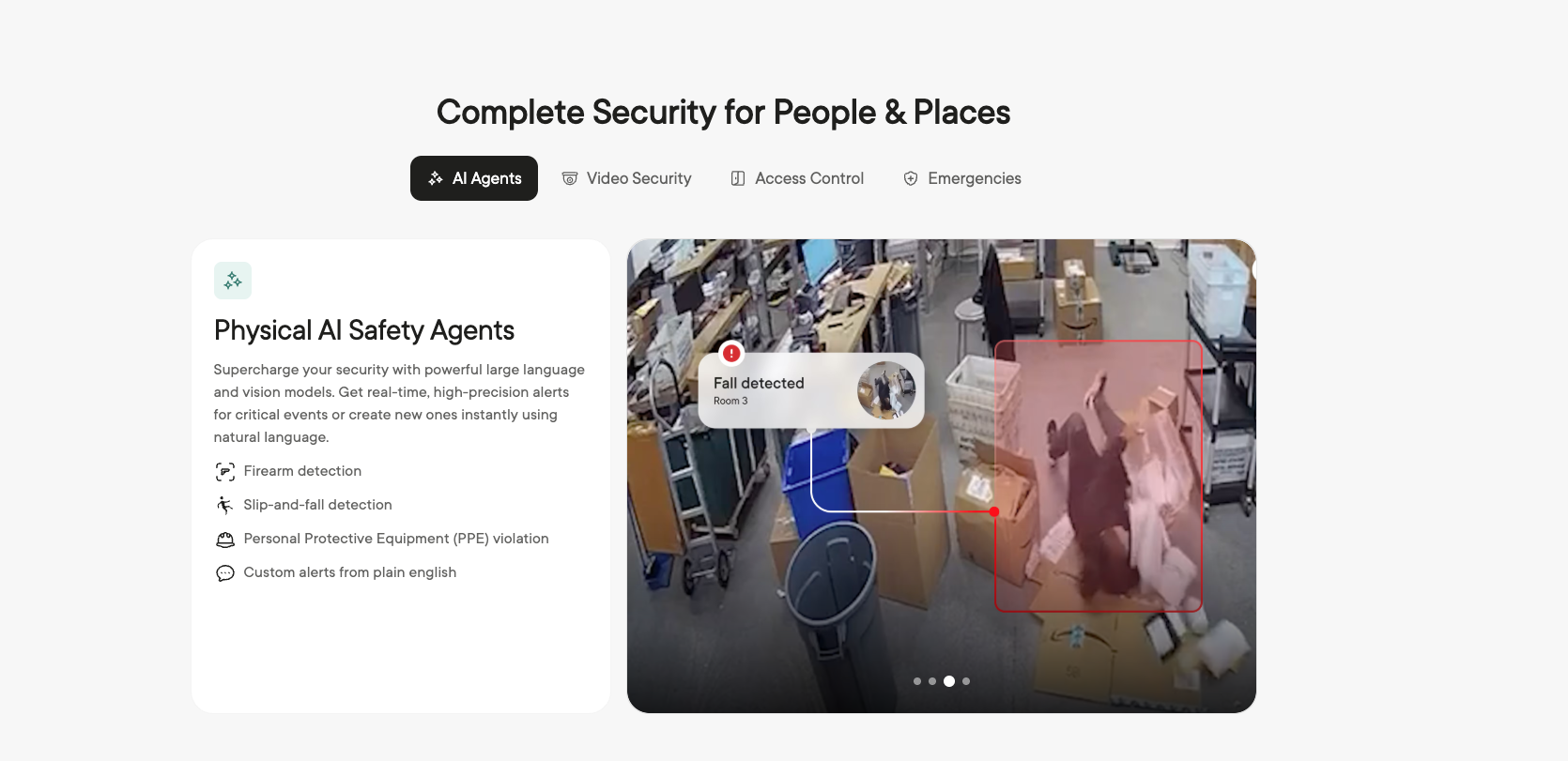
Coram is an AI-native physical security platform that connects to any existing IP camera and unifies video surveillance, AI detection, access control, and emergency management in one dashboard. It works with 1,000+ ONVIF-compatible camera models (including Axis cameras) so organizations add cloud management and AI capabilities on top of what they already own. No hardware replacement required.
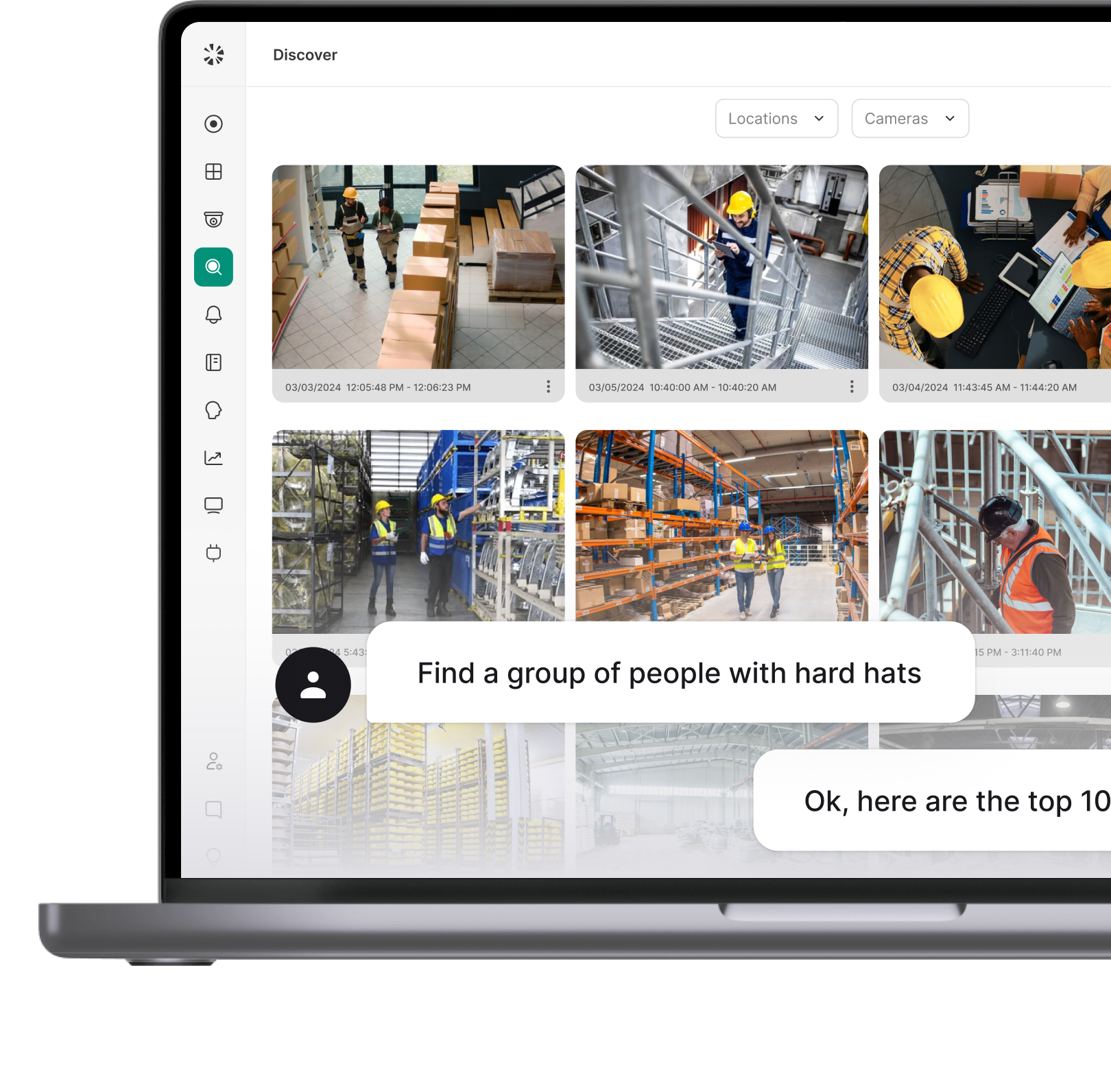
This is the most important distinction for an Axis customer to understand. Axis cameras are hardware. They produce video. Managing that video, searching it, getting alerted when something happens, and coordinating a response all require additional tools, typically a VMS like Milestone or Genetec, plus separate analytics licenses, plus a separate alerting system. Coram replaces that entire stack and works with the Axis cameras already installed. Organizations with 50 or 200 Axis cameras can add real-time AI detection, natural language video search, and unified access control without replacing a single camera.
The AI detection is built natively: real-time alerts for firearms, intrusions, slip-and-falls, PPE violations, and custom events defined in plain English. When an event is detected, Coram embeds a live video clip into the alert and opens a dedicated response channel. SOC 2 Type II and HIPAA certified. G2 rating of 4.9/5, with 9.5/10 ease of use.
The fit limitation is specific. Coram requires existing IP camera infrastructure to add value. Organizations starting from scratch with no cameras may find a hardware-plus-VMS package from Hanwha or Bosch more straightforward as an initial setup.
Best for: Multi-site organizations with existing Axis (or any IP) cameras that want to add AI detection, unified management, and emergency response without replacing hardware.
Strengths:
- Works with 1,000+ ONVIF-compatible IP camera models including Axis; no hardware replacement required
- AI-native detection: firearms, intrusions, slip-and-falls, PPE violations, and plain-English custom alerts
- Natural language video search across all camera feeds
- Embeds live video clips into alerts; opens dedicated response channels automatically
- Unified platform: video surveillance, access control, and emergency management in one login
- SOC 2 Type II and HIPAA certified; G2 4.9/5, 9.5/10 ease of use
Limitations:
- Requires existing IP camera infrastructure; not a standalone hardware solution
- Complex workflow automation requires upfront configuration and structured rollout
- Newer platform; shorter track record than legacy VMS vendors
Pricing: Quote-based.
Axis vs. Coram
Axis gives you cameras. Coram gives you what to do with them. If your Axis cameras are feeding footage into a basic VMS with manual review and reactive alerting, Coram adds AI detection, natural language search, and automated emergency workflows on top of that existing infrastructure. It's not a replacement for Axis hardware. It's a replacement for the software and intelligence stack that Axis doesn't provide.
2. Verkada
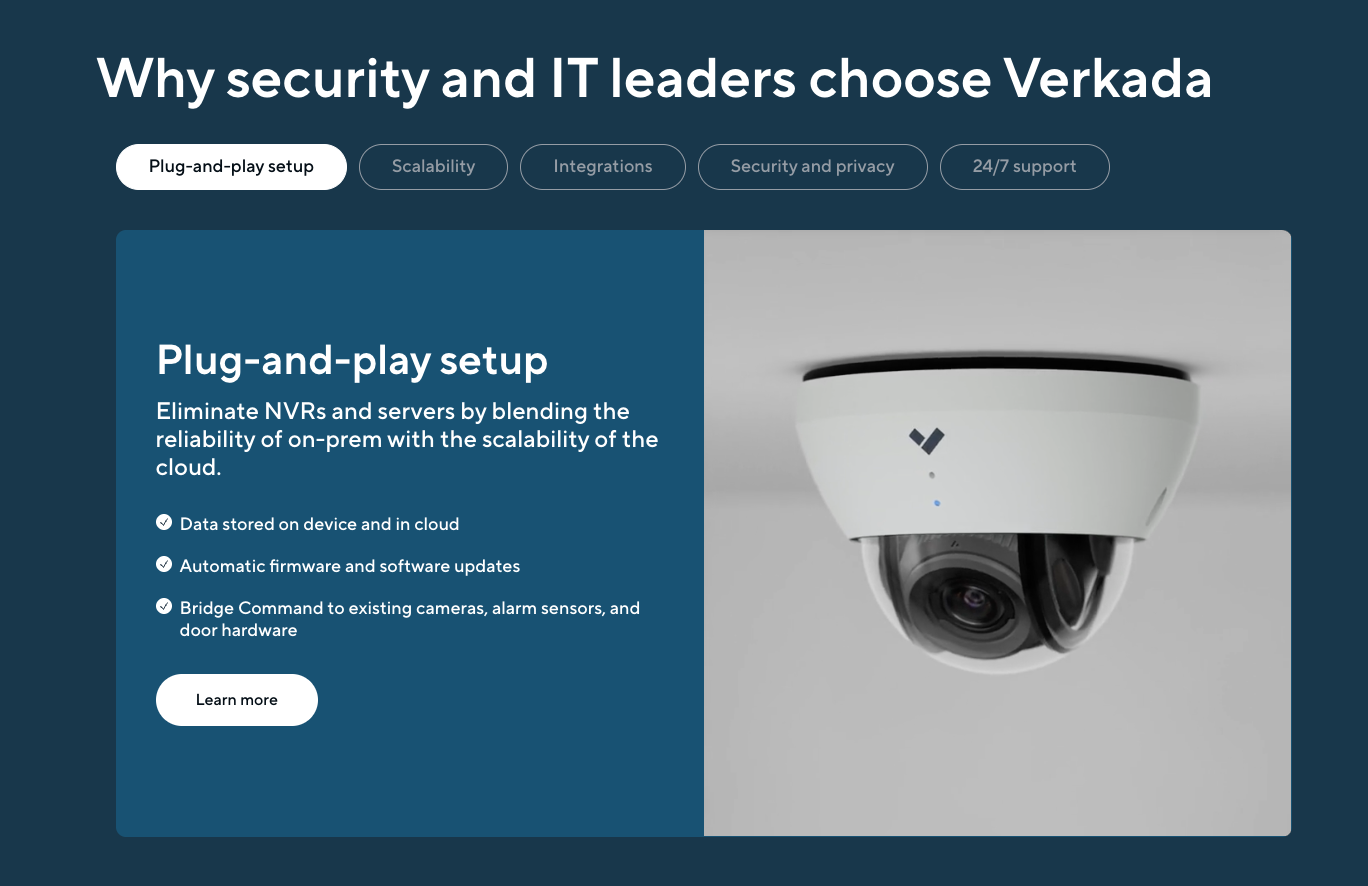
Verkada is a cloud-based physical security platform combining cameras, access control, sensors, and alarms in a unified system managed through Verkada Command. It emphasizes simplicity, remote management, and zero on-premise server infrastructure.
The critical distinction from Coram and from Axis is hardware lock-in. Verkada cameras are proprietary, meaning the platform's AI analytics, cloud management, and unified dashboard only work with Verkada hardware. Organizations with existing Axis cameras cannot add Verkada's capabilities without replacing their cameras. For a fresh deployment where hardware replacement is acceptable, Verkada's all-in-one simplicity is genuine, with built-in storage, no NVR required, and remote access from day one. For organizations with existing camera infrastructure, the full hardware replacement cost makes it a significantly more expensive transition than camera-agnostic alternatives.
Best for: Schools, retail chains, offices, and multi-location businesses wanting simplified all-in-one cloud management.
Strengths:
- Cloud-managed with a single dashboard for video, access control, and alerts
- Cameras include built-in storage; no separate NVR required
- Fast deployment and remote access without on-premise server infrastructure
- NDAA-compliant
Limitations:
- Proprietary hardware: existing Axis cameras cannot be reused; full hardware replacement required
- Higher per-camera cost (~$499–$5,000+) plus recurring licensing
- Connectivity issues can impact reliability during critical operations
Pricing: ~$499–$5,000+ per camera plus recurring licensing. (If that looks steep, take a look at Verkada alternatives.)
Axis vs. Verkada
Choose Verkada for a fresh deployment where simplicity and all-in-one cloud management are the priority and hardware replacement cost is acceptable. For organizations with existing Axis cameras, Verkada requires replacing all of them, a significant cost that camera-agnostic platforms like Coram or Eagle Eye Networks avoid entirely.
3. Avigilon
Avigilon Alta is a cloud-native security platform built by Motorola Solutions, combining AI-powered video surveillance (Ava Security) and access control (Openpath) in one fully cloud-managed system.
The AI analytics are genuinely strong, with Appearance Search and self-learning detection as Avigilon's differentiators. The key limitation is that the strongest AI features are optimized for Avigilon cameras. Third-party hardware including Axis cameras can connect via ONVIF, but analytics capability is reduced on non-Avigilon hardware. For organizations replacing cameras entirely, Avigilon Alta offers a premium unified platform. For organizations wanting to keep existing cameras, the AI advantage is partially lost.
Best for: Enterprises and large organizations wanting unified video and access control with strong AI analytics.
Strengths:
- Fully cloud-native; no on-premise servers required
- Unified video and access control in one platform
- AI-powered Appearance Search for quickly finding people and vehicles across cameras
- Backed by Motorola Solutions; enterprise-grade support and scale
- NDAA-compliant
Limitations:
- Strongest AI features optimized for Avigilon cameras; third-party hardware reduces analytics capability
- Higher cost than basic surveillance systems
- Firmware and hardware compatibility issues reported in some deployments
Pricing: Quote-based.
Axis vs. Avigilon
Choose Avigilon when replacing cameras entirely and wanting a unified cloud platform with strong AI analytics. If keeping existing Axis cameras, Avigilon's AI advantages are reduced on third-party hardware, and camera-agnostic platforms like Coram or Eagle Eye Networks are a better fit for that scenario.
4. Rhombus
Rhombus Systems is a cloud-native physical security platform combining cameras, access control, IoT sensors, and alarms in a single fully cloud-managed system with no NVR or DVR required.
Like Verkada, Rhombus is a proprietary camera ecosystem, meaning the platform's full feature set requires Rhombus hardware. Organizations with existing Axis cameras would need to replace them. AI-powered analytics include facial recognition, vehicle detection, and natural language search. Pricing starts around $500 per camera plus recurring cloud licensing. Camera connectivity and recording reliability issues have been reported in some deployments.
Best for: Multi-location businesses, offices, and retail chains wanting a fully cloud-managed unified security platform.
Strengths:
- Fully cloud-managed with no NVRs; fast deployment and remote access
- Unified system: cameras, access control, IoT sensors, and alarms in one dashboard
- AI analytics including facial recognition, vehicle detection, and natural language search
- NDAA-compliant across all products
Limitations:
- Proprietary camera system; existing Axis cameras cannot be reused
- Camera connectivity and recording reliability issues reported in some deployments
- Higher cost than traditional surveillance systems
Pricing: ~$500 per camera plus recurring cloud licensing.
Axis vs. Rhombus
Choose Rhombus for a fresh multi-location deployment where unified cloud management and no on-premise infrastructure are the priorities. Like Verkada, it requires replacing existing cameras, and organizations wanting to keep their Axis infrastructure should evaluate camera-agnostic cloud platforms instead.
5. Eagle Eye Networks
Eagle Eye Networks is a cloud video surveillance provider built around the Eagle Eye Cloud VMS. It works with 7,500+ camera models and offers an open API ecosystem for custom integrations, making it one of the earliest and most established camera-agnostic cloud platforms.
Eagle Eye Networks is the closest architectural cousin to Coram among the cloud platforms: both are camera-agnostic, both ONVIF-compatible, and both work with existing Axis cameras without hardware replacement. The distinction is platform scope. Eagle Eye Networks is primarily a cloud VMS, strong on video management, storage, search, and API integrations, but less focused on AI detection, access control, and emergency management than Coram. For organizations whose primary requirement is cloud-managed video storage and remote access, Eagle Eye Networks is a strong fit. For organizations that want active AI detection and unified physical security management, Coram covers more ground.
Best for: Multi-site organizations, retail chains, and schools wanting camera-agnostic cloud VMS with open API flexibility.
Strengths:
- Works with 7,500+ camera models including Axis; no hardware replacement required
- Open API platform for custom integrations and workflows
- AI-powered video search and automation for faster investigations
- NDAA-compliant with encrypted cloud storage
- Subscription pricing (~$15–$50 per camera/month) provides cost predictability
Limitations:
- Camera status inconsistencies can create troubleshooting challenges
- Video playback delays reported in some configurations
- Less AI detection depth and less unified platform scope than Coram
Pricing: ~$15–$50 per camera/month (subscription).
Axis vs. Eagle Eye Networks
Choose Eagle Eye Networks when cloud-managed video storage, remote access, and API-driven integrations are the primary requirements and you want to keep existing Axis cameras. It's the most API-flexible camera-agnostic cloud VMS on this list. For organizations that also need active AI detection and physical security management beyond video, Coram covers a broader scope.
6. Spot AI

Spot AI is an AI video analytics platform that works as a layer on top of existing camera infrastructure, built specifically for manufacturing and industrial operations. It detects safety issues (PPE violations, unsafe zone entry, workflow gaps), supports text-based video search across sites, and deploys on existing cameras without hardware replacement.
Against Axis, Spot AI is not a camera alternative. It's what you add when you want to do more with cameras you already have. NDAA compliance depends on the cameras used rather than on Spot AI itself, since it's software-first. For manufacturing and warehouse environments where operational visibility and safety detection are the primary use case, Spot AI's vertical depth is an advantage. For organizations that also need access control, emergency management, and multi-site physical security beyond manufacturing, Coram covers more of that scope.
Best for: Manufacturing facilities, warehouses, and multi-site industrial operations wanting AI video analytics on existing cameras.
Strengths:
- Detects PPE violations, unsafe zone entry, and workflow gaps directly from existing camera feeds
- Text-based search across all cameras for fast incident and delay investigation
- Works with existing camera setups; deploys relatively fast across sites
- Vertical depth for manufacturing and industrial operations
Limitations:
- NDAA compliance depends on which cameras are used, not the platform itself
- Azure SSO login flow can slow team access
- Camera setup difficult with certain hardware types
- Less scope outside manufacturing and industrial use cases
Pricing: Quote-based.
Axis vs. Spot AI
Choose Spot AI when the primary requirement is operational visibility and safety detection in manufacturing and industrial environments and you want to add AI capability to existing cameras without hardware replacement. Axis is a hardware decision; Spot AI is the software layer that makes that hardware more useful in industrial settings.
Hardware Alternatives to Axis
These are camera manufacturers competing directly with Axis on hardware quality, NDAA compliance, price per camera, and VMS ecosystem. If you're looking to replace Axis cameras with similar hardware, this is the right category.
7. Hanwha Vision
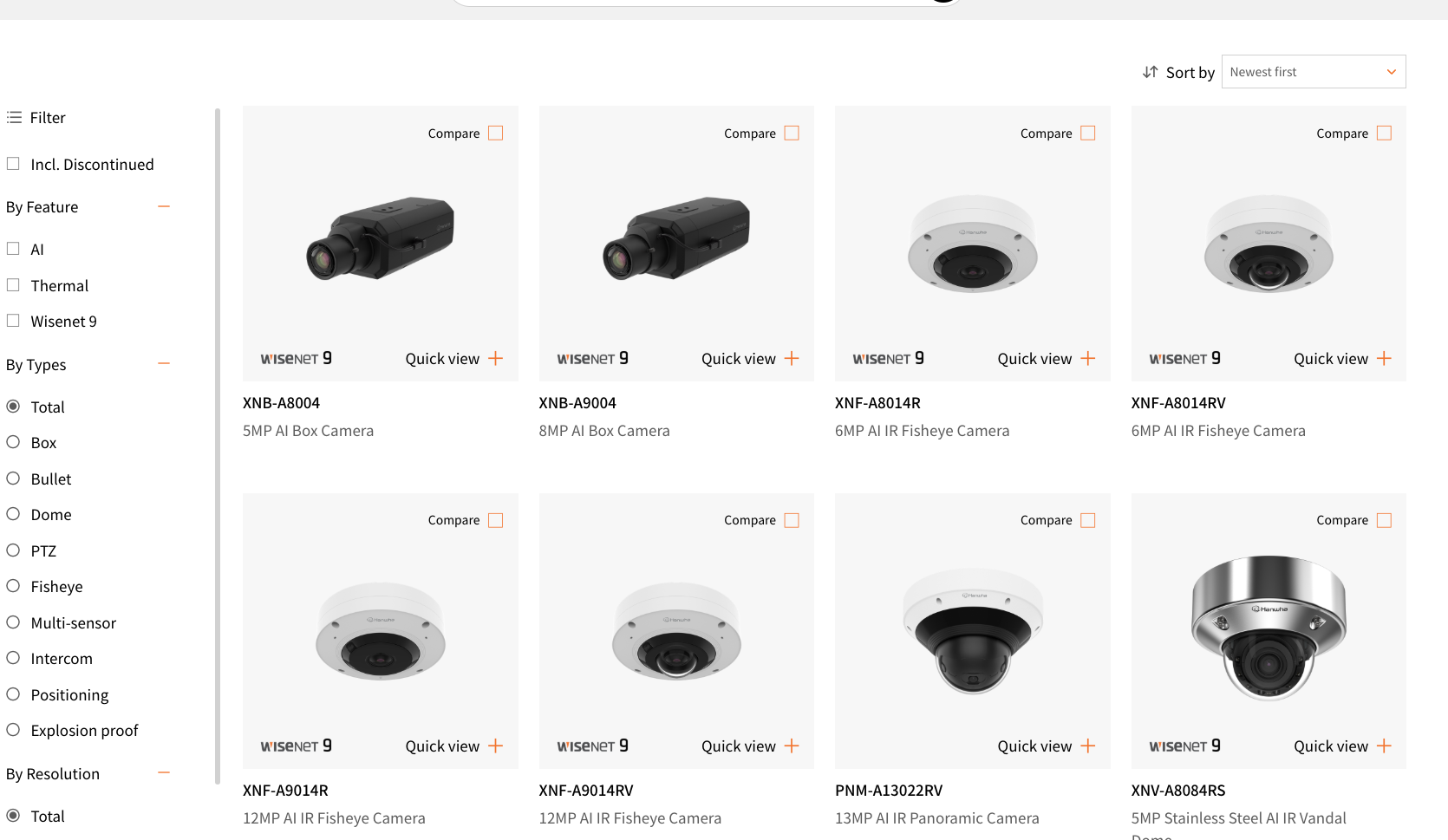
Hanwha Vision (formerly Hanwha Techwin) is a video surveillance manufacturer offering cameras, NVRs, and a VMS with built-in AI analytics, manufactured primarily in South Korea and Vietnam. Its strongest argument against Axis is compliance depth: Hanwha holds FIPS 140-3 Level 3 certification alongside NDAA Section 889 compliance, which makes it one of the few hardware alternatives that can satisfy both cybersecurity and supply chain requirements simultaneously in government and regulated deployments. Axis is NDAA-compliant but doesn't carry FIPS-level hardware certifications. The tradeoff is a hardware-heavy deployment model with higher upfront costs.
Best for: Government projects, critical infrastructure, transportation systems, and enterprises with NDAA compliance requirements.
Strengths:
- NDAA-compliant; manufactured in South Korea and Vietnam
- FIPS 140-3 Level 3 certification for high-security environments
- Built-in Wisenet AI analytics: people counting, heatmaps, object detection
Limitations:
- Hardware-heavy deployment increases upfront cost and setup time
- Advanced analytics may require additional configuration
- Less broad ecosystem than Axis for third-party integrations
NDAA status: Compliant.
Pricing: Quote-based.
Axis vs. Hanwha Vision
Choose Hanwha when NDAA compliance and cybersecurity certifications are the primary requirement, particularly for government and regulated environments. It matches Axis on hardware quality and exceeds it on compliance credentials. Axis remains the better fit for organizations that need broader ecosystem flexibility.
8. Bosch Security

Bosch Security Systems provides cameras, video management software (BVMS), and intrusion detection systems built for long-term reliability in demanding conditions. Against Axis, Bosch's argument is durability and cybersecurity architecture: hardware designed for extreme conditions including weather, vibration, and impact, with secure boot, encryption, and multiple independent certifications. NDAA compliance is available but depends on model selection; verify specific models before purchasing.
Best for: Critical infrastructure, government facilities, industrial sites, and harsh-environment deployments.
Strengths:
- Built-in AI video analytics for detection, tracking, and event-based monitoring
- Hardware designed for harsh environments with high impact and weather resistance
- Strong cybersecurity: secure boot, encryption, multiple certifications
Limitations:
- Higher upfront cost than most competitors
- NDAA compliance depends on specific model selection; verify before purchasing
- Complex setup and configuration in large deployments
NDAA status: Compliant on select models. Verify per model.
Pricing: Quote-based; premium segment.
Axis vs. Bosch Security
Choose Bosch when the deployment environment is harsh and long-term hardware reliability is the design requirement. Axis is the better fit when ecosystem flexibility and a wider third-party integration set matter more than environmental hardening.
9. Vivotek
Vivotek is an IP surveillance manufacturer headquartered in Taiwan, offering cameras, NVRs, and edge-based AI analytics with strong ONVIF and open-standard support. NDAA Section 889 and TAA-aligned products are available with Taiwanese manufacturing, satisfying procurement requirements for many regulated environments without Axis's premium price point. Pricing is on the higher side relative to other mid-market vendors, and advanced setups require technical expertise.
Best for: Small to mid-sized businesses, property management, and multi-site deployments needing edge AI with compliance-ready options.
Strengths:
- NDAA Section 889 compliant and TAA-aligned; manufactured in Taiwan
- Edge-based AI for perimeter detection and smart search
- Strong open-standard and ONVIF integration support
Limitations:
- Pricing higher than comparable mid-market vendors
- Advanced features and full setup require technical expertise
- Smaller ecosystem than Axis
NDAA status: Compliant.
Pricing: Varies by distributor, region, and project requirements.
Axis vs. Vivotek
Choose Vivotek when you need NDAA-compliant, mid-market hardware with edge AI at a more accessible price point. Axis remains the better fit for larger enterprise deployments where ecosystem depth is the priority.
10. Hikvision
Hikvision is a global video surveillance manufacturer offering a wide range of IP cameras, NVRs, and security systems at the lowest price points on this list. Basic indoor cameras start around $50, mid-range dome cameras between $100 and $300, complete systems between $800 and $2,500. The hard constraint is compliance. Hikvision is restricted under NDAA Section 889, which blocks its use in U.S. government projects and federally funded environments. This is a purchase-blocking issue for a significant portion of buyers. Organizations in compliance-sensitive environments should not evaluate Hikvision further.
Best for: Budget-sensitive, large-scale deployments where NDAA compliance is not a requirement.
Strengths:
- Lowest per-camera cost on this list; strong cost-to-coverage ratio for large deployments
- Wide product portfolio from basic cameras to advanced PTZ systems
- Built-in video analytics and smart features across many models
Limitations:
- Restricted under NDAA Section 889; blocked from U.S. government and federally funded projects
- Security and compliance concerns in certain regions beyond government
- Long-term support may require specialized installers
NDAA status: Non-compliant. Restricted under Section 889.
Pricing: ~$50–$800+ per camera; complete systems ~$800–$2,500.
Axis vs. Hikvision
Choose Hikvision when budget is the primary driver, the deployment is private-sector, and NDAA compliance is not a requirement. Axis is the right choice when cybersecurity credentials, ecosystem depth, and compliance-ready hardware are required.
11. Dahua
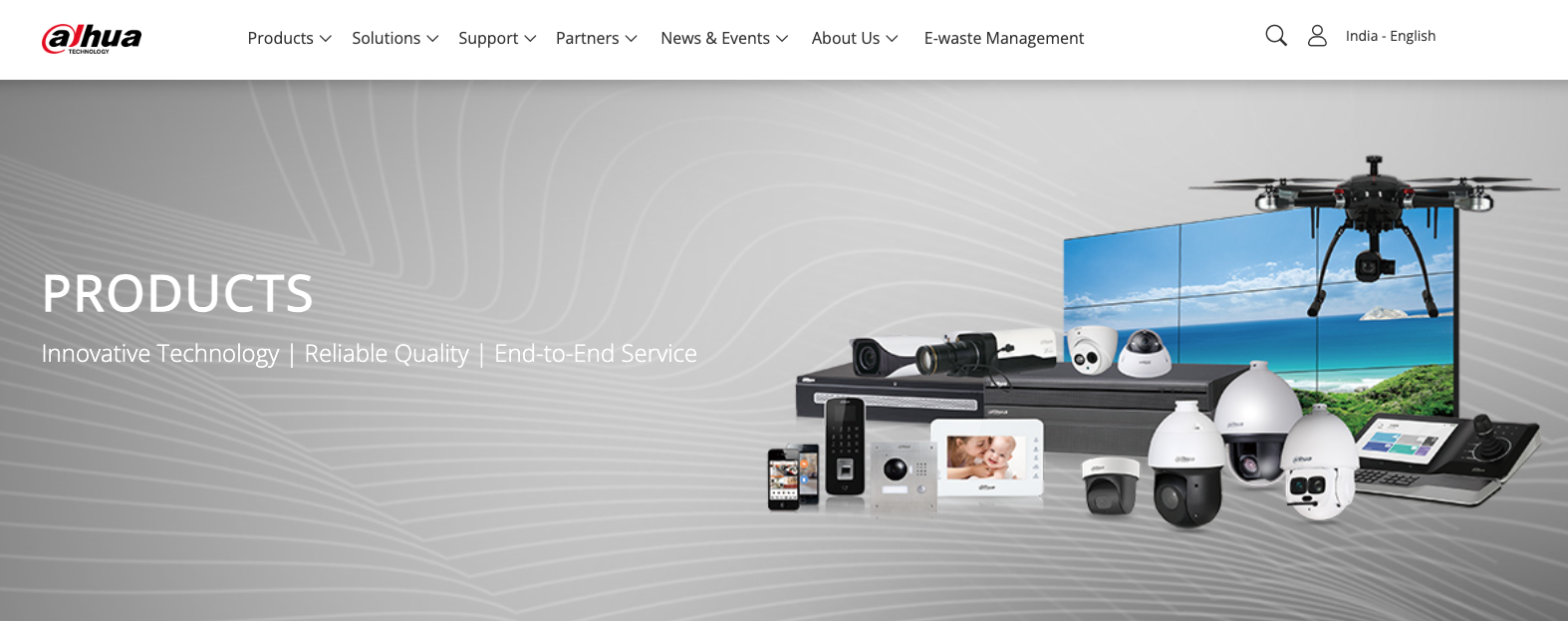
Dahua Technology is a video surveillance manufacturer offering AI-powered cameras with built-in human and vehicle detection, active deterrence features, and smart motion analytics across its product range. Like Hikvision, Dahua is restricted under NDAA Section 889, which eliminates it from government and federally funded projects. For private-sector deployments where compliance isn't a factor, the built-in AI detection and deterrence capabilities at $50–$600+ per camera represent genuine value. Firmware consistency and support experience vary by seller.
Best for: Cost-sensitive, large deployments in private-sector environments where NDAA compliance is not required.
Strengths:
- WizSense AI for human and vehicle detection with low false alarm rates
- Active deterrence built into cameras: sirens, flashing lights, real-time alerts
- Smart motion detection and Quick Pick search for faster footage review
Limitations:
- Restricted under NDAA Section 889; blocked from government and federally funded use
- Firmware and support consistency varies by seller
- Security concerns in certain regions beyond government procurement
NDAA status: Non-compliant. Restricted under Section 889.
Pricing: Entry-level ~$50–$100; mid-tier AI cameras ~$100–$200; advanced systems ~$200–$600+.
Axis vs. Dahua
Choose Dahua when cost efficiency and built-in AI deterrence are the priority in private-sector deployments where NDAA compliance doesn't apply. Axis is the better fit when compliance credentials, cybersecurity posture, and long-term ecosystem support are required.
12. Pelco
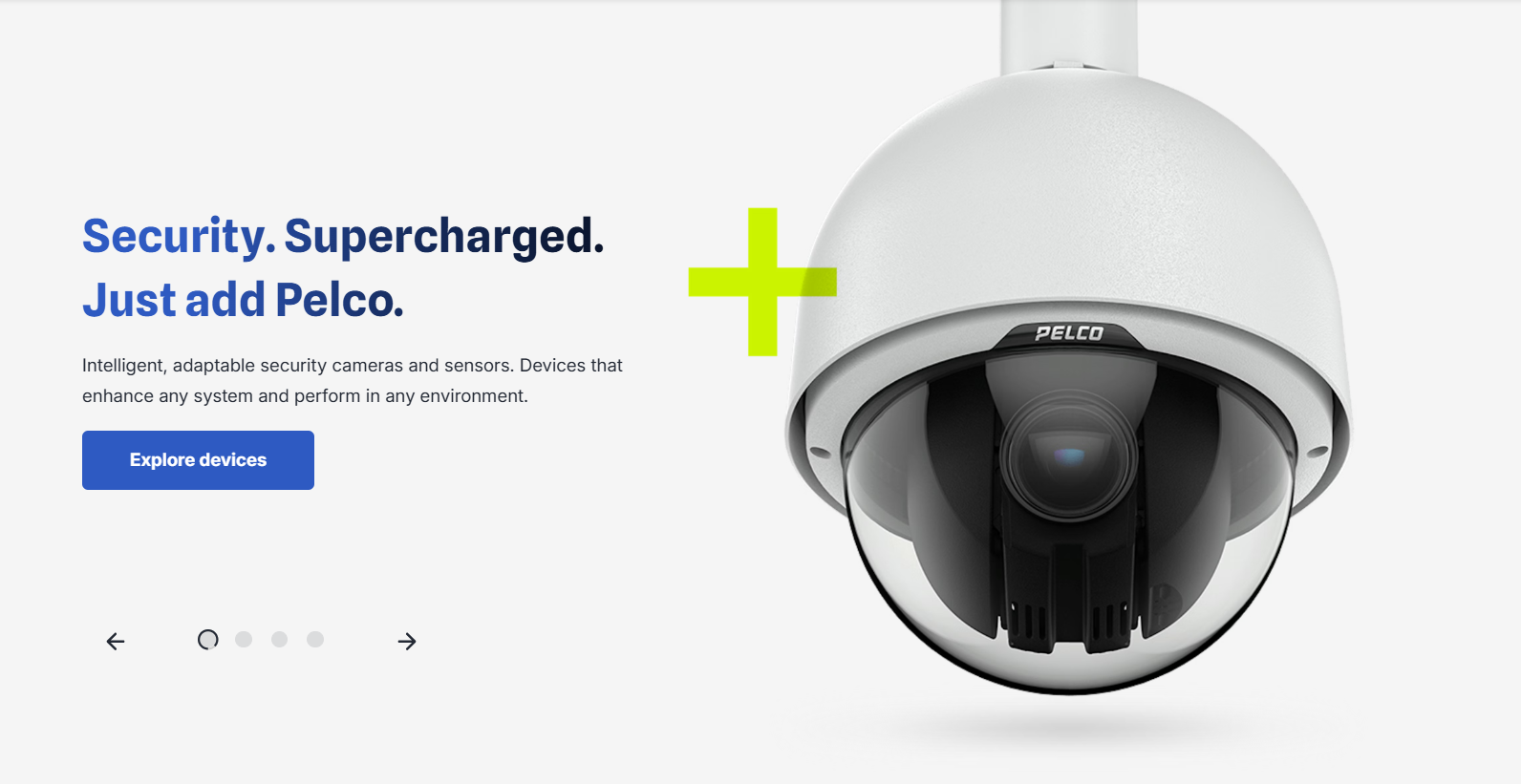
Pelco is a video surveillance manufacturer with cameras, VMS, and specialized hardware including thermal imaging and ruggedized devices, built around open-platform flexibility and long deployment lifecycles. Against Axis, Pelco's argument is stability and integration flexibility for organizations that need to connect surveillance into existing systems. The tradeoff is limited AI innovation compared to newer platforms. The feature set is functional but not advancing at the pace of cloud-native competitors.
Best for: Enterprises and industrial facilities prioritizing long-lifecycle deployments and open-platform integrations.
Strengths:
- Open platform with strong third-party VMS and integration support
- Specialized hardware including thermal imaging and ruggedized devices
- NDAA-compliant product lines for regulated environments
- Long lifecycle focus suits organizations with infrequent replacement cycles
Limitations:
- Limited AI innovation compared to newer platforms
- Feature set requires additional integrations to match modern capabilities
- Narrower product range than Axis
NDAA status: Compliant on select models.
Pricing: Mid-range IP dome cameras ~$250–$1,250; specialized hardware higher.
Axis vs. Pelco
Choose Pelco when stability, long lifecycle support, and open-platform integration with existing systems are the requirements. Axis is the better fit when a broader feature set, wider ecosystem, and more active product roadmap matter.
13. Mobotix
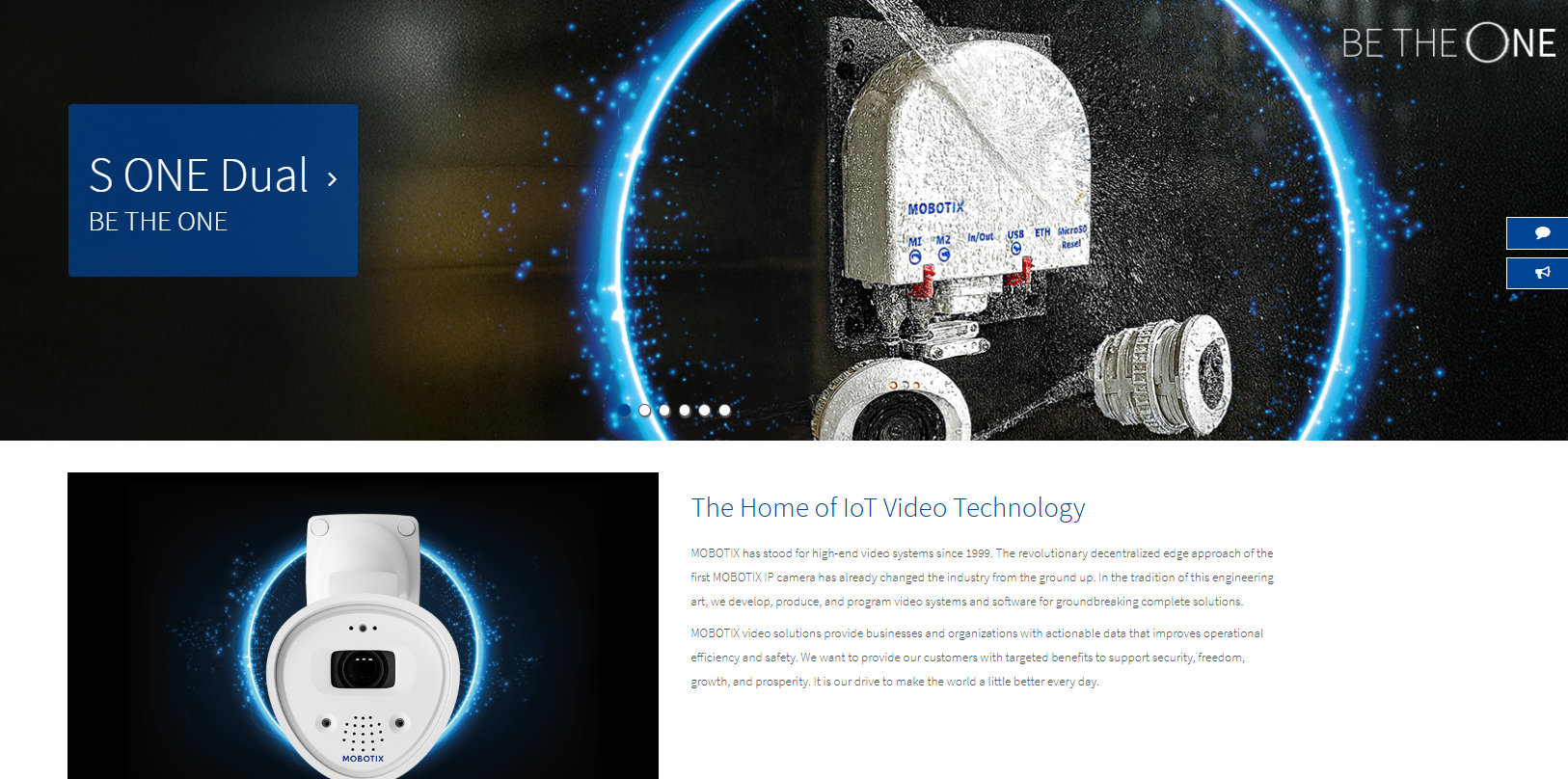
Mobotix is a German manufacturer known for decentralized camera architecture: processing, analytics, and storage run directly on the camera rather than on a central server. The modular hardware design allows interchangeable sensor and function modules for specialized use cases including thermal detection and industrial monitoring. For environments where data sovereignty, network independence, or on-camera processing are non-negotiable, Mobotix offers something Axis doesn't, a system that functions fully at the edge without cloud or server dependency. NDAA-compliant with no restricted components. Premium pricing and deployment complexity are the tradeoffs.
Best for: Industrial sites, healthcare facilities, and critical infrastructure requiring decentralized edge processing.
Strengths:
- Decentralized architecture: processing, storage, and analytics run on the camera
- Modular design with interchangeable sensor and function modules
- Strong cybersecurity with secure hardware and long lifecycle support
- NDAA-compliant; no restricted components
Limitations:
- Premium pricing compared to most surveillance vendors
- Complex system design for standard deployments
- Smaller ecosystem than Axis for third-party integrations
NDAA status: Compliant.
Pricing: Premium; modular and capability-based.
Axis vs. Mobotix
Choose Mobotix when decentralized edge processing is the architectural requirement, for environments where data must stay on-device, network connectivity is unreliable, or server infrastructure isn't viable. Axis is the better fit for organizations that want a broad ecosystem, centralized management, and a wider range of standard deployment options.
14. i-PRO
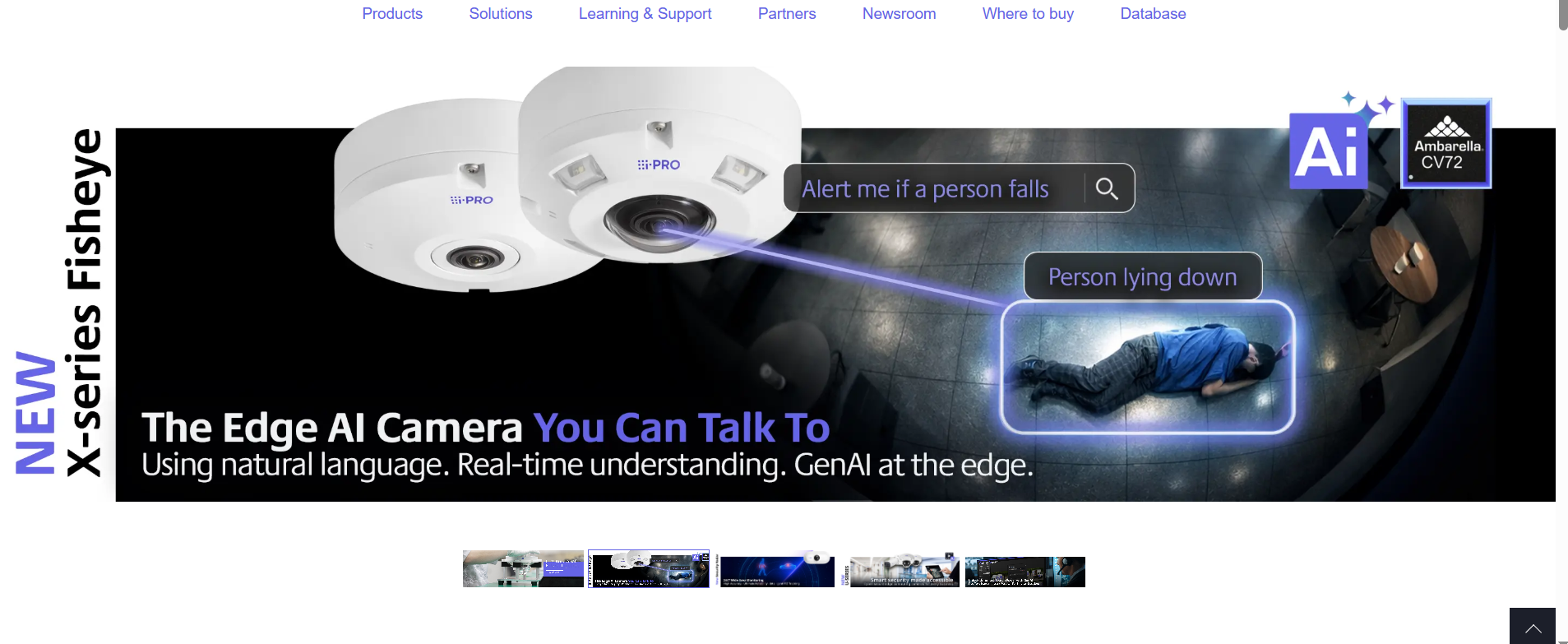
i-PRO is a video surveillance manufacturer focused on AI-enabled cameras with built-in edge processing, ONVIF compliance, and cybersecurity certifications, spun out of Panasonic with enterprise-grade hardware standards. Against Axis, i-PRO's distinction is edge AI depth combined with open-platform flexibility: AI processing runs directly on the camera for detection and classification, reducing server dependency. The platform focus is narrower than Axis, with less ecosystem breadth and less third-party VMS coverage, but the edge AI capability is competitive with Axis's analytics offering.
Best for: Government projects, smart cities, and transportation systems requiring edge AI with strong cybersecurity.
Strengths:
- Edge AI analytics built directly into cameras for detection and classification
- Open platform with strong ONVIF support and third-party integrations
- Strong cybersecurity focus with secure hardware and data protection certifications
- NDAA-compliant product lines
Limitations:
- Advanced features require configuration and technical setup
- Narrower ecosystem than Axis for third-party VMS integrations
- Less focused on unified platform experience
NDAA status: Compliant.
Pricing: Varies by camera model, AI features, and deployment size.
Axis vs. i-PRO
Choose i-PRO when edge AI processing depth and cybersecurity certifications are the priority, particularly in government and smart city deployments. Axis offers broader ecosystem flexibility; i-PRO offers deeper on-camera intelligence with a comparable compliance posture.
15. Uniview

Uniview is a video surveillance manufacturer offering IP cameras, NVRs, and AI-powered systems with features including face detection, intrusion prevention, and video metadata analytics. SeekFree, its text-based video search tool, is a differentiator for organizations that review footage regularly. Uniview's NDAA compliance status is partial and worth scrutinizing: the company states that certain products meet NDAA requirements, but usage may still be restricted or scrutinized in U.S. government and sensitive environments due to its origins. For private-sector deployments without compliance requirements, the AI feature set at accessible price points is competitive.
Best for: SMBs, retail chains, and warehouses needing built-in AI features at accessible price points.
Strengths:
- Wide product range from entry-level to enterprise-grade hardware
- AI features including face detection, intrusion prevention, and video metadata analytics
- SeekFree text-based video search for faster footage retrieval
Limitations:
- NDAA compliance status is partial; scrutinized in U.S. government and sensitive environments
- Advanced analytics less mature than premium vendors
- Limited brand recognition in high-security environments
NDAA status: Partial. Verify for your specific deployment.
Pricing: Talk to sales.
Axis vs. Uniview
Choose Uniview when budget is a constraint and the deployment is private-sector with no compliance-sensitive requirements. Axis is the better fit for organizations where NDAA compliance, cybersecurity posture, and ecosystem depth are requirements.
How to Choose the Right Axis Alternative
The decision starts with which category of problem you're actually solving.
You Want to Do More with Existing Cameras
If the cameras aren't the problem, you have Axis cameras that work fine but you're spending too much time on manual monitoring, reactive alerting, or fragmented management across sites, a cloud or AI platform is the right category.
For organizations that want to keep existing cameras and add AI detection, unified management, and emergency response, the camera-agnostic options are Coram, Eagle Eye Networks, and Spot AI. Verkada, Avigilon, and Rhombus require hardware replacement and should only be evaluated for fresh deployments.
For manufacturing and industrial safety specifically, Spot AI has vertical depth worth evaluating. For broader physical security across multiple sites, Coram covers the wider scope. For cloud VMS with strong API flexibility, Eagle Eye Networks is the most open platform.
You Need Different Camera Hardware
If the cameras are the problem, wrong spec, wrong price, wrong compliance status, wrong manufacturer, the hardware alternatives are the right category. The key dimensions are:
NDAA compliance is the first filter. If your organization has any U.S. government funding, federal contracts, or compliance-sensitive requirements, Hikvision and Dahua are immediately off the list. Hanwha, Bosch, Pelco, Mobotix, i-PRO, and Vivotek all offer compliant options; verify specific models before purchasing.
Edge AI vs. cloud AI is the second filter. If your sites have unreliable connectivity or data sovereignty requirements, edge-processing hardware (Mobotix, i-PRO) keeps analytics on-camera. If centralized management and cloud storage work for your environment, the platform options become more relevant.
Price per camera sets the floor. Hikvision and Dahua are the lowest where compliance permits. Axis, Bosch, and Mobotix sit at the premium end. Hanwha, Vivotek, Pelco, and i-PRO cover the mid-range.




.png)