.webp)
Cloud-based surveillance spending to hit $7.80 billion in 2026, according to Fortune Business Insights. That growth reflects a clear shift away from on-premise systems, which often struggle with scaling, maintenance costs, and remote access across distributed teams and security operations.
For security directors evaluating video surveillance software, the real challenge is finding a cloud security video management system that balances flexibility, storage, and control. But how do you choose the right platform?
This article compares 9 leading cloud-based VMS solutions and shows which options fit different business needs, from small deployments to enterprise video surveillance solutions. Let’s dive in.
What is a Cloud VMS?
A cloud VMS (video management system replaces the traditional on-premise server and network video recorder with a platform hosted entirely in the cloud. Your security operations are powered by video surveillance software that runs in secure, off-site data centers.
Footage is handled differently here. A cloud VMS does not rely on local hard drives that can fail or be tampered with; video is transmitted directly to a surveillance video cloud storage. With this approach, footage is encrypted, backed up, and accessible from any location.
As a result, you’re deploying a surveillance video management software that centralizes camera configuration, user permissions, and health monitoring into a single, intuitive interface.
Why Cloud-Based VMS Matters in 2026
In 2026, the conversation around cloud-based video management has shifted from “Is it secure?” to “Can we afford not to adopt it?” As organizations face operational complexities, a cloud VMS has become a necessity to address the scalability, security, and intelligence demands of today’s enterprises.
Multi-Location Surveillance Challenges
For any organization managing more than one site, traditional on-premise VMS comes with its blind spots. Each location requires its own servers, separate software licenses, and dedicated IT oversight, and this fragmented setup makes centralized visibility nearly impossible.
A cloud-native approach is designed to solve this. With a unified platform, security teams can manage cameras across multiple locations from a single dashboard. This promotes convenience and consistency.
When every site runs on the same video surveillance software, policies like retention periods, user permissions, and firmware updates can be applied centrally within minutes. That uniformity reduces risk and eliminates the gaps that often emerge when each location operates as its own silo.
Rising Compliance & Data Sovereignty Requirements
Data and compliance regulations have accelerated cloud VMS adoption in 2026. Organizations are under immense pressure to process, store, and use video surveillance data in ways that comply with regional mandates.
On-premise systems often struggle to meet these requirements, especially at scale. A single misconfigured server or an outdated policy can lead to fines, legal exposure, or reputational damage. Cloud-based surveillance video cloud storage offers a built-in advantage: leading platforms now integrate granular data residency options, allowing you to manage where footage is stored.
Equally important is the auditability that a cloud security video management system provides. Every access event, video export, or user action is logged for compliance, investigative, and security purposes. Choosing a cloud VMS in 2026 is less about technology preference and more about demonstrating due diligence to regulators.
Increasing Demand for AI Analytics
The era of “video as a passive record” is over. Today, organizations expect their surveillance infrastructure to actively generate insights, and that demands processing power that on-premise hardware simply cannot deliver.
AI-powered analytics, such as real-time object detection, behavioral analysis, and anomaly detection, require computational resources that are most efficiently delivered through the cloud. This is where modern surveillance video management software differentiates itself.
It centralizes AI processing, enabling advanced features that would otherwise be cost-prohibitive.
Remote Monitoring & Operational Efficiency
The hybrid work model and distributed workforce have changed how businesses approach security operations. Centralized command centers are no longer the only way to monitor sites. Security personnel now expect to review live feeds, investigate incidents, and share clips from anywhere, using any device.
A cloud VMS makes this easy. Because the system resides off-site and is accessible via secure web or mobile interfaces, security teams are no longer tied to a physical console. This has profound implications for operational efficiency.
Rather than staffing a guard desk 24/7, companies can adopt centralized remote monitoring services, where one trained operator oversees multiple facilities. This model reduces labor costs and improves response times.
Beyond monitoring, operational efficiency extends to system management. Using traditional VMS, technical issues might require an on-site technician, and this delay can leave your facility unrecorded for hours or days.
Deploying enterprise video surveillance solutions built on a cloud architecture, health monitoring is continuous, and many issues can be resolved remotely. Automatic updates, remote diagnostics, and centralized support mean the burden on local IT staff is reduced, allowing them to focus on other pressing issues requiring human attention.
9 Best Cloud-Based VMS Platforms in 2026
Cloud-based VMS platforms have moved well beyond simple off-site recording. Today, the strongest options combine remote access, surveillance video cloud storage, AI-assisted search, and multi-site control, making them useful for enterprise surveillance.
VMukti Cloud VMS
VMukti Cloud VMS is an enterprise-focused video surveillance software platform built around cloud deployment and AI-driven monitoring. The system:
- is STQC-certified, among other certifications
- supports large-scale camera environments
- includes analytics such as face recognition, ANPR, intrusion & object detection, and fire detection
This makes it a strong fit for organizations that need a cloud security video management system with advanced built-in intelligence.
Its major advantage is scale: the company positions it as an enterprise-grade surveillance solution for:
- Manufacturing
- Oil & gas
- Smart cities
- Hospitality
- Construction
- Warehouse
- Healthcare
- Transportation
- Pharma
- Banking
- Sports
- Education
- Logistics
And enterprises that need centralized control and real-time analytics. If your priority is a cloud-native platform that pairs surveillance with operational intelligence, VMukti is one of the most enterprise-oriented options on this list.
Coram
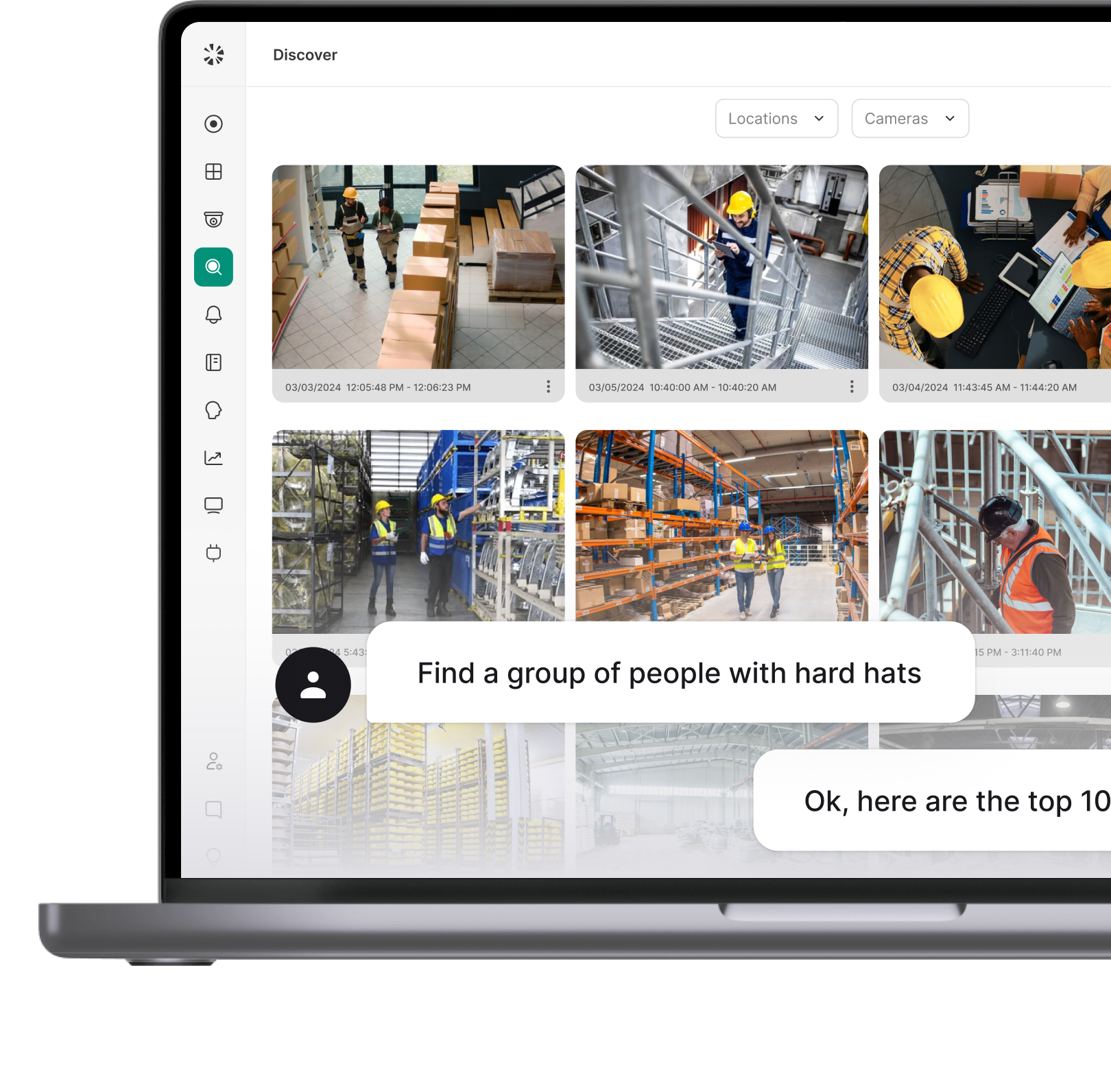
Coram is an AI-first cloud-based security platform that unifies video surveillance, access control, and emergency management into one system. Built to modernize security without replacing existing camera infrastructure, Coram works with any IP camera and supports Wiegand and OSDP access readers.
This makes it a compelling choice for organizations looking to consolidate their security stack. The platform features:
- AI-powered search
- Hybrid storage options
- Real-time proactive threat alerts
- User-friendly interface
- Natural language search
- Seamless IP camera integration
- Enterprise-level access policy enforcement
- License plate recognition
- Facial recognition
This makes it especially relevant for schools, warehouses, and multi-building organizations.
What stands out most is how Coram combines surveillance with everyday operational use. That makes it a perfect option for teams that want surveillance video management software with faster investigations, simpler administration, and a more unified cloud dashboard.
Milestone XProtect
XProtect is Milestone’s long-running video management software platform and its cloud-connected offerings reflect the company’s deep heritage in open-platform architecture. Milestone positions itself as scalable, and widely deployed, with support for more than 14,000 devices and 500,000 installations worldwide.
While traditionally known for on-premise deployments, Milestone now offers hybrid and cloud-managed options that allow organizations to retain existing infrastructure while gaining centralized cloud administration.
XProtect supports a vast ecosystem of third-party integrations, making it a go-to for complex environments that require flexibility. Security teams seeking surveillance video management software that can bridge legacy hardware with modern cloud capabilities can deploy Milestone.
It remains a trusted solution and a strong option for companies that want a proven VMS with:
- broad hardware compatibility
- strong cybersecurity focus
- the option to move into cloud or hybrid architecture
Genetec Security Center
Genetec Security Center is a unified physical security platform that brings together:
- video management
- access control
- intrusion monitoring
- automation
- communications
- forensic search
- other advanced security capabilities
Genetec also offers Security Center SaaS, which can be deployed in the cloud or as a hybrid solution, making it one of the most established names for organizations that want a cloud security video management system with enterprise-grade capacity.
This platform is best for larger organizations requiring one environment to manage security operations across multiple functions. If you're comparing enterprise video surveillance solutions, Genetec stands out for unification, flexibility, and a cloud path that still supports complex security workflows.
Avigilon Alta (Motorola Solutions)
Avigilon Alta is Avigilon’s cloud-based security service for video surveillance, access control, and detection systems. Alta prides itself as a serverless VMS with AI video analytics, remote management, and support for existing hardware through Cloud Connectors. This makes it appealing for teams wanting to modernize without replacing everything at once.
Alta emphasizes AI-powered search capabilities that reduce investigation times. Deploying it means you don't have to scroll through hours of footage; you can search for objects, people, or vehicles using natural language queries.
Its sleek camera hardware integrates seamlessly with the cloud platform, making it particularly attractive for:
- commercial buildings
- offices
- retail
- healthcare
- manufacturing
- education and businesses that prioritize both aesthetics and innovative technology
Avigilon also offers cloud storage options, including 30 days of cloud storage with Alta Video licenses, which adds to its appeal for cloud video management buyers focused on retention and compliance.
Eagle Eye Networks
Eagle Eye Networks is one of the most recognizable names in cloud video management, with a platform designed to securely record, manage, and play back video from any camera, anywhere.
Its developer-friendly API platform and AI search tools make it a favorite for integrators and businesses that need to embed video into custom applications or existing business systems.
The platform is a solid choice for multi-site businesses, retailers, and multi-location operators that want remote monitoring without the burden of traditional server-heavy infrastructure.
Eagle Eye’s emphasis on secure cloud transmission, browser-based access, and searchable video also makes it a practical option for teams that need fast investigations and easy day-to-day oversight.
Arcules
Arcules, Milestone’s VSaaS, has carved out a niche as a cloud-native VMS designed for operational intelligence as much as security. The platform places heavy emphasis on AI-driven analytics and works with existing hardware and ONVIF devices.
It is a subscription-based option that reduces upfront costs and IT overhead while keeping cameras and footage under your control.
Arcules’ intuitive interface and focus on simplicity appeal to security leaders requiring robust security without the complexity of traditional VMS.
It is well-suited to organizations that want a cloud experience without ripping their current camera investment. Arcules offers a balanced path into cloud surveillance video management with flexibility, scalability, and a smoother integration.
Videoloft
Videoloft is an enterprise-ready cloud video management system built to add secure offsite cloud storage to existing camera setups. Simple multi-site monitoring, easy live viewing, quick footage retrieval, and AI-assisted search, are some of its capabilities.
Hence, it has become a practical choice for companies wanting to deploy cloud video surveillance without a major hardware overhaul.
Its ideal users are small to mid-sized businesses, multi-location companies, and teams that value easy deployment and remote access. If you're looking for surveillance video cloud storage and an easier day-to-day experience, Videoloft is one of the best options on the market.
Hanwha Vision Cloud
Hanwha Vision Cloud is a broader cloud ecosystem that includes the Cloud Portal and OnCloud video management system. OnCloud is a camera-to-cloud VMS with:
- live video
- searchable clips
- event notifications
- remote monitoring
- encrypted cloud storage
The Cloud Portal centralizes user, device, and license management. This makes Hanwha Vision Cloud a strong choice for organizations already invested in Hanwha hardware, as well as teams that want cloud-connected surveillance with a centralized management layer.
For organizations already standardized on Hanwha hardware or those seeking a vertically integrated solution with enterprise-grade reliability, Hanwha Vision Cloud presents a compelling option.
Cloud-Based VMS- Quick Comparison Table
This quick comparison view shows you the different cloud-managed platforms at a glance.
Conclusion
Choosing the right cloud-based VMS in 2026 is beyond features. The best platform for your business depends on how you balance scalability, security, cost, and day-to-day usability. Some teams need enterprise video surveillance solutions with deep integrations and AI-driven insights.
Others simply want reliable video surveillance software with secure surveillance video cloud storage and easy remote access. What’s most important is clarity on your use case. Are you managing multiple locations? Upgrading from legacy systems? Or looking for a smarter surveillance video management software that does more than just record footage?
Start by asking yourself these questions. Then choose a cloud security video management system that aligns with how your team actually operates today and as you grow.




.png)