Cisco Meraki's per-device licensing model charges you whether a device is active or not, and hardware becomes unmanageable the moment a license lapses. That calculus got harder on December 3, 2025, when Cisco announced the End-of-Sale for Meraki Systems Manager (SM) — the mobile device management (MDM) product that hundreds of thousands of organizations built their endpoint strategy around. New purchases are allowed only until June 3, 2026, and support ends June 3, 2029.
For IT teams that adopted SM because it lived inside the same dashboard as their switches, access points, and firewalls, the announcement raises a question that's hard to ignore: what else gets cut?
Meraki's mandatory per-device subscription runs $225 to $550 for a 3-year license, depending on device type and security tier. At enterprise scale, that compounds. This guide to Cisco Meraki alternatives covers every product line Meraki touches — networking (MR, MS), security and SD-WAN (MX), smart cameras (MV), and endpoint management (SM) — with twelve options evaluated against the specific Meraki product each replaces.
TL;DR
- Meraki's per-device licensing model and SM End-of-Sale are pushing IT teams to evaluate alternatives across every product line
- No single alternative replaces the full Meraki stack; match each replacement to the specific product line it addresses
- For firewalls and SD-WAN, Fortinet and Cato Networks lead on security depth and architecture flexibility
- For networking without recurring licensing costs, Ubiquiti UniFi is the strongest option for SMBs and mid-market teams
- For MDM, begin SM migration planning before the June 3, 2026 purchase deadline
- For cameras, Coram delivers AI-native video intelligence on existing infrastructure without hardware replacement
Why IT Teams Are Evaluating Meraki Alternatives in 2026
Three structural problems are driving IT teams to evaluate Meraki alternatives: a per-device licensing model that creates compounding costs at scale, an SM End-of-Sale that raised questions about the platform's long-term direction, and a cloud-first architecture that creates operational risk when connectivity drops. Meraki's simplicity still holds. The economics around it have shifted.
The licensing model creates compounding pressure. Every Meraki device requires its own license regardless of how many ports or users it serves, and losing an active license means losing management capability entirely. Co-termination adds friction on top: organizations that added devices at different points often face misaligned expiration dates, forcing early renewals or complex license shuffling.
The SM End-of-Sale changed the conversation. Cisco cited limited growth and ongoing operational costs as the reason for exiting the MDM market. Long-time customers have noted this is the first time something has been removed from the dashboard, which raises legitimate concerns about what else could follow. Three years of remaining support sounds generous until you factor in how long enterprise MDM migrations actually take.
Cloud dependency is a structural risk. Meraki's cloud-first architecture routes all configuration changes, firmware updates, and policy enforcement through Cisco's cloud. Losing internet access disrupts management capabilities entirely, a real concern for facilities with inconsistent connectivity or strict data residency requirements.
Is Cisco Discontinuing Meraki?
The End-of-Sale applies to Meraki SM specifically. The broader product line — MR, MX, MS, and MV — remains active. Final SM purchases are allowed until June 3, 2026, with support continuing until June 3, 2029.
What to Look for in a Cisco Meraki Alternative
Map which Meraki products you're replacing before evaluating anything. The criteria for a firewall replacement are different from those for a camera system or MDM platform, and most alternatives cover one or two product lines well and the rest adequately.
Licensing model and total cost of ownership. Look beyond the headline per-device fee. Factor in whether licenses are tied to hardware, how multi-year commitments affect flexibility, and whether advanced features require separate tiers. The cheapest upfront option frequently becomes the most expensive over three to five years.
Cloud architecture and offline resilience. Evaluate whether an alternative supports local controller fallback, on-premises deployment, or hybrid operation. For camera and access control systems, offline functionality is a baseline requirement.
Integration and migration complexity. Verify API availability and directory service compatibility before committing. For networking replacements, build pilot deployments into every evaluation — a misconfigured firewall or access point rollout affects production traffic immediately.
Vendor stability. The SM End-of-Sale demonstrated that established vendors exit product categories. Evaluate whether the product you're buying is central to the vendor's business or an adjacent offering.
Cisco Meraki Alternatives: Side-by-Side Comparison
Best Cisco Meraki Alternatives for 2026
No single platform replaces the full Meraki stack. Use the comparison table above to identify which vendors cover the product line you're replacing, then read those first.
1. Coram
Coram is an AI-native physical security platform that connects to any existing IP camera and manages video surveillance, access control, and emergency management from a single cloud dashboard.
For organizations moving off Meraki MV, Coram solves the most expensive part of the migration first: you don't have to replace your cameras. Where every other camera platform on this list — Verkada, UniFi Protect — requires proprietary hardware, Coram works with the IP cameras already on your walls, including Meraki MV units. That changes the TCO calculation significantly for organizations with cameras already deployed across multiple sites.
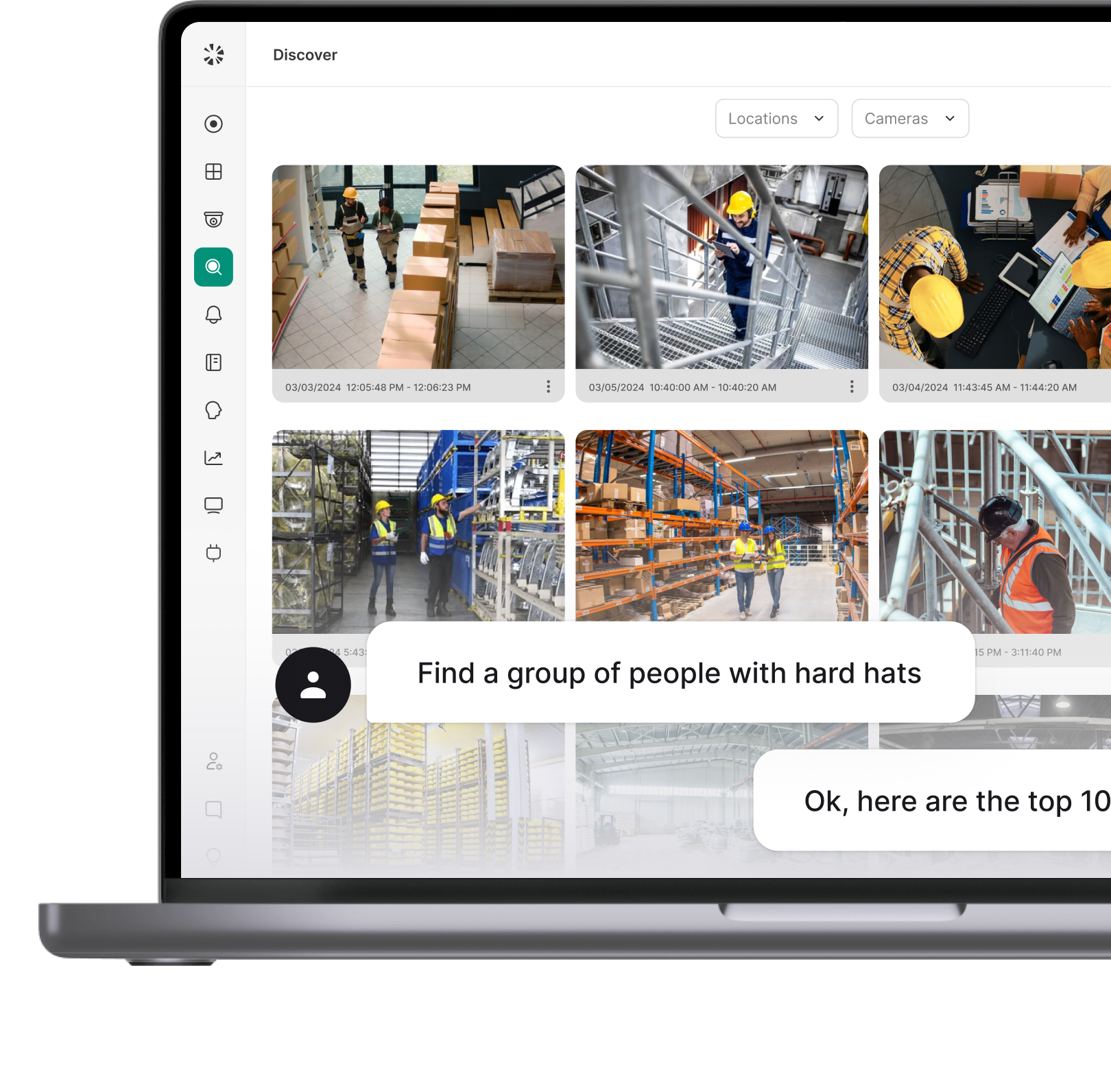
What Coram adds on top of that compatibility is the capability gap that most Meraki MV customers feel acutely. Meraki MV handles motion detection and basic object recognition, but advanced queries require developer resources to build custom API applications. Coram layers AI intelligence across the existing infrastructure: natural language video search retrieves specific clips in seconds, cross-camera tracking follows a person or asset across a facility automatically, and real-time alerts cover weapons, behavioral anomalies, slip-and-fall events, and custom triggers defined in plain English. These aren't add-ons requiring separate configuration, they're native to the platform.
The unified platform also extends beyond what Meraki MV covered. Video, access control, and emergency management run from one login. Every door access event links automatically to the corresponding video footage. Access control continues operating during internet outages, which addresses one of the core structural risks in Meraki's cloud-dependent model.
Best for: Security directors and IT teams at mid-to-large enterprises, schools, healthcare facilities, and warehouses that need AI-powered video intelligence without replacing existing camera infrastructure.
Strengths
- Compatible with 1,000+ IP camera models via ONVIF — Axis, Hikvision, Dahua, and Meraki MV units all connect without reconfiguration
- Custom alert triggers defined in plain English; no developer resources or API work required to create new detection rules
- Coram Point hardware (AI NVR) handles on-site processing per location; the cloud dashboard manages every site centrally
- SOC 2 Type II and HIPAA certified; on-premises AI processing available for environments with strict data residency requirements
- Rated 4.9/5 on G2 with a 9.5/10 ease-of-use score and 9.6/10 ease of administration
Limitations
- Covers physical security only; MR, MX, and MS replacement requires a separate evaluation
- Some third-party integrations are still maturing relative to established VMS incumbents like Genetec and Milestone
- Pricing is not publicly listed: a demo conversation is required to scope it
Pricing: Contact for pricing. Free trial and demo available.
Meraki MV vs. Coram
Coram is the stronger choice when AI detection capability matters and camera replacement isn't in the budget. Meraki MV's analytics ceiling is low — there's no natural language search, no cross-camera tracking, and no behavioral anomaly detection without custom API work. Coram delivers all of that on your existing camera infrastructure from day one. Choose Meraki MV only if you're already standardized on the Meraki ecosystem and your surveillance needs don't exceed basic motion detection and clip retrieval.
2. Ubiquiti UniFi
UniFi is Ubiquiti's networking ecosystem covering wireless access points, switches, gateways, and cameras under a single management interface. Hardware purchase includes all management software, with no mandatory per-device subscription fees.
For cost-conscious teams, this is the core appeal: UniFi eliminates the recurring per-device licensing that makes Meraki expensive at scale. A UniFi access point bought today doesn't require an annual renewal to keep working. That structural difference is meaningful for organizations with large device fleets or unpredictable renewal cycles.
UniFi covers more of the Meraki stack than any other single alternative on this list — MR, MS, MX, and MV all have UniFi equivalents. The tradeoff is support and technical overhead. Meraki's managed support model handles a lot of what UniFi leaves to the internal team or the community forum. Organizations with strong in-house networking expertise will find UniFi more capable per dollar. Organizations that rely on vendor support will find the gap real.
Best for: SMBs and mid-market IT teams with internal networking expertise who want enterprise-grade features without recurring software licensing costs.
Strengths
- No per-device licensing on any product line — switches, access points, gateways, and cameras all included with hardware purchase
- WiFi 7 access points available from $189; UniFi switches and gateways from comparable entry points
- UniFi Protect supports AI-based person, vehicle, and license plate detection at no recurring cost after hardware purchase
- Site Magic SD-WAN connects up to 1,000 sites in a hub-and-spoke topology without additional licensing
- Self-hosted controller option available for organizations with cloud dependency or data residency constraints
Limitations
- No enterprise SLA-backed support tier; escalation paths rely on community forums and Ubiquiti's standard support channels
- UniFi Protect uses a proprietary camera protocol — third-party IP cameras are not compatible
- Initial setup and ongoing management require stronger in-house networking expertise than Meraki's guided deployment model
Pricing: Hardware only. WiFi 7 access points from $189. No per-device licensing fees.
Meraki MR/MS/MX/MV vs. UniFi
UniFi beats Meraki on total cost of ownership for teams with the technical staff to manage it. The licensing savings are real and compound over time. Choose UniFi when you have internal networking expertise and want to eliminate recurring fees across the full stack. Choose Meraki when simplified management and vendor-backed support matter more than long-term licensing economics.
3. Fortinet FortiGate
FortiGate is Fortinet's next-generation firewall and SD-WAN platform built on custom ASICs that perform threat inspection at wire speed. It is the most common enterprise replacement for Meraki MX in environments where deep security inspection and granular policy control are the primary requirements.
The architectural difference from Meraki MX is fundamental. FortiGate hardware operates at a basic level without an active subscription. Meraki MX requires a license to pass traffic at all. For organizations that experienced what Meraki's cloud dependency means when a license lapses or connectivity drops, FortiGate's on-premises capability is a structural improvement.
The tradeoff is operational complexity. Meraki's dashboard is genuinely simpler to operate day-to-day. FortiGate's security depth — granular firewall rules, native SD-WAN, FIPS-validated cryptography, and the Security Fabric that unifies FortiGate, FortiSwitch, and FortiAP — requires teams with dedicated network security expertise to use effectively. For enterprise security teams that have those resources, FortiGate consistently outperforms Meraki MX on inspection throughput and policy control.
Best for: Enterprise IT and security teams in finance, healthcare, government, and manufacturing that need advanced threat inspection, SD-WAN, and granular policy control at scale.
Strengths
- Custom ASIC architecture delivers SSL inspection throughput that software-based alternatives can't match at comparable price points
- Secure SD-WAN is native to FortiGate hardware — no separate appliance, license tier, or third-party integration required
- Fortinet Security Fabric extends unified policy management across FortiGate, FortiSwitch, and FortiAP from one console
- FIPS 140-2 validated cryptography meets requirements for government, defense, and regulated financial deployments
- Perpetual hardware license; basic traffic forwarding works without an active subscription, unlike Meraki MX
Limitations
- Zero-touch branch deployment requires pre-staging via scripts or FortiDeploy — Meraki's plug-and-play rollout is faster for distributed sites
- FortiManager is needed for fleet-scale management, adding a separate tool and licensing layer that Meraki's unified dashboard avoids
- Realistic deployment requires a dedicated network security engineer; it's not a platform a generalist IT team manages part-time
Pricing: Perpetual hardware licenses with annual FortiGuard/FortiCare support. Security bundles range from $500 to several thousand dollars per year depending on deployment size and features.
Meraki MX vs. FortiGate
FortiGate is the right call when security inspection depth and policy granularity are the primary requirements, and when you have the staff to manage it. Meraki MX wins on ease of deployment and management simplicity. If a lean IT team handles the firewall alongside a dozen other responsibilities, FortiGate's operational overhead is a real cost. Choose FortiGate for dedicated security teams in regulated environments. Choose Meraki when management simplicity outweighs inspection depth.
4. Aruba (HPE)
Aruba, part of HPE, covers enterprise wireless, switching, and SD-WAN under the Aruba Central cloud management platform, with a structural advantage most alternatives don't offer: genuine support for both cloud and on-premises deployment models.
For compliance-sensitive environments — regulated healthcare, government, financial services — that's not a minor differentiator. Meraki's cloud-only management architecture routes everything through Cisco's cloud. Aruba Central supports hybrid operation, meaning organizations with strict data residency requirements or cloud restrictions don't have to choose between modern management and compliance.
Aruba also outperforms Meraki in high-density wireless environments, which matters for large campus deployments where access point density is high and interference management is a real problem. The tradeoff comes in management complexity and procurement friction. Aruba Central requires more technical expertise than Meraki's dashboard, and licensing across seven SD-Branch gateway tiers creates complexity that Meraki's simpler model avoids.
Best for: Large enterprises and campus environments in education, healthcare, and regulated industries that need hybrid deployment flexibility and high-density wireless performance.
Strengths
- Aruba Central supports both cloud and on-premises deployment — the only alternative on this list with a genuine hybrid management option
- AI-driven radio frequency optimization adjusts automatically across high-density wireless environments without manual tuning
- EdgeConnect SD-WAN supports application-aware routing and dynamic path selection across distributed sites
- Zero-trust network access enforcement applies consistently across wired and wireless from a single policy framework
- Hardware costs run below comparable Meraki MR and MS tiers at most deployment sizes
Limitations
- Aruba Central requires more administrative depth than Meraki's dashboard — onboarding takes longer for teams new to the platform
- Seven SD-Branch gateway licensing tiers create procurement complexity that Meraki's simpler model avoids
- Support experience is less consistent than Meraki's bundled model, particularly post-HPE acquisition
Pricing: Subscription-based per device, tiered across product lines. Quote-based for enterprise deployments.
Meraki MR/MS/MX vs. Aruba
Aruba is the stronger choice for large enterprise and campus environments where high-density wireless performance and hybrid deployment flexibility matter. Meraki is simpler to manage and better suited to distributed environments where ease of operation outweighs configuration depth. Choose Aruba when compliance requirements make cloud-only management a liability.
5. Juniper Mist
Juniper Mist is an AI-native networking platform covering wireless, wired, and WAN infrastructure, managed through the Marvis AI Virtual Network Assistant. It is built for enterprise teams that need proactive, self-healing network operations rather than reactive troubleshooting.
The operational model is different from Meraki's passive dashboard. Where Meraki surfaces alerts after something goes wrong, Marvis detects anomalies, identifies root causes, and initiates corrective actions in real time, before users experience impact. For large distributed networks where mean time to resolution drives real operational cost, that's a meaningful difference.
The value depends on having staff capable of acting on AIOps recommendations. Juniper Mist is premium-priced and positioned above Meraki for mid-market deployments. It earns that premium in environments where network complexity justifies the investment in proactive automation.
Best for: Enterprise IT teams running large distributed networks where proactive fault isolation and AI-driven troubleshooting reduce operational overhead at scale.
Strengths
- Marvis AI engine performs root cause analysis and initiates corrective actions automatically — reducing mean time to resolution without waiting for ticket escalation
- Service Level Expectation monitoring tracks performance at the individual user and session level, surfacing problems before users report them
- Every access point includes an integrated Bluetooth LE radio, enabling indoor location services and asset tracking without additional beacon hardware
- Fully open API architecture; integrates with existing ITSM and security toolchains without custom middleware
- WAN link health monitoring with configurable probes across IPv4 and IPv6 underlays, with real-time path visibility
Limitations
- Premium pricing — positioned above Meraki MX and MR at most mid-market throughput tiers; requires enterprise budget justification
- HPE acquisition integration is ongoing; some customers have reported inconsistency in support escalation paths
- AIOps value is proportional to network complexity and staff capacity to act on recommendations — smaller, simpler environments won't see the return
Pricing: Subscription-based per device. A 90-day trial including a complimentary access point is available. Enterprise pricing via HPE/Juniper sales.
Meraki MR/MS/MX vs. Juniper Mist
Juniper Mist outperforms Meraki where AIOps reduces operational load at scale, such as large enterprise networks where proactive fault isolation matters. Meraki is simpler and more accessible for mid-market teams that don't have the staff to act on sophisticated network telemetry. Choose Juniper Mist when network complexity justifies the investment.
6. Sophos
Sophos delivers unified threat management through its XGS firewall appliances and the Sophos Central cloud management platform. Its Synchronized Security architecture shares threat intelligence between firewalls and endpoints in real time, a capability Meraki MX does not offer natively.
That integration is the core differentiator. When a Sophos-managed endpoint detects a threat, the firewall automatically isolates it without requiring manual intervention. Meraki MX handles perimeter security, but the connection between endpoint behavior and firewall response requires separate tooling. For mid-market organizations running Sophos endpoint protection alongside their firewall, that synchronization eliminates a gap in automated response.
The tradeoff is management simplicity. Sophos requires more configuration effort than Meraki's dashboard, and SD-WAN capabilities trail dedicated platforms like Fortinet and Cato for complex multi-site topologies.
Best for: Mid-market IT and security teams that need deeper threat protection and endpoint-to-firewall synchronization than Meraki MX provides, without full enterprise security fabric complexity.
Strengths
- Security Heartbeat shares real-time threat status between endpoints and the XGS firewall; compromised devices are isolated automatically without manual intervention
- Xstream architecture offloads SSL/TLS inspection and threat analysis to dedicated processing, maintaining throughput under heavy inspection load
- Sophos Central manages firewalls, endpoints, email, and cloud workloads from one console — no separate management server required
- SD-WAN with dynamic path selection, application-based routing, and automatic failover across multiple WAN links
- Cloud sandboxing via Sophos Sandstorm provides zero-day threat detection for files traversing the firewall
Limitations
- Feature satisfaction scores run below Meraki MX in enterprise peer comparisons, particularly on reporting and visibility depth
- SD-WAN capabilities trail dedicated platforms like Fortinet FortiGate and Cato Networks for organizations with complex multi-site topologies
- More initial configuration required than Meraki's guided setup; policy migration from Meraki MX is not automated
Pricing: Hardware plus annual Xstream Protection or Firewall Management subscription. Quote-based; publicly available ranges start in the hundreds annually for SMB appliances and scale with throughput tier.
Meraki MX vs. Sophos
Sophos is the right replacement when endpoint-to-firewall threat synchronization matters and you're already running Sophos endpoint protection. The automated isolation response covers a gap Meraki MX leaves open. Choose Meraki MX when management simplicity is the priority and threat synchronization isn't a requirement.
7. Verkada
Verkada is a cloud-managed physical security platform covering cameras, access control, alarms, and sensors under one dashboard. It embeds AI processing directly on camera hardware, analyzing video locally and transmitting only relevant alerts to the cloud rather than continuous footage streams.
For organizations that are willing to replace all their cameras and want the fastest possible path to a modern security system, Verkada delivers. Plug-and-play installation, edge-based AI with sub-two-second detection latency, and a single-vendor ecosystem across cameras, access control, and alarms make it the most operationally simple option in this category.
The constraint is the hardware model. Verkada's ecosystem is fully proprietary: cameras work only with Verkada hardware. Existing IP cameras cannot be carried forward. At $500 to $2,100 per camera, the full hardware replacement cost is a significant barrier for organizations with existing camera infrastructure. Natural language search and cross-camera behavioral tracking are not available out of the box.
Best for: Organizations prioritizing fast deployment and a single-vendor security ecosystem, and prepared to invest in full hardware replacement to achieve it.
Strengths
- Edge AI runs on the camera itself with sub-two-second alert latency for people, vehicle, and license plate detection — no NVR required
- Native LPR built into the platform without third-party integration or additional licensing
- Local storage on each camera plus configurable cloud archive; footage is accessible even if cloud connectivity drops
- Unified dashboard covers cameras, access control, alarms, and environmental sensors under one login and one vendor contract
- Plug-and-play installation with minimal network configuration — fastest deployment path among camera platforms on this list
Limitations
- Fully proprietary hardware ecosystem; Verkada cameras only work with Verkada software and vice versa
- No natural language video search; clip retrieval relies on timeline scrubbing and filter-based queries
- Cross-camera behavioral tracking is not available out of the box
Pricing: Hardware ranges from $500 to $2,100 per camera. Cloud services are included with hardware purchase for a defined license term, with renewal fees for continued support.
Meraki MV vs. Verkada
Verkada is a direct architectural replacement for Meraki MV and improves on it meaningfully: better AI, a more purpose-built security interface, and no per-camera license required to access recordings. The cost of that improvement is a full hardware replacement. For organizations starting from scratch or due for a hardware refresh anyway, Verkada is a capable and fast path forward. For organizations with existing camera infrastructure they want to reuse, the hardware cost makes Coram the more practical choice.
8. Cato Networks
Cato Networks delivers a converged SASE platform combining SD-WAN, NGFW, ZTNA, CASB, and threat prevention as a single cloud service. It routes all traffic through a global private backbone, eliminating on-premises firewall appliances at branch sites entirely.
This is the highest architectural departure from Meraki on the list. Replacing Meraki MX with Cato isn't a firewall swap — it's a rethinking of the WAN and security topology. For distributed enterprises with large remote workforces and multi-site footprints, that's the point: Cato consolidates multiple point security solutions into one platform and one contract, with policy enforced consistently regardless of user location.
The migration complexity and premium pricing make Cato a poor fit for mid-market teams. It earns consideration for large distributed enterprises where eliminating branch hardware and converging networking and security into a single cloud service produces real operational and cost benefits.
Best for: Distributed enterprises with large remote workforces and multi-site WAN footprints that want to eliminate hardware firewalls and converge networking and security into a single cloud service.
Strengths
- Global private backbone with over 80 Points of Presence routes WAN traffic without MPLS, reducing latency for distributed workforces
- Single-pass inspection architecture processes all security functions simultaneously — NGFW, IPS, CASB, DLP, ZTNA — without stacking latency across separate tools
- Branch sites connect via lightweight Cato Sockets or software agents; no on-premises firewall appliance required at any location
- Identity-based access policies enforce consistently across on-premises, remote, and cloud workloads from one policy engine
- Converges SD-WAN, NGFW, CASB, DLP, and ZTNA into one subscription, eliminating separate point-solution contracts
Limitations
- All traffic routes through Cato's cloud backbone; organizations with regional data residency requirements must verify PoP coverage before committing
- Migration requires redesigning WAN topology and security architecture — not a drop-in Meraki MX replacement
- Premium pricing relative to FortiGate and Sophos; not cost-competitive for mid-market deployments with straightforward security requirements
Pricing: Subscription-based per site and per user. Contact Cato for enterprise pricing.
Meraki MX vs. Cato Networks
Cato is the right replacement for large distributed enterprises ready to eliminate branch hardware firewalls entirely and operate their WAN and security from a single cloud service. It's the wrong choice for mid-market teams replacing a firewall without a broader WAN transformation. Choose Meraki MX when operational simplicity and familiar on-premises architecture are the priority.
9. SonicWall
SonicWall delivers next-generation firewall appliances across its TZ and NSA series, targeting mid-market organizations that need reliable NGFW capabilities at a lower total cost of ownership than Meraki MX. It is one of the most frequently compared alternatives to Meraki MX among enterprise IT buyers.
Like FortiGate, SonicWall hardware operates at a basic level without an active subscription, a structural advantage over Meraki MX's license-dependent model. The pricing difference from Meraki is meaningful at comparable throughput tiers, and an established reseller network provides support coverage that community-driven alternatives can't match.
The tradeoffs are real. SonicWall has a documented history of security vulnerabilities that require disciplined firmware update practices, a genuine operational overhead that Meraki's managed update model avoids. The management interface demands more hands-on configuration, and SD-WAN capabilities trail Fortinet and Cato for complex multi-site topologies.
Best for: Cost-sensitive mid-market IT teams replacing Meraki MX who need reliable NGFW capabilities without mandatory per-device licensing.
Strengths
- TZ and NSA series hardware runs basic firewall functions without an active subscription; advanced threat services require TotalSecure or Essential Protection
- Real-time deep packet inspection, SSL/TLS decryption, IPS, and application intelligence across all throughput tiers
- SonicWall Zero-Touch deployment automates branch site configuration without on-site technical staff
- SonicWall Network Security Manager provides centralized multi-device management across distributed locations
- Established reseller and MSSP network provides support coverage in geographies and verticals where enterprise vendors are less accessible
Limitations
- Documented history of exploited vulnerabilities — CVE disclosures have been frequent enough that firmware update discipline is a genuine operational requirement, not a routine precaution
- SonicWall Network Security Manager is a separate tool with its own licensing; Meraki's single-dashboard model is simpler to operate
- SD-WAN path selection and application routing trail Fortinet and Cato for organizations with complex multi-site topologies
Pricing: Hardware purchase plus annual TotalSecure or Essential Protection subscription. Lower than comparable Meraki MX throughput tiers. Quote-based via SonicWall or authorized resellers.
Meraki MX vs. SonicWall
SonicWall wins on TCO for cost-sensitive mid-market deployments with straightforward security requirements. Meraki MX wins on management simplicity and vendor support consistency. If budget is the primary driver and your team can manage more hands-on configuration, SonicWall is a credible replacement. If firmware discipline is a concern for your team, factor in that operational overhead before committing.
10. NinjaOne
NinjaOne is a unified IT management platform combining RMM, MDM, patch management, backup, and remote access in a single SaaS console. It is named a Leader in the 2026 Gartner Magic Quadrant for Endpoint Management Tools and rated number one for MDM by G2.
For teams migrating off Meraki SM, NinjaOne's breadth is its strongest argument. SM was an MDM product inside a networking dashboard. NinjaOne is a full IT management platform: RMM, MDM, patching, backup, and ticketing under one contract. Organizations that adopted SM partly for its dashboard integration with the broader Meraki ecosystem will find NinjaOne's consolidation of IT management tools a comparable operational benefit, without the per-product Meraki licensing model.
Most users are fully operational in under a week, with average task onboarding under three hours. That pace matters given the June 2026 SM purchase deadline.
Best for: MSPs and internal IT teams migrating off Meraki SM who want a unified endpoint management platform covering mobile, desktop, and server management under one contract.
Strengths
- Named a Leader in the 2026 Gartner Magic Quadrant for Endpoint Management Tools; rated number one for MDM by G2
- Covers Android, iOS, iPadOS, macOS, Windows, and Linux from one console — broader OS coverage than Meraki SM offered
- FedRAMP Moderate, SOC 2, ISO 27001, HIPAA, and GovRAMP certifications for compliance-sensitive environments
- Automated patch management with scheduled deployment and compliance reporting across Windows, macOS, and Linux
- Condition-based script remediation triggers automated fixes when monitoring rules fire, reducing manual IT intervention
Limitations
- MDM is an add-on to the base RMM platform, not bundled — teams that only need mobile device management pay for RMM capability they may not use
- Windows mobile device management requires a separate RMM module
- Per-module pricing accumulates; organizations adding RMM, MDM, backup, and ticketing should model total cost before assuming it undercuts Meraki SM
Pricing: Per-device model ranging from approximately $1.50 per endpoint per month at 10,000 devices to $3.75 per endpoint per month at 50 or fewer devices. MDM is an add-on to the base RMM platform.
Meraki SM vs. NinjaOne
NinjaOne is the stronger replacement for teams that want a unified IT management platform rather than a standalone MDM. It covers more ground than SM did and scales predictably. For smaller teams that only need MDM and don't want to pay for RMM, Microsoft Intune may be a better fit if they're already on M365. For MSPs and IT teams managing a full device fleet, NinjaOne is the more capable platform.
11. Microsoft Intune
Microsoft Intune is a cloud-based unified endpoint management platform included in Microsoft 365 E3, E5, and Business Premium subscriptions. For organizations already standardized on Microsoft, it is the lowest-friction Meraki SM replacement with no additional MDM licensing cost.
The integration with Microsoft's identity and security stack is what separates Intune from every other option here. Conditional Access gates Microsoft 365 app access based on device compliance status. Microsoft Autopilot handles zero-touch Windows enrollment at scale. Microsoft Defender for Endpoint shares device security posture and threat response with Intune directly. For organizations where Microsoft is already the identity and productivity layer, Intune extends that investment into device management without adding a vendor.
The configuration complexity is real. Intune requires dedicated admin time to migrate policies from SM, and macOS and mobile device management require more configuration effort than Apple-native platforms. Teams without existing Microsoft admin expertise will find the learning curve steeper than Meraki SM.
Best for: M365-standardized enterprises migrating off Meraki SM that want a zero-additional-cost MDM platform tightly integrated with their existing Microsoft security and identity infrastructure.
Strengths
- Included in M365 E3, E5, and Business Premium at no additional cost; organizations on M365 A3 can enroll unlimited devices at no per-device charge
- Conditional Access enforces device compliance as a condition of M365 app access — non-compliant devices are blocked automatically
- Microsoft Autopilot handles zero-touch Windows enrollment; devices ship directly to end users and configure themselves on first boot
- App protection policies manage corporate data on personal devices without requiring full MDM enrollment — useful for BYOD environments
- Intune Plan 2 and the Intune Suite add advanced endpoint analytics, privilege management, and remote help as per-user add-ons
Limitations
- Policy migration from Meraki SM is not automated; translating restriction profiles, app assignments, and VPN payloads requires dedicated admin time
- macOS management requires more configuration than Apple Business Manager-native tools; feature parity with Jamf is not complete
- Teams without existing Azure AD and Intune admin experience face a steeper learning curve than any other MDM on this list
Pricing: Included with Microsoft 365 E3, E5, and Business Premium. Intune Plan 2 and the Intune Suite available as per-user per-month add-ons.
Meraki SM vs. Microsoft Intune
Intune is the right replacement for M365-standardized organizations that want to eliminate a separate MDM license and keep device management inside the Microsoft ecosystem. It's the wrong choice for teams without Microsoft admin expertise or those that need a lighter-touch, faster-to-configure MDM. NinjaOne is the better alternative for teams that want platform breadth and fast onboarding.
12. pfSense
pfSense is an open-source firewall and router platform built on FreeBSD, available as a free Community Edition or licensed pfSense Plus. It runs on Netgate hardware or customer-supplied x86 hardware, delivering stateful packet inspection, VPN, and traffic management with no mandatory per-device licensing.
pfSense is the most cost-efficient option on this list and the most demanding operationally. There is no SLA-backed support on Community Edition, no native centralized dashboard for multi-site fleet management, and no simplified deployment workflow. Configuration and maintenance require significant networking expertise. For organizations with that expertise on staff, particularly those running smaller environments or with a strong preference for on-premises control, pfSense eliminates recurring licensing costs entirely.
Best for: IT teams and network engineers with strong technical expertise who need full firewall control without recurring licensing costs, and are willing to trade Meraki's simplified management for configurability.
Strengths
- Community Edition is free; core stateful packet inspection, NAT, VPN, and traffic shaping run without any subscription
- Supports IPsec, OpenVPN, and WireGuard natively for site-to-site and remote access VPN without additional licensing
- Runs on Netgate appliances or any customer-supplied x86 hardware — no proprietary hardware lock-in
- pfSense Plus adds cloud deployment on AWS and Azure, plus TAC-backed support tiers for organizations that need professional escalation
- Extensive plugin ecosystem extends base functionality: IDS/IPS via Suricata or Snort, traffic monitoring, VLAN management, and more
Limitations
- Community Edition has no SLA-backed support; professional support requires pfSense Plus with a TAC Lite or TAC Pro subscription
- No native centralized management dashboard for multi-site deployments — managing more than a handful of locations requires additional tooling or scripting
- Every configuration change is manual; there is no guided setup, no zero-touch deployment, and no automatic policy rollout across sites
Pricing: Community Edition is free. Netgate hardware starts at approximately $1,000. pfSense Plus requires a TAC Lite or TAC Pro support subscription for enterprise environments.
Meraki MX vs. pfSense
pfSense is the right replacement when eliminating licensing costs entirely is the priority and technical expertise is available. Meraki MX wins on management simplicity, vendor support, and zero-touch deployment. Choose pfSense for technically strong teams that want full control without recurring fees. Don't choose it for distributed environments that need centralized multi-site management without additional tooling.
How to Migrate from Cisco Meraki to an Alternative
Migration complexity varies by product line. A camera migration carries different risks than a firewall cutover or an MDM platform switch. Work through the steps below in sequence. The first two apply regardless of product line.
Step 1: Audit your current Meraki environment. Export your full device inventory from the Meraki Dashboard, including serial numbers, license expiration dates, firmware versions, and network assignments. For SM, export enrolled devices, active policies, app configurations, and directory integrations via the Meraki API before licenses lapse. Your device count, license timeline, and configuration dependencies determine your migration window.
Step 2: Map your configuration to the target platform. Identify which Meraki configurations have direct equivalents on the replacement platform and which require rebuilding. Firewall rules, VLAN structures, VPN topologies, SSID configurations, and access policies all need mapping before anyone touches hardware.
Step 3: Replacing Meraki MX (firewall and SD-WAN). Run the replacement appliance in parallel with the existing MX before cutover. Validate firewall rules, NAT policies, VPN tunnels, and VLAN configurations in a test environment first. Migrate branch sites one at a time and keep the MX available for rollback until the replacement has handled a full business cycle without issues.
Step 4: Replacing Meraki MR (wireless). Survey access point placement before deploying replacement hardware. Reconfigure SSIDs, authentication methods, and VLAN assignments on the new platform before decommissioning Meraki APs. Run both networks in parallel during transition and pilot one site fully before rolling out fleet-wide.
Step 5: Replacing Meraki MV (cameras). Export any clip archives or incident reports you need to retain before decommissioning. Recorded footage does not transfer between platforms. If migrating to Coram, existing IP cameras — including Meraki MV units — can remain in place. If migrating to a proprietary platform like Verkada, plan for full hardware replacement and installation scheduling.
Step 6: Replacing Meraki SM (MDM). New SM licenses cannot be purchased after June 3, 2026. Back up device configurations, restriction profiles, app assignments, and VPN and Wi-Fi payloads via the Meraki API before unenrolling devices. Set up the replacement MDM and connect Apple Business Manager and Android Enterprise accounts first. Pilot with one department before rolling out fleet-wide. If you have SM licenses extending beyond June 3, 2029, Cisco will automatically issue partial credit memos applicable toward other Cisco products.
Step 7: Validate and decommission. Run both environments in parallel before removing Meraki from production. Confirm monitoring, alerting, reporting, and user access all function correctly on the replacement platform before decommissioning hardware and licenses.




.png)