
Code Silver: What It Means and How Hospitals Respond
Code Silver signals an armed threat, active shooter, or hostage situation in a hospital. A strong response depends on fast alerts, clear roles, unit-specific lockdown plans, and regular drills.

Stu Waters
Published


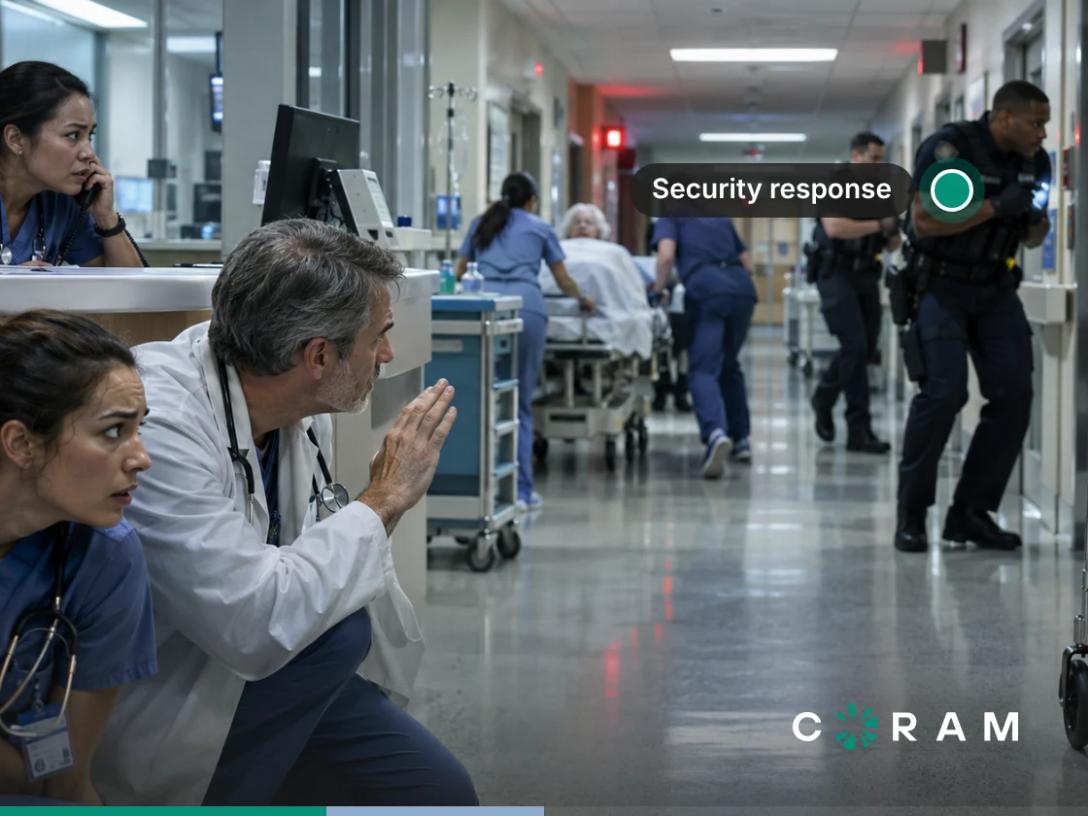
Code Silver in hospitals is an emergency code signaling a serious security threat involving a person with a weapon, an active shooter, or a hostage situation on the premises. Because hospital emergency codes vary by facility, some hospitals use plain-language alerts such as “Security Alert, Active Shooter,” followed by the location and instructions.
When the Code Silver announcement goes overhead, staff have seconds to decide whether to run, hide, or shelter in place, while caring for patients on oxygen, in restraints, or sedated in a procedure room who cannot make that decision for themselves.
The color code tells staff what is happening. It does not tell them what to do next, who is doing what, or when the building is clear.
This guide explains how hospitals respond to a Code Silver, what each team is responsible for, and how security leaders can build a response plan that works when it matters most.
What a Code Silver Announcement Tells Staff
A well-formed Code Silver hospital announcement carries three pieces of information:
- the threat type (what is happening),
- the exact location (where the threat is located), and
- a direction for staff (what action to take).
For example, “Code Silver, third-floor surgical wing, avoid the area” tells staff three things at once: what kind of emergency it is, where not to go, and, implicitly, that the response is already underway. An announcement missing the location is harder to act on than one that names the wing or room number.
The threat type matters because hospitals use the same code to cover meaningfully different situations.
- A weapon seen but not fired calls for shelter-in-place and controlled lockdown.
- An active shooter with confirmed gunfire activates a different response, including Run/Hide/Fight guidance, an immediate call to 911, and a handoff to law enforcement.
- A hostage or barricade situation may require a perimeter hold and negotiation support rather than evacuation.
Some hospital systems split these into separate calls; others use a single Code Silver and rely on the verbal description that follows to carry the distinction. Staff should know how their facility distinguishes between these situations and which instructions apply.
Activation procedures also vary by hospital and may be initiated by any staff member. Depending on local policy, a staff member who identifies a threat may call the operator to initiate the overhead page, press a panic button connected to the security desk or operator, or dial 911 directly to trigger an external response.
Many hospital policies allow any staff member to initiate a Code Silver and ask the caller to report the location and a description of the person and the weapon. The key is to know your facility’s protocol before an emergency occurs.
One note for context: Some Canadian provinces also use Code Silver, though other systems use different colors for personal threats. Some international protocols, including Australia’s, use Code Black for a similar category.
Code Silver vs Other Hospital Emergency Codes
Understanding where Code Silver fits within the broader set of hospital emergency codes helps staff recognize the situation and follow the appropriate response protocol.
Code meanings aren't standardized nationally, and the same color can refer to different emergencies across states and hospitals. Staff who float between hospitals or have recently joined from another system should confirm local policy before assuming the Code Silver meaning they learned elsewhere applies at their current facility. Knowing which alert signals an armed threat, a medical emergency, or a facility-wide incident helps teams respond without confusion.
Why Hospitals Are Replacing Code Silver With Plain-Language Alerts
The core problem with Code Silver is the same problem with every color code: the meaning is only as reliable as the training that preceded it.
The Emergency Nurses Association’s (ENA) position statement on plain-language emergency alerts, most recently revised in 2022, cites a Pennsylvania patient-safety study that found “Code Silver” carried seven different meanings across the state’s healthcare facilities. This means a nurse floating from one facility to another, a visitor, or a recently hired staff member may hear the same words and reach a different conclusion about what is happening.
In a weapon or active shooter situation, people need to understand the threat and what to do without decoding an announcement. This gap creates significant risk.
Why the Shift to Plain-Language Alerts?
Several healthcare and emergency management organizations support clearer emergency communications.
- The Emergency Nurses Association formally supports replacing color codes with plain-language announcements in all hospitals.
- According to the ENA, the Department of Homeland Security, the National Incident Management System, the FBI, and at least ten state hospital associations, including those in Colorado, Minnesota, Missouri, Texas, and Wisconsin, support plain-language alerts. The New Jersey Hospital Association has published its own implementation guidance.
- In 2024, the Washington State Hospital Association (WSHA) led a statewide campaign asking hospitals to replace most color codes with standardized plain-language alerts, keeping only Code Blue and the AMBER alert. Hospitals began implementing the change on October 1, 2024. Adoption is voluntary, though WSHA strongly recommends it.
The goal is to ensure staff, patients, and visitors can understand an announcement without memorizing a hospital's color-code system.
What Does a Plain-Language Alert Sound Like?
A plain-language announcement replacing a Code Silver page might sound like this: “Security Alert, Active Shooter, third-floor surgical wing. Avoid the area and shelter in place.”
It defines the threat, names the location, and tells people what to do, using words that a patient’s family member in a waiting room can understand and act on without prior training.
Some hospitals worry that announcing an active threat directly could frighten patients and visitors more than a color code would. However, coded alerts can also leave people confused about the danger or unsure what action to take.
The case for plain language is that clear instructions can help staff and visitors understand the threat and respond appropriately. Float staff, contract workers, and people with limited English proficiency may find a direct announcement easier to understand than a code that requires familiarity with a hospital's internal system.
The debate is worth having internally before changing policy. Hospitals should review their communication needs, staff training, and local requirements before deciding how to implement plain-language alerts.
How Hospitals Respond to a Code Silver, Step by Step
No two Code Silver incidents unfold identically, but the response sequence follows a logic that a well-prepared security team can rehearse and execute. Security must coordinate unit lockdowns, protect patients, guide law enforcement, and account for everyone once the immediate threat has passed.
The following seven steps outline how a hospital security team and emergency management leaders can prepare for and manage a Code Silver incident.
1. Activation and Notification
The gap between “a staff member sees a weapon” and “the rest of the hospital receives the alert” is the first point of failure in any Code Silver response. Activation paths vary by facility policy: a call to the operator who initiates the overhead page, a panic button wired directly to the security desk or dispatch center, a direct 911 call, or a mass notification push to staff phones and pagers. Most facilities use more than one in combination.
- The overhead page goes first because it reaches everyone simultaneously: staff in stairwells, visitors in waiting rooms, and clinicians in procedure rooms without a phone in hand.
- The mass notification to devices follows and carries more detail: the threat type, the last known location, and the initial direction.
Every second between the sighting and the page is a second the threat has without a building-wide response in motion. Facilities that rely solely on someone finding a phone and calling the operator can expect a longer delay than those with direct panic-button activation that bypasses the operator queue. In a hospital’s Code Silver response, the goal is to get an accurate alert to the right people through the available channels without adding avoidable delays.
What security leaders should check:
- Activation: Can staff initiate an alert without locating a phone or reaching a busy operator?
- Coverage: Does the alert reach relevant units, security posts, and staff who may not be near a speaker?
- Backup channels: What happens if the overhead system or mobile notification service fails?
- Testing: Does pressing a panic button trigger the intended response, or does it alert only the security desk?
Test the full activation chain, not just the overhead announcement. A system that alerts one security post but fails to notify the rest of the facility leaves a critical gap in the response.
2. The First Minutes: Run, Hide, Fight in a Care Setting
The HHS, FEMA, and FBI guide Incorporating Active Shooter Incident Planning Into Health Care Facility Emergency Operations Plans adapts the Run/Hide/Fight framework specifically for hospitals, and the adaptation matters. In a standard workplace, the options may read as a ranked sequence. In a hospital, they depend on the situation and the staff. A charge nurse in a mobile unit near an exit has different options than a surgeon mid-procedure or an ICU nurse with a ventilated patient.
People should consider the safest available response based on the threat's location, their surroundings, and whether they can move safely.
- Run: If there is a safe route away from the threat, staff who are not in the middle of a patient-care obligation should move to safety and encourage others to follow when it is safe to do so.
- Hide: If leaving is unsafe or not possible, move to a secure room or area, lock or barricade the door where possible, move patients away from windows and doorways or lines of sight, and follow the facility's shelter instructions.
- Fight: This is a last resort for someone who cannot run or hide, or who is in direct contact with the threat and has no other option.
What about patients who cannot evacuate?
This is one of the hardest questions a hospital’s Code Silver plan must address before an incident. A patient may be ventilated, undergoing surgery, unable to walk, or dependent on equipment that cannot be moved quickly. The answer is not to abandon them, and the federal healthcare planning guide acknowledges that no single answer fits every situation.
Hospitals should develop unit-specific procedures so that staff can shelter with non-ambulatory patients, secure the room, silence monitoring alarms only where clinically safe, and stay low and away from the door.
During a Code Silver incident, the plan should also identify who makes decisions for patients requiring continuous care and how clinical teams communicate with security during lockdown. Staff need clear guidance that balances immediate safety with their responsibility to patients.
3. Lockdown and Controlling Movement
A hospital lockdown is a coordinated set of actions across doors, entrances, units, and security posts. The goal is to restrict access to the threat area, reduce unnecessary movement, and keep routes open for law enforcement and emergency responders.
Depending on the building and its systems, the response may include:
- Securing unit doors: Lock or restrict access to affected units according to the emergency plan.
- Managing the emergency department entrance: Control entry and exit while maintaining the access required for emergency operations.
- Controlling elevators and corridors: Limit movement into affected areas where the building's systems and procedures allow it.
- Protecting staff and visitors: Direct people away from the threat and prevent them from entering unsafe corridors or public areas.
Unit doors may need to be switched to badge-only access or secured manually, depending on available hardware. Stairwell doors along routes between the threat's last known location and other parts of the building should also be addressed in the lockdown plan.
Coordinate lockdown procedures with local law enforcement in advance. Security teams should know which doors can be secured remotely, which require staff intervention, and which entry points responders will use. The plan should also explain how staff can verify responder instructions before opening secured doors.
For more on securing entrances and restricting unauthorized movement, see the guide to hospital access control.
4. Unit-Specific Realities
Each unit has different patient needs, access points, and constraints, so the emergency plan should clearly outline what staff are expected to do in their area.
- Emergency department: The ED has a relatively open layout and a high volume of visitors. It may also be the entry point for a threat. Triage and waiting areas need a clear protocol for securing access, moving patients away from danger, and maintaining communication with security without blocking responder access.
- Operating rooms mid-procedure: If a procedure is underway, the team must follow the facility's plan to secure the room, silence non-essential alarms where clinically appropriate, and continue patient care. The plan should identify who is responsible for managing the door and receiving updates.
- Intensive care unit (ICU): Many patients cannot move independently and rely on continuous monitoring or life-support equipment. Procedures should prioritize sheltering in place where appropriate, securing unit doors and staying with patients.
- Labor and delivery / NICU (neonatal intensive care unit): Newborns, recovering patients, and families may all need protection. Plans should address securing the unit, controlling family movement, and assigning a staff member to communicate with families so clinical staff can stay with patients.
- Behavioral health: Patients may already have restricted movement or may respond unpredictably to a sudden overhead announcement. Units often have controlled access. Staff need a clear protocol for managing patient behavior during lockdown, separate from the standard de-escalation response.
- Outpatient clinics: Clinics may be less integrated into hospital incident command and less practiced in Code Silver response. If outpatient facilities share a campus, include their lockdown and evacuation procedures in the same plan and exercise them with appropriate frequency.
The security lead should confirm that each unit's plan reflects its actual layout, staffing, and patient population. A procedure that works in an administrative office may not be workable in an ICU or during surgery.
5. Law Enforcement Arrival and Incident Command
When police respond, the hospital must move from internal notification to coordinated incident management. Activate the Hospital Incident Command System as soon as the code is called, without waiting to confirm the severity.
The security team should be ready to provide law enforcement with:
- Floor plans and access information: Building layouts, entrances, restricted areas, and relevant access points.
- Threat details: The person's description, any known weapon, and the last confirmed location, including when the information was received.
- Incident status: Known injuries, affected units, and any changes in the threat's location.
- Available camera views: Relevant live video, where the system supports access and sharing with responders.
- A clear point of contact: A designated security or command representative who can meet responders at the agreed entry point, relay information, and coordinate requests.
Keep essential resources, such as floor plans and a working security radio, readily accessible so responders can get information without unnecessary delays.
Staff should follow law enforcement instructions and remain in a secure location until directed otherwise. The arrival of officers does not automatically mean the threat has ended. Staff should not open doors or leave shelter simply because someone claims to be a responder. Hospital active shooter training should explicitly cover how to verify instructions and handle requests to open secured doors.
6. All Clear, Accountability, and Continuing Care
Only authorized officials should make an all-clear announcement. Even after the immediate threat is contained, the hospital must account for people, continue medical care, and manage the incident scene.
A hospital’s Code Silver plan should address three priorities during this phase:
- Account for staff, patients, and visitors: Unit supervisors should confirm headcounts against assignment sheets and report discrepancies to the incident commander. Report missing staff, patients, or visitors promptly to the appropriate response team. Visitors who sheltered in place may be in locations not on any list, so visitor sign-in and badging at entry points matter for accountability and access control.
- Continue care for the injured: Treating the injured inside an active crime scene requires coordination with law enforcement on where and how evidence is preserved. Clinical priorities remain essential, but staff should document the scene as thoroughly as care allows and communicate with officers managing the perimeter about the movement of patients, equipment, and personnel.
- Coordinate family reunification: Establish a designated location away from the incident area, assign a staff member to manage it, and use a protocol to verify identity before releasing information. Reunification marks the next phase of the incident, including family communication and media and legal considerations.
7. After the Event
The response does not end when the building is cleared. Make psychological first aid and other support available as soon as practical. Staff who were in direct contact with the threat, treated the injured, or sheltered in place for an extended period may need structured support before returning to their usual duties.
- Provide psychological support. Offer staff access to employee assistance programs, peer support, behavioral health services, or other appropriate resources. Make support available proactively, rather than expecting employees to ask for it themselves.
- Conduct an after-action review. Bring together security, clinical leadership, facilities, communications, incident command, and relevant external responders to review what happened. Aim to conduct the review promptly, while the sequence of events is still clear to participants. Examine where the plan held, where it broke down, what staff actually did versus what the plan required, and what changes to procedures, hardware, or training are needed. Every gap that surfaces in the review existed before the incident; the incident just made it visible.
- Update the plan and training. Assign owners and deadlines to corrective actions. Use the findings to update procedures, address equipment or communication gaps, and plan follow-up exercises. The purpose is to turn lessons from the incident into specific improvements.
- Review privacy and law enforcement disclosures. HIPAA permits certain disclosures of protected health information to law enforcement in specific circumstances and subject to applicable conditions. The HHS guide on active shooter response in healthcare facilities includes an appendix covering permissible disclosures to police. Review it with your compliance officer before an incident.
Who Does What During a Code Silver
Clear role assignments are what separate a practiced Code Silver response from a hallway full of people waiting to be told what to do. Each team should know its responsibilities before an incident begins.
Document these responsibilities in policy and practice them through drills. During an active shooter in a hospital, staff need to know their roles and follow established procedures rather than search for instructions in a binder.
How to Build a Code Silver Plan That Holds Up
A hospital’s Code Silver response needs to be planned before an incident, not improvised during one. The essentials include a written plan in the hospital's emergency operations plan (EOP), a threat assessment team, coordination with local law enforcement, and clear alert language staff understand.
The Planning Essentials
The written plan should cover how to activate the alert, who is responsible for each action, what individual units should do, and how the hospital will manage lockdown, sheltering, evacuation, the all-clear, and family reunification. Keeping these procedures within the EOP helps ensure they are reviewed and exercised alongside the hospital's wider emergency preparedness plans.
Coordination with local law enforcement also needs to happen before an incident. A walkthrough can help responding officers understand the building layout, entry points, and access restrictions. Agree in advance on how officers will communicate with hospital security, which routes they may use, and who will provide information when they arrive.
Alert language matters just as much. Whether the hospital uses Code Silver or a plain-language announcement, staff should recognize the wording and know what action to take when they hear it.
Training and Drills: Test More Than the Plan
A tabletop exercise helps the team talk through a scenario, but it cannot show every problem that comes up when staff must act in real time. A live exercise can reveal whether the alert reaches the right units, doors can be secured as planned, responders can access the building, and staff understand their responsibilities.
Two regulatory references are worth checking as part of the planning process:
- CMS Emergency Preparedness Rule: For Medicare and Medicaid Participating Providers and Suppliers, 42 CFR § 482.15 requires hospitals to provide emergency preparedness training at least every two years and conduct exercises to test their emergency plans at least twice a year. The rule specifies the required exercises and documentation, including an annual full-scale exercise or an eligible facility-based alternative, plus an additional exercise. Hospitals should review the current regulation to confirm which requirements apply to their circumstances.
- The Joint Commission's workplace violence prevention standards: The Commission's current workplace violence prevention requirements address leadership oversight, a multidisciplinary prevention program, risk analysis, reporting, staff training, and post-incident support. Code Silver exercises should complement this wider program, not replace it.
Checklist for Your Next Safety Committee Meeting
Use this checklist to identify gaps in your current plan and assign follow-up actions. It also works as one part of a broader hospital security assessment.
- Review the written plan: Is the Code Silver or active threat procedure included in the emergency operations plan and up to date?
- Check activation and alerts: Can staff trigger an alert quickly, and do backup notification channels work?
- Confirm roles and call language: Do staff know who activates the alert, who secures each unit, and what the announcement means?
- Coordinate with local police: Have responders reviewed floor plans, entry points, access restrictions, and communication procedures?
- Review training and exercises: Does the schedule meet applicable CMS requirements, and do exercises test realistic scenarios across different units?
- Track corrective actions: Are findings from previous drills documented, assigned to an owner, and followed through to completion?
Hospital active shooter training should prepare staff to carry out their specific responsibilities, not simply demonstrate that a drill took place. The plan is only useful if teams can follow it under pressure and the hospital acts on the gaps each exercise reveals.
Where Technology Fits in Code Silver Response
Even a well-planned Code Silver response can run into problems if an alert is delayed, reaches only part of the building, or leaves responders without a clear picture of the threat's location. Technology can help close these gaps by improving how alerts are delivered, information is shared, and security teams coordinate their response.
Emergency Management
Coram's Emergency Management platform supports the notification and coordination side of a hospital emergency response. It includes several capabilities designed to help security teams get the right information to the right people:
- Panic alerts that show the location assigned to the button and which button was pressed. When someone reports an emergency from the web or mobile app, they pick the location and can add context from a preset list.
- Alerts by push, SMS, and email. Push alerts can be set to Critical for each emergency type, so they sound through Do Not Disturb (and silent mode on iPhone) for staff who have allowed critical alerts.
- Automatic Dispatch, which shares the emergency details and location with a trusted dispatch partner. The partner first texts the hospital's emergency contact to verify, then notifies 911 if that person confirms or doesn't respond. Site Admins turn it on for each emergency type, and staff with permission also get a manual Call 911 button in the mobile app.
- A dedicated incident chat for each emergency, where designated responders, such as security leads, incident commanders, and unit charge nurses, post updates.
- CAP-standard webhooks that can send emergency activations to the mass-notification platform a hospital already uses.
- A drill mode that lets teams practice the activation workflow. Drill notifications are tagged as drills, a panic button pressed during a drill never dispatches 911, and drills are flagged in the emergency export so teams can review them afterward.
- Up to five configurable emergency types, so a hospital can set up Code Silver, or a plain-language active threat alert, as its own type with its own recipients and alert channels.
- Device health alerts when a panic-button gateway goes offline or a button’s battery runs low, plus a desktop notification app for Mac, Windows, and ChromeOS for nursing stations and front desks.
Connecting Alerts With Video and Firearm Detection
When paired with Coram Video Security, firearm detection alerts add a short video clip to the emergency chat, covering five seconds before the detection to ten seconds after. That gives the security team visual context for the reported area rather than relying only on verbal descriptions.
Coram's Firearm Detection works with existing compatible cameras to detect a visible firearm and send the alert, with a clip, to recipients with Emergency Management access. Once one of them confirms it on web or mobile, the emergency starts with no panic button needed, along with any Automatic Dispatch set up for that emergency type. For how camera-based detection fits alongside entry screening, see our guide to hospital weapons detection systems.
Both capabilities can work with the hospital's existing cameras, where compatible, rather than requiring a complete camera hardware replacement.
Final Thoughts
A Code Silver plan is only as effective as its ability to get the right information to the right people at the right time. Its effectiveness depends on two things: how quickly alerts reach staff throughout the building and whether they know how to respond.
Clear procedures, regular drills and reliable communication help security teams coordinate their response when every second matters.
If you’re reviewing your facility’s emergency preparedness, explore Coram Emergency Management to see how it supports emergency alerts and coordination during a Code Silver response.
FAQ
What does Code Silver mean in a hospital?
Code Silver in a hospital typically signals a person with a weapon, an active shooter, or a hostage situation. It alerts staff to a potential security threat and prompts them to follow the facility's emergency procedures.
What should staff do during a Code Silver?
Staff should follow the hospital's emergency plan and determine whether they can safely leave the area or need to shelter in place. Those caring for patients who cannot move independently may need to secure the room and shelter with them. Fighting is a last resort when someone faces an immediate threat and cannot safely run or hide.
Is Code Silver the same in every hospital?
No. Hospital emergency codes aren't standardized nationally. So Code Silver can mean different things across facilities and regions. Staff working across multiple hospitals should confirm local policies rather than assume the same announcement signals the same threat.
What is the difference between Code Silver, Code Gray, and Code Black?
Code Silver typically refers to a weapon-related threat, an active shooter, or a hostage situation. Code Gray generally signals a combative or aggressive person when no weapon has been confirmed, while Code Black often refers to a bomb threat. Meanings vary, so staff should follow their hospital's emergency code policy.
Why are hospitals replacing color codes with plain-language alerts?
Color codes can confuse visitors, temporary staff, and employees who have worked at different facilities. Plain-language announcements, such as “Security Alert, Active Shooter, third-floor surgical wing,” state the threat and location directly, followed by instructions. The Emergency Nurses Association and several state hospital associations support clearer emergency communication to reduce confusion.
What happens to patients who cannot evacuate during an active shooter event?
The response depends on the patient's condition, the threat's location, and whether movement is safe. Staff may need to shelter with patients, secure the room, and maintain essential care according to unit-specific procedures. Hospitals should plan for patients who cannot evacuate, including those who are ventilated, undergoing surgery, or dependent on life-support equipment.
How often should hospitals run Code Silver drills?
Hospitals should follow applicable regulatory requirements and their emergency preparedness plan. Under the U.S. CMS emergency preparedness rule, covered hospitals must conduct exercises at least twice a year, including a full-scale community-based or facility-based exercise, subject to specific provisions. Tabletop exercises help teams review decisions, while live drills reveal practical issues with alerts, access controls, staff responsibilities, and coordination with responders.
What information do police need from a hospital when they arrive?
Responding officers need the threat's last known location, a description of the person and weapon if available, floor plans, relevant entry points, and information about known injuries. Relevant live camera views may also help if the hospital's systems support them. A designated security contact should share verified updates and coordinate access with responding officers.