Managing safety across a single school is challenging enough. Doing it across an entire district, with dozens of buildings, hundreds of entry points, and thousands of students, requires a fundamentally different approach. The strategies that work for one campus often fall apart when applied at scale.
Most districts face a common problem: fragmented systems. One school uses one camera vendor, another uses a different access control provider, and emergency protocols vary from building to building. When an incident occurs, administrators scramble to piece together information from disconnected sources. Response times suffer, and critical details slip through the cracks.
This guide covers how to build a cohesive, district-wide approach to school safety. It addresses the technology, processes, and coordination required to protect students and staff across every campus in your district.
Why District-Wide Safety Requires a Different Approach
Single-school solutions rarely scale. A camera system that works well for one building becomes unmanageable when you have 20 buildings, each with its own login, its own storage, and its own way of handling footage. The same applies to access control, visitor management, and emergency response.
Districts also face challenges that individual schools do not. Budget decisions happen at the district level, not the building level. Compliance requirements, such as those mandated by Alyssa's Law in certain states, apply across all schools equally. When parents and community members ask questions about safety, they expect consistent answers regardless of which school their child attends.
The goal is not simply to replicate single-school solutions across multiple campuses. It is to create a unified safety infrastructure where administrators can see, manage, and respond to incidents from any location through a single system.
Core Components of a District-Wide School Safety Plan
Centralized Security Management
A centralized approach means that security teams can monitor every school from a single dashboard. Instead of logging into separate systems for each building, administrators see all locations in one place. This applies to live video feeds, access logs, alert notifications, and incident reports.
Centralization also enables standardized policies. When every school follows the same protocols for visitor check-in, door access, and emergency lockdowns, there is less room for confusion during critical moments. New staff can be trained on one system rather than learning different tools at each location.
Integrated Technology Infrastructure
Effective district safety relies on technology systems that communicate with each other. Video surveillance should work alongside access control, so that when a door is propped open or forced, the nearest camera automatically pulls up the relevant footage. Emergency management systems should trigger lockdowns across all buildings simultaneously when needed.
Integration reduces response time. Instead of manually cross-referencing logs from different systems, security personnel receive correlated information automatically. They can see who accessed a door, at what time, and what the camera captured at that moment, all in one view.
Emergency Preparedness and Response
Districts need the ability to initiate lockdowns across multiple schools at once. In scenarios where a threat affects more than one campus, or where the location of a threat is uncertain, waiting to activate each school individually costs precious time.
Emergency preparedness also includes regular drills, clear communication channels, and post-incident review processes. The systems used for real emergencies should be the same systems used for drills, ensuring that staff are familiar with the tools they will rely on when it matters most.
Compliance and Documentation
Several states have enacted legislation requiring schools to implement specific safety measures. Alyssa's Law, named after a victim of the Parkland shooting, mandates panic alert systems that connect directly to law enforcement in states including Florida, New Jersey, New York, and Texas. Districts operating in these states must ensure their systems meet these requirements.
Beyond legal compliance, thorough documentation supports grant applications, insurance requirements, and community accountability. Systems that automatically log incidents, access events, and emergency responses make it easier to demonstrate due diligence.
Seven Strategies to Improve School Safety Across Your District
1. Conduct a District-Wide Security Assessment
Before implementing new technology or policies, understand what currently exists. Audit every school to document existing camera systems, access control hardware, emergency protocols, and staff training levels. Identify inconsistencies between buildings and note which systems are outdated or incompatible with modern standards.
This assessment creates a baseline for improvement. It also reveals opportunities for consolidation. Many districts find that they are paying for overlapping services or maintaining hardware that no longer serves its intended purpose.
2. Standardize Access Control at Every Entry Point
Every exterior door and sensitive interior area should be covered by access control. This means credential-based entry for staff and authorized visitors, with the ability to revoke access instantly when someone leaves the district or when credentials are compromised.
Visitor management is equally important. A standardized check-in process across all schools ensures that every visitor is identified, logged, and given appropriate access. Systems that screen visitors against sex offender registries and custody databases add an additional layer of protection.
Modern access control platforms allow administrators to manage credentials for all schools from a single interface. When a staff member transfers from one building to another, their access can be updated without coordinating between separate systems.
3. Deploy AI-Powered Video Surveillance
Traditional camera systems record footage that someone reviews after an incident. AI-powered systems analyze video in real time, detecting potential threats before they escalate. This includes identifying weapons, recognizing unauthorized individuals, and flagging unusual behavior such as someone lingering near an entrance or moving against the normal flow of traffic.
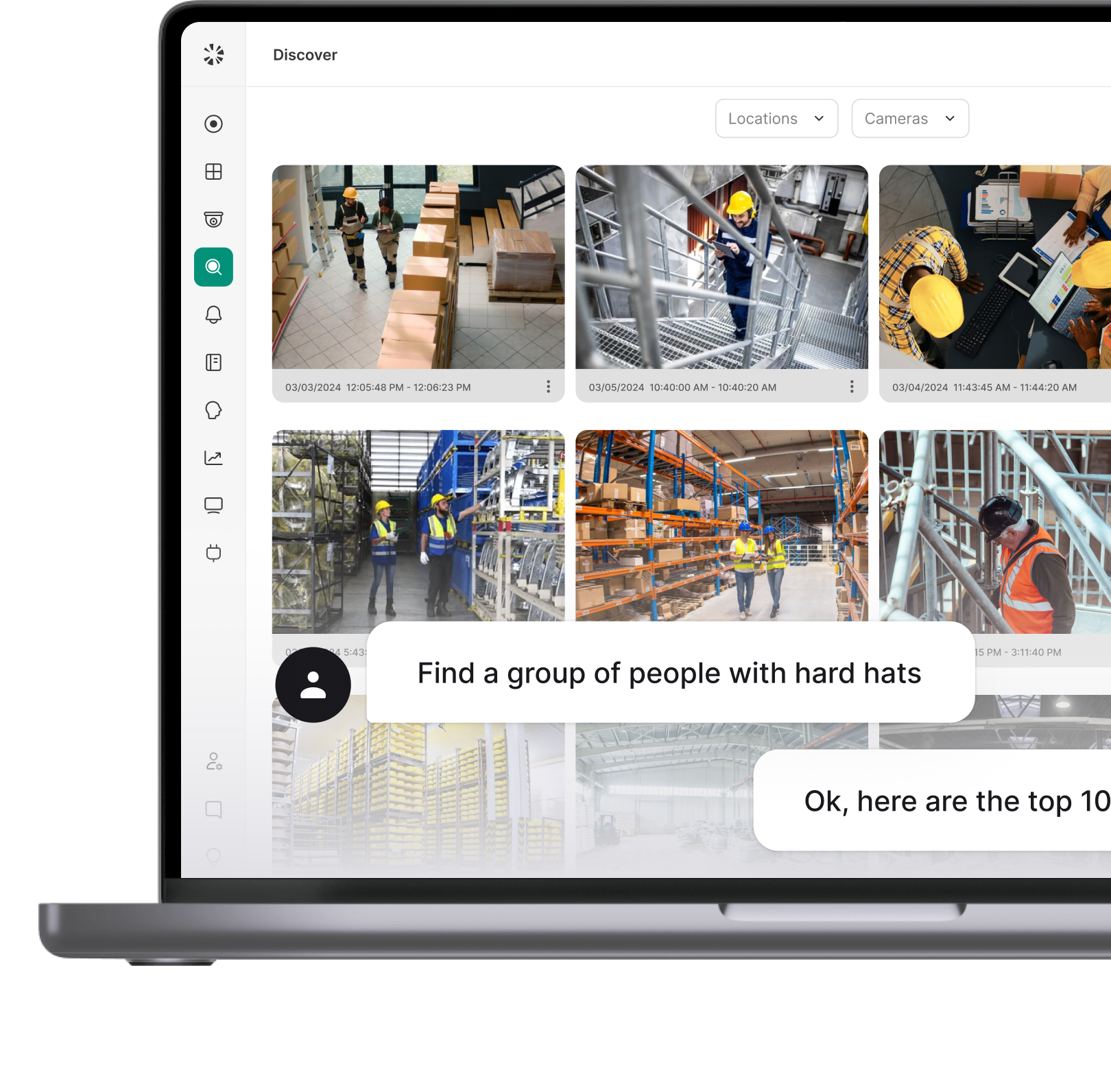
AI also transforms how security teams search footage. Instead of scrubbing through hours of video manually, staff can search using natural language queries: "person in red jacket near gym entrance" or "silver sedan in parking lot between 2 and 3 PM." This capability dramatically reduces investigation time after incidents.
For districts with existing camera infrastructure, cloud-native platforms can add AI capabilities without requiring a complete hardware replacement. As long as cameras support standard protocols like RTSP or ONVIF, they can typically be integrated into a modern system.
4. Implement a Unified Emergency Management System
Emergency management systems coordinate response activities during critical incidents. At the district level, this means the ability to initiate lockdowns, send mass notifications, and communicate with first responders across all schools simultaneously.
Key features to look for include panic buttons that staff can activate to alert administrators and law enforcement instantly, automated lockdown triggers that secure doors and notify occupants, integration with 911 dispatch systems for faster response, and role-based access so that the right people receive the right information during an emergency.
For districts in states covered by Alyssa's Law, the emergency management system must include direct communication with law enforcement. This is not optional; it is a legal requirement. Systems like Coram's Emergency Management System are designed specifically to meet these compliance needs while integrating with video and access control for a coordinated response.
5. Establish Clear Communication Protocols
During an emergency, communication failures cause confusion and delay. Districts need predefined channels for internal communication between administrators, teachers, and security staff, as well as external communication with parents, law enforcement, and media.
Internal protocols should specify who has authority to initiate a lockdown, who receives notifications at each stage of an incident, and how information flows between buildings and the central office. External protocols should include templates for parent notifications, designated spokespersons for media inquiries, and procedures for coordinating with police and emergency services.
These protocols must be documented, distributed to all staff, and practiced regularly. A plan that exists only on paper provides little value when an actual incident occurs.
6. Train Staff District-Wide
Technology is only as effective as the people using it. Every staff member should understand how to use the safety systems relevant to their role, from checking in visitors at the front office to activating a panic button during a threat.
Training should be consistent across all schools. When staff transfer between buildings, they should not need to learn entirely new systems. Regular refresher sessions ensure that knowledge stays current, especially as systems are updated or new features are added.
Drills are a critical component of training. Districts should conduct lockdown drills, evacuation drills, and tabletop exercises that test decision-making under pressure. The systems used during drills should be the same systems used during real emergencies, with a clear distinction in the software so that drills do not trigger actual 911 calls.
7. Monitor, Measure, and Improve Continuously
Safety is not a one-time project. It requires ongoing attention to metrics, regular audits, and a willingness to adapt as threats evolve. Key metrics to track include emergency response times measured from alert to action, drill completion rates across all schools, incident report accuracy and completeness, system uptime and reliability, and staff training completion.
Quarterly reviews allow district leadership to identify trends, address recurring issues, and allocate resources where they are needed most. Annual audits provide an opportunity to reassess the overall strategy and make adjustments based on changing circumstances or new technology.
Technology Solutions for District-Wide School Safety
Video Surveillance Systems
At the district level, video surveillance must support hundreds or thousands of cameras across multiple locations. Cloud-based systems simplify this by eliminating the need for on-site servers at each school. Footage is stored securely off-site, accessible from any authorized device, and retained according to district policy.
AI capabilities add significant value. Look for systems that offer real-time threat detection, including gun detection and aggressive behavior alerts. Natural language search reduces investigation time. Cross-camera tracking allows security teams to follow a person's movement across an entire campus or between buildings.
Compatibility matters. Districts should not need to replace all existing cameras to adopt a new platform. Systems that work with any IP camera using standard protocols protect existing investments while enabling modern capabilities.
Access Control Systems
District-wide access control means managing credentials for thousands of staff, students, and visitors across all buildings from a single platform. Cloud-based systems allow real-time updates; when a staff member is terminated or a credential is lost, access can be revoked immediately across the entire district.
Integration with video surveillance enhances security. When someone badges in at a door, the system can automatically display the corresponding camera feed. If a door is forced or held open, alerts are generated along with video evidence of what happened.
For schools, access control extends beyond exterior doors to include sensitive areas like administrative offices, server rooms, and storage areas containing student records or valuable equipment.
Emergency Management Platforms
Emergency management platforms coordinate response activities and ensure that the right people take the right actions at the right time. Features to prioritize include one-click lockdown activation across all or selected buildings, mass notification via text, email, phone, and on-screen alerts, direct integration with 911 for states requiring Alyssa's Law compliance, drill mode that allows realistic practice without triggering actual emergency responses, and post-incident reporting for documentation and improvement.
The most effective platforms integrate emergency management with video and access control. When a panic button is pressed, the system can automatically lock nearby doors, display relevant camera feeds, and alert both internal security and external responders with location information.
Funding School Safety Improvements
District-wide safety improvements require significant investment, but multiple funding sources are available. Federal programs like the STOP School Violence Prevention Program provide grants for security improvements, threat assessment training, and technology upgrades. State-level programs vary but often include dedicated school safety funding, particularly in states that have enacted legislation like Alyssa's Law.
When applying for grants, a comprehensive security assessment demonstrates that the district has done its due diligence. Proposals should clearly articulate the problem, the proposed solution, the expected outcomes, and how the district will measure success. Systems with built-in reporting capabilities make it easier to document results and justify continued funding.
Beyond grants, districts should consider the total cost of ownership when evaluating solutions. Cloud-based systems typically reduce infrastructure costs compared to on-premise alternatives. Integrated platforms eliminate the expense of maintaining multiple separate systems. And modern, efficient systems require less staff time for monitoring and management.
Implementation Roadmap
Implementing district-wide safety improvements is a multi-phase process. Rushing leads to mistakes; moving too slowly leaves vulnerabilities unaddressed. The following timeline provides a realistic framework for most districts.
Phase 1: Assessment and Planning (Months 1 to 2). Audit existing systems at every school. Document current capabilities, gaps, and inconsistencies. Engage stakeholders including administrators, teachers, security staff, and parent representatives. Define requirements and evaluate vendors. Develop a budget and identify funding sources.
Phase 2: Pilot Program (Months 3 to 4). Select two to three schools representing different sizes and configurations. Deploy the chosen solutions and train staff. Gather feedback and identify issues before broader rollout. Refine configurations and processes based on pilot results.
Phase 3: District-Wide Rollout (Months 5 to 8). Deploy systems to remaining schools in phases. Standardize configurations across all locations. Complete staff training for all personnel. Integrate all systems into the central management platform.
Phase 4: Optimization (Ongoing). Monitor system performance and user feedback. Conduct regular drills and training refreshers. Review metrics quarterly and adjust as needed. Update systems as new capabilities become available.
Common Challenges and How to Overcome Them
Budget constraints: Phase implementation to spread costs over multiple budget cycles. Pursue grant funding aggressively. Focus initial investment on the highest-risk areas and expand from there.
Staff resistance: Involve staff early in the planning process. Demonstrate how new systems will make their jobs easier, not harder. Provide thorough training and ongoing support. Celebrate early wins to build momentum.
Legacy systems: Choose solutions that integrate with existing infrastructure rather than requiring complete replacement. Many modern platforms work with cameras and hardware from multiple vendors, protecting existing investments.
Inconsistent adoption: Centralized management ensures that all schools use the same systems and follow the same protocols. Regular audits identify schools that are falling behind. Accountability at the building level reinforces district-wide standards.
Maintaining momentum: Safety is not a project with an end date. Build ongoing review and improvement into the district's operations. Share success stories and metrics with stakeholders to maintain support and engagement.
Moving Forward
Improving school safety across a district requires more than implementing technology at each school. It requires a unified approach where systems communicate, data flows freely between locations, and administrators have visibility into every building from a single platform.
The strategies outlined in this guide provide a framework for building that unified approach. Start with a thorough assessment of your current state. Prioritize integration and centralization over piecemeal solutions. Invest in training and communication as much as technology. And commit to continuous improvement rather than treating safety as a one-time initiative.
Every district has unique challenges based on its size, geography, budget, and existing infrastructure. But the fundamental principles remain the same: centralized management, integrated systems, clear protocols, and ongoing attention to improvement.
Platforms like Coram bring video surveillance, access control, and emergency management together in a single cloud-based system designed for multi-site operations. For districts looking to move beyond fragmented solutions, this integrated approach provides the foundation for effective, scalable school safety.




.png)