%20(44).webp)
Every hour, high-value freight rolls through sprawling yards, distribution hubs, and transport terminals, making logistics sites one of the most exposed segments in supply chains. In 2024 alone, reports suggest a 27% year-over-year rise in cargo theft, and losses are projected to increase by another 22% in coming years.
With goods constantly in motion and facilities spread across vast acreage, traditional onsite guards or standalone cameras struggle to provide full coverage.
Remote video surveillance now fills that gap - combining live video, analytics, and live monitoring to keep an eye on things when you’re not physically on-site.
In this blog, we’ll explore the best remote video surveillance solutions for logistics monitoring, examining what sets them apart, how they function in real-world logistics settings, and how they help transform sprawling operations from vulnerable to visible and secure.
What is Logistics Remote Video Security?
Logistics remote video security is an advanced form of logistics monitoring that allows businesses to keep watch over warehouses, yards, and transport hubs in real time, no matter where they are. Using high-definition cameras combined with intelligent video analytics, it provides continuous visibility into facility operations, asset movement, and site safety.
This technology goes beyond traditional CCTV. Through logistics remote video surveillance, security teams can detect unauthorized access, track vehicle activity, and respond instantly to unusual events. It also enables managers to review footage, verify deliveries, and monitor staff or vendor activity remotely through secure platforms on computers or mobile devices.
For large-scale or multi-site operations, industrial remote video monitoring delivers round-the-clock protection, reduces staffing costs, and strengthens operational control.
Benefits of Remote Video Surveillance for Logistics Sites
24/7 Real-Time Protection
Unlike traditional patrols or on-site guards, logistics remote video monitoring covers every corner of your facility - from loading docks to storage zones. Smart cameras equipped with AI analytics can detect motion, recognize vehicles, and spot suspicious behavior instantly. Live logistics monitoring teams then verify activity and take real-time action, whether that means issuing a warning or alerting law enforcement. For sprawling logistics yards or multi-site operations, this level of 24/7 oversight is invaluable.
Strong Deterrence and Faster Response
Cameras that are visibly monitored act as powerful deterrents. When intruders know they’re being watched live, not just recorded, the chance of theft or vandalism drops sharply. In case of a breach, operators can communicate through loudspeakers or dispatch security within seconds. This immediate response often prevents incidents before they lead to losses or operational downtime.
Reduced Costs and Lower Insurance Premiums
Hiring and managing full-time on-site guards for large facilities can be expensive. Remote video guarding reduces the need for multiple personnel while maintaining even broader coverage. Many logistics companies report up to 50% savings compared to traditional guarding costs. Additionally, insurers often lower premiums for facilities that deploy advanced remote surveillance systems, recognizing them as lower-risk sites.
Operational Visibility and Efficiency
Beyond security, remote video monitoring gives managers insight into daily workflows and bottlenecks. Footage helps track vehicle turnaround times, verify loading and unloading procedures, and monitor employee compliance. This level of operational visibility helps identify inefficiencies, improve safety compliance, and even reduce delays in shipping and receiving.
Improved Safety & Compliance
Safety lapses can be costly. Remote logistics monitoring helps spot unsafe behavior, such as improper lifting, vehicle congestion, or equipment misuse, before they lead to accidents. It also provides documented footage for investigations or training, helping teams improve safety culture and accountability across shifts.
Scalable and Integrated Security
As logistics operations expand, remote video systems easily scale to new areas or facilities. They integrate with access control, intrusion alarms, and inventory management platforms, forming a unified, automated ecosystem for both security and operations.
Every hour, high-value freight rolls through sprawling yards, distribution hubs, and transport terminals, making logistics sites one of the most exposed segments in supply chains. In 2024 alone, reports suggest a 27% year-over-year rise in cargo theft, and losses are projected to increase by another 22% in coming years.
With goods constantly in motion and facilities spread across vast acreage, traditional onsite guards or standalone cameras struggle to provide full coverage.
Remote video surveillance now fills that gap - combining live video, analytics, and live monitoring to keep an eye on things when you’re not physically on-site.
In this blog, we’ll explore the best remote video surveillance solutions for logistics monitoring, examining what sets them apart, how they function in real-world logistics settings, and how they help transform sprawling operations from vulnerable to visible and secure.
How Coram Powers Remote Video Surveillance for Logistics Monitoring?
In the logistics world, visibility means control. Every hour, shipments move through warehouses, truck yards, and loading docks and keeping eyes on everything is no small task. With valuable assets on the move and operations running around the clock, traditional CCTV setups simply can’t deliver the level of oversight modern logistics demands.
That’s where Coram’s logistics remote video surveillance system comes in. Built for scale and simplicity, it helps logistics operators manage multiple sites, monitor real-time activity, and respond to incidents instantly; all from a single platform.
Getting started with Coram’s logistics monitoring platform is straightforward. The setup takes less than 10 minutes, and if you already have IP cameras, there’s no need to replace them. Coram seamlessly integrates with existing hardware, saving time and costs. For new users, high-quality IP cameras are available as part of the subscription, so your system is ready to go from day one.
Once connected, Coram turns every camera into a powerful, AI-assisted logistics monitoring tool that helps you keep an eye on multiple logistics facilities, all from a single dashboard.
- AI-Based Search and Intelligent Tracking
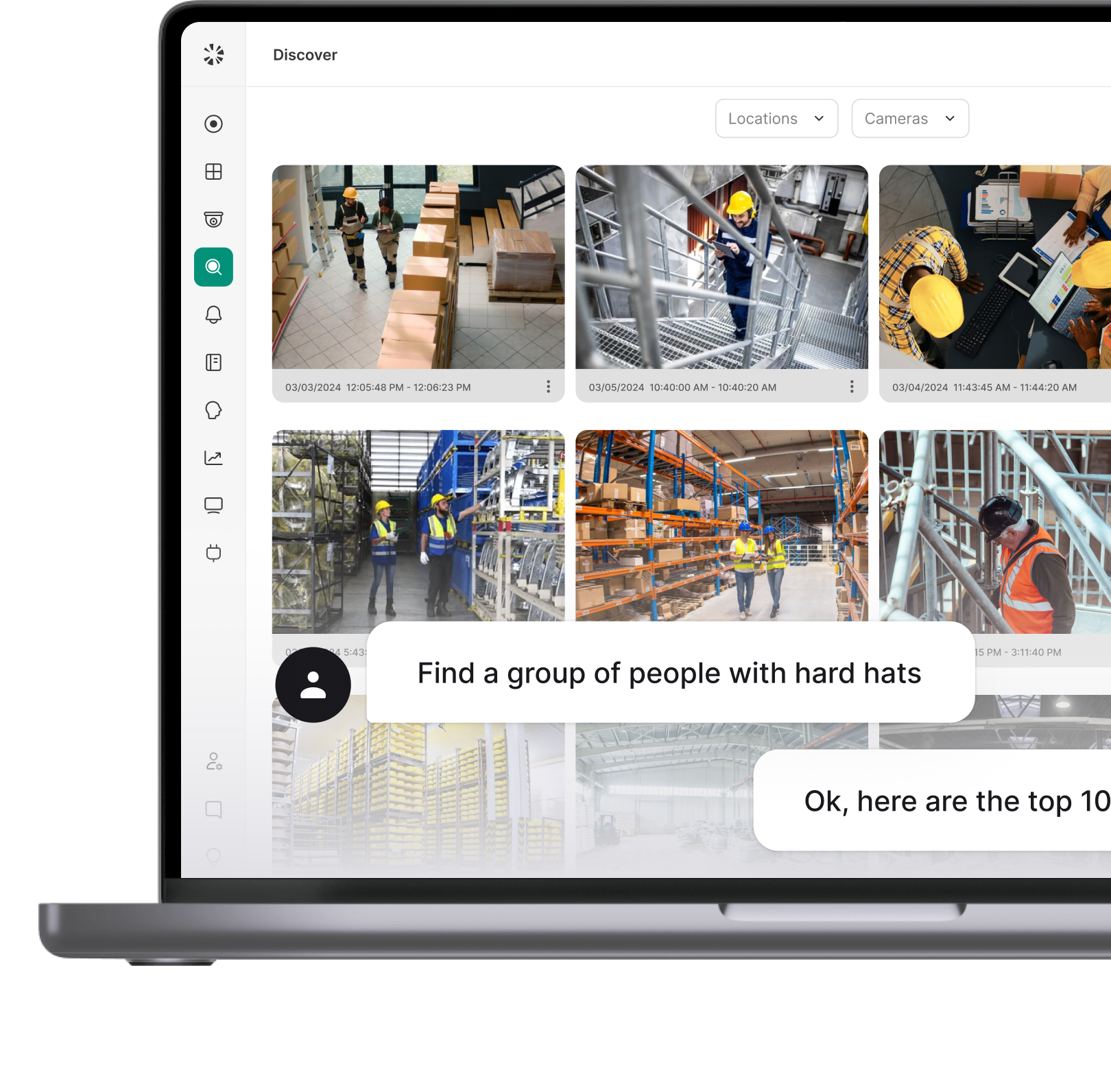
Coram’s strength lies in its AI-driven search capabilities. Unlike traditional CCTV systems that require hours of manual playback, Coram lets you find specific events or objects in seconds.
Through logistics monitoring, users can track the movement of people, vehicles, or assets across multiple sites using simple text or visual prompts. Its thumbnail-style video scrubbing makes reviewing footage faster and easier, a huge advantage when time is critical.
Whether you’re investigating a missing pallet or tracking unauthorized entry, Coram’s AI-based search system ensures you find exactly what you need without scrolling endlessly through footage.
Beyond simple object detection, Coram’s system also includes facial recognition capabilities. It analyzes every frame in real time to identify unauthorized individuals. You can upload faces of restricted personnel, and the system automatically sends an alert if they attempt to enter any facility. The dashboard displays key details such as the last seen location, the detecting camera, and related clips for easy investigation.
Coram’s Journey tool takes it one step further by tracking a person’s movement across multiple cameras, even if their face is not visible. Using consistent physical appearance data, it allows continuous monitoring of a suspect’s path throughout the facility, making it especially valuable after a security alert or facial match is detected.
This level of precision transforms how logistics teams handle logistics monitoring, saving time and improving response.
- Centralized Dashboard and Real-Time Analytics
All camera feeds and analytics are accessible through Coram’s secure, cloud-based dashboard. The platform delivers logistics real-time video surveillance insights like
- Tresspassing or absence detection in restricted areas
- Vehicle movement and line-crossing activity
- Safety compliance status
- Identity verification and face capture logs
Each event is logged automatically, providing deeper visibility into what’s happening across your sites. You can also access detailed reports showing captured faces, time stamps, and triggered alerts.
This centralized view is especially useful for logistics and industrial operations that manage multiple facilities. Managers can quickly identify where an incident occurred, check related footage, and take immediate action; all from one place.
- Incident Management Made Simple
When something goes wrong, quick collaboration makes all the difference. Coram simplifies incident management with tools that help teams respond faster and work together more effectively.
You can download, tag, and share video clips directly from the dashboard via a web browser or mobile app. Coram’s unlimited cloud archive ensures that all footage remains safely stored and easily retrievable whenever needed.
The system also allows users to create complete incident reports with multiple video clips, notes, and shared access for team members, making it easier to investigate events, coordinate responses, or provide verified footage for insurance or compliance purposes.
- Enterprise-Grade Security and Seamless Integrations
Coram’s industrial remote video monitoring platform integrates effortlessly with most access control systems, including Mercury boards and enterprise-level software. This means you can manage cameras, alarms, and access points together through one unified interface.
Security is at the core of Coram’s design. The system meets SOC 2 Type II and HIPAA compliance standards, with all footage encrypted during transmission and storage. For logistics operators handling sensitive goods or client data, this level of data protection adds another layer of trust and reliability.
- Add-On Tools That Go Beyond Traditional Monitoring
Coram’s AI capabilities extend far beyond traditional surveillance.
- Weapon Detection: Identifies firearms in real time and alerts teams instantly, helping avoid delayed reactions.
- License Plate Recognition (LPR): Converts standard IP cameras into smart vehicle trackers, identifying vehicles by full or partial plate numbers.
- Facial Recognition: Detects unauthorized individuals and alerts staff, providing detailed logs of entry, exit, and movement patterns.
Each of these systems operates directly on Coram’s platform, eliminating the need for third-party monitoring or extra hardware, saving time and ensuring accuracy when seconds matter.
What Makes Coram Stand Apart?
Logistics monitoring never stands still and neither does Coram. As your business expands, new cameras or monitoring zones can be added effortlessly. The system scales with your needs, adapting to changing site layouts, seasonal peaks, or new facilities.
From large industrial yards to last-mile delivery hubs, Coram’s logistics monitoring ensures every asset, shipment, and worker remains protected.
It’s not just another surveillance system; it’s your partner in smarter, faster, and more connected logistics security.
Why is Logistics Remote Video Monitoring Important?
In today’s logistics industry, visibility is the backbone of control. Logistics remote video monitoring gives businesses that visibility, helping them stay ahead in environments that never slow down.
- It’s not just about security; it’s about accountability, transparency, and operational confidence. Remote logistics monitoring allows management teams to verify shipments, confirm processes, and maintain trust across distributed networks without relying solely on reports or manual checks.
- It also supports regulatory compliance and audit readiness, offering clear, time-stamped footage of critical events. For companies handling high-value or sensitive goods, this becomes a vital layer of protection, ensuring that every movement, handoff, and operation is verifiable and traceable.
Simply put, remote video monitoring helps logistics teams see everything that matters, even when they can’t be everywhere.
Final Takeaway
In logistics, the risks have never been higher. Rising theft, vandalism, and unauthorized access continue to pose significant challenges to warehouses, distribution centers, and transportation yards worldwide. With valuable cargo constantly in motion and limited on-site supervision, traditional security measures alone can no longer keep up.
- That’s where remote video surveillance changes the game. It delivers round-the-clock visibility,
- faster response times, and
- actionable insights,
All while reducing the cost and complexity of managing large facilities. For logistics operators, this means fewer losses, safer workers, and smoother operations.
Coram stands out as the best remote video surveillance for logistics monitoring, combining advanced AI analytics with a user-friendly, cloud-based system that works seamlessly across multiple sites. From real-time alerts to intelligent incident tracking, Coram helps logistics teams stay one step ahead of threats and inefficiencies.
In a world where every second counts, Coram isn’t just watching your logistics network; it’s helping you protect, predict, and perform better every single day.




.png)