When it comes to AI video security, the decision usually isn’t straightforward. What works well for one organization may not fit yours, especially when deployment scale, system compatibility, and day-to-day usability matter equally.
Lumana covers a solid range of capabilities, but depending on your requirements, there can be areas where other platforms feel more aligned. In some cases, the focus is on better integration with existing systems, while in others, it’s on more control over analytics or simply a setup that your team can manage without added complexity.
These are practical considerations that often lead teams to explore alternatives, and that’s exactly what this guide is here to help with. It covers the most relevant Lumana alternatives in 2026 and how they actually perform in real-world environments, so you can make a more informed decision based on what fits your needs best.
What is Lumana?
Lumana is an AI-based video security platform developed by an Israeli-headquartered company with a growing U.S. presence, including an office in the San Francisco Bay Area. The company has gained traction quickly in the AI security space, backed by significant funding and deployments across thousands of cameras.
On the product side, Lumana uses a connector/NVR-based architecture where most analysis happens locally for speed and privacy, while the cloud enables remote access and centralized management. It is a camera-focused platform, meaning it concentrates on video analytics and search rather than offering a broader physical security suite that includes access control, emergency management, or visitor management.
Why Look for Lumana Alternatives?
If you’re exploring Lumana alternatives, it usually means the platform isn’t fully aligning with how your operations actually run. This could be around integrations, the breadth of security capabilities, flexibility, or how easily your team can use and manage the system on a daily basis.
Since Lumana is primarily a camera-only platform, organizations with broader physical security needs—such as unified access control, emergency management, visitor management, or firearm detection—often find they need to source these from separate vendors, which adds complexity. As your requirements become more defined, these gaps become easier to spot. That’s why exploring alternatives can help you find a solution that fits more naturally into your workflow.
The 10 Best Lumana Alternatives in 2026
If you’re exploring Lumana alternatives, there are multiple options, but they don’t all work the same way. Here are the top platforms in 2026, each with its own strengths depending on what you’re looking for.
1. Coram
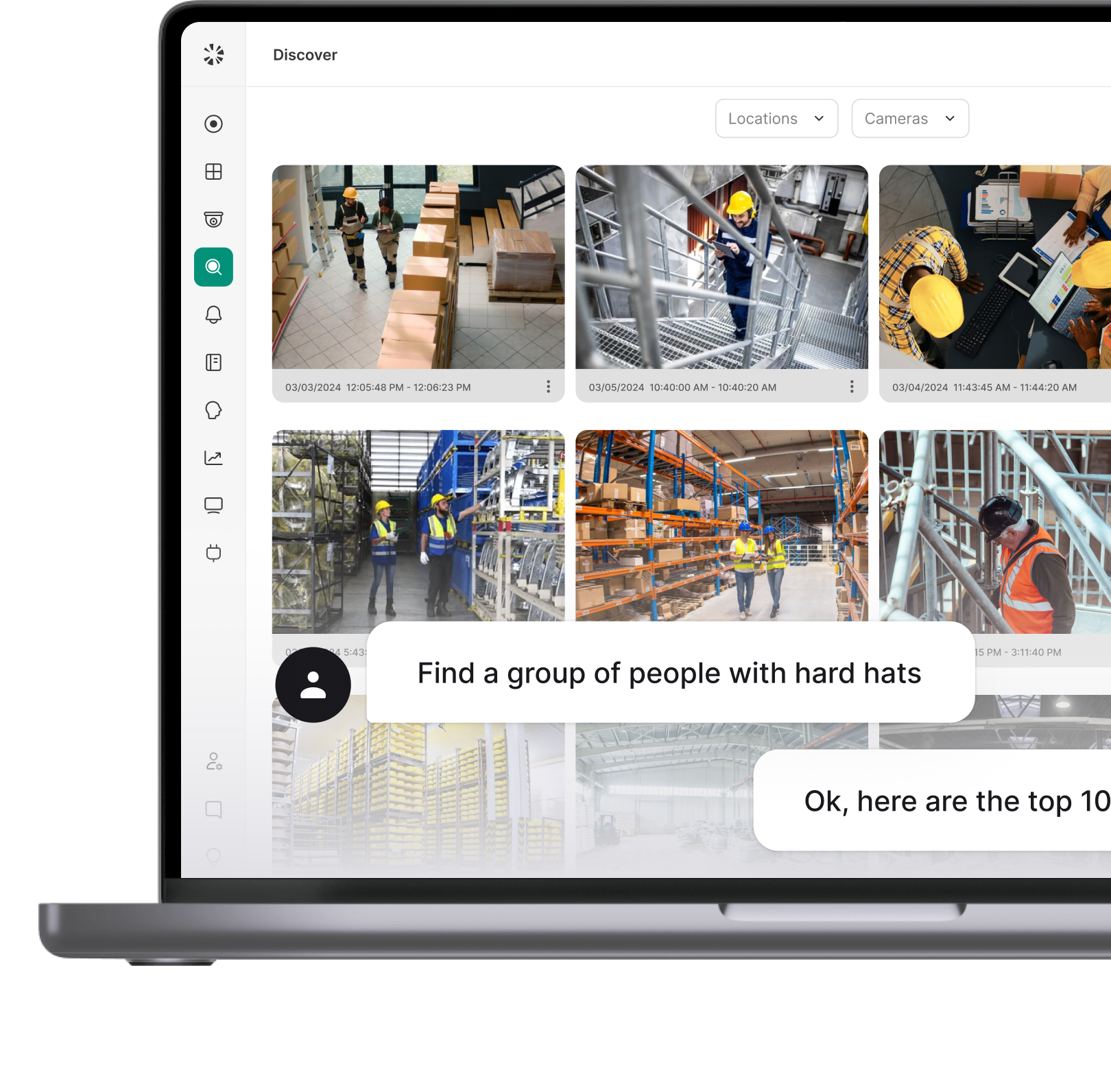
Coram is an AI-first video security camera system designed to help teams get more clarity from their existing camera systems. It works with standard IP cameras and can detect events, send alerts, and let you search footage just by typing what you’re looking for. This makes it easier to move from simply recording video to actually using it in day-to-day operations.
What sets Coram apart is that it goes well beyond cameras. Video feeds, access control events, emergency management workflows, visitor management, and firearm detection alerts are all connected inside a single dashboard, so you can understand what’s happening without switching between systems. This becomes especially useful when reviewing incidents or managing multiple locations, where context matters just as much as the footage itself.
Why It’s the #1 Alternative
Coram stands out because it delivers a full physical security platform rather than a camera-only point solution. Since it works with most IP cameras, there’s no need for a full hardware swap, and rollouts are smoother. Coram also has a significantly stronger market presence compared to Lumana (DR 61 vs. 24), reflecting broader adoption and a more established footprint. In head-to-head trials, Coram consistently wins, with field data pointing to an 80–90% win rate against Lumana.
Key Differentiators vs. Lumana
- Delivers more consistent event detection and alerts. Over time, this translates to fewer unnecessary notifications and more relevant insights, helping teams trust the system instead of constantly double-checking it.
- Works with virtually any standard IP camera (100+ brands), so you don’t have to rethink your existing setup. This makes adoption simpler, especially for organizations with a mix of devices across locations.
- Pricing is clearly laid out, making it easier to evaluate without lengthy back-and-forth.
- Coram natively includes access control, emergency management, visitor management, and firearm detection—capabilities that Lumana does not offer and that would require separate vendors to replicate.
- Finding specific footage is faster and more intuitive through natural language search across all cameras.
- Journey path tracking auto-stitches clips of a person across all cameras for faster investigations.
Key Features
- AI-powered alerts automatically detect important events and notify you in real time, reducing the need for constant monitoring.
- Natural language video search lets you type what you’re looking for and quickly find relevant footage without scrubbing through timelines.
- Cloud VMS brings all cameras, locations, and users into one dashboard, making it easier to manage operations across sites.
- Real-time monitoring provides live feeds and timelines in one place, so you can stay updated as things happen.
- License plate recognition (LPR) helps track vehicle movement and identify specific plates when needed.
- Occupancy analytics gives visibility into how spaces are being used, including people count and movement patterns.
- Unified access control integration connects entry events with video footage, adding more context during reviews or investigations.
- Firearm detection with multi-layer AI verification triggers alerts within 5–10 seconds, critical for schools and hospitals.
- Emergency management includes built-in panic buttons, lockdown workflows, and Alyssa’s Law compliance.
Best For
Organizations that want to get more value from their existing camera systems with better search, alerts, and visibility—and that need a unified physical security platform covering video, access control, emergency management, and weapon detection without juggling multiple vendors.
2. Verkada
Verkada is a leading video security platform that combines cameras, storage, and management into one system. It stores footage directly on the cameras and lets you manage everything through a cloud dashboard. This setup reduces hardware dependency and makes it easier to access and control your system across locations.
Why It’s the #2 Alternative
Verkada stands out because it simplifies how video security is managed. This makes a noticeable difference for teams handling multiple sites, where ease of use and centralized control become more important than stacking features.
Key Differentiators vs. Lumana
- No need for NVRs or servers, since storage happens on the camera itself.
- Brings video, access control, and other security tools into one platform.
- Faster setup with minimal configuration required.
- Easier to manage multiple locations from a single dashboard.
Key Features
Smart search helps you quickly find specific events or activities. Perimeter monitoring detects movement around restricted areas. Person of Interest tracking flags individuals, and automatic license plate recognition handles vehicle detection.
Best For
Teams that want a simple, easy-to-manage system without dealing with heavy hardware, especially if they are handling multiple locations and need everything in one place.
3. Avigilon (Motorola Solutions)
Avigilon is an enterprise-grade video security platform owned by Motorola Solutions, designed for large-scale and high-security environments. It offers deep integration with Motorola’s broader safety ecosystem, connecting video data with communication systems, emergency response tools, and operational workflows.
Why It’s the #3 Alternative
Avigilon stands out for how accurately it detects events and supports large, complex deployments, even though it may require more setup and infrastructure compared to simpler solutions.
Key Differentiators vs. Lumana
- Strong focus on enterprise and mission-critical environments, not just general business use.
- Deep integration with Motorola’s safety ecosystem (communication, emergency response, etc.).
- Offers both cloud (Alta) and on-prem (Unity) options for different operational needs.
- More advanced and customizable AI detection tailored to specific environments.
Key Features
Appearance search quickly finds people or vehicles across multiple cameras. Perimeter protection and object detection enable proactive monitoring. Flexible deployment spans both on-prem NVR systems and cloud-based options. Integration with sensors and systems provides broader situational awareness.
Best For
Large organizations or critical environments that need high accuracy, deeper control, and tightly integrated security systems.
4. Eagle Eye Networks
Eagle Eye Networks is a cloud-first video management system (VMS) that focuses heavily on flexibility and openness. It works with thousands of camera models and lets you store footage in the cloud, on-site, or both, depending on what suits your setup, while bringing AI analytics, automation, and reporting into one system.
Why It’s the #4 Alternative
Eagle Eye stands out mainly because of how open and flexible it is compared to more controlled ecosystems. This makes it a strong option for businesses that already have cameras in place and want to upgrade without starting from scratch.
Key Differentiators vs. Lumana
- Supports thousands of camera models, including legacy systems.
- Choose between cloud, local, or hybrid setups based on your needs.
- Allows custom rules and actions based on events, not just alerts.
- Open APIs make it easier to connect with other business systems.
Key Features
Smart Video Search helps you quickly find specific events, people, or objects without manually scanning footage. Editions give you different feature sets and pricing options. Two-way audio lets you communicate directly through cameras for real-time interaction.
Best For
Organizations that want a gradual shift to cloud-based video surveillance.
5. Axis Communications
Axis Communications is one of the oldest players in IP-based video surveillance and is known for building both hardware and software as a complete ecosystem. It offers network cameras, video management software (AXIS Camera Station), and access control, with a heavy focus on end-to-end reliability and image quality.
Why It’s the #5 Alternative
Axis stands out because of its strong hardware-plus-software combination, rather than being purely cloud-driven. While it may not be the simplest system to set up, it offers a level of control and performance that many cloud-first platforms don’t always match.
Key Differentiators vs. Lumana
- Strong focus on high-quality cameras and imaging, not just software analytics.
- Complete ecosystem (cameras, VMS, access control, audio) built to work together.
- More open and standards-based approach, allowing integration with third-party systems.
- Built-in video authentication (signed video) to ensure footage hasn’t been tampered with.
Key Features
High-resolution video support (including 4K) for clearer identification of incidents. Integrated access control and video in a single interface. Built-in audio support for live communication. Advanced cybersecurity features like signed video for evidence integrity.
Best For
Organizations that prioritize video quality, reliability, and long-term performance.
6. Spot AI
Spot AI positions itself less as a traditional video surveillance system and more as an AI-powered operations platform built on top of cameras. It connects to your existing cameras (or provides its own) and uses a mix of on-site and cloud processing through its Intelligent Video Recorder (IVR).
Why It’s the #6 Alternative
Spot AI stands out because it goes beyond security and focuses heavily on operations, safety, and productivity. This makes it especially useful in environments like warehouses, manufacturing, and logistics, where video data can directly impact operations.
Key Differentiators vs. Lumana
- Uses a dedicated Intelligent Video Recorder (IVR) with NVIDIA GPUs for on-edge processing.
- Offers AI agents (See, Reason, Act framework) that don’t just detect but also trigger actions automatically.
- Provides at-cost IP cameras or works with existing ones, reducing upgrade costs.
- Strong emphasis on workflow automation.
Key Features
Intelligent Video Recorder (IVR) combines 24/7 local storage with cloud capabilities and on-edge AI processing. Cloud Dashboard lets you monitor all locations, search footage, and manage incidents from a single interface. AI Agents continuously analyze video, interpret events, and trigger automated actions. Smart Video Search helps find specific events quickly.
Best For
Operations-heavy environments like warehouses, manufacturing units, and multi-site businesses.
7. Milestone Systems
Milestone Systems is known for its open-platform video management software (VMS), mainly through its product XProtect. It doesn’t lock you into a fixed ecosystem, which makes it highly flexible, especially if you already have a mix of devices and want a system that can adapt over time.
Why It’s the #7 Alternative
Milestone stands out because of its open-platform approach. It lets you build your own setup by connecting cameras, sensors, and third-party tools as needed, giving you control over how the system evolves.
Key Differentiators vs. Lumana
- Open platform supports thousands of cameras and over 1,000 third-party integrations.
- Highly customizable—build workflows, analytics, and integrations based on your exact needs.
- Multiple deployment options across on-prem, cloud, or hybrid environments.
- Strong focus on compliance and data control, especially for regulated industries.
Key Features
XProtect VMS centralizes all cameras, sensors, and analytics into a single interface. Alarm Manager helps track, manage, and respond to incidents with clear workflows. Evidence Lock ensures important footage cannot be deleted or tampered with. Video Anonymization masks faces and license plates to support privacy compliance.
Best For
Organizations with complex infrastructure, multiple integrations, or strict compliance requirements.
8. Turing AI
Turing AI offers a cloud-based video surveillance platform that combines cameras, VMS, and AI analytics into one system. It supports both its own hardware (like Smart Series cameras and Edge+ Cloud Cameras) and third-party devices, which makes it relatively flexible to deploy. The platform is built around AICloud, where video footage is actively analyzed for events, alerts, and insights.
Why It’s the #8 Alternative
Turing AI stands out because it makes AI features more accessible without requiring a heavy enterprise setup. It offers built-in AI analytics, flexible licensing (including a free tier), and bundled hardware and software, which lowers the entry barrier for businesses that want AI-powered surveillance without a complex rollout.
Key Differentiators vs. Lumana
- Offers cameras, VMS, and AI in one package, reducing the need to piece together different components.
- Flexible licensing, including a basic free version and paid AI tiers.
- Cloud-based access with optional local hardware, adaptable for different setups.
- Quick deployment and ease of use, especially for small to mid-sized businesses.
Key Features
AICloud actively analyzes footage for events and anomalies. Flexible licensing lets you start free and scale as needed. Smart Series cameras are purpose-built for AI analytics. Cloud dashboard centralizes management across locations.
Best For
Small to mid-sized businesses that want an all-in-one AI video security system with bundled hardware and software instead of building a custom setup.
9. Rhombus
Rhombus is a cloud-managed video security platform with 50+ integrations and 100% open API support. It’s used not just for security but also to generate operational insights like space usage, movement patterns, and activity trends. Everything is managed through a centralized cloud console, with a mix of cloud and edge processing for faster detection and response.
Why It’s the #9 Alternative
Rhombus is a good alternative because it offers features like AI search and spatial analytics that help teams not just detect incidents but also understand what’s happening across locations in real time.
Key Differentiators vs. Lumana
- Strong focus on operational analytics, not just security alerts (e.g., occupancy, traffic flow).
- Natural language AI search to find events instantly instead of manual filtering.
- Unified platform combining video, access control, sensors, and alarms in one system.
- Cloud-managed with edge processing for low-latency detection across sites.
Key Features
AI Search lets you find events using simple text queries, reducing investigation time. Line Crossing and Occupancy Counting track movement and space usage. People Analytics provides insights like crowd count and engagement levels. Centralized Cloud Console manages cameras, alerts, and analytics across all locations from one place.
Best For
Businesses—especially retail, offices, and multi-site operations—where understanding movement, space usage, and daily activity can improve decision-making alongside safety.
10. Genetec
Genetec is a global security technology company founded in Canada and widely considered one of the major players in the physical security space. Its core platform, Security Center, brings together video surveillance, access control, license plate recognition, and other systems into a single setup.
Why It’s the #10 Alternative
Genetec stands out because of how deeply it integrates different parts of security operations. This makes it especially useful for organizations where security decisions depend on multiple inputs.
Key Differentiators vs. Lumana
- True unified platform with video, access control, ALPR, and more managed in one system.
- Open architecture that supports a wide range of third-party devices and integrations without vendor lock-in.
- Built for complex environments—designed to handle multi-site, large-scale security operations with centralized control.
Key Features
Security Center provides a single interface to monitor video, manage access, and handle incidents across all locations. Omnicast VMS delivers advanced video management with support for analytics and large-scale deployments. Forensic Search helps you quickly find events using filters, metadata, or natural language queries. Cybersecurity and privacy features ensure data protection, compliance, and secure evidence handling.
Best For
Large organizations or high-security environments where multiple systems (video, access, analytics) need to work together seamlessly.
Lumana vs. Top Alternatives: Feature Comparison Table
Now that we’ve taken a deep dive into all 10 alternatives, here’s a quick overview based on the main features:
On-Premises NVR vs. Cloud Video Surveillance: What’s Right for You?
Both on-premises NVR and cloud video surveillance handle video monitoring, but they differ in control and flexibility. On-prem NVR is a better fit if you want full data control, have limited internet access, need local storage for compliance, and can manage hardware. In contrast, cloud video surveillance works well if you need remote access, easy scalability, minimal maintenance, and automatic updates with centralized management.
Key Features to Look for in a Lumana Alternative
While evaluating your options, most platforms will seem similar at first. However, when making a decision, it’s important to focus on the features that matter most:
- Smart AI detection: The system should understand what’s happening in the video and identify people, vehicles, or unusual activity.
- Real-time alerts: Instant notifications when something important happens, so you don’t have to constantly monitor screens.
- Single dashboard for all locations: If you manage multiple sites, everything should be accessible from one place.
- Scales without complexity: As you add more cameras or locations, the system should still stay easy to manage.
- Unified platform scope: Consider whether the platform offers access control, emergency management, visitor management, and weapon detection natively—or whether you’ll need separate vendors for each.
- Basic security controls: User access management, data protection, and audit logs should be built in without extra effort.
Even though many tools offer these features, what really matters is how smoothly they work in real use. That’s what makes a platform feel reliable in the long term.
How to Choose the Right Lumana Alternative for Your Organization
To make sure you’re choosing the right alternative, consider whether the platform easily works with your existing cameras, how simple it is for your team to use, how smoothly it can scale as your setup grows, and whether it covers your full security needs or just video. If any of these don’t align, even a feature-rich system can become difficult to manage over time.
At the same time, cost should be evaluated beyond just the initial price. Factor in the total cost of ownership: will you need separate vendors for access control, emergency management, or weapon detection? Those additional systems and integration costs add up. Keeping these considerations in mind early can help you avoid unnecessary friction and choose a system that continues to work well as your operations expand.
Alternatives to Lumana: Final Takeaway
Choosing a Lumana alternative comes down to your priorities. If you already have cameras in place, flexibility and compatibility will matter most. If you’re managing multiple locations, centralized control and scalability become important. And if you need more than just cameras—access control, emergency management, visitor management, weapon detection—look for a platform that delivers those capabilities natively rather than forcing you to stitch together multiple vendors.
There isn’t a single “best” option for everyone, but there is a setup that will fit your operations better than others. Choose something that works smoothly in your environment today and doesn’t create extra friction as you scale.




.png)