Choosing between Milestone Systems, Avigilon, and Coram means choosing between three fundamentally different bets on how enterprise video security should work. All three handle cameras. All three handle large deployments. But the underlying architectures, cost structures, and operational realities are different enough that the wrong choice will cost you years of friction, instead of dollars.
This guide is written for security directors, IT infrastructure leaders, and operations teams who are past the demo stage and need a clear-eyed breakdown of what each platform actually delivers at scale.
Milestone built its reputation as the open-platform standard. Avigilon is a vertically integrated ecosystem that Motorola Solutions has been expanding through acquisition. Coram is the newer entrant, built cloud-native with AI analytics at the core rather than bolted on later.
None of them is the right answer for every enterprise. But one of them is likely the right answer for yours, and by the end of this article, you'll know which one and why.
TL;DR
- Milestone is the open-platform standard for large, complex, multi-vendor environments with dedicated IT resources
- Avigilon delivers strong out-of-the-box analytics and a clean single-vendor experience within the Motorola Solutions ecosystem
- Coram is the cloud-native option for organizations that want AI detection, unified access control, and multi-site management without rebuilding their camera infrastructure
- The architectural gap between legacy server-based platforms and cloud-native platforms is widening, and that gap shows up in day-to-day operational overhead
- For organizations modernizing their security stack in 2026, the platform that requires the least infrastructure to deliver the most visibility is increasingly the right answer
What is an Enterprise Video Management Platform?
An enterprise video management platform is the software layer that connects your cameras, stores footage, controls who can access it, and analyzes what's happening in real time across your facilities.
At the basic level, every VMS ingests video streams, records them, and makes them searchable. The differences that actually matter to enterprise buyers show up in three areas.
Scale and architecture. Enterprise deployments routinely manage hundreds or thousands of cameras across multiple sites, sometimes across continents. How a platform handles distributed infrastructure, network failures, and cross-site visibility determines whether your security team is managing a system or constantly fighting it.
Integration depth. A video platform that operates in isolation from access control, alarms, and incident management creates operational silos. Enterprise security operations need correlated data, not separate dashboards for every system.
Intelligence layer. This is where platforms have diverged sharply over the past three years. Traditional VMS platforms record and retrieve. Modern platforms detect, classify, and alert, processing video in real time to surface the events that matter before someone has to go looking for them.
The buying decision in 2026 is about which architecture fits how your security team actually operates, how much IT overhead you can sustain, and how much manual review work you are willing to accept in exchange for flexibility or control.
Milestone, Avigilon, and Coram each answer those questions differently.
Milestone Systems vs Avigilon vs Coram Overview
Milestone Systems
Milestone Systems has been the default choice for large, complex deployments since the late 1990s. Its XProtect platform is built around openness, supporting thousands of camera models and an extensive partner ecosystem through its MIP SDK. That flexibility is the reason Milestone holds significant market share in government, critical infrastructure, and multi-vendor enterprise environments.
The tradeoff is complexity. Milestone requires dedicated server infrastructure, trained integrators, and ongoing IT involvement to stay current. For organizations with those resources, the platform delivers genuine depth.
Key characteristics:
- Supports 13,000+ camera models and devices
- Extensive third-party integration marketplace
- On-premises and hybrid deployment options
- Requires dedicated IT infrastructure and certified integrators
Best for: Large enterprises and public sector organizations with established IT infrastructure, in-house technical resources, and multi-vendor hardware environments that require deep customization.
Avigilon
Avigilon, now part of Motorola Solutions, builds its own cameras, access control hardware, and video analytics under one roof. Hardware and software are designed together from the start, which produces a tighter out-of-the-box experience than open platforms typically deliver.
Avigilon's Appearance Search is a genuine strength. Searching footage by person or vehicle attributes across large camera networks is fast and reliable. The platform has also added cloud connectivity options to what was originally a purely on-premises product.
The vertical integration that makes Avigilon cohesive also creates lock-in. Camera replacements and integrations outside the ecosystem get complicated quickly.
Key characteristics:
- Proprietary camera hardware and analytics are tightly coupled
- Appearance Search for person and vehicle attribute lookup
- Cloud connectivity added to the on-premises core
- Single-vendor procurement simplifies support contracts
Best for: Enterprises that want a single-vendor hardware and software stack with strong out-of-the-box analytics, and are comfortable committing to the Motorola Solutions ecosystem long term.
Coram
Coram was built after the cloud and AI infrastructure that powers modern security had already matured. The analytics, search, and alerting capabilities are not add-ons layered onto a legacy recording architecture. They are built into how the platform processes video from the ground up.
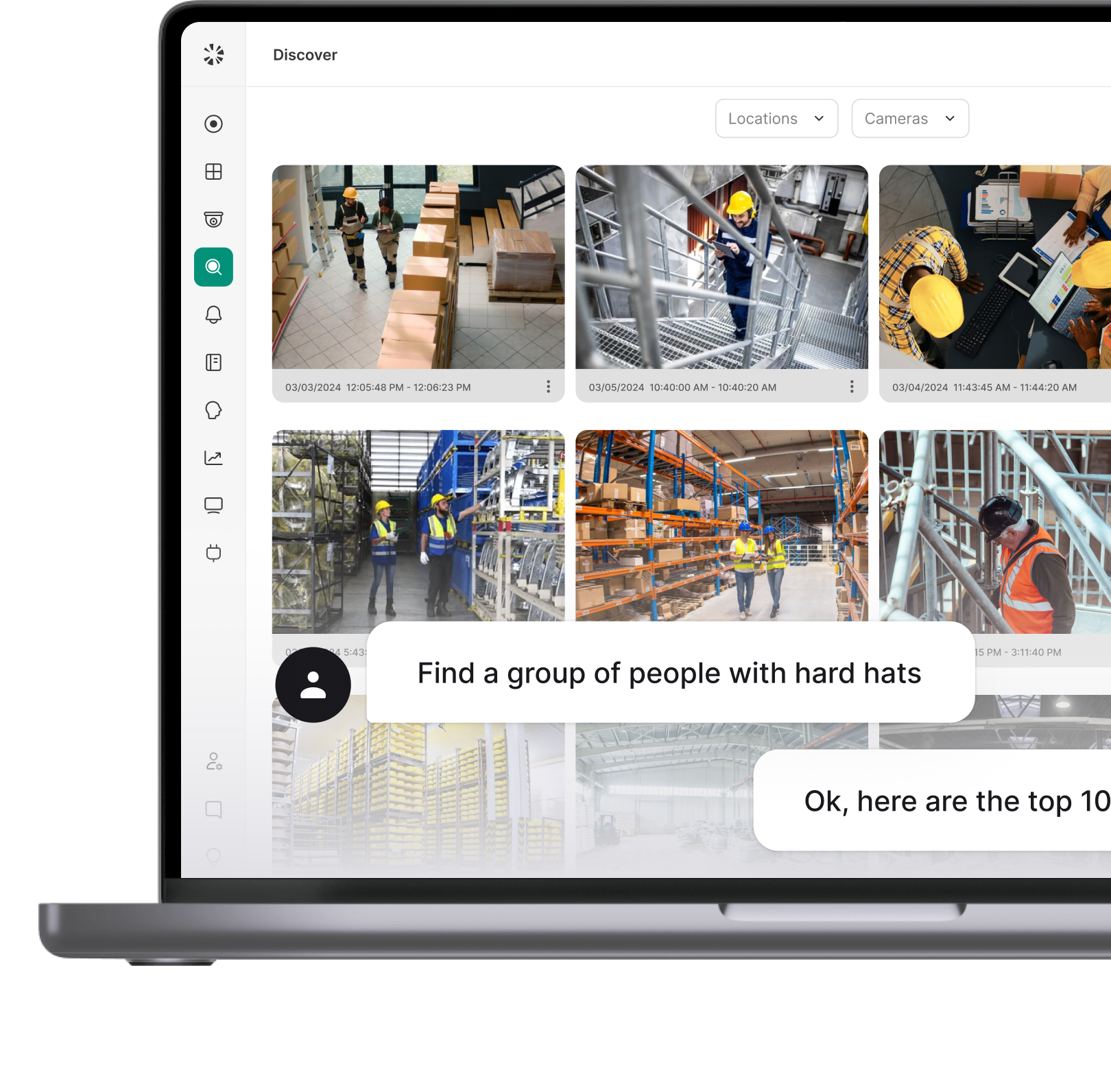
Hardware-agnostic by design. Coram works with existing cameras, manages everything through a single cloud dashboard, and covers video, access control, and AI alerts in one place.
Key characteristics:
- Works with existing camera hardware, no rip-and-replace required
- Natural language video search and AI-flagged event detection
- Unified dashboard for video, access control, and alerts
- Cloud-managed across unlimited sites from one interface
Coram is a newer platform. The partner ecosystem and third-party integration depth that Milestone has built over decades are still developing, and organizations with deeply customized legacy environments should factor that in.
Best for: Mid-market and enterprise organizations modernizing their security stack, managing multiple sites, and prioritizing operational efficiency and AI-powered detection over maximum hardware flexibility.
Platform Architecture: Open vs Integrated vs AI-Native
Architecture is where the real differences between these three platforms live. Feature lists look similar on paper. How each platform is built determines what it actually costs to run, how fast it adapts to your environment, and where it breaks down at scale.
Milestone: Flexibility With an IT Price Tag
Built around on-premises servers. Modular, configurable, and open to virtually any camera or third-party system through its MIP SDK.
That openness has a cost that doesn't show up in the licensing quote:
- Every integration requires manual configuration
- Every server requires patching and maintenance
- Every site expansion requires a certified integrator
- Organizations at scale typically carry dedicated IT resources just to maintain the platform
Works well when you have the infrastructure to support it. Becomes the hidden tax on flexibility when you don't.
Avigilon: Tight by Design, Rigid at the Edges
Purpose-built around its own hardware stack. Cameras, controllers, and the Alta cloud platform are designed together, which eliminates many integration headaches within the ecosystem.
What works well:
- Alta cloud platform enables remote access and OTA updates
- Centralized visibility across sites without full on-premises overhead
- Clean, consistent experience when the entire stack is Avigilon
Where it gets complicated:
- Third-party cameras lose access to the analytics layer
- Integrations outside the ecosystem require custom development
- Tight coupling that produces simplicity inside creates friction at the edges
Coram: Built for the Cloud From the Start
Processing, storage, and management live in the cloud. The on-site footprint is minimal, typically an edge device that handles local recording and keeps operating during network outages.
What that means in practice:
- No servers to patch at individual locations
- Firmware updates push automatically across all sites
- Adding a new site means connecting cameras, not provisioning infrastructure
- One dashboard covers every location, camera, and flagged event
The AI layer runs at the edge and in the cloud simultaneously. Real-time alerts stay low-latency. Cross-site search and pattern detection work across your entire camera network without manual effort.
Where Each Platform Wins and Where It Doesn't
Three platforms. Meaningfully different feature depth depending on what you're trying to solve. This table cuts through the marketing positioning and shows where each platform actually delivers.
What the table doesn't show:
A few things worth calling out that don't fit neatly into rows:
Milestone's analytics gap. The platform itself doesn't do AI detection. That capability is provided by third-party plugins via the MIP SDK marketplace. Quality varies significantly by vendor, and each integration adds cost and configuration complexity.
Avigilon's hardware dependency. Appearance Search and the broader analytics suite perform as advertised on Avigilon cameras. Mixed hardware environments get a noticeably different experience. That's not a footnote; it's a planning constraint.
Coram's ecosystem maturity. The platform is newer. Deep third-party integrations that Milestone has accumulated over two decades are still developing. Organizations with highly customized legacy environments should verify specific integration requirements before committing.
Where Enterprise Video Security Is Heading
The enterprise video market is shifting faster than most security teams' procurement cycles. Understanding where the technology is going matters as much as evaluating where each platform stands today, because the system you buy in 2026 will still be running in 2030.
Three shifts are reshaping how enterprise video platforms compete.
AI Is Moving From Feature to Foundation
For most of the last decade, AI analytics in video security meant purchasing an add-on module or a third-party plugin. Detection accuracy was inconsistent. Alert fatigue was high. Most teams turned notifications off within months.
That model is breaking down. Platforms built with AI at the core, processing video continuously rather than on demand, are producing meaningfully different operational outcomes:
- Security teams investigate flagged events rather than review hours of footage
- Patterns across sites surface automatically rather than requiring manual analysis
- Response times compress because relevant alerts reach the right person faster
Milestone's plugin-dependent approach puts it behind this curve. Avigilon has strong analytics within its own hardware ecosystem. Coram processes AI detection across any connected camera, which changes the economics of upgrading existing infrastructure.
Cloud Management Is Becoming the Baseline Expectation
On-premises VMS infrastructure made sense when bandwidth was expensive and cloud storage was immature. Neither condition holds in 2026.
Security leaders managing multi-site operations increasingly expect:
- Firmware and software updates without dispatching IT to individual sites
- Cross-location visibility from a single interface
- Scalability that doesn't require new server procurement per expansion
Milestone has added hybrid cloud options but remains fundamentally server-dependent. Avigilon's Alta platform has moved the needle on cloud management within its ecosystem. Coram was designed around this expectation from the start, which shows in how little infrastructure is required to add a new site.
Physical Security Convergence Is Accelerating
Video, access control, visitor management, and emergency response are converging into unified platforms. The days of separate systems with separate dashboards and separate vendors are ending, not because consolidation is trendy, but because siloed data produces slower investigations and slower incident response.
The practical implications for enterprise buyers:
- Platforms that unify video and access control reduce the time between an access event and visual verification
- Integrated alerting across systems means fewer missed incidents
- Single-vendor accountability simplifies support and contract management
Milestone connects to access control through integrations. Avigilon offers its own ACM access control system within the Motorola ecosystem. Coram manages video, access control, and AI alerts from one platform, which reduces the coordination layer between systems entirely.
What This Means for Your Buying Decision
Buying a platform today means betting on an architecture for the next five to seven years. The questions worth asking:
- Will your chosen platform's AI capabilities improve automatically or require new hardware purchases?
- Does the architecture scale without proportional IT overhead?
- Can video and access data be correlated without custom integration work?
The answers point toward cloud-native, AI-integrated platforms as the lower-friction path forward. Legacy architectures can still serve complex, highly customized environments. But the operational gap between them and modern platforms is widening each year.
Which Platform Fits Your Operation
The right choice depends on your infrastructure, your team's technical capacity, and what you actually need the system to do day to day.
Choose Milestone If...
Milestone earns its position in environments where hardware diversity and deep customization are non-negotiable.
Large public sector and critical infrastructure deployments:
Government agencies, airports, and utilities often operate with procurement mandates that require open, multi-vendor architectures. Milestone's 13,000+ device compatibility and certified integration ecosystem make it the default fit for environments where standardizing on a single hardware vendor is not an option.
Highly customized enterprise environments:
Organizations that have built complex workflows around specific integrations, whether PSIM platforms, specialized analytics engines, or legacy access control systems, benefit from Milestone's MIP SDK depth. The platform bends to fit existing architecture rather than requiring the environment to adapt.
Multi-integrator deployments:
Large campuses or facilities with multiple security contractors managing different zones often run Milestone because integrators know it. The talent pool is wide, documentation is deep, and the platform has a long track record in complex physical environments.
Where it struggles: Lean IT teams, fast-growth organizations adding sites frequently, and operations where AI detection capability matters more than hardware flexibility.
Choose Avigilon If...
Avigilon performs best when you are building from scratch or standardizing a refresh across a controlled hardware environment.
Investigations requiring fast person or vehicle search:
Appearance Search is genuinely strong. For security teams that regularly conduct post-incident investigations across large camera networks, the ability to search by physical attributes across hours of footage from multiple cameras compresses investigation time considerably.
Single-vendor simplicity at enterprise scale
Organizations that want one contract, one support line, and one hardware standard benefit from Avigilon's vertical integration. The procurement and support model is straightforward when the entire stack is from Motorola Solutions.
Regulated industries with predictable infrastructure
Healthcare campuses, financial institutions, and corporate headquarters that control their hardware environment and want proven, warrantied analytics on known camera models are well served by Avigilon's approach.
Where it struggles: Mixed hardware environments, budget-sensitive expansions where Avigilon camera costs create friction, and operations that need to integrate deeply outside the Motorola ecosystem.
Choose Coram If...
Coram fits organizations that are modernizing their security operations and need AI capability without rebuilding their camera infrastructure.
Multi-site operations with lean security teams
Managing ten locations from one dashboard without dispatching IT to each site is where Coram's architecture produces the clearest operational advantage. Security teams get unified visibility, AI-flagged events, and access control in one place, regardless of how many sites they manage.
Organizations with existing camera infrastructure
Hardware-agnostic by design, Coram works with the cameras already on the wall. That changes the economics of a platform upgrade significantly, particularly for mid-market organizations that cannot absorb a full rip-and-replace.
Operations where access control and video need to work together
When an access event triggers a video clip automatically, investigation time drops. Coram's unified platform handles this natively, without custom integration work between separate systems.
Fast-growing organizations adding locations regularly
Adding a new site on Coram means connecting cameras to the network. There’s no need for server provisioning, an integrator dispatched, or configuration from scratch. For organizations in active growth, that operational difference compounds quickly.
Where it makes a difference: Deeply customized legacy environments with complex third-party integrations, and organizations that require a broad certified integrator network for large-scale installation projects.
Pick the Platform That Fits How You Actually Operate
Three platforms. Three different bets on what enterprise video security should look like.
Milestone fits large, complex environments with hardware diversity, multi-integrator deployments, and dedicated IT resources. The platform is mature and well-documented. The tradeoff is real infrastructure overhead and AI analytics that depend entirely on third-party plugin quality.
Avigilon fits organizations standardizing on a single vendor. Appearance Search is a genuine advantage for investigation-heavy teams, and the Alta cloud layer has modernized the platform considerably. Commit to the Motorola ecosystem, and it rewards you. Step outside it and friction climbs fast.
Coram fits organizations where operational efficiency matters more than maximum customization. Works with existing cameras, unifies video and access control in one dashboard, and adds new sites without provisioning infrastructure.
The Decision in Three Questions
Not sure which fits? Answer these:
- How much IT overhead can your team sustain? High capacity points toward Milestone. Low capacity points toward Coram.
- Are you standardizing hardware or working with a mixed estate? Single-vendor refresh favors Avigilon. Mixed or existing infrastructure favors Coram. Deep multi-vendor complexity favors Milestone.
- Do you need a unified video and access control system, or are separate systems acceptable? Unified platform points to Coram. Separate best-of-breed systems with integration work points to Milestone or Avigilon.




.png)