An assistant superintendent at a small district put it plainly on a call last year: "No, we're a small district. I don't have a grant. I am the grant team."
That is who this is for. Ohio runs several funding programs that a district can point at security equipment, and they are administered by three different agencies with different rules, different match requirements, and windows that open and close at different times. Two of them will pay for cameras, panic buttons, and access control. One of them will not pay for school security at all and shows up in the search results anyway.
Here is what is open as of September 2026, what each program actually funds, and how to write an application a reviewer can approve without interpretation.
Which Ohio Grants Are Open Right Now
The BWC reopening matters more than it looks. BWC put more than $41 million into the FY27 safety grant program and started taking applications on August 17, 2026. The FY26 round paused in March 2026 because demand outran the money, and the round before that paused in November. Applications do not carry over between fiscal years, so anything a district submitted in a previous cycle has to be resubmitted.
That history is the real deadline. There is no published closing date. The window closes when the money runs out, and in each of the last two cycles it ran out partway through the year.
BWC School Safety and Security Grant: The Equipment Program
This is the school-specific instrument in the BWC safety grant family, and the one whose award ceiling is high enough to matter for a real equipment purchase: up to $40,000 in funding every three years.
Eligibility runs through your status as an employer, not just your status as a school. That distinction sounds academic but it decides your application. BWC is a workers' compensation agency and every one of these programs is built on the employer relationship, so the questions that settle your eligibility are about your district's standing with BWC, not about enrollment, building count, or the incident history a school safety grant would normally ask for. Your school must be a licensed preschool through 12th grade educational organization providing direct instructional services to children. It must also maintain active workers' compensation coverage and be current with any payments owed to BWC.
The match changes your budget conversation
SSSG is a 3-to-1 matching grant. BWC contributes $3 for every $1 the district contributes. A $40,000 project means $30,000 from BWC and $10,000 from the district.
Two things follow from that. First, the $10,000 has to be real, budgeted, and available, so this is a conversation with your treasurer before it is a conversation with a vendor. Second, fees paid to an outside grant writer do not count toward the match. BWC is explicit that it is not affiliated with any grant writing service and that those fees are the employer's own cost.
Design the project around the ceiling
At up to $40,000 for each three-year eligibility cycle, the grant covers a real single-building deployment or a focused district-wide purchase in one equipment category. It does not cover a full multi-building system refresh. Districts that treat the ceiling as the whole project budget tend to get further, because the equipment list stays coherent and a reviewer can check the quote against the request without doing any interpretation.
Confirm the equipment categories before you write anything down
The four approved categories are employee safety interventions; incident response equipment; facility, transportation, and grounds security equipment; and HVAC and indoor air quality improvements. The full list lives on the SSSG program page and is worth a detailed review. Radios, panic buttons, access control, security cameras, and bollards have all been funded under this program.
What is safe to plan around is the general shape: these programs fund equipment and its installation, and they are specific about categories rather than open to any purchase a district calls a safety improvement. The language you use to describe your purchase matters as much as the purchase itself.
Apply before you buy
This is the single most expensive mistake available in this program. BWC expects the application, the review, and the approval to happen before the district purchases anything. Equipment bought ahead of approval is not retroactively covered. Districts that find the grant after they have already signed a PO have generally found the money out of reach for that project.
The application route runs through BWC's grant management portal, and the instructions document linked from the SSSG program page is the authority on what the submission has to include.
Attorney General's School Safety Grant: The Flexible One
This is the program the draft version of this page was missing, and for a lot of districts it is the better fit.
For the 2026-27 academic year the Ohio Attorney General's Office made $9.01 million available across two grants, funded through House Bill 96 of the 136th General Assembly. Every school district was eligible to apply for a formula-based grant of $2,500 or $4.50 per student, whichever amount is greater, and a program-based grant of up to $40,000 regardless of enrollment. Districts could apply for one or both. Awards went out first come, first served, and the application deadline was May 29, 2026.
The uses the Attorney General's Office named include silent panic alarms, gunshot-detection technology, systems allowing immediate camera access to responding law enforcement, alert systems warning of wanted dangerous individuals, license plate reader alerts, active-shooter response training or equipment, and school supplies or equipment related to safety or to implementing a school safety plan.
Read that list against your equipment plan. It is broader than BWC's, it names the security technology categories directly, and the announcement does not describe it as a matching grant the way BWC's programs are described.
That round is closed. The FY26 opportunity was announced on October 27, 2025 and closed on May 29, 2026. If the office runs the program again for 2027-28, based on the last cycle the announcement would land around late October, with applications through the Ohio Grants Portal. Watch the portal's funding opportunities listing and get on the Attorney General's notification list rather than waiting to hear about it.
Two practical notes for planning. The formula grant is small for a small district, which is exactly the district that has no grant team. And the program-based grant tops out at the same $40,000 as SSSG, so a district that lands both is looking at a meaningfully larger project than either one funds alone.
State of Ohio Security Grant: Nonpublic Schools and Preschools
The State of Ohio Security Grant is administered by the Ohio Emergency Management Agency and awards competitively to Ohio nonprofit organizations, houses of worship, chartered nonpublic schools, and state-licensed preschools for security improvements that help the organization prevent, prepare for, or respond to acts of terrorism.
Public districts are not eligible. Chartered nonpublic schools and licensed preschools are. The SFY27 round closed May 15, 2026, with a performance period running July 1, 2026 through June 30, 2028. Improvements have to address risks identified in a vulnerability assessment, which is a real piece of work and not a form you fill out the week before the deadline.
If you run a nonpublic school or a preschool, this program and the BWC SSSG are your two main state routes, and they are not mutually exclusive.
Safety Intervention Grant: When a District Uses This Instead
The Safety Intervention Grant is an employer injury-prevention program. Its purpose is to reduce the risk of injury to people who work for you, which is a different question from reducing risk to students, and that difference decides whether it fits your project.
A district reaches for SIG when the equipment protects staff. Three kinds of purchases sit closer to SIG's purpose than to the school security program's: duress devices carried by staff who work alone or with the public, equipment that addresses a documented pattern of employee injury, and anything a district can tie to one job function and one hazard. If your case for the purchase reads like a workers' compensation case, SIG is built for it. Expect to work with an assigned BWC grant coordinator and to submit a case study a year after implementation.
If your case reads like a school security case, apply to SSSG and do not split one project across both to improve your odds. Districts can participate in the SIG program concurrently with BWC's other safety grant programs, so two genuinely separate projects can go to two grants at the same time.
Firefighter Exposure Grant: Why It Appears in School Searches
This program does not fund school security equipment. It funds gear and equipment that reduce responder exposure to environmental and carcinogenic hazards, at up to $15,000 for each three-year eligibility cycle, and volunteer emergency medical service units are eligible. That eligibility is the only detail here a school district needs, and then only if the district runs its own EMS unit.
It appears in Ohio school safety searches because BWC announces all three programs in the same releases and lists them on the same portal.
Mapping Security Equipment to the Right Grant
Reviewers read equipment categories, not product names. The middle column below is the one that decides your application.
The naming discipline in that middle column is not cosmetic. An application that asks for a product by brand name puts a reviewer in the position of deciding whether that product belongs to an allowable category, and they have no reason to make that call in your favor. An application that asks for video surveillance equipment and installation, and attaches a quote showing which product delivers it, has already answered the question. Write the category, then let the quote carry the specifics.
What Your Equipment Quote Needs to Contain
Get three of them. BWC now requires three vendor quotes, or a single quote with a sole-source justification, for the proposed purchase. This was introduced across the safety grant family and it is the requirement districts most often miss, because it changes your timeline. Three quotes means three vendor conversations before you can submit, and it means the vendor you want has to survive a comparison rather than just produce a number.
Each quote needs:
- Every item on its own line, with quantity and unit price, so a reviewer can see what the money buys without doing arithmetic.
- Model or part numbers for hardware, because "cameras" is a category and a quote has to be specific.
- Installation and labor on their own lines, never folded into a hardware price.
- Software licensing shown with its term, so the reviewer can separate one-time cost from recurring cost.
- A quote total that matches your requested amount to the dollar, with no bundled discount that appears in one document and not the other.
- Vendor name, contact, and quote date.
Read BWC's application instructions before you ask a vendor for anything. Then the quote arrives in the shape BWC wants rather than the shape your vendor's template produces, and you are not asking for a revision in the last week of the window.
How Coram Fits a Grant-Funded Security Project
Start with what the district already owns. Most schools have cameras that still work, doors that already have hardware, and cable already pulled through the walls. Coram works with existing cameras, doors, and cabling, which is the difference between a $40,000 ceiling covering a building and a $40,000 ceiling covering a wiring closet. On a capped grant, that is the whole argument.
Coram Emergency Management is the product line that maps most directly to a school security grant. Panic buttons are small, battery-powered devices that let a staff member discreetly trigger a predefined emergency, and gateways receive those button signals and relay them to Coram EMS over your network. For quoting purposes the hardware line items are buttons, gateways, and antennas.
What a button does when it is pressed is configured by you. Coram EMS allows you to configure up to five emergency types, each with its own label, its own list of who can trigger it, and its own broadcast and resolution rules, and the panic button trigger determines which of those emergency types a button activates. Recipients and channels are set per emergency type, with email, SMS, and push notification available. For firearm alerts specifically, push notifications can be set to critical priority, which overrides Do Not Disturb, Focus, and silent mode on iOS.
Firearm Detection feeds the same emergency types. Firearm Detection alerts send real-time notifications to specified recipients whenever an unholstered or threatening firearm is identified on selected camera feeds. With the firearm alert integration enabled, users who receive firearm alerts and have EMS access can trigger an emergency directly from the alert, in the mobile app. A person decides to escalate; the detection does not escalate on its own.
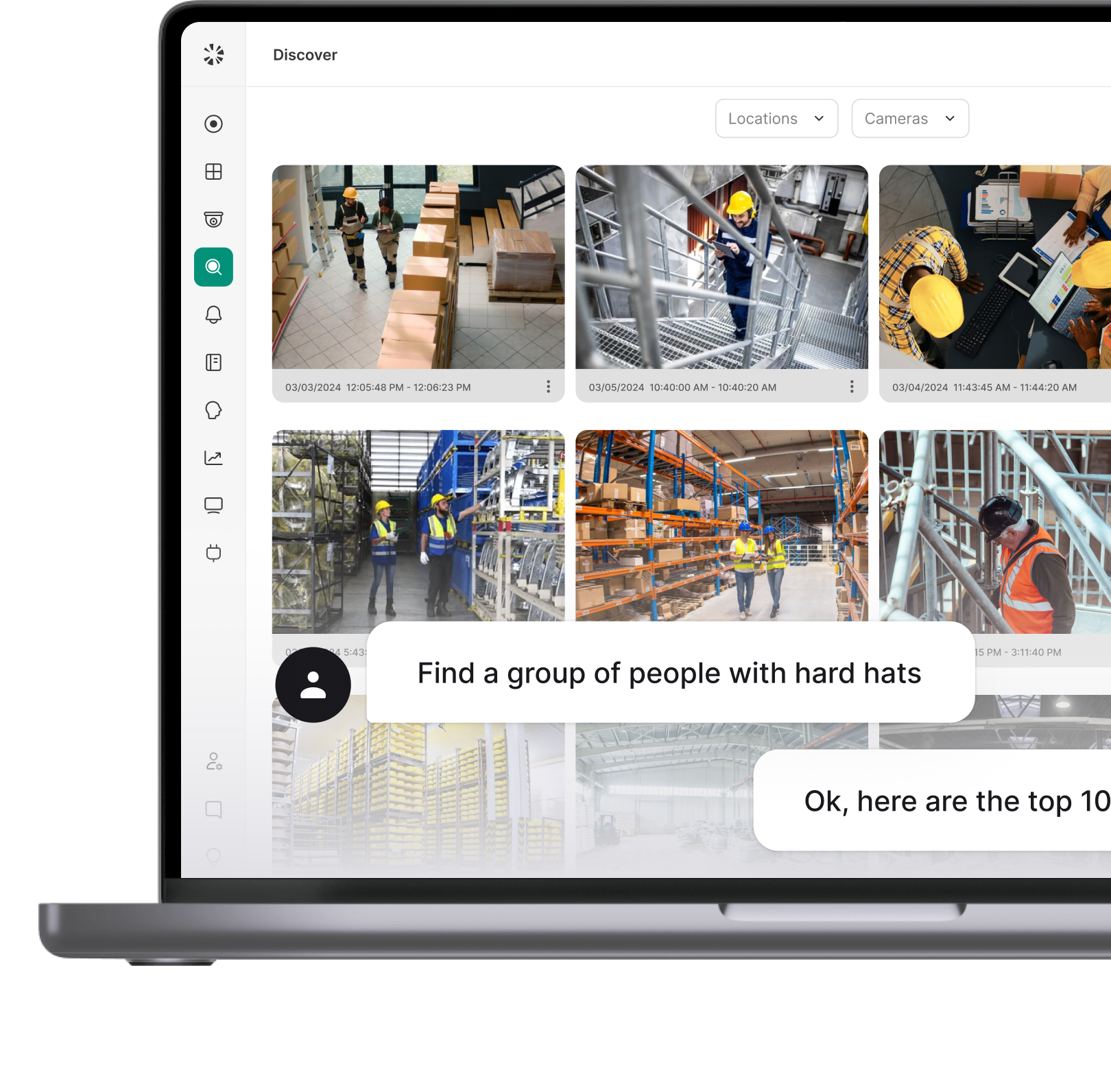
Video Security, Access Control, and Emergency Management run in one platform, so a door event arrives with the video of that door, and a firearm detection arrives with the camera feed that produced it. For a grant application that mainly means one vendor, one quote, and one line of installation labor instead of three.
If you are mapping equipment to an application this cycle, the useful next step is a line-item quote you can attach to it. Tell us the buildings and the equipment category and we will put one together in the format BWC's instructions ask for, including the detail a reviewer needs to check it without calling you. You can also try Coram free if you want to see the product before you commit it to an application.
Before You Start the Application
Two things decide these applications: the equipment category language, and a quote a reviewer can check line by line. Get those right and the rest is paperwork.
Confirm the match requirement, the allowable categories, and the current status of each program against the administering agency's own pages before you build the budget. Program mechanics in this space change between cycles, BWC paused twice in two years, and every third-party page covering this topic goes stale, including this one.
For the federal side of the same question, see our guide to school safety grants, which covers STOP, SVPP, DHS TVTP, Project SERV, and the COPS Matching Grant Program, along with our overview of school security grants. We are also working on a companion guide to the application itself, covering the narrative, the budget, and what reviewers look for.




.png)