Choosing an AI video surveillance platform often becomes difficult because options look similar, but they are built on fundamentally different assumptions. Some platforms layer AI on top of existing cameras, others replace the entire stack with proprietary hardware, and a few take an AI-first approach designed to evolve over time. When these differences are unclear, teams risk selecting systems that limit flexibility, inflate long-term costs, or complicate future expansion.
This guide covers Spot AI vs Verkada vs Coram by focusing on how each platform is architected, how AI is actually used for video surveillance, and what those choices mean in real deployments. Rather than listing features, it examines deployment models, camera compatibility, scalability, and ecosystem design to help identify which approach aligns with specific operational requirements.
The article covers platform architecture, AI philosophy, deployment and scaling considerations, total cost implications, and best-fit use cases across multi-site, regulated, and growth-oriented environments.
Read on to know more.
TL;DR - Spot AI vs Verkada vs Coram
- All three platforms use AI, but differ in how intelligence is applied, deployed, and scaled across environments.
- Spot AI layers AI on existing cameras, focusing on automation, semantic search, and operational intelligence without changing infrastructure.
- Verkada delivers a standardized, cloud-managed security stack with tightly integrated hardware, simplifying deployment but increasing ecosystem dependency.
- Coram uses a hybrid, camera-agnostic model that connects AI-driven detection with access control and emergency response workflows.
- Total cost of ownership is shaped more by hardware dependency and scaling strategy than upfront pricing.
- The right choice depends on your needs: how well the platform aligns with your architecture, growth plans, and operational needs.
What is Coram?
Coram is an AI-first physical security platform designed to modernize video surveillance without replacing existing IP cameras. It applies cloud-native intelligence on top of current infrastructure, making it suitable for organizations that want advanced detection and analytics without hardware lock-in.
Core Features
Coram focuses on real-time intelligence rather than post-incident review.
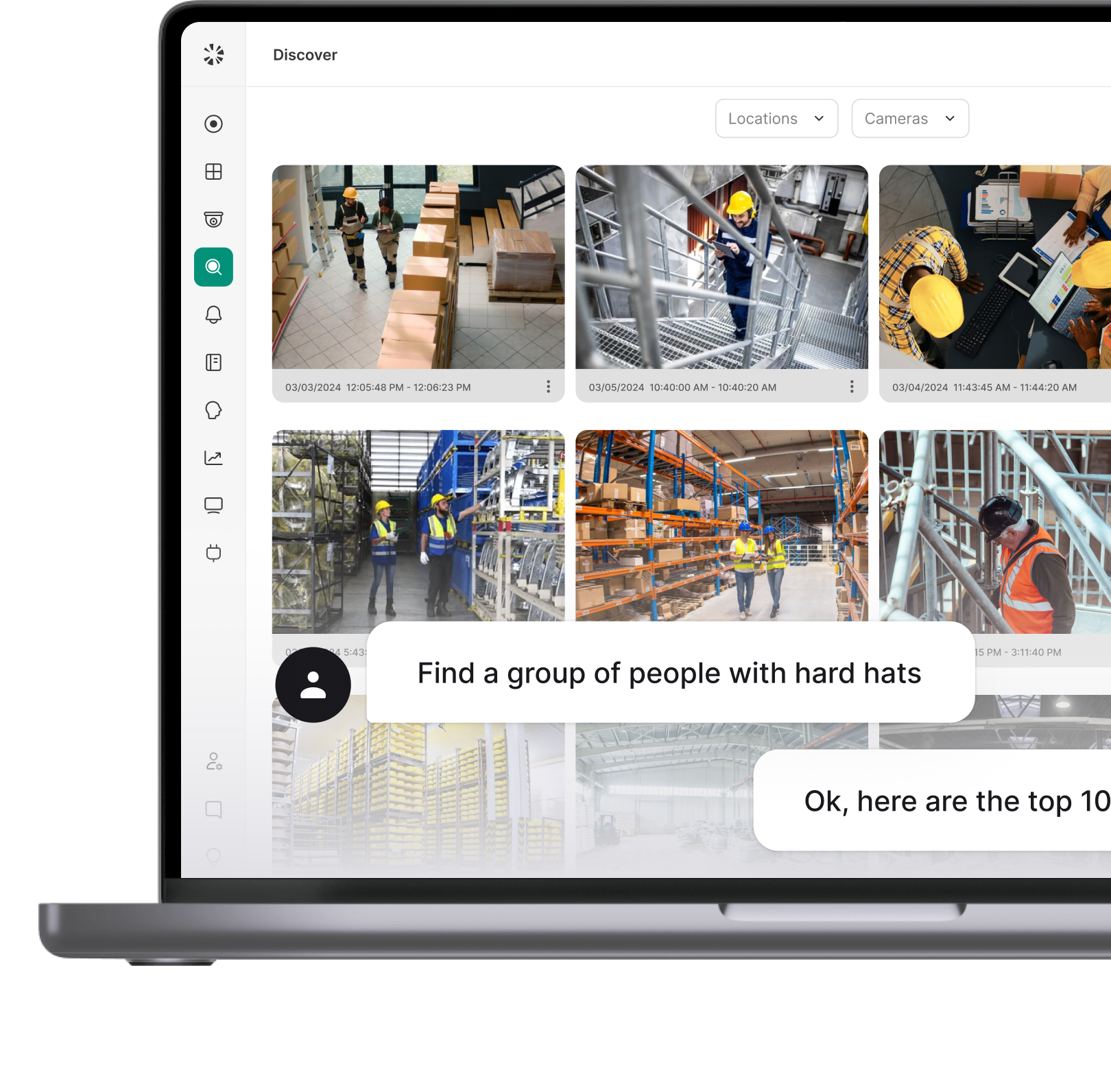
Its AI enables natural-language video search and proactive alerts that surface critical events as they happen. Common detections include firearm presence, slip-and-fall incidents, PPE violations, and other safety-related activity.
The platform also supports operational insights such as occupancy tracking and queue analysis, extending value beyond security.
Platform Components:
Coram brings multiple security functions into a single platform:
- AI Video Surveillance for real-time alerts, AI search, and event detection
- Access Control that integrates with existing readers and links door events to video
- Emergency Management (EMS) for panic alerts and coordinated incident response
These components are designed to work together under one system rather than as separate tools.
Use Cases
Coram is commonly used in schools, healthcare facilities, warehouses, and multi-site enterprises that need fast deployment, real-time alerts, and flexibility to scale. It fits environments where existing cameras must be retained while adding AI-driven intelligence and centralized control.
What is Verkada?
Verkada is a cloud-managed physical security platform built around proprietary hardware and a tightly integrated ecosystem. It combines cameras, access control, environmental sensors, and alarms into a single cloud dashboard, prioritizing simplicity, consistency, and centralized management across sites.
Core Features
Verkada’s strength lies in its unified, plug-and-play experience.
Cameras store video locally on the device while using the cloud for management, analytics, and updates. AI features support people and vehicle detection, motion-based search, and operational visibility without requiring complex configuration.
The platform emphasizes ease of deployment and low day-to-day IT overhead.
Platform Components
Verkada delivers an all-in-one security stack that includes:
- Video Surveillance with cloud-managed cameras and built-in analytics
- Access Control integrated directly into the same platform
- Environmental Sensors and Alarms for air quality, noise, and safety monitoring
All components operate within a closed ecosystem and are managed through a single interface.
Use Cases
Verkada is commonly adopted by organizations that want a standardized security stack across multiple locations with minimal setup effort. It fits environments where teams prefer a fully managed, cloud-first system and are comfortable committing to proprietary hardware for long-term consistency and simplicity.
What is Spot AI?
Spot AI is an AI-powered video intelligence platform that turns cameras into active operational agents. It applies continuous AI analysis to live video streams, enabling organizations to detect issues early, reason about what’s happening, and take action automatically across security and operations.
Core Features
Spot AI centers on AI agents that monitor video 24/7 and surface only the moments that matter. Its platform combines real-time video analysis, intelligent reasoning against defined goals or SOPs, and automated actions such as alerts, deterrence, and workflow triggers. Teams can search video using AI-driven context instead of manual review, improving response speed and operational consistency.
Beyond security, Spot AI is used to optimize productivity, reduce downtime, and standardize operations across shifts and sites.
Platform Components
Spot AI’s platform is built around AI-driven operational intelligence:
- AI Security Guard for continuous monitoring, threat detection, and live deterrence
- AI Operations Assistant for safety oversight, process enforcement, and efficiency tracking
- AI Video Search and Analytics to surface insights from large volumes of footage
These capabilities work together to convert video into real-time decisions and actions.
Use Cases
Spot AI is widely used in construction, manufacturing, logistics, retail, and multi-location operations where constant oversight and fast response matter. It fits environments that want AI to actively monitor conditions, prevent incidents, and improve operational outcomes without adding headcount.
Spot AI vs Verkada vs Coram- Side-by-Side Feature Comparison
This comparison covers how Spot AI vs Verkada vs Coram differ across core platform capabilities. The table focuses on architecture, AI scope, hardware flexibility, and system coverage to make structural differences clear at a glance:
How Each Company Thinks About AI Video Surveillance?
AI video surveillance is implemented differently across platforms. The way AI is applied influences how events are detected, how footage is reviewed, and how teams respond. Know how each company applies AI to video surveillance and how those choices affect real-world operations.
Spot AI: AI as an Always-On Operator
Spot AI treats video as a continuous operational signal rather than passive footage. Its AI agents monitor live streams 24/7, apply contextual understanding, and surface only the moments that matter.
Semantic AI search allows teams to find events using context instead of timestamps, while automation enables actions: alerts, deterrence, or workflow triggers to fire in real time. The emphasis is on standardizing decisions and actions across sites without adding headcount.
Verkada: AI as Cloud-Managed Visibility
Verkada uses AI to simplify monitoring and investigation within a tightly integrated cloud ecosystem. Its analytics focus on structured detection: people, vehicles, motion and fast filtering of footage through a centralized dashboard.
AI supports operational awareness and ease of use, prioritizing consistency across locations. The model favors clarity and manageability over deep customization, with intelligence closely tied to Verkada’s proprietary hardware.
Coram: AI as Real-Time Intelligence and Response
Coram approaches AI as a proactive layer designed to reduce response time. Its platform applies AI to detect safety and security events as they happen, supports natural-language video search, and links alerts directly to access control and emergency workflows.
By separating cameras from AI compute, Coram allows intelligence to evolve independently of hardware. The focus is on early detection, coordinated response, and flexibility across environments.
In short: Spot AI uses AI to act, Verkada uses AI to manage, and Coram uses AI to detect and respond.
Spot AI vs Verkada vs Coram: Key Differences
Infrastructure Dependency and Flexibility
The platforms differ in how tightly they bind intelligence to hardware.
Spot AI adds intelligence on top of existing ONVIF-compliant cameras using a hybrid IVR + cloud model, allowing upgrades without replacing infrastructure.
Verkada delivers intelligence through a tightly integrated hardware and cloud stack. While third-party cameras are supported via Command Connector, the platform is optimized around Verkada devices.
Coram separates cameras from AI compute through its Coram Point NVR, enabling organizations to retain cameras while evolving analytics independently.
This difference directly affects long-term flexibility and exit costs.
Role of Video in Day-to-Day Operations
The difference is in how video is used operationally once deployed.
Spot AI keeps video focused on automation and oversight, helping teams standardize actions and reduce manual monitoring across sites.
Verkada uses video as a shared layer across security functions, making it easier to manage people, doors, and sensors from one system.
Coram uses video as the trigger point for response, linking detections directly to access control and emergency workflows.
The practical impact is whether video primarily drives automation, simplifies management, or coordinates response.
How Deployments Scale Over Time
Scaling looks different depending on architectural design.
Spot AI scales by expanding AI coverage and automation across sites without changing camera infrastructure.
Verkada scales through standardization, adding locations by deploying the same hardware and cloud-managed tools everywhere.
Coram scales by upgrading AI compute and workflows at the NVR and cloud level while leaving cameras untouched.
Each approach favors a different growth model: flexibility, uniformity, or modular expansion.
Operational Tradeoffs
The platforms prioritize different operational outcomes.
Spot AI emphasizes reducing manual monitoring and investigation time through automation.
Verkada emphasizes simplicity, consistency, and centralized management.
Coram emphasizes faster detection and coordinated response across security layers.
These tradeoffs matter more in daily operations than feature checklists.
Which Platform Fits Your Environment?
This section maps each platform to the environments it fits best based on architecture, platform scope, and day-to-day operational requirements.
Coram Is Ideal For
Coram fits environments where video needs to trigger coordinated action. It works well for organizations that require AI-driven detection tied directly to access control and emergency workflows, without replacing existing cameras.
Schools, healthcare facilities, and regulated multi-site operations benefit from Coram’s ability to unify video, access, and emergency response while preserving infrastructure flexibility.
Spot AI Is Ideal For
Spot AI fits operations-focused environments that want to add intelligence and automation to existing cameras.
It is commonly used in construction, manufacturing, logistics, retail, and other multi-location operations where continuous monitoring, faster investigations, and standardized actions across shifts matter. Spot AI is best suited where video intelligence and operational outcomes are the priority.
Verkada Is Ideal For
Verkada fits organizations that prefer a standardized, cloud-managed security stack delivered through a single vendor.
It suits distributed offices, campuses, and retail chains that value simplicity, consistency, and centralized management across video, access control, and sensors, with deployment optimized around a unified ecosystem.
Pricing & Total Cost of Ownership
Pricing differences between Spot AI, Verkada, and Coram are driven more by cost structure than list price. The key factors are hardware dependency, licensing model, and how costs change as deployments grow.
- Spot AI follows a software-first model that builds on existing camera infrastructure. Costs are primarily tied to software subscriptions and AI usage rather than mandatory hardware refreshes. This keeps upfront investment lower for organizations that already have cameras in place and allows spend to scale gradually with operational needs.
- Verkada uses a tightly integrated hardware and subscription model. Initial costs include proprietary devices, followed by recurring licenses for cloud management and analytics. While this creates a predictable operational model, total cost typically increases in line with hardware expansion and long-term platform commitment.
- Coram uses a hybrid approach. Organizations can retain existing cameras while investing in AI compute, access control, and emergency management as required. Costs scale with platform adoption rather than forced hardware replacement, making long-term spend easier to manage in phased rollouts.
At a high level: Spot AI optimizes for lower upfront investment, Verkada optimizes for standardized deployment with predictable costs, and Coram optimizes for long-term flexibility and modular growth.
Final Verdict: Choosing the Right AI Video Surveillance Platform
There is no single “best” AI video surveillance platform only the one that fits your operational reality. This comparison shows how architecture, deployment flexibility, and long-term scalability matter more than surface-level features.
Platforms like Coram highlight a shift toward AI-first, hybrid models that reduce hardware lock-in while connecting video to real-time response.
Others prioritize standardization or operational automation. The right decision comes from understanding how much flexibility, control, and integration your environment needs today and how that will evolve tomorrow.
When architecture aligns with outcomes, the platform choice becomes clear.




.png)