Over the last few years, cloud-managed video surveillance has become the default direction for many organizations that want to replace NVR-based systems. During this shift, Verkada is often one of the first platforms buyers consider because of the way it bundles cameras, storage, and management software into a tightly integrated cloud platform.
However, once you start understanding the nuances of this evaluation, you realize Verkada is only one approach within a broader market. More often, you will also come across AI-native platforms like Coram, hybrid enterprise systems such as Avigilon, and ecosystem-driven solutions like Ubiquiti Protect or Cisco Meraki.
All of them modernize video surveillance in their own ways. However, they still differ in how they handle hardware flexibility, analytics, deployment architecture, and long-term costs. That is exactly why we have put together this guide.
By the end of the article, you will have a full panoramic view of where Verkada performs particularly well, where its model creates tradeoffs, and how other platforms stack up across the factors most teams consider before making the absolute right choice.
Verkada at a Glance - What It Does Well
One of the main reasons many organizations consider Verkada when moving to cloud surveillance is the simplicity of its model. Here are a few reasons why this works so well:
Edge Processing and Local Storage
Although Verkada is cloud-managed, the cameras themselves perform a significant amount of work locally. Each device includes onboard processors that can analyse video streams directly at the camera. This edge processing architecture allows the camera to detect activity, identify objects, and prepare searchable data before sending relevant information to the cloud platform.
Another important part of this architecture is local video storage on the camera itself. Verkada cameras typically include built-in storage that can retain recordings for extended periods, sometimes ranging from around 30 days to as much as a year, depending on the model.
Because footage is stored locally, cameras continue recording even if internet connectivity temporarily drops. Once connectivity is restored, users can still access recordings through the cloud interface.
AI-Powered Detection and Search
Modern surveillance systems increasingly rely on artificial intelligence to help security teams identify events more quickly, and Verkada integrates several AI-based analytics features into its cameras. These analytics allow the system to automatically detect people, vehicles, and other objects within the camera’s field of view.
Once detected, the platform can classify attributes such as clothing color, vehicle type, or license plates. The platform also includes AI-driven search capabilities that allow investigators to filter footage using parameters like time, appearance, or object type.
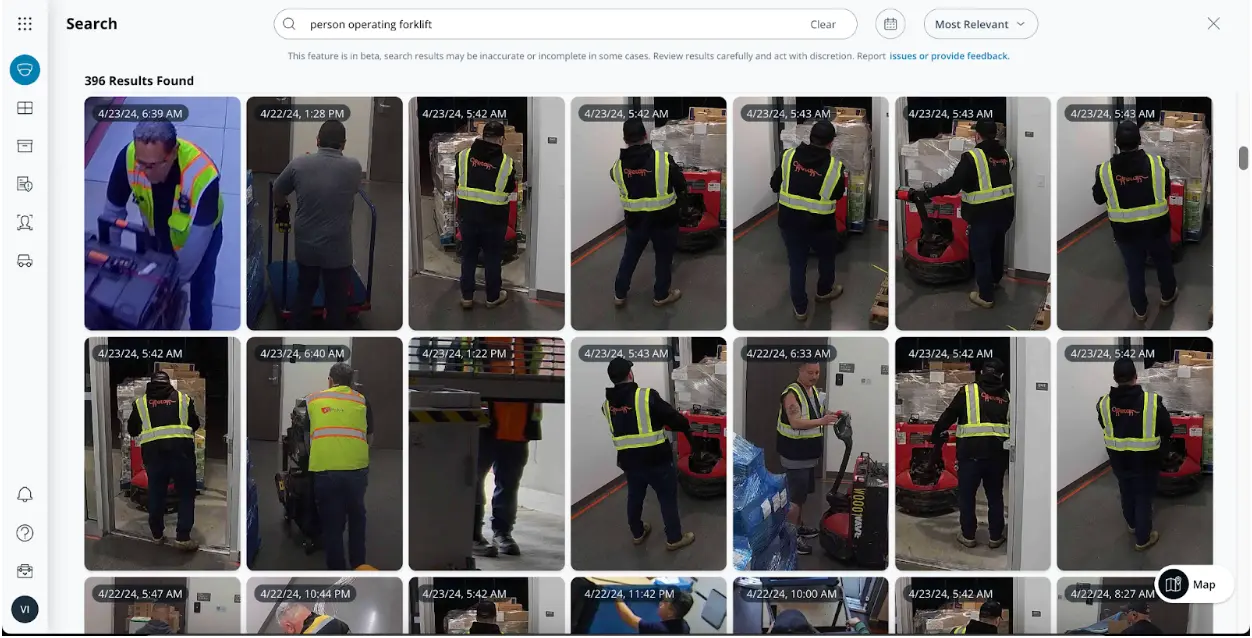
Source: Verkada’s AI-Powered Search
In fact, some features even allow natural-language style searches, for example, looking for a person wearing a specific color attire or identifying a vehicle that entered a parking lot earlier in the day. These capabilities help to use the surveillance footage as a searchable dataset, which can speed up investigations and reduce the time required to find relevant events.
Remote Monitoring and Proactive Alerts
Another advantage of Verkada’s cloud-managed system is the ability to monitor security remotely. Because Verkada cameras are connected to the cloud platform, authorized users can access live or recorded video from virtually anywhere with an internet connection.
In addition to passive monitoring, the system can also generate alerts when certain events occur. Cameras can notify administrators if they detect motion, recognize vehicles, or identify unusual activity based on configured analytics rules. The platform can also send notifications if cameras go offline, are tampered with, or experience connectivity problems.
Long-Term Reliability and Hardware Support
For organizations deploying surveillance infrastructure across multiple sites, hardware reliability can be a major concern. Verkada addresses this by designing its cameras and devices as part of a tightly integrated hardware ecosystem, which helps ensure compatibility and predictable performance.
Another aspect is its extended hardware warranty. Many of its camera models include warranties that can extend up to 10 years (depending on the product), which is significantly longer than typical warranties offered for standard surveillance equipment. This type of coverage can help reduce concerns about equipment replacement cycles and maintenance costs over time, particularly if you are planning long-term deployments across a facility.
Where Verkada Creates Tradeoffs
While Verkada’s integrated cloud model simplifies deployment and management, it also introduces a few structural tradeoffs that you should understand before committing to the platform. For many buyers, these factors only become visible once they start planning for larger deployments, integrating with other systems, or budgeting for multi-year usage.
That’s why understanding these considerations early helps you determine whether Verkada’s model aligns with your operational priorities. Here are a few factors to consider:
1. Proprietary Ecosystem and Vendor Lock-In
One of the structural tradeoffs of Verkada’s platform comes from its closed, proprietary ecosystem. The system is tightly integrated, where the cameras, software, storage, and management interface are built to work together seamlessly. This simplifies deployment as you don’t have to worry about compatibility issues between hardware, software, and analytics tools.
Everything is designed to operate within the same environment, which can make setup and day-to-day management much easier. However, this also means that you cannot mix cameras from other manufacturers or integrate external devices as easily as you could with more open surveillance platforms. So, if you want flexibility, this can become a serious consideration.
2. Higher Long-Term Licensing Costs
Another concern is the cost of recurring licenses. Verkada’s platform requires a subscription for each device to access cloud management, analytics features, and platform updates. While this model simplifies software maintenance and ensures continuous updates, the recurring licensing structure can become a significant part of the total cost as deployments scale.
For smaller deployments, the pricing may feel manageable, but in larger environments with dozens or hundreds of cameras, license renewals become an important budgeting factor.
3. Connectivity and Bandwidth Considerations in Some Cases
Since Verkada is built around a cloud-managed architecture, reliable network connectivity becomes a core requirement for the platform to function smoothly. Cameras still record locally during temporary outages, but many management and analytics capabilities depend on connectivity with the cloud platform.
In environments with limited bandwidth or strict network segmentation policies, this dependence can sometimes lead to operational friction. That’s also the reason organizations with remote locations or constrained networks often evaluate how much bandwidth the system requires and whether their infrastructure can support large-scale deployments.
4. Platform Flexibility and Missing Advanced Controls
Another tradeoff comes from Verkada’s focus on simplicity and tightly controlled system design. While this helps to reduce configuration complexity, the platform still offers fewer advanced customization options compared to more open or enterprise-focused systems.
For example, features such as IP filtering and manual software update options, or certain access configuration options, are limited compared to platforms designed for heavy IT customization. So, if you have strict internal security policies or complex infrastructure, you might want to look for systems that provide more granular administrative control.
5. AI Detection Accuracy in Complex Environments
AI-powered analytics are one of Verkada’s key selling points, but like most computer-vision systems, detection accuracy can vary depending on the environment. Factors such as lighting conditions, camera placement, or crowded scenes can sometimes lead to false alerts or missed detections.
This is not unique to Verkada. Many video analytics platforms face similar challenges, but if you are deploying AI-driven surveillance systems, you would need to test how detection features perform in your specific environment before relying on them for operational decisions.
Source: G2 Verkada Reviews
Side-by-Side Comparison Table
While many systems promise similar capabilities (such as cloud access, AI analytics, and remote monitoring), HOW they deliver those capabilities can vary significantly. Some platforms prioritize tight hardware integration and simplified management, while others focus on open architectures, enterprise infrastructure, or cost-efficient ecosystems.
To make these differences easier to understand, here’s a table comparing Verkada with several other widely considered platforms, such as Coram, Avigilon, Ubiquiti, and Cisco Meraki, across the key parameters organizations typically evaluate when selecting a cloud surveillance system.
How to Choose?
Different systems are designed around different priorities. Some focus on tightly integrated hardware and simplicity, while others focus on flexibility, AI-driven analytics, or enterprise control. So, let’s look at a few key decision questions that can help you narrow down which type of platform is most suitable for your environment.
1. Do You Already Have Cameras Installed?
If your organization already has cameras installed across offices, campuses, warehouses, or retail locations, replacing all of them can significantly increase the cost of upgrading your system. In such cases, the flexibility of the platform becomes an important factor.
Platforms built around open architectures, such as Coram, are designed to work with a wide range of existing IP cameras. Instead of requiring a full hardware replacement, they typically allow organizations to:
- Connect the platform to existing cameras already on the network
- Add cloud-based management and monitoring capabilities
- Introduce AI-powered analytics without replacing the hardware
On the other hand, platforms like Verkada, Ubiquiti, and Cisco Meraki operate within proprietary hardware ecosystems. These systems are designed so that the cameras, storage, and management software all come from the same vendor. As a result:
- The system is easier to deploy because all components are built to work together
- Compatibility and performance are more predictable
However, organizations usually need to replace existing cameras with the vendor’s devices. Because of this tradeoff, the right choice often depends on your starting point.
- If you are building a system from scratch, integrated platforms like Verkada or Meraki can offer a straightforward deployment experience.
- If you already have a large installed camera base, a hardware-agnostic platform like Coram may allow you to upgrade capabilities without replacing your entire infrastructure.
Ultimately, understanding this early can help narrow down the list of viable platforms before moving on to other considerations.
2. How Important is AI to Your Security Posture?
In many traditional surveillance setups, cameras mainly record footage that teams review when an incident occurs. However, modern systems increasingly rely on AI to detect events in real time, surface relevant footage faster, and reduce the amount of manual monitoring required.
If AI plays only a supporting role in your environment (such as basic motion detection, people detection, or simple alerts), then most modern platforms will meet your needs.
However, if you plan to rely heavily on AI for proactive security monitoring, automated threat detection, or operational insights, then the architecture behind the AI system becomes much more important. In practice, surveillance platforms tend to fall into 3 different AI approaches.
- AI-native and continuously upgradeable platforms (Cloud-based AI architecture)
- Integrated AI within a closed platform (Built-in AI analytics like people detection, vehicle detection, attribute search, and license plate recognition inside the software)
- Basic AI and smart detection features (Motion detection, people detection, vehicle recognition, and simple event alerts)
Because of this, the role AI plays in your security operations can strongly influence which platform makes the most sense. Here’s a quick summary of how to determine which platform aligns with how heavily you plan to rely on AI:
3. What’s Your 5-Year Budget?
When evaluating surveillance platforms, many buyers focus on the year-one price. However, the real cost of a surveillance system becomes clearer when you look at it over several years. Hardware purchases, licensing fees, maintenance, and potential upgrades all of these add up to the total cost of ownership.
Because each platform follows a different pricing model, the initial cost you see may not reflect what you actually spend over time. Some systems require higher upfront hardware investments but have fewer recurring fees, while others rely on ongoing licenses for cloud management and analytics.
So when comparing platforms, consider what the system will cost you over the next five years. Here’s how to compare the options:
When you look at your budget this way, you can avoid focusing only on year-one pricing and actually see how hardware costs, recurring licenses, and future upgrades will impact your total investment over time.
4. Do You Need Access Control Integration?
Another factor to consider is whether your surveillance system needs to work alongside access control and other physical security systems. In environments like offices, campuses, warehouses, and commercial buildings, video surveillance is closely tied to door access, badge systems, alarms, and visitor management.
When these systems are integrated, you can investigate incidents much faster. For example, you can quickly verify who accessed a door and what happened around that event by linking badge logs with nearby camera footage. However, platforms approach integrations in different ways.
If you want flexibility and don't want to depend completely on the vendor…
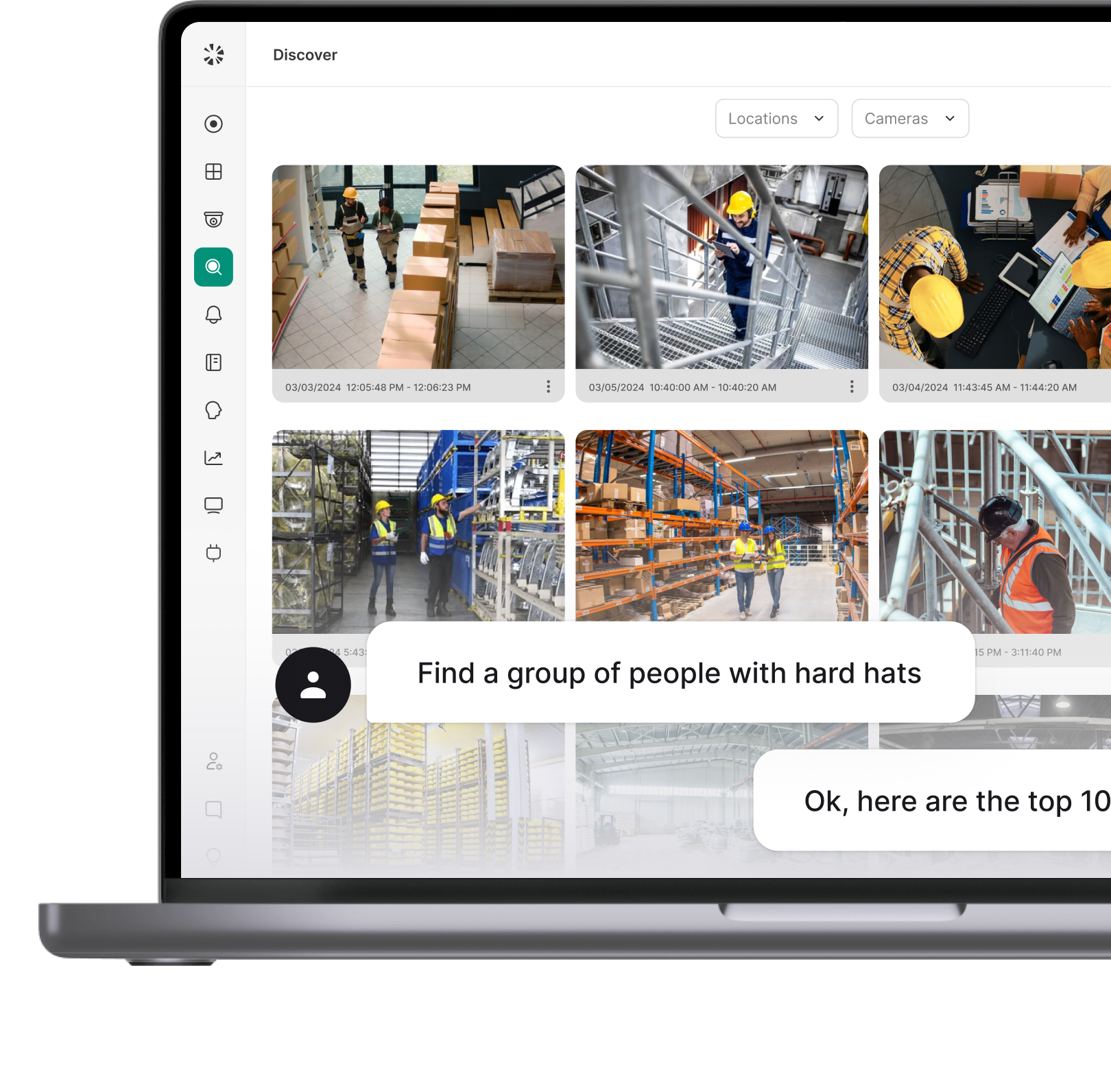
Platforms with open integrations, such as Coram, work well as they can connect with a wide range of third-party systems. This can be particularly useful if your organization already has a security stack in place or expects it to evolve over time.
If you want a tightly integrated ecosystem…
Platforms like Verkada and Avigilon can be a suitable choice where video surveillance and access control are designed to work together within the same ecosystem. This model typically offers:
- Simpler setup and configuration
- Built-in compatibility between components
- A more unified interface for managing security systems
However, it can also limit flexibility if you later want to integrate tools from other vendors. So, choose wisely!
5. How Much IT Overhead Can You Absorb?
If your organization has a dedicated IT or network team, managing parts of the surveillance infrastructure may not be a major concern. But if security teams need a system that runs with minimal maintenance, the level of operational overhead becomes an important factor.
If you want a turnkey, low-maintenance system…
Platforms like Verkada are designed to minimize operational complexity by tightly integrating hardware, software, and cloud management. This means:
- Cameras are plug-and-play with minimal configuration
- Software updates are handled automatically through the cloud
- No NVR servers or storage infrastructure to maintain
Because of this, the system can often be managed by security teams without requiring significant IT involvement.
If your team is comfortable managing infrastructure
Platforms like Ubiquiti Protect give organizations more control over the system, but they also require more direct management. In these environments, your team may need to:
- Manage local NVR hardware and storage capacity
- Handle firmware updates and network configuration
- Monitor system performance and maintenance
This approach can reduce recurring costs, but it assumes that your organization has the technical resources to maintain the system.
If you want AI-driven monitoring with low operational overhead
Platforms like Coram reduce both infrastructure management and manual monitoring by combining cloud management with AI-driven analytics. This allows you to:
- Connect existing cameras without rebuilding infrastructure
- Use AI to surface important events automatically
- Manage the system centrally without maintaining local servers
That’s how you can focus actively on responding to events rather than managing the system yourself.
6. Are You in a Regulated Industry?
If your organization operates in a regulated industry (healthcare, finance, government, or critical infrastructure), compliance requirements may shape your surveillance decisions more than features or pricing. In these cases, regulations often dictate how video data is stored, who can access it, and whether it can leave your internal network.
Due to this, a fully cloud-managed system may not always be the right fit. Many organizations in regulated sectors need greater control over where their video data lives and how it is managed. That’s why the architecture of the surveillance platform becomes especially important here.
If strict data control is required…
Platforms like Avigilon rely heavily on on-premise infrastructure, where video is stored on local servers or NVR systems within your network. This setup allows you to:
- Keep video data inside your internal infrastructure
- Apply your own network and security policies
- Meet stricter compliance or data governance requirements
For organizations where data sovereignty and internal control are critical, this approach can make compliance easier to manage.
If you want cloud benefits but still need control…
A hybrid model would work well as it can balance local control with cloud capabilities. Platforms like Coram allow you to:
- Keep cameras and storage within your environment
- Add cloud-based monitoring and AI analytics on top
- Maintain more control over how video data is handled
This can be useful if you want modern analytics and remote management without moving everything fully into the cloud. So, if compliance requirements are part of your decision process, always confirm where the platform stores data and how it handles access control.
Conclusion
Verkada has played a major role in popularizing cloud-managed surveillance by offering a tightly integrated system that combines cameras, storage, and management software into a single platform. For organizations looking for a straightforward, turnkey deployment with minimal infrastructure to manage, this model can be very appealing.
But as the market evolved further, other approaches have emerged. Open platforms like Coram focus on flexibility and AI-driven analytics, enterprise systems like Avigilon prioritize infrastructure control and compliance, while ecosystems like Ubiquiti and Meraki often appeal to organizations already using those vendors for networking or looking for simpler deployments.
Because each approach is built around a different philosophy, the right choice usually depends on how well the platform fits your existing infrastructure, operational needs, and long-term plans. So, always look carefully at architecture, costs, integrations, and operational impact so you can make a more confident and informed decision.




.png)