At 8:15 on a school morning, the front office is handling a late drop-off, a parent collecting a sick child, a substitute without a badge, and a delivery driver who needs a signature. Ask the office manager right then who is in the building who isn't a student or staff member, and the answer usually lives on a clipboard.
A school visitor management system replaces that clipboard with a check-in that verifies ID, screens the visitor, prints a badge, and keeps a live list of everyone on campus. Choosing one is harder than it looks. Systems that seem identical in a demo differ on the things that matter by the second year: how deeply they screen, what happens when the Wi-Fi drops, what they store about visitors, and how they are licensed when a building has three entrances.
This guide covers how these systems work, what to evaluate, how needs change from an elementary school to a childcare center, and how Coram Guest Management, Raptor VisitorSafe, and Verkada Guest compare.
The short answer. A visitor management system for schools checks every visitor in at the front office, verifies their ID, screens them against public records and your own watchlist, prints a badge, and keeps a live, searchable record of who is on campus. When comparing systems, look hardest at screening depth, check-in speed at peak times, offline behavior, what visitor data is stored, and whether licensing is per building or per kiosk.
School visitor management systems at a glance
The full comparison, with camera connection, SIS sync, and hardware, is further down.
What a school visitor management system does
A visitor management system is software, usually running on a tablet at the front office, that records and screens everyone who enters a school who isn't a student or staff member: parents, volunteers, contractors, substitutes, and guests.
In practice, a digital K-12 check-in follows the same sequence in most systems:
- The visitor enters their name, the reason for the visit, and who they are there to see.
- The system takes a photo and scans a driver's license or other ID.
- The visitor is screened against public records and against the school's own list of people who should not be on campus.
- If they clear, a badge prints with their name, photo, and time of entry, and the staff member they are visiting is notified.
- When they leave, they check out, and the visit is closed with an exit time.
Every visit stays in a searchable log. At any moment, the office can see who is on campus, why, and since when.
Why paper sign-in logs fall short
Paper logs record what a visitor chooses to write, in handwriting someone else has to read later. Nobody verifies the name against an ID, nobody screens it, and nothing tells staff when someone has stayed past the end of their visit.
The bigger gap shows up in an emergency. If the building has to evacuate or lock down, a paper log can't tell anyone which visitors are still inside. Someone has to find the binder, read the entries, and guess who left without signing out. A digital system answers that question with a list.
What to look for in a school visitor management system
Most systems handle the basics: check-in, badge printing, and a visitor log. These are the areas where they actually differ.
Screening depth
Many K-12 visitor systems screen against sex offender registries and stop there. That covers one category of risk. A broader criminal-record search also checks arrests, warrants, court cases, and convictions.
Ask each vendor exactly which databases they check, whether every state is covered, and how long a result takes. A check that takes too long gets skipped at 8:15 in the morning.
Your own watchlist, and how a match is handled
Public databases won't know about the former employee, the parent under a restraining order, or the visitor banned after an incident last spring. Your office needs its own list, and staff need to be able to update it without calling the vendor.
How a match is handled matters just as much. The better pattern holds the visitor at a neutral "additional verification" screen while an administrator reviews and decides. That keeps a lobby full of parents from watching someone get flagged, which can escalate a situation that didn't need to.
If your front office verifies authorized pickups, ask where guardian and custody information comes from. Some systems sync it from your student information system, while others rely on a list staff maintain. Both can work. The difference is who keeps it current.
Check-in speed at arrival and dismissal
A check-in that works for one visitor at 10 a.m. has to hold up when twenty parents arrive for a morning assembly. If the process is slow, staff start waving people through, and the log stops meaning anything.
Look for fields you can set as required, optional, or hidden. An elementary school might require an ID scan for every visitor, while a high school running a sports night might need a lighter flow.
What happens when the internet drops
Ask every vendor this directly. Some systems stop working or fall back to paper during an outage, which means no record at exactly the moment the network is down. Others keep checking visitors in locally and sync when the connection returns.
Also ask whether watchlist screening still runs offline, or only after the system reconnects.
What visitor data is stored
A check-in captures a photo, an ID, contact details, and sometimes a date of birth. Before signing, find out what the system keeps, for how long, and who can see it. Some systems store a full image of the scanned ID; others keep only what they need to match a visitor against a list.
Check that front desk staff and administrators can have different permissions. The person printing badges doesn't need to see a visitor's full history.
A live on-site list for emergencies
A list of checked-in visitors only helps during an evacuation or lockdown if someone can pull it up away from the front desk. Confirm that administrators can see who is currently checked in from a browser, not just the kiosk in the lobby.
A connection to your cameras
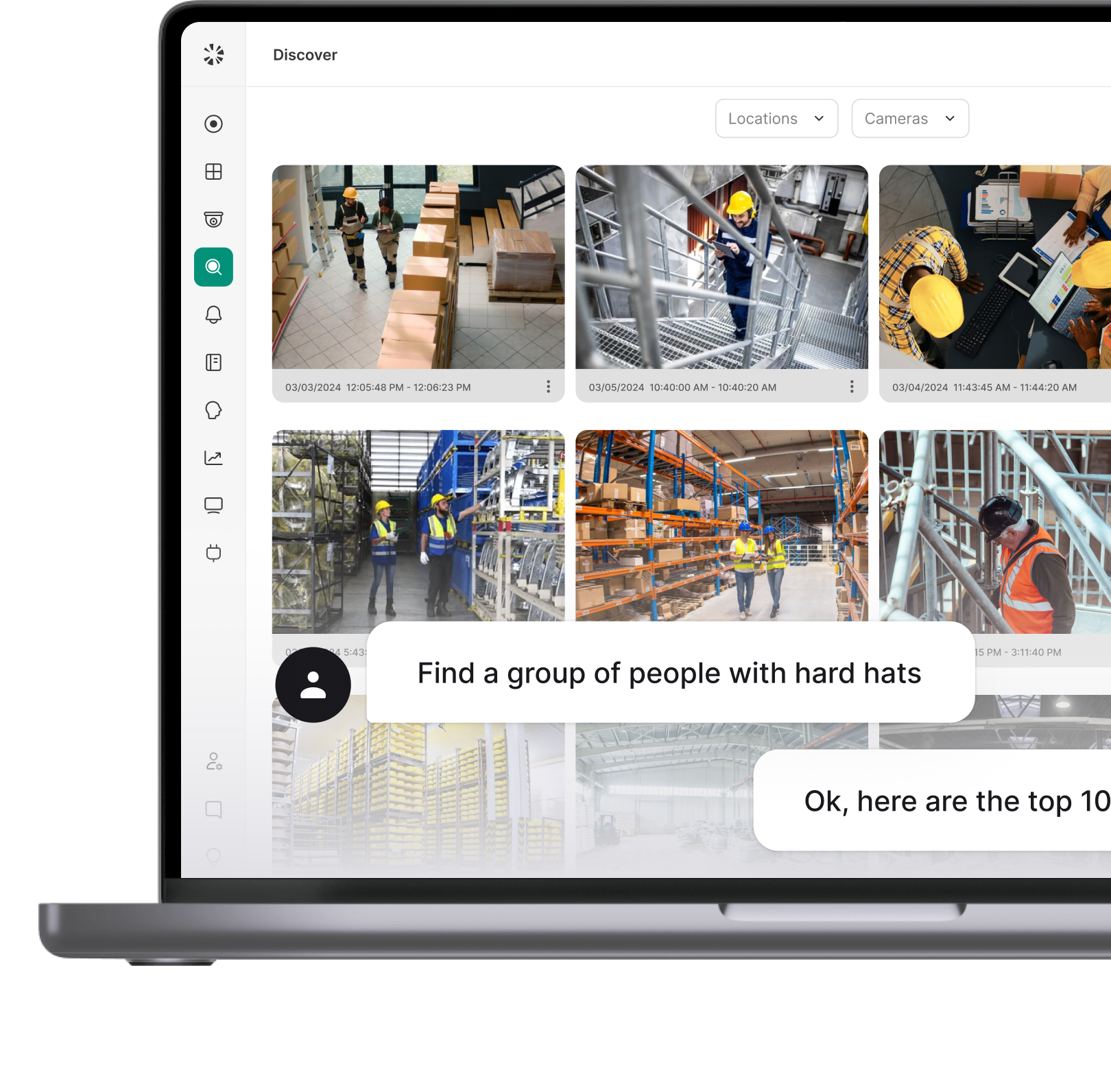
After an incident, one of the first questions is who was in the building. A system that links each check-in to the entrance camera lets you see the visitor record and the footage from that moment together, instead of matching timestamps across two separate systems. If you are also reviewing cameras, see how Coram school video security works with the cameras a school already has.
Licensing per building versus per kiosk
Many schools have more than one entrance that needs a kiosk: a front vestibule, the main office, and a parent pickup door. Some vendors license per kiosk, so every additional entrance adds a license. Others license per building and let you add tablets at no extra cost. Ask before you count entrances.
Visitor management for different types of schools
The core check-in is the same everywhere. What changes is the problem the front office is actually trying to solve.
Elementary schools
Most visitors are parents and guardians, and the highest-stakes moment is pickup. The system has to answer one question quickly: is this adult allowed to leave with this child? That puts the weight on accurate custody and restriction information, and on a process fast enough that the office uses it every time rather than only when something feels off. Visitor records also matter after an emergency, when the school has to account for who was on site before families are reunified. Coram's reunification workflow verifies guardians against authorizations and custody details synced from Clever.
Middle and high schools
Visitor volume goes up and the reasons for visits multiply: volunteers, coaches, recruiters, contractors, and guests for games, concerts, and conferences. The system needs to handle surges without becoming the bottleneck, and after-hours events often run with lighter staffing at the door. A clear log of who entered and when is what makes these busy days manageable.
Private and charter schools
Visitor numbers are usually lower, but the front office is often one person handling phones, attendance, and the door at the same time. A system that screens and notifies automatically takes that load off them. Families also notice how the front office runs, so a consistent, predictable check-in reflects on the school.
After-school programs, childcare, and daycare centers
Everything concentrates at pickup time, and the question is almost always the same: is this person on the approved list for this child? Visitor management for daycare and after-school programs is less about general visitors and more about verified release, quickly, every day. Check your state's childcare licensing rules for sign-in and release records, since they often set the minimum.
Colleges and universities
Open campuses with many buildings need a different model: check-in at the specific buildings that need it rather than at a single front door. We cover that in visitor management for universities and higher ed.
Top school visitor management systems compared (2026)
These are the three systems K-12 districts most often compare. Raptor is the long-standing K-12 incumbent, Verkada Guest is the option for schools already on Verkada, and Coram Guest Management is built into a wider physical security platform.
Raptor and Coram also appear side by side in our comparison of Raptor, Navigate360, and Coram, and in our roundup of SchoolPass alternatives for schools also weighing carline and dismissal tools.
Coram Guest Management
Coram Guest Management runs on a standard iPad at the front office. It captures the visitor's name, photo, and ID, screens them, notifies the staff member they are visiting by email and SMS, and prints a badge.
Its main difference is screening depth. With background screening turned on, each check-in is searched against more than 650 million criminal records from over 2,400 sources, covering arrests, warrants, court cases, convictions, and sex offender registries across all 50 states, DC, and US territories. Results typically come back in under a second. Matches against the school's own watchlist hold the visitor at a neutral verification screen while an administrator approves or denies from the web dashboard.
Check-in keeps working when the internet drops, and watchlist screening still runs against a locally cached list. Coram doesn't store the ID image or date of birth, and it keeps only a one-way hash and the last four digits of the document number. A building license covers every iPad at that location.
Because Guest Management lives in the same dashboard as Coram Video Security and Emergency Management, a check-in record can be reviewed alongside the entrance camera footage from that moment. It also works on its own, without Coram cameras.
Consider another option if you need guardian and custody data synced from your student information system into front-desk check-in, or pre-registration with QR invitations, today, or if you want on-site training services bundled with the platform. (Coram does sync guardian authorizations and custody restrictions from Clever for emergency reunification.)
Raptor VisitorSafe
Raptor is the most established name in K-12 visitor management. It scans IDs and screens visitors against sex offender databases and school-maintained lists, including banned visitors and custody restrictions, and it integrates with PowerSchool and ClassLink. Raptor also offers emergency management and on-site training services, which some districts value as much as the software. Pricing is quote-based and set for district-wide rollouts.
Verkada Guest
Verkada Guest is Verkada's visitor module, managed in the same Command platform as Verkada cameras and access control. For a school that has standardized on Verkada hardware, that shared platform is the main draw. Schools with mixed camera brands should know that extending to Verkada Guest usually means extending the Verkada ecosystem.
How much does a school visitor management system cost?
Most vendors quote school pricing rather than publishing it, but a few public benchmarks give a sense of the range:
- Verkada Guest: around $3,600 per site per year.
- Envoy Visitors Premium: $4,344 per location per year. Envoy is built for workplaces and is rarely chosen by schools, but it is a useful reference point.
- iLobby: around $199 per month per kiosk, so a building with three entrances pays for three kiosks.
- Raptor: quote-based, priced for district-wide implementation.
Coram doesn't publish prices either. Guest Management is licensed per building, with unlimited iPads and users at each site, on 1-, 3-, 5-, or 10-year terms.
Beyond the license, budget for hardware at every entrance: a tablet, a stand, and a label printer. If you are funding a rollout, our guide to school safety grants covers the programs districts most often use.
How to roll out a visitor management system
Most problems with these systems show up in daily use, not in the demo. A rollout that works usually follows this order.
- Map how visitors get in today. Walk the current process at your busiest entrance during arrival and dismissal. Note what information is captured, what's skipped, and where people wait.
- Decide your rules before configuring anything. Agree on who needs an ID scan, how volunteers, contractors, and substitutes are handled, who can add someone to the watchlist, and how long visitor records are kept.
- Pilot in one building. Start with one school and one or two kiosks. A pilot shows where the process slows down before the whole district depends on it.
- Train the front office properly. The office staff use the system all day, and if training is rushed, they go back to old habits the first busy morning. Let them practice real check-ins, a watchlist match, and an internet outage before go-live.
- Tell families what is changing. Parents will be asked for ID and photographed. A short note explaining what happens at check-in and why prevents most of the friction at the door.
- Review after the first month. Check wait times at peak hours, whether staff are checking everyone in, and what is being flagged. Then expand to the next building.
How Coram approaches school visitor management
Most districts don't start with a blank slate. They already have cameras, an emergency plan, and a front office with its own habits. Coram Guest Management is designed to fit into that rather than replace it.
A visitor's check-in sits in the same dashboard as the school's video and emergency tools. When an administrator reviews an incident, the visitor record and the entrance footage are in one place, and the same platform runs Coram's emergency management system for alerts, lockdowns, and reunification. Guest Management works with the cameras a school already has, and it can run on its own if the school isn't changing anything else.
See how check-in, screening, and badge printing work in Coram Guest Management.




.png)