Compare the six best construction site security solutions for 2026, with what each one is best for, how construction alarm systems and live video monitoring work, and how to choose the right setup for remote, temporary and multi-site projects.
Most construction theft happens after hours, when the crew has left and nobody is watching the equipment yard, the copper or the fuel. The National Insurance Crime Bureau estimates that equipment theft costs the U.S. construction industry between $300 million and $1 billion a year, and that less than 20% of stolen equipment is ever recovered.
The best construction site security solution is rarely one product. Most contractors combine a physical perimeter, cameras or mobile surveillance units, some way of responding to alerts at night, and tracking on their most valuable equipment. The right mix depends on whether the site has power and internet, how long the project runs, how many sites you manage, and who answers an alert at 2am.
This guide compares six construction site security providers, explains the main types of construction site security systems, including alarms, and shows which setup fits remote, temporary, multi-site and overnight-risk projects.
Best Construction Site Security Solutions at a Glance
Types of Construction Site Security Systems
Before comparing providers, it helps to separate the main types of construction site security. Each one covers a different gap, and most sites need more than one.
Perimeter fencing, gates, lighting and signage
The physical layer is the cheapest and the first thing a thief sees. Temporary fencing, locked gates, motion-activated lighting and clear signage make a site harder to enter and slower to work in. On their own they deter casual trespassers but do little against someone who has already decided to cut a fence, which is why they are almost always paired with detection.
Security cameras and AI video
Fixed cameras cover gates, laydown areas, storage containers and equipment yards. A camera that only records gives you evidence after a loss. AI video adds detection: it flags a person or vehicle in a restricted area after hours and sends an alert with the clip, so someone can act while it is happening. On sites with power and a network connection, fixed cameras are usually the backbone of the system.
Mobile surveillance units and solar trailers
Mobile units put cameras, recording, connectivity and deterrence such as lights and speakers into one portable package. Solar trailers add their own panels and batteries, so they run on sites with no power at all. They are the standard choice for early-phase and remote projects and for any site whose layout keeps changing. For a deeper comparison, see our guide to mobile surveillance unit providers and our review of solar-powered surveillance trailers for construction sites.
Construction site alarm systems
Construction site alarms range from portable wireless intrusion kits, with motion and perimeter sensors, sirens and strobes, to monitored alarm systems tied to a central station. They are quick to deploy and cheap to run, but motion-only alarms struggle outdoors. Wind, animals and blowing debris trigger false alarms, and every time the site layout changes the sensors have to be moved. Many contractors now prefer video-verified alarms, where a detection is checked against camera footage before anyone is called. That cuts false dispatches and tells the responder what they are walking into.
Access control
Gate credentials, visitor sign-in and license plate recognition control who comes on site during working hours and create a record of every entry. This matters most on busy urban sites and projects with many subcontractors and deliveries, where unauthorized people can blend in with the crowd.
GPS equipment tracking
Trackers fitted to excavators, generators and trailers do not stop a theft, but they tell you where the equipment went and how long it has been there. Given how rarely stolen equipment is recovered, tracking is the main way to get high-value machines back.
Security guards and remote guarding
On-site guards provide a visible presence and can check doors and gates, but one guard covers one area of one site per shift. Remote guarding services use cameras and off-site operators to watch several sites at once and respond with loudspeaker warnings or a police call. The section on guards vs. remote guarding below compares the two in more detail.
The 6 Best Construction Site Security Providers
The providers below are the ones construction teams most often shortlist. They take different approaches, so the right choice depends on the gap you need to close rather than on a single ranking.
1. Coram
Coram is an AI physical security platform that works with the compatible IP cameras a contractor already owns and adds portable hardware for sites that have none. Fixed cameras, mobile units and solar trailers all appear in the same dashboard, so a superintendent or security lead checks one place for every site.
The Coram Remote Unit (CRU) is a weatherproof mobile surveillance unit that packs a Coram Point AI NVR, a 5G LTE router, a PoE switch, speakers and strobes into one enclosure. You supply power, place the unit, and it appears in the Coram dashboard with no on-site networking. Detections can trigger the speakers and strobes automatically, and CRU detections at a temporary gate can be matched with door events in Coram Access Control. For sites with no power at all, Coram Point Mini fits inside a solar surveillance trailer and runs person, vehicle and firearm detection on the trailer at 25W.
Best for: general contractors running several sites who want trailers, temporary units and permanent cameras managed together. Keep in mind: Coram does not sell alarm panels or GPS asset trackers, so pair it with a tracker if you need to locate equipment that leaves the site.
2. LiveView Technologies (LVT)
LiveView Technologies builds solar-powered mobile surveillance units, and the company started in the construction industry. An LVT unit sets up in minutes and needs no concrete work, wiring or internet connection, and each unit carries a backup battery.
Units include flashing lights and customizable talk-down alerts and announcements to discourage trespassers. Footage and live streams are managed through the LVT Platform, the company’s own video management system.
Best for: contractors who want a self-powered trailer program from a single vendor, especially on bare lots. Keep in mind: if you also run fixed cameras at a yard or office, check how the LVT Platform fits alongside them before you commit.
3. Zedcor
Zedcor rents MobileyeZ surveillance towers: portable, ruggedized light towers that capture video from more than 25 feet up. The towers come with live-verified 24/7 monitoring from Zedcor’s North American operations centres, where operators can warn intruders over live loudspeakers.
Zedcor also offers wireless activity sensors and security personnel, and it has deployed towers along large linear projects such as pipeline construction, where the work moves every few weeks.
Best for: large or remote projects that want monitoring delivered as a managed service rather than run by the site team. Keep in mind: confirm that Zedcor’s operations cover your region before you plan around it.
4. Pro-Vigil
Pro-Vigil has provided remote video monitoring since 2006. It combines AI-enabled cameras with 24/7 monitoring teams who watch for suspicious activity and intervene when something happens on site.
For construction, Pro-Vigil deploys mobile, self-contained units that can be moved as a project progresses, which avoids running power and network to a temporary location.
Best for: contractors who want after-hours coverage handled by an outside team instead of a guard on every site. Keep in mind: as with any monitored service, ask how alerts are verified, what response time is written into the contract, and how false alarms are billed.
5. Tattletale
Tattletale makes a portable wireless alarm system for contractors who need protection without a complex installation. The system deploys in minutes and uses perimeter and motion sensors with sirens and strobe alarms, and alerts reach the team through the Tattletale Edge app.
Best for: small crews and short projects that move often, or as an extra layer inside a trailer, container or partly finished building. Keep in mind: it is a sensor-based alarm, so plan for how you will confirm what triggered it before sending someone out.
6. Geoforce
Geoforce provides rugged GPS trackers and a cloud platform for monitoring equipment and tools across multiple sites. Its Days on Location reporting shows where each asset is and how long it has been there, which helps with inventory checks and reduces misplaced tools and unnecessary rentals.
Engine-hour data and usage reports also support preventive maintenance. For theft, constant location updates help you find and recover stolen assets faster.
Best for: contractors with high-value machinery spread across several jobsites. Keep in mind: tracking tells you where equipment went after it left; pair it with cameras or alarms if you want to catch the theft while it is happening.
Best Construction Site Security by Site Type
Remote sites with no power or internet
Start with solar trailers. LVT units and solar trailers running Coram Point Mini both operate off-grid and connect over cellular. If a generator or temporary power drop is available, a powered unit such as the Coram CRU adds more cameras and on-site deterrence. Plan for who receives alerts, because remote sites are often hours from the nearest crew member.
Temporary and short-term projects
Choose equipment you can move. Portable alarms such as Tattletale and mobile surveillance units can be set up in minutes and relocated as fences and laydown areas shift. Fixed cameras rarely make sense on a project that lasts only a few months.
Contractors running multiple sites
The biggest problem is visibility across locations. A platform that shows fixed cameras, trailers and temporary units in one dashboard, as Coram does, saves a security lead from logging into a different system for every project. Add GPS tracking if equipment moves between sites.
Heavy equipment yards
Cover the yard with cameras and AI detection after hours, use license plate recognition at the gate, and fit GPS trackers to the most valuable machines. Lighting matters here: a dark yard is where most equipment theft starts.
Sites with nobody on call overnight
If nobody on your team can answer an alert at 2am, use a monitored service such as Zedcor or Pro-Vigil, or a video-verified alarm service. Detection without a response owner only gives you a better recording of the loss.
Busy urban sites
Theft on urban sites often happens during working hours, when strangers blend in with subcontractors. Credentialed gate access, visitor logs and cameras on every entry point matter more here than perimeter detection.
Security Guards vs. Remote Guarding vs. AI Video
A common question is whether AI cameras or remote guarding can replace overnight guards. The answer depends on what you need the guard to do.
Many contractors combine them: a guard does a site walk to check gates and doors, and cameras with AI detection or a remote guarding service cover the rest of the night.
Construction Live Video Monitoring: How It Works and What to Ask
Live video monitoring means someone acts on what the cameras see while it is happening, instead of reviewing recorded footage the next morning. On construction sites it usually takes one of three forms.
- Self-monitored. Cameras send AI alerts and live video to the superintendent or security lead, who decides what to do. It costs the least, but it depends on someone answering an alert at 2am.
- Monitored remote guarding. A provider’s operators watch feeds or review alerts from a central station, warn intruders over loudspeakers and call police when needed. Zedcor and Pro-Vigil work this way.
- Video-verified alarm response. When an armed camera detects a person or vehicle, a trained reviewer checks the clip before anyone is called, which cuts the false dispatches that motion-based alarms are known for.
Whichever model you choose, these questions separate a strong contract from a weak one:
- Who reviews an alert overnight, and is a response time written into the contract?
- Is police dispatch automatic, or does your team decide?
- Are false alarms billed, and is monitoring capped at a number of events per month?
- Can trailers, temporary units and fixed cameras be watched from one place?
- What happens to coverage when the site loses power or cellular signal?
For more on how monitored services work, see our guide to remote video monitoring.
How to Choose a Construction Site Security Solution
Work through these questions in order. The answers usually point to two or three layers rather than one product.
- Does the site have power and internet? If not, start with solar trailers or a cellular mobile unit.
- How long will the project run? Under a few months, favor portable and rented equipment. Longer builds can justify fixed cameras.
- Who answers an alert after hours? If nobody on your team can, budget for remote guarding or verified alarm response.
- How many sites do you manage? With several, choose a system that shows every site in one place.
- What is most likely to be stolen? Heavy equipment points to GPS tracking and yard cameras; copper and tools point to cameras on storage areas and containers.
- Do you need gate control during the day? Busy sites with many subcontractors benefit from access control and license plate recognition.
- Will the system move with you? Check that units can be redeployed to the next project without new contracts or hardware.
How Coram Helps Construction Teams Catch and Deter Theft
Coram is built for contractors who need one system across fixed cameras, mobile units and solar trailers.
- AI detection built to cut false alarms. Coram’s AI models identify people, vehicles (including license plates), and firearms in the areas you choose to watch. Detections are checked before an alert goes out, which filters out much of the noise from shadows, animals, weather and blowing tarps.
- Detection at the edge. Detection runs on the Coram hardware on site, so remote sites on cellular connections do not depend on streaming every camera to the cloud.
- Alerts within seconds. After a quick cloud verification step, your team receives an SMS, email or dashboard notification with the video clip and the camera’s location.
- Deterrence that responds immediately. The CRU’s speakers and strobes can activate automatically or from the dashboard, and compatible speakers can play a pre-recorded warning that the area is under surveillance. Your team sees the event live in the Coram app and decides whether to call law enforcement.
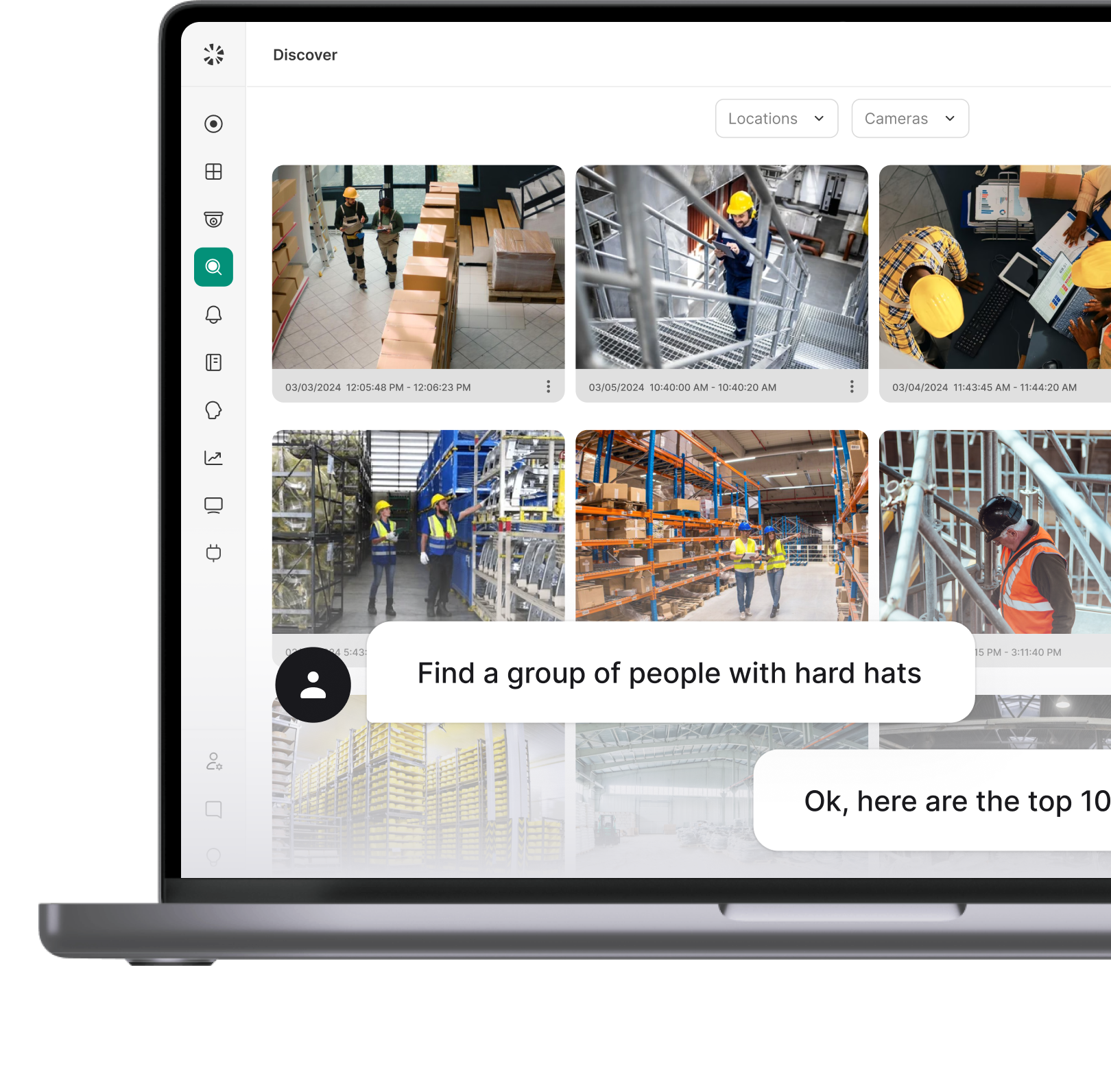
- Journey path across cameras. Coram follows a person or vehicle across multiple cameras by appearance, even without facial recognition, showing when someone entered, where they went and when they left. You can also search in plain language, for example “man in black jacket with a black bag.”
- Day, night and bad weather. Coram supports PTZ, infrared and thermal cameras alongside the cameras you already have, and solar trailers use built-in battery storage to keep running without external power.
Final Takeaway
There is no single best construction site security system. The strongest setups layer a physical perimeter, cameras or mobile units with AI detection, a clear plan for who responds after hours, and tracking on the equipment most likely to walk away. Start from your site’s constraints: power, project length, number of sites and overnight response. Then choose providers that cover those gaps without leaving you with a separate system for every jobsite.
If you run several projects and want fixed cameras, mobile units and solar trailers managed from one dashboard, book a Coram demo to see how it would work on your sites.