Security platforms now sit at the intersection of compliance, cybersecurity, and operations. Regulations like NDAA, tighter procurement scrutiny, and rising expectations around real-time response have changed what “good” surveillance looks like.
Systems that were once evaluated on camera specs and upfront cost are now judged on audit readiness, multi-site visibility, and how well they integrate with broader security workflows.
Hikvision and Dahua remain widely deployed, but their hardware-first roots create friction as environments scale and compliance demands grow. Coram enters the conversation with a different architectural model, shaped for centralized control and phased modernization.
This comparison matters because platform choice now determines how easily security adapts as organizations grow, regulations tighten, and response expectations rise.
TL;DR
- Hikvision and Dahua are hardware-first CCTV platforms, best suited for on-premise, site-level surveillance with strong control over local infrastructure.
- Coram operates as a cloud-first security platform, centralizing video, access control, and analytics across locations without replacing existing cameras.
- Hardware-first systems scale through additional recorders and site-by-site management, increasing operational and compliance overhead over time.
- Cloud-first security enables centralized policies, faster investigations, and consistent analytics across multi-site environments.
- Access control becomes more effective when door events and video are linked in one system rather than managed separately.
- The right platform depends on scale, compliance exposure, and how much centralized control your security operations require.
What is Hikvision?
Hikvision is a global video surveillance manufacturer known for its hardware-centric security ecosystem. Its offerings span IP cameras, NVRs/DVRs, thermal cameras, and on-premise video management software, built to operate as a tightly integrated stack. This model gives teams direct control over local storage, network configuration, and device-level performance.
Key features
- Broad hardware portfolio covering fixed, PTZ, thermal, and specialty cameras
- On-premise video management with local recording and site-level control
- Edge-based AI analytics such as motion filtering, people/vehicle detection, and perimeter alerts
- High model variety enabling deployments across different budgets and environments
- Standards support, including ONVIF and RTSP for limited third-party interoperability
Common use cases
Hikvision is typically deployed in cost-sensitive, on-premise environments where local control is preferred, such as warehouses, manufacturing facilities, standalone commercial buildings, and regions with limited cloud adoption. It performs best in single-site or lightly distributed setups where hardware standardization is feasible, and compliance requirements are stable.
What is Dahua?
Dahua is a global video surveillance vendor built around a hardware-first security model, similar to Hikvision. Its portfolio includes IP cameras, HDCVI cameras, NVRs/DVRs, and on-premise video management software, designed to deliver reliable surveillance at competitive price points. Dahua is widely adopted where budget control and local system ownership are key considerations.
Key features
- Wide camera range, including IP, HDCVI, PTZ, and specialty cameras
- Edge-based AI analytics, such as smart motion detection, intrusion detection, and object classification
- Local recording and management through NVRs and on-premise VMS
- Cost-efficient deployments suited for large camera counts
- Standards compatibility with ONVIF and RTSP for basic interoperability
Common use cases
Dahua is commonly used in budget-conscious deployments such as retail chains, small to mid-sized commercial sites, residential complexes, and industrial locations where local storage and simple monitoring meet operational needs. It works best in environments with limited compliance pressure and where centralized, cloud-based management is not a primary requirement.
What is Coram?
Coram is a cloud-first video security platform built for organizations that need centralized visibility, modern analytics, and flexibility across distributed environments. Unlike traditional CCTV vendors, Coram does not rely on proprietary cameras. It connects to existing IP cameras and layers intelligence, search, and workflows on top, without forcing a rip-and-replace upgrade.
Key features
- Cloud-native architecture for centralized monitoring, analytics, and policy management
- Hardware-agnostic compatibility with most standard IP cameras, including NDAA-compliant models
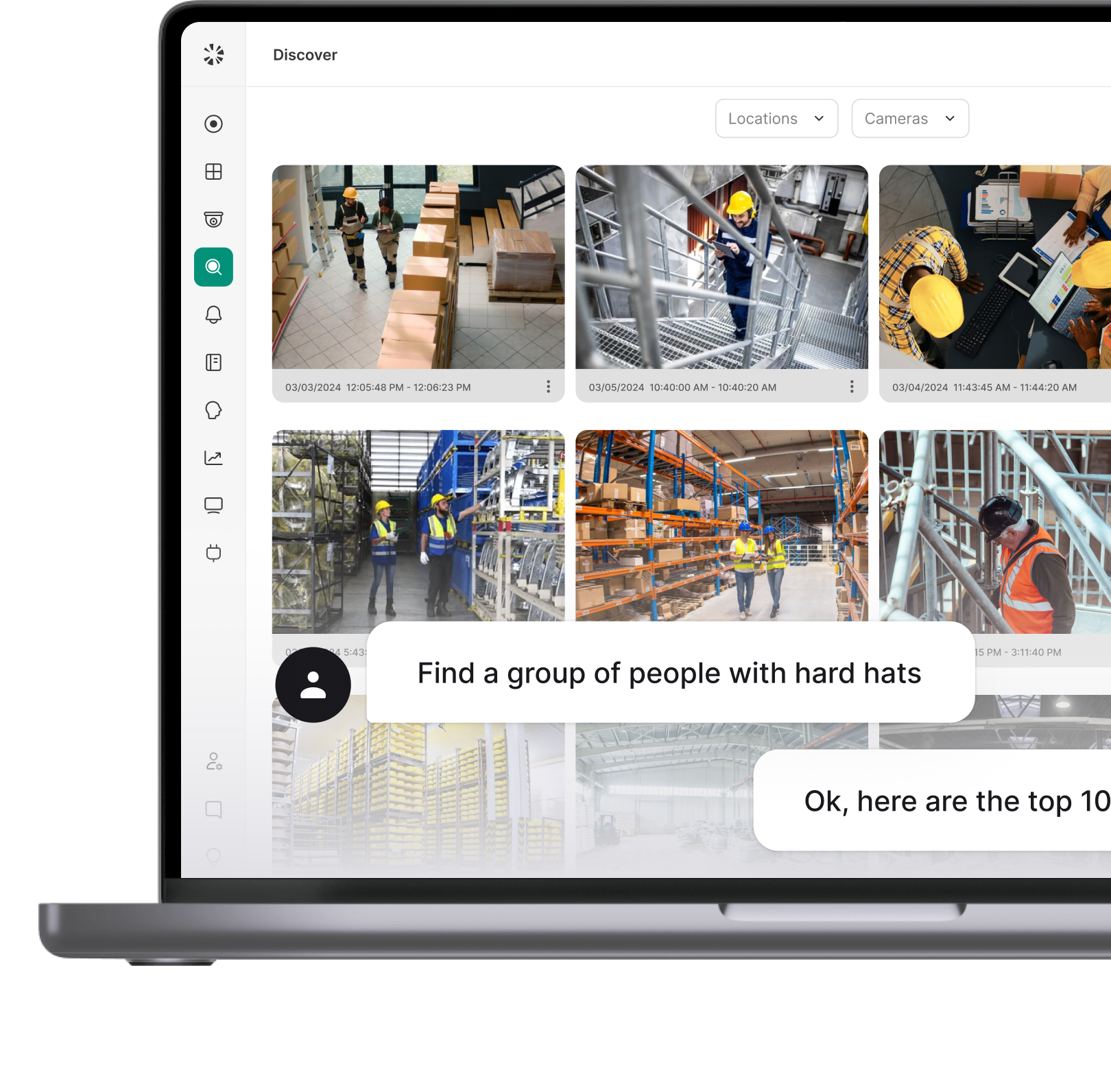
- Real-time AI analytics such as weapon detection, license plate recognition, facial recognition, and text-based video search
- Unified security workflows combining video, access events, and incident timelines
- Multi-site scalability without adding on-site servers or complex infrastructure
Common use cases
Coram is designed for multi-site organizations such as school districts, campuses, retail chains, healthcare networks, and enterprises operating under compliance or procurement scrutiny. It fits teams that need centralized control, faster investigations, and phased modernization, especially where existing camera fleets must be retained while security operations evolve.
Product Line Comparison: Hikvision vs Dahua vs Coram
At a glance, all three platforms offer video surveillance, but the scope of what each product line is built to support differs significantly. Some prioritize owning cameras and recorders, while others focus on the software layer that sits above existing infrastructure.
Understanding these differences helps clarify not just what you buy on day one, but how the system evolves as requirements grow.
This comparison highlights a clear split: Hikvision and Dahua are built around hardware ownership, while Coram is built around centralized intelligence and operational control – a difference that becomes more pronounced as environments scale and compliance requirements tighten.
Deployment Model Comparison: Hardware-First vs Cloud-First
How a security platform is deployed shapes everything that follows: how fast it scales, how much effort it takes to manage, and how easily it adapts to compliance and operational change.
The core divide today sits between traditional hardware-first architectures, where intelligence lives on-site, and cloud-first platforms, where intelligence is centralized and software-driven. That architectural choice becomes increasingly visible as organizations add locations, users, and security use cases.
Hikvision and Dahua Deployment Model
Hikvision and Dahua follow a hardware-first deployment model built around on-premise infrastructure. Cameras connect to local NVRs or DVRs, where video is recorded, stored, and processed. System performance, retention, and analytics depend heavily on the capabilities and limits of the installed hardware.
This model gives teams direct ownership of data and local control, but it also ties scalability to physical capacity. Expanding coverage or adding sites typically means deploying new recorders, provisioning storage, and managing each location independently. Remote access and mobile viewing are enabled through cloud-connected apps, yet the core system logic, intelligence, and storage remain site-bound.
As environments grow, this architecture increases operational load: firmware updates, health monitoring, compliance documentation, and analytics consistency must be handled across multiple independent systems.
Coram Deployment Model
Coram uses a cloud-first, platform-centric deployment model designed for distributed environments. Instead of anchoring intelligence to on-site recorders, Coram connects existing IP cameras to a centralized cloud platform where video management, analytics, search, and policies are controlled from one interface.
Coram is hardware-agnostic, allowing organizations to reuse current camera fleets while introducing modern AI and workflows at the software layer. Lightweight edge components handle secure ingestion and optimization, while analytics, alerts, and investigations operate consistently across all locations.
Scaling becomes a configuration exercise rather than a hardware project. New cameras and sites are added centrally, analytics are applied uniformly, and updates roll out platform-wide, supporting faster expansion, cleaner audits, and centralized security operations without rebuilding infrastructure at every location.
Access Control Capabilities: Hikvision vs Dahua vs Coram
Access control becomes harder to manage as doors, users, and locations grow. The difference across platforms comes down to how tightly access events connect with video, how centrally policies are managed, and how easily systems scale without adding operational overhead.
The distinction is clear at scale. Hikvision and Dahua extend access control through hardware ecosystems, while Coram treats access control as part of a unified security workflow, where every door event is immediately visible, searchable, and actionable across all locations.
Why Multi-Site Organizations Need Centralized Security Management?
As organizations expand across locations, security complexity increases faster than headcount or infrastructure. Each site adds cameras, doors, users, and local processes that are often managed independently.
Over time, this creates gaps in visibility, inconsistent policies, and slower response during incidents. Centralized security management addresses this by bringing monitoring, access control, and incident response into one coordinated system.
Unified visibility across all locations: Security teams need a clear, real-time view of what’s happening across every site. Centralized management aggregates video feeds, access events, and alerts into a single interface, making it easier to detect patterns, investigate incidents, and respond quickly without relying on local handoffs.
Consistent policies and easier compliance: Managing security site by site leads to configuration drift. Centralized platforms allow teams to define access rules, alert thresholds, and retention policies once and apply them everywhere. This consistency simplifies audits, reporting, and compliance checks across regulated environments.
Faster response with fewer resources: Incidents rarely wait for local teams to coordinate. Centralized systems let security operators access cameras, door events, and alerts from any location instantly. This reduces investigation time, limits disruption, and removes the need for specialized security staff at every site.
Scalable growth without rework: Adding a new location should not require rebuilding security from scratch. Centralized security management supports faster onboarding of sites with standardized configurations, enabling growth without increasing operational complexity.
Central control over access and users: Employee movement, role changes, and offboarding happen across locations. Centralized access management allows permissions to be granted, adjusted, or revoked instantly across all sites, keeping access aligned with current roles and reducing risk.
Hikvision vs Dahua vs Coram: Which Platform is Best For You?
Choosing between these platforms comes down to your organization’s priorities and operational context. All three solutions can secure facilities effectively, but where they excel and where they create friction differ sharply when environments scale, compliance matters, or centralized operations are required.
Choose Hikvision If…
- You prioritize hardware ownership and local control.
- Your deployment is single-site or a small multi-site with manageable infrastructure.
- You need a broad range of camera models and on-premise analytics without relying on cloud connectivity.
- Cost sensitivity is driven by hardware pricing rather than total lifecycle operations.
Hikvision fits scenarios where teams want to own their cameras and storage, and where centralized management is not a core requirement.
Choose Dahua If…
- Budget and hardware footprint are primary considerations.
- You want reliable on-premise cameras and access control with basic analytics.
- Simplicity and cost efficiency in local deployments matter more than centralized workflows.
Dahua delivers value in deployments where equipment cost and straightforward local management are higher priorities than cloud-native control or advanced multi-site coordination.
Choose Coram If…
- You operate multiple locations and need centralized visibility and control.
- Compliance, audit readiness, and standardized policies across sites are priorities.
- Your security team needs AI-driven search, real-time alerts, and integrated workflows tied to both video and access control events.
- You want to reuse existing cameras while modernizing analytics and response capabilities.
Coram is best suited for organizations that require software-led security management with centralized operations, especially where existing hardware investments need to be preserved, and compliance/regulatory demands are rising.
In short, Hikvision and Dahua solve local surveillance needs effectively, but Coram’s cloud-first architecture unlocks unified security management, scalability, and faster investigations, making it the strongest choice for distributed or compliance-focused environments.
When Security Needs to Scale, Choose Control
This comparison shows how quickly security challenges change once organizations grow beyond a few locations. Camera quality and upfront cost matter less than central visibility, consistent enforcement, audit readiness, and response speed.
Platforms designed around local hardware struggle as sites multiply, policies diverge, and investigations require stitching together data from multiple systems.
Coram fits naturally at this stage. It allows teams to keep existing cameras while centralizing video, access events, and intelligence in one place, making security easier to govern, faster to operate, and better aligned with how modern organizations actually scale.




.png)