You know the drill.
An incident gets flagged at 2 AM. Your analyst starts scrubbing footage, your integrator gets called because the access control event didn't correlate with the camera feed, and your IT team is looped in because the on-premise server is throwing storage errors. Forty minutes later, you have a clip that should have taken ten minutes to find.
The platform did everything it was supposed to. The problem is everything that is required to do it.
This is the tension sitting inside most enterprise security operations right now. The platforms are powerful. The operational overhead to run them is just as large.
If you're evaluating Lenel vs Genetec vs Coram, you're likely already feeling this. All three sit at the top of the enterprise physical security market, but they represent fundamentally different philosophies about how security infrastructure should work.
Lenel and Genetec have a real enterprise pedigree. The organizations running them didn't make a bad decision. They made the decision that fit the infrastructure constraints of the time.
Whether that decision still fits is worth examining. This is a frank look at where each platform leads, where it creates drag, and what kind of organization each one was actually built to serve. Platform decisions at enterprise scale carry 5 to 7-year consequences. This article is meant to make that decision clearer.
TL;DR
- Lenel and Genetec are mature, deeply capable platforms built for a world where on-premise infrastructure and human operators were the only option. That depth comes with real operational weight.
- Lenel is the strongest choice for government, healthcare, and critical infrastructure organizations with complex compliance requirements and dedicated integrator resources.
- Genetec pulls ahead on unification and hardware flexibility, making it the better fit for multi-site enterprises that need open architecture across video, access, and ALPR.
- Coram is built differently. AI detection runs natively, alerts fire automatically, and the platform deploys without servers, integrators, or rip-and-replace hardware costs.
- For enterprises where the biggest problem is operational overhead rather than compliance complexity, Coram represents a meaningfully different path forward.
Lenel vs Genetec vs Coram: What Each Platform Was Built to Be
Lenel (LenelS2)
LenelS2, a Honeywell company, has been deployed across government facilities, data centers, healthcare networks, and global corporate campuses for decades.
Its flagship product, OnGuard, is built around deep integration and configurability, connecting with hundreds of third-party systems through its OpenAccess Alliance Program (OAAP).
Key capabilities:
- Multi-site access control with granular role-based permissions
- NetVR and VRx video management with forensic search and UHD playback
- Magic Monitor unified client consolidating access events, video, and alarms into a single operator view
- OnGuard Cloud, a single-tenant SaaS offering hosted on AWS
- BlueDiamond mobile credentials with touchless access support
OnGuard Cloud is a meaningful step forward, but it is a hosted version of the legacy system, not a ground-up cloud rebuild. Deployments require certified integrators, and the ongoing IT maintenance burden is real.
Best for: Enterprises in government, healthcare, and critical infrastructure with complex compliance requirements and dedicated integrator and IT resources.
Genetec
Genetec's Security Center unifies video management, access control, and license plate recognition under one interface. Security Center SaaS extends that into a continuously updated cloud environment.
The open architecture is a genuine differentiator as organizations can keep existing infrastructure, connect non-cloud-ready hardware through Genetec appliances, and migrate at their own pace.
Key capabilities:
- Unified video, access control, ALPR, and intrusion management under a single interface
- Open hardware support across Axis, Bosch, i-PRO, and hundreds of other vendors
- Investigation workflows with natural language search, similarity detection, and visual trajectory search
- Hybrid deployment flexibility from fully cloud-native to fully on-premise
- Cloud-native audio with intercom and SIP-based audio integrated alongside video and access control
The capability is real. So is the overhead. Genetec requires certified partners to deploy, trained operators to run, and ongoing IT involvement to maintain.
Best for: Enterprises that need a unified platform across video, access, and ALPR, value open architecture, and have the resources to deploy and maintain a sophisticated system.
Coram
Coram is an AI-native physical security platform built to detect, surface, and flag security events automatically, before an operator has to go looking for them.
Cloud-native with no on-premise server requirement, Coram works with existing IP cameras. The AI layer is not an analytics add-on sitting on top of a traditional VMS. It is how the system operates.
Key capabilities:
- Real-time AI detection for firearms, slip-and-fall incidents, PPE violations, and license plates
- Custom alert creation in plain English, without integrator configuration or scripting
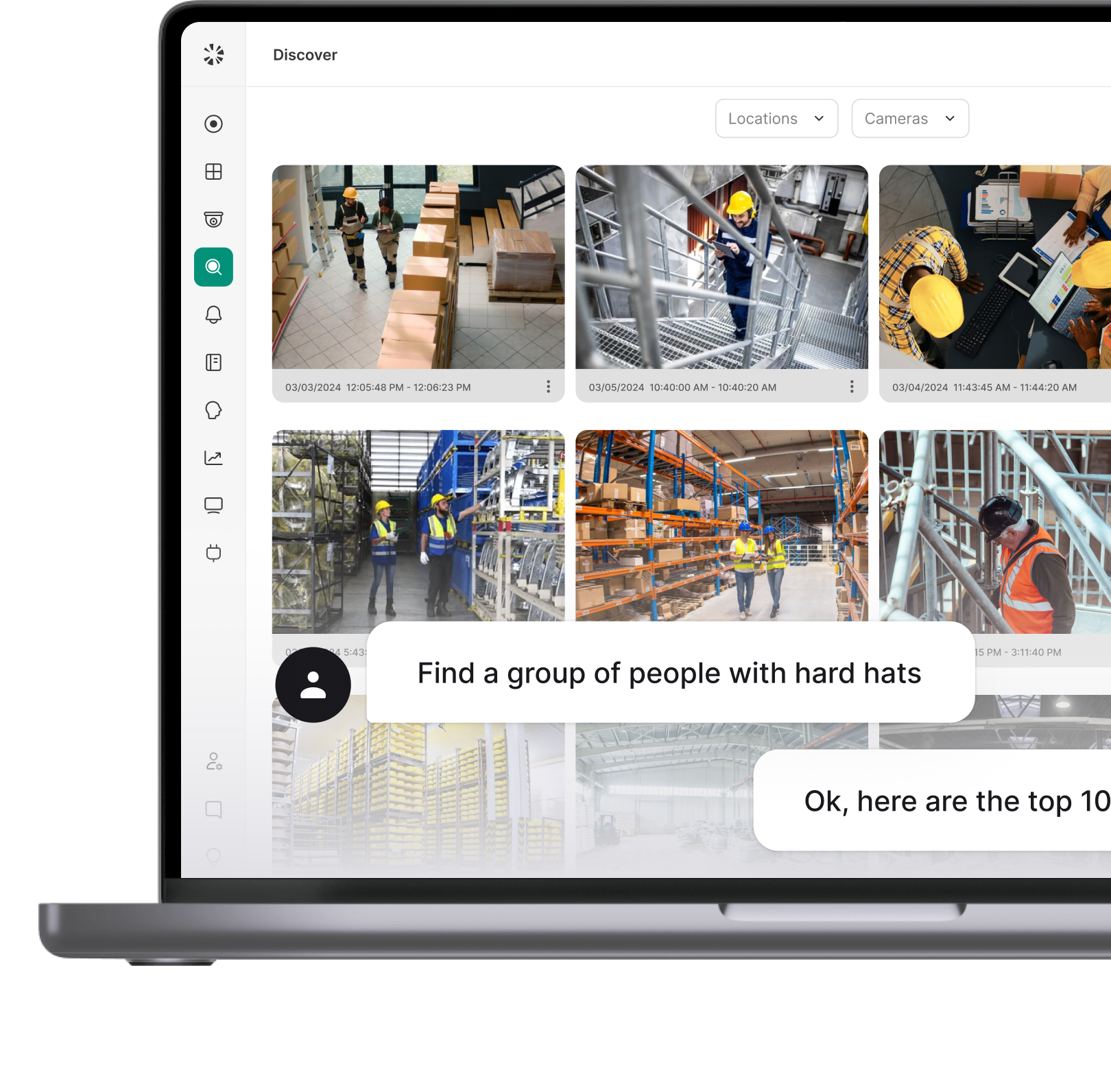
- An AI search that retrieves footage from a description rather than manual timeline scrubbing
- Unified video, access control, and emergency management, including panic buttons and reunification workflows
Organizations with deeply embedded legacy integrations will need to evaluate migration scope. Coram's third-party integration ecosystem does not yet match the depth of Lenel or Genetec.
Best for: Enterprises that want AI-native detection and response across multiple sites, and are looking to reduce the operational overhead of a legacy security stack.
Access Control: How Each Platform Stacks Up
All three platforms can manage who gets through which door. Where they differ is in how that access is configured, maintained, and connected to everything else happening in your environment.
Deployment Architecture
Lenel and Genetec both offer hybrid flexibility, on-premise, cloud, or a combination. OnGuard Cloud runs as a single-tenant SaaS on AWS. Genetec Synergis supports cloud-native and on-premise deployments with centralized management across both. Both options still carry the infrastructure overhead of their legacy roots.
Coram runs fully in the cloud with no on-premise server requirement. There is nothing to provision, patch, or maintain on-site.
Credential and Hardware Support
This is where Lenel and Genetec have genuine depth. OnGuard supports smart cards, mobile credentials via BlueDiamond readers, biometric integrations through OAAP-certified partners, and touchless access for high-traffic entry points.
Genetec Synergis supports a similarly broad range, with the added advantage of open hardware compatibility across vendors, so organizations are not penalized for past purchasing decisions.
Coram covers the core credential types, including door readers and mobile access. The third-party hardware integration ecosystem is narrower than either legacy platform, which matters for organizations with highly specific or non-standard hardware environments.
Multi-Site Management
All three platforms handle multi-site deployments. Lenel and Genetec have been doing it for decades, with role-based permissions, time-based access schedules, and cardholder management built for large, complex environments.
Genetec adds centralized SOC management through web and mobile apps, with real-time alerts across sites.
Coram manages multiple sites from a single cloud dashboard. No local servers or site-by-site IT involvement. For enterprises looking to expand without adding infrastructure overhead at each new location, that is a meaningful operational difference.
Access Events and Intelligence
In Lenel and Genetec, an access event is a data point. It gets logged, and an operator reviews it, correlates it with other data, and decides whether it warrants action.
Both platforms have made progress here, Genetec in particular, with its unified interface that correlates access events with video automatically. But the operator is still the one connecting the dots.
In Coram, that correlation is automated. An access event at an unusual hour, combined with motion detection in a restricted area, does not sit in a log. It surfaces as an alert. Security teams are not reviewing data after the fact. They are responding to intelligence in real time.
Compliance and Audit Support
Lenel OnGuard has a deep compliance pedigree. Detailed audit logs, HR system integration for automated provisioning and deprovisioning, and long deployment history in government and healthcare make it a strong choice for organizations where regulatory requirements are complex and non-negotiable.
Genetec matches that with built-in audit trails, evidence management, and case documentation inside Security Center SaaS.
Coram AI covers audit logging and access reporting. For organizations with standard compliance requirements, it is sufficient. For highly customized regulatory workflows built around OnGuard or Synergis configurations, the depth gap is real and worth evaluating carefully.
Beyond the Badge: How Each Platform Approaches Video Security
Video security is where the operational differences between these three platforms become most visible. All three can record, store, and retrieve footage. Where they split is in what happens between an event occurring and your team acting on it.
Lenel: Powerful Footage Retrieval, Built Around the Human Operator
Lenel handles video through NetVR and its newer VRx system, which brings UHD playback and deep learning analytics into the mix. Magic Monitor pulls video feeds, access events, alarms, and digital signage into a single operator view, which reduces context switching during incidents.
The forensic search capabilities are solid for a legacy platform. Operators can filter by time, camera, and event type. VRx adds some analytics capability on top. But the workflow is still fundamentally reactive: something happens, an operator investigates, and footage gets reviewed manually.
For large enterprises running hundreds of cameras across multiple sites, the storage and server infrastructure that supports this is significant.
Local NVRs, server maintenance, storage capacity planning. It is a real and ongoing IT overhead that does not shrink as the deployment grows.
Genetec: Unified by Design, Smarter on Investigation
Genetec is further along on this problem. Omnicast, its video management system, is tightly integrated with Synergis access control inside Security Center, meaning the correlation between access events and camera feeds happens inside the same interface rather than requiring an operator to jump between systems.
The investigation capabilities added to Security Center SaaS in 2025 pushed this further. Natural language search lets operators describe a person or vehicle rather than scrubbing timelines. Similarity detection surfaces related footage automatically.
Visual trajectory search tracks movement across cameras without manual handoff between feeds.
For a multi-site enterprise dealing with a complex incident, that is a meaningful reduction in investigation time. The operator still drives the investigation. But the platform does more of the legwork.
Coram: The System That Flags Events Before Anyone Goes Looking
Lenel and Genetec ask: how quickly can an operator find what they need after something happens?
Coram asks: What if the system already knows what happened before anyone starts looking?
The AI layer runs continuously across every camera feed. Firearms, slip-and-fall incidents, PPE violations, unusual movement patterns, license plates. When something worth flagging occurs, it is surfaced automatically with a timestamp and context, without an operator having to initiate a search.
The operational implication is significant. Your team is not scrubbing footage after an incident. They are responding to an alert that already has the footage attached.
When an investigation is needed, Coram's AI search works the same way. Describe what happened in plain English, and the system retrieves the relevant clips. You don’t have to do timeline scrubbing or check with camera-by-camera review.
And because Coram is cloud-native, there are no local NVRs to maintain, storage servers to manage, or plan capacity conversations with IT every time a new site comes online.
Here is how the core video capabilities compare across all three:
Lenel vs Genetec vs Coram: Platform Comparison
Pricing & Total Cost of Ownership
Pricing is a core differentiator, but the license fee is rarely where the real cost lives. Focus on what the platform costs to deploy, maintain, and operate over three to five years.
Cost Buckets to Evaluate
- Hardware Capex: Lenel requires controllers, readers, and servers as an upfront capital investment. Genetec's open architecture avoids proprietary hardware, but on-premise deployments still carry significant infrastructure costs. Coram works with existing IP cameras, bringing hardware capex close to zero in most deployments.
- Software and Licensing: Lenel follows a modular, per-door licensing model with pricing that scales by volume. Genetec Security Center SaaS is billed per connected device, whether a camera, door controller, or intrusion panel. Coram uses transparent per-camera subscription pricing.
- Installation and Professional Services: Lenel and Genetec both require certified integrators or channel partners to deploy. Coram is self-deployable, with most organizations operational within hours of plugging in.
- Ongoing Maintenance: Lenel and Genetec carry recurring costs for support contracts, software updates, and integration management. Coram is cloud-managed, removing local server maintenance, patching, and backups from the equation entirely.
- Migration and Integration: Adding modules or connecting legacy hardware adds cost at every stage for Lenel and Genetec. Coram's camera-agnostic architecture means existing ONVIF-compliant infrastructure plugs straight in.
Total Cost of Ownership
Lenel carries the highest TCO of the three, driven by hardware investment, integrator fees, and ongoing support contracts that compound over time. Genetec's modular SaaS pricing makes costs more predictable, but the infrastructure and partner dependency still add up across a multi-site deployment.
Coram's camera-agnostic, cloud-native model consistently delivers a lower three-year TCO than both legacy platforms, largely because it eliminates the hardware replacement, server maintenance, and integrator overhead that quietly inflate the cost of running a traditional stack.
Which Platform Is Actually Right for You?
The right answer depends less on feature lists and more on what your organization is actually built to operate.
Choose Lenel if:
You are running a government facility, healthcare network, or critical infrastructure environment where compliance is non-negotiable and deeply customized.
Your organization has dedicated IT resources, certified integrators on retainer, and a security team that is comfortable managing a complex, configuration-heavy platform for the long term. You are already embedded in the Honeywell ecosystem, and a full migration carries more risk than it is worth.
Choose Genetec if:
You need a genuinely unified platform across video, access control, and license plate recognition, and hardware flexibility matters because you have accumulated mixed infrastructure across sites over the years.
Your security operations team runs investigations that span multiple locations and needs a single interface to work from. You have the partner resources to deploy and maintain a sophisticated system, and cybersecurity posture is a boardroom-level concern.
Choose Coram if:
You are running a multi-site enterprise, and your security team is spending too much time managing infrastructure and scrubbing footage rather than acting on intelligence.
You want AI detection that works out of the box without integrator configuration, and you need new sites to come online fast without adding IT overhead at each location. You have existing IP cameras you want to keep, and you are done paying for the complexity you did not ask for.
The Future of Enterprise Security Is Already Here
Lenel and Genetec earned their place at the top of the enterprise security market. The deployments are real, the capabilities are deep, and for organizations in heavily regulated industries with complex compliance requirements, that pedigree still carries weight.
But pedigree does not solve the problem of a security team that spends more time managing infrastructure than responding to threats. It does not fix the analyst still scrubbing footage forty minutes into an investigation. And it does not reduce the integrator call that needs to happen before a new alert type can go live.
That is the gap Coram was built to close.
The shift happening in enterprise physical security right now is not about replacing one camera system with another. It is about whether your platform is built to give your team intelligence or just data. Whether it surfaces what matters automatically or waits for a human to go find it. Whether your security operation gets faster and smarter as you scale, or just heavier.
For organizations ready to make that shift, the answer is already clear.




.png)