A manufacturing visitor management system controls and records everyone entering a plant, including contractors, drivers, auditors, and corporate visitors. It handles pre-registration, identity verification, safety induction, zone-scoped badging, and exit reconciliation, and it produces records that hold up to safety, customer, and regulatory audits.
An auditor asks for last quarter's visitor log. They want to know who entered, when they arrived, which checks they completed, which areas they were cleared for, and when they left. At a plant with three entrances, a dock that receives drivers around the clock, and no receptionist after 6 p.m., that request can take days to answer.
The record has to start before the visitor reaches the gate. Contractors may need pre-approval and training. Drivers follow a separate process at the dock. Once someone is on site, PPE, escort, and zone rules decide where they can go. Each visitor type moves through the plant differently, and a manufacturing visitor management system has to capture those differences in a record you can retrieve months later.
Who Actually Walks into a Plant
Plant visitors fall into five groups, and each one needs its own workflow. Contractors stay for days, drivers arrive at the dock without a host, auditors ask for records, and temporary workers sit somewhere between visitors and employees. Sorting out who these people are is the first step toward managing them.
Contractors and Service Technicians
Contractors and service technicians are usually the largest visitor group and carry the heaviest compliance burden. They return regularly, stay for several days, and often work in hazardous areas. Every arrival needs the same checks and the same documentation, even when the person at the gate is someone the team has seen every week for a year.
Truck Drivers and Delivery Personnel
Drivers and delivery personnel typically enter at a different point and rarely have a host waiting for them. Their arrival, movement, and departure run through the gate or dock workflow rather than the front office. For a closer look at dock and driver processes, see our guide to warehouse visitor management.
Auditors, Inspectors, and Regulators
Auditors, inspectors, and regulators want records of their own visit and of everyone else who entered. That group includes customer auditors, certification bodies, OSHA, the FDA, and insurers. When any of them asks how access was managed, the answer has to come from records you can retrieve and hand over.
Corporate Visitors and Customers
Corporate visitors and customers come for tours, meetings, and business reviews, usually with restricted access. An NDA may need to be signed before the visit, and photography rules may limit what they can do once inside. Their workflow has to capture those conditions alongside the basic entry and exit record.
Temporary and Agency Labor
Temporary and agency workers are the least obvious visitor-management problem because they sit between visitors and employees. They may work on site for months without being managed like permanent staff. Records tend to break down in that gray area, so define in writing which process covers them.
Why an Office Visitor System Fails in a Plant
Office visitor systems assume a staffed front desk, one entrance, and a host waiting in the lobby. A plant may have no receptionist on second or third shift, several entry points, remote gates, and drivers who arrive with no host at all. Plant visitor management has to close gaps an office system was never designed for:
- No receptionist on second or third shift: A contractor arrives after hours, and no one is at a front desk to verify the visit, check authorization, or give instructions.
- Multiple or remote entrances: A visitor uses the contractor gate instead of main reception, and the workflow has to run there too.
- Connectivity gaps: The gate loses network access mid-check-in. The visitor still has to be verified and the entry still has to be recorded.
- Safety and PPE requirements: A contractor completes an induction and receives PPE before entering production. Both steps belong in the visit record.
- Hazardous-area restrictions: A visitor cleared for one area may not be cleared for another, and the record has to show those boundaries.
- Audit retention: Months later, an auditor asks who entered, what authorization they had, and when they left.
A paper sign-in sheet handles none of this well. It shows that someone arrived. It rarely shows whether they are still inside.
The Plant Visitor Workflow, Stage by Stage
A plant visitor workflow answers five questions: who is coming, whether they are approved, what they must complete before entry, where they can go, and whether they have left. Each stage should record what the next stage needs, so a visitor's status carries through from the gate to the production floor to the exit.
Pre-Registration and Approval
Approval should be finished before the visitor reaches the gate. The host submits the visitor's details, purpose, and expected arrival, the right person reviews and approves the visit, and any required pre-screening happens in advance. When the contractor pulls up, the gate team confirms an approved visit that is already on record. Approval should never start with the contractor standing at the entrance.
Verification at the Gate or Entrance
The gate team verifies each visitor's identity on arrival, and that step has to work when the network does not. If the gate loses connectivity, the visitor still needs to be identified, the approved visit confirmed, and the entry recorded. An offline-capable workflow keeps a network outage from shutting down the site's visitor process.
Safety Induction and PPE
Visitors complete the required orientation and acknowledge site rules before entering areas with specific safety controls. Where PPE is required, the plant issues it and records that the right equipment was provided and checked. Check whether each system you evaluate can capture induction and PPE records inside the visitor workflow, or whether they end up in a separate binder.
Badging, Zone Scoping, and Escort
The visitor's badge should match the access approved for the visit. If an escort is required, the record should say so and make the permitted areas obvious. That keeps a visitor's physical movement in line with the authorization granted at check-in.
Exit and Reconciliation
The visitor signs out and the record closes. At shift change, someone should review any records still open instead of assuming everyone who checked in has left. Open records feed directly into emergency headcounts, so the time to resolve them is at shift change, before an alarm ever sounds.
What Compliance Actually Requires
Compliance obligations for visitors depend on what your plant makes, the hazards on site, the customers you serve, and whether you handle controlled technology or regulated products. Those factors decide what your manufacturing visitor management system needs to verify, document, retain, and restrict for each visitor.
Safety and OSHA-Driven Documentation
OSHA's requirements follow the hazards and operations at your facility. Under 29 CFR 1910.1200, employers must maintain a hazard communication program and train employees on the hazardous chemicals they work with. OSHA's multi-employer citation policy extends responsibility to worksites where other employers' workers, such as contractors, may be exposed.
Emergency planning adds another layer. Under 29 CFR 1910.38, an emergency action plan must include evacuation procedures and a way to account for employees after an evacuation. The evacuation section below covers how that applies to visitors and contractors.
Customer and Second-Party Audits
Major customers often audit their suppliers' site controls directly. A customer may ask for evidence of who entered the facility, how visitors were authorized, which site procedures they followed, and how long records are kept. The specifics come from your supplier agreements and the customer's quality requirements, so check those contracts before you configure retention and reporting.
Export Control and Restricted-Party Screening
Plants that handle defense articles, controlled technical data, or items subject to U.S. export controls have to treat visitor access as part of export compliance. Three frameworks usually apply:
- ITAR: The International Traffic in Arms Regulations, administered by the U.S. Department of State's Directorate of Defense Trade Controls.
- EAR: The Export Administration Regulations, administered by the Commerce Department's Bureau of Industry and Security (BIS), which apply to covered items, software, technology, and certain activities.
- Restricted-party screening: The Consolidated Screening List, published by the Commerce Department's International Trade Administration, combines multiple Commerce, State, and Treasury screening lists.
For a visitor workflow, the question is whether a given visitor can access controlled areas, technology, or information, and whether the required screening has been completed before they arrive.
GMP and Regulated Production
FDA current good manufacturing practice (CGMP) rules shape who can enter regulated production areas. For food, 21 CFR Part 117 sets CGMP and risk-based preventive control requirements for covered human food facilities. For drugs, FDA's CGMP regulations cover manufacturing, processing, packing, and holding. When evaluating visitor controls in either setting, check:
- Who can enter controlled production areas
- Which hygiene, gowning, or site procedures apply to visitors
- Which visitor or training records your quality team requires
- How those records are retained and retrieved for inspections
Your quality and compliance teams should decide which FDA regulations and site procedures apply to your visitors.
Food Manufacturing Has Its Own Rules
Food plants answer to certification schemes that treat every visitor as a potential contamination risk. The major schemes write visitor and contractor controls directly into their requirements. The SQF Food Manufacturing code, Edition 10, addresses visitors entering food-handling areas and requires them to:
- Enter and exit food-handling areas through the proper entrance points
- Follow the site's handwashing requirements
- Follow applicable personnel-practice requirements
The Safe Quality Food Institute (SQFI) published Edition 10 in March 2026. Edition 9 remains the audit basis until Edition 10 takes effect, which SQFI has said will be no earlier than January 2027. Both editions treat visitor and contractor controls as part of the site's food safety system, so food manufacturing visitor management software has to enforce them for the relevant production areas.
BRCGS Food Safety Issue 9
BRCGS Food Safety Issue 9 includes specific controls on personal hygiene and medical screening. Where there is a product-safety risk, visitors and contractors must be made aware of the symptoms, infections, diseases, or conditions that would prevent them from entering. Issue 9 remains the current version, and BRCGS has not announced a release date for Issue 10.
FSSC 22000 Version 7
FSSC 22000 Version 7, published in May 2026, brings visitors explicitly into the audit. Its audit report requirements ask certification bodies to detail the site's personal hygiene procedure for employees, visitors, and external providers, including contractors. The scheme's additional requirements also cover allergen management, environmental monitoring, food defense, and food fraud mitigation. Audits against Version 7 become mandatory from May 2027.
Contractor Management Is the Hardest Part
Contractors are hard to manage because their eligibility changes over time. A contractor approved in March can be ineligible in June because an insurance certificate lapsed or a certification expired, and the visitor system is often the last checkpoint before they reach the floor. Three problems come up repeatedly.
Prequalification and Insurance Verification
Prequalification and insurance checks should finish before a contractor is scheduled. Platforms such as ISNetworld and Avetta manage this verification, and what matters is whether a contractor's status in those tools reaches the person approving site access. An expired insurance document or failed prequalification should surface days before the contractor's scheduled arrival.
Training and Certification Currency
Approval can expire while the contractor relationship stays active. Track the expiry dates that matter for the work being done and check them before each visit. Without that check, a recurring contractor looks approved because they were approved last time, even when they no longer meet the requirements for today's job.
Multi-Day and Long-Term Contractor Access
The visitor model strains when a contractor works on site every day for weeks or months. Daily check-ins record each arrival, but they are a poor way to manage ongoing access to specific doors, zones, or working hours.
A scoped credential works better for long assignments. Access is limited to the areas and time period the job requires, and you can change or revoke it when the work ends. Our manufacturing access control guide covers that side of the process.
Evacuation and Knowing Who Is on Site
An accurate evacuation headcount depends on a live list of who is on site. If a visitor signed in and never signed out, their record stays open even if they left hours ago, and the muster point ends up searching for someone who is already home.
OSHA's guidance on emergency action plans says employers should account for non-employees, including contractors, customers, suppliers, and visitors, during an evacuation, and notes that some employers use sign-in lists for this. A real-time on-site roster lists every visitor, contractor, and non-employee who has not signed out, and the muster warden compares it against the people who have been accounted for.
Suppose three contractors enter during the night shift and one signs out before an alarm sounds. The roster should show the other two as still on site. The warden needs to answer four questions quickly:
- Who is still listed as on site?
- Who has reached the muster point?
- Which visitor records are still open?
- Is anyone missing from the reconciliation?
Real-time on-site visibility and muster reconciliation belong on your evaluation list for any manufacturing visitor management system, because the moment you need them is the worst moment to discover the gap.
Where Visitor Management Meets Access Control and Video
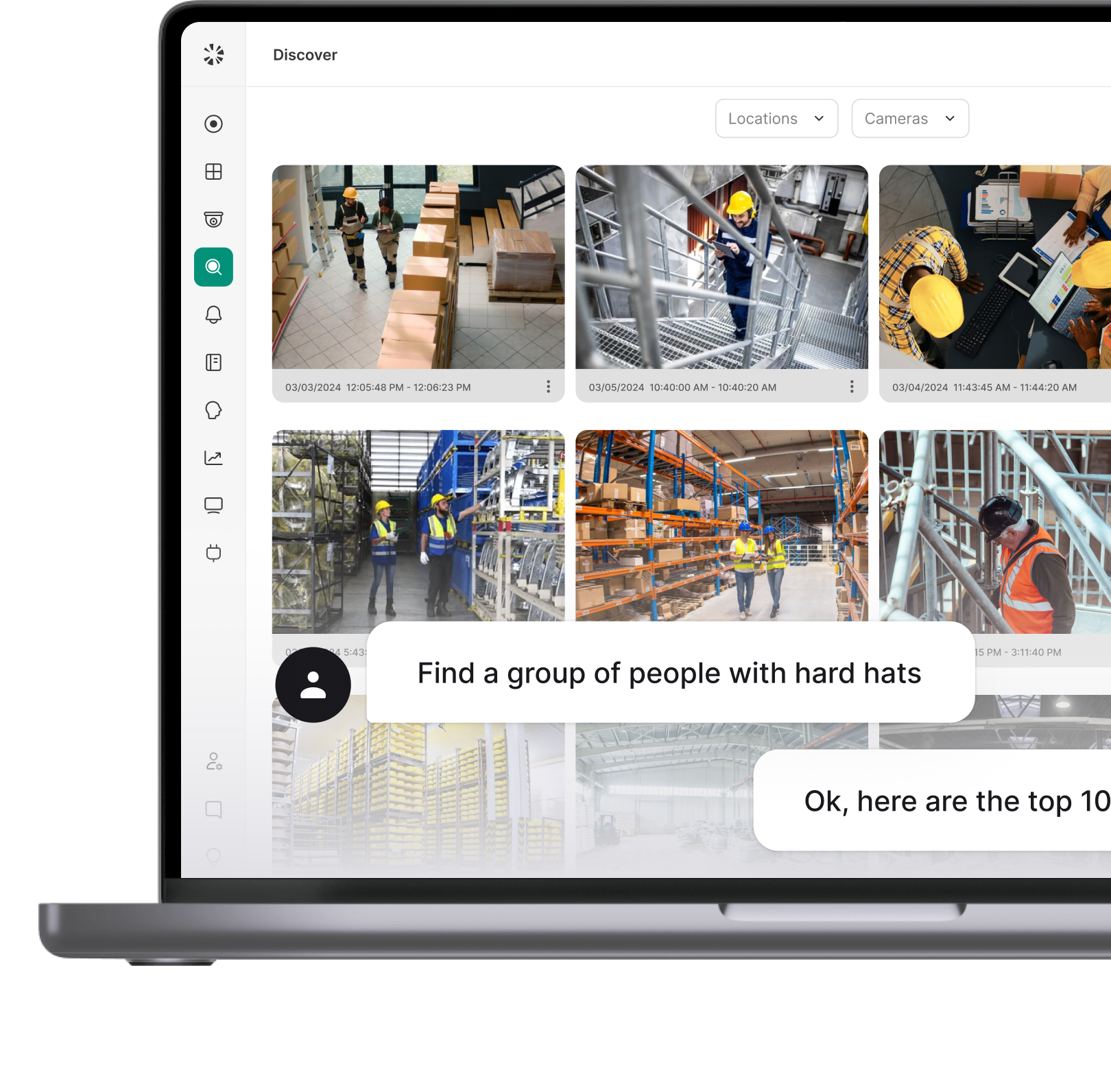
Each system holds one piece of a visit. A visitor record shows that someone checked in, but not where they went. A door event shows that a badge opened an access point, but not who was holding the badge. Video fills that gap: it can show that the visitor who checked in at 9:05 is the person at the controlled door at 9:18.
When visitor management, access control, and video run as separate systems, reconstructing a visit means pulling records from each and lining them up by hand. Connecting the three records produces one account of the visit:
- Visitor record: Who checked in and what they were authorized to do
- Access event: Which door or controlled entry point their credential opened
- Video: What actually happened around that access event
An integrated visitor management approach lets an investigator review a visit or incident on a single timeline instead of across three exports.
Evaluating a Manufacturing Visitor Management System
The right manufacturing visitor management system fits how your plant actually runs, including after-hours arrivals, remote gates, mixed visitor types, and multiple sites. Before comparing vendors, test each candidate against these questions:
- Gate connectivity: Can the gate keep checking visitors in if the network goes down?
- Visitor workflows: Can contractors, drivers, auditors, and other visitors follow different workflows, and can those workflows vary by entrance?
- Contractor management: Can the system check contractor prequalification, insurance, and certification expiry before each visit?
- Induction records: Can the system record required safety inductions and visitor acknowledgements?
- Zone-based access: Can a visitor's badge limit access to the areas they are cleared for?
- Access control: Can visitor records connect to your existing access control system?
- Audit records: Can you export visitor, approval, entry, and exit data in the form an auditor will ask for?
- Multiple plants: Can you standardize visitor policies across facilities without configuring each site separately?
- Third shift: Can the system handle an unexpected visitor when no one is at the gate?
A system that works well at a staffed front desk can struggle at a remote gate at 2 a.m. Run each option through those conditions before moving on to the vendor comparison.
Manufacturing Visitor Management Platforms Compared
The manufacturing visitor management systems below differ most on four points: safety induction and contractor workflows, offline operation, integration with access control and video, and hardware. The table summarizes how each one handles them, based on vendor documentation and our competitive research as of October 2026.
The entries below explain where each platform fits on the plant floor and what to confirm before buying. For a broader checklist, see our guide on how to choose the right visitor management system.
1. Coram Guest Management
Coram Guest Management is the visitor management module of Coram's AI-native physical security platform, running iPad check-in in the same platform as Coram's video, access control, and emergency management.
Its advantage in a plant is that visitor records sit next to the cameras the security team already uses. Each check-in can be matched to footage from the camera linked to that kiosk, so confirming who actually came through the gate means opening one record instead of searching a second system. Guest records are not yet linked to door events, so following a visitor from the gate to a controlled door still means checking access logs separately. Coram is also a weaker fit for plants whose main gap is contractor prequalification or export-control screening. Those plants will likely pair it with a dedicated tool.
Best for: Multi-site manufacturers that want visitor records connected to the video around them, on the same platform as their security cameras.
Strengths:
- Each check-in record can show footage from the linked camera at the moment of check-in, and guest records sit in the same dashboard and login as Coram's cameras, Access Control, and Emergency Management.
- Offline mode captures check-ins locally at gates with unreliable connectivity, keeps screening against a cached watchlist, and syncs everything when the connection returns.
- Watchlists flag individuals by email, phone, or ID document number, hold matches on a pending-approval screen, and auto-deny entry if no admin responds within three hours.
- Visitors can be screened against a criminal-record search covering 650 million+ records from 2,400+ sources across all 50 states, DC, and US territories, and each scanned ID is checked automatically against the name entered and for expiry.
- Visitors can sign an NDA or site-rules agreement on the iPad, and a signed PDF is emailed to the people you choose.
- Coram doesn't store ID document images or dates of birth, and document numbers are one-way hashed.
- One site license covers every iPad at a location, so a plant with a main lobby, a contractor gate, and a dock pays for one license, not three.
- A central dashboard shows which kiosks are online at every location, and the guest log can be filtered to visitors who are still checked in, which gives a muster warden a starting list.
Limitations:
- It is not built for deep safety induction or contractor prequalification workflows, so plants with heavy induction requirements will need a dedicated tool.
- Guest records are not linked to Access Control door events, and the kiosk can't issue visitor door credentials.
- There is no pre-registration today, and all visitor types and entrances use the same check-in flow.
- In offline mode, badge printing waits until the iPad reconnects, and hosts are notified once the visit syncs.
- It does not perform export-control or restricted-party screening, and the kiosk runs on iPad only.
Pricing: Quote-based, licensed per site rather than per iPad. Request pricing or book a demo.
2. FacilityOS VisitorOS
FacilityOS VisitorOS is an enterprise visitor management platform that connects check-in to contractor compliance, watchlist screening, and emergency mustering across multiple sites.
VisitorOS is the stronger choice when contractor compliance and documentation drive the decision. It collects signed NDAs, safety policies, and compliance forms at check-in, connects to contractor compliance through its ContractorOS integration, and lists ITAR among its supported standards, with trade-compliance integrations including Amber Road and Descartes. Plants with export-controlled areas or heavy contractor documentation will find more built in here than in Coram. The tradeoff is video: VisitorOS does not include it, so linking a visit to footage still means a second system.
Best for: Manufacturers whose priority is contractor compliance, document collection, and screening across many sites.
Strengths:
- Check-in workflows can require safety training, policy acknowledgment, and legal sign-off before entry.
- Screening combines government ID capture, custom watchlists, and integrated third-party lists.
- Emergency mustering covers visitors, contractors, and employees, with two-way SMS during evacuations.
- VisitorOS ships pre-configured iPads, stands, and badge printers, manages them through mobile device management (MDM), and replaces worn devices.
Limitations:
- Video is not part of the platform, so correlating a visit with footage requires a separate system.
- Its access control integrations are not listed by vendor, so confirm compatibility with your system.
- Licensing is per kiosk, so a plant with several gates pays for each one.
Pricing: Quote-based, billed annually per kiosk, with hardware management included.
3. Verkada Guest
Verkada Guest is the visitor management product in Verkada's cloud security platform, linking check-in to Verkada cameras, access control, and temporary visitor credentials.
Verkada Guest makes the most sense for plants that already run Verkada cameras and doors. In that environment it issues time-limited visitor credentials, shows integrated camera feeds, and keeps visitor activity in the same console the security team already uses. The integration is strongest inside the Verkada ecosystem, though. Verkada's Command Connector extends support for certain third-party cameras, but compatibility is model by model, and AI features are reduced on non-Verkada cameras, so a plant with an existing mixed camera fleet gets less of the integrated benefit. Coram links check-ins to video from the cameras a plant already has.
Best for: Manufacturers already standardized on Verkada cameras and access control.
Strengths:
- Visitors can receive time-limited access through keycards, unlock links, entry codes, or QR codes.
- Government ID scanning checks visitors against criminal and sex offender registries, alongside custom deny lists.
- Check-in can include questionnaires and document signing, including NDAs.
- Integrated camera feeds let security teams follow visitor activity in the same console as video and access.
Limitations:
- The full video and access integration works best on Verkada hardware; third-party camera support through Command Connector is model by model, with reduced AI features.
- Verkada does not document offline check-in behavior.
- Induction support is limited to forms and signatures, with no training or certification tracking.
Pricing: Quote-based, licensed per Guest tablet.
4. Sign In Solutions (Sign In Enterprise)
Sign In Solutions is an enterprise visitor and contractor management platform for multi-site organizations, combining watchlist screening, contractor training, and compliance documentation.
Sign In Solutions goes deepest on contractor training. It assigns training courses to contractors with automated reminders and tracks certifications, work permits, and safety training, which addresses the certification-currency problem directly. Plants where expired training is the recurring audit finding will get more from it than from Coram. The tradeoff is integration with physical security: it supports access control integrations but documents no video integration, so a visit and the footage around it live in separate systems.
Best for: Multi-site manufacturers with high contractor volumes and formal training requirements.
Strengths:
- Contractors receive assigned training courses with automated reminders before they arrive.
- The platform tracks certifications, work permits, and safety training against each contractor.
- Visitors, contractors, and vendors are screened against watchlists with real-time alerts.
- Badges can show visitor type and authorized areas, and the platform documents visitor details, access logs, and compliance checklists.
Limitations:
- No video integration is documented.
- Sign In Solutions does not publicly name the access control systems it integrates with, so confirm compatibility.
- Offline support is partial, so confirm which check-in steps still work when the gate loses connectivity.
Pricing: Quote-based.
5. Greetly
Greetly is a cloud visitor management system with configurable check-in workflows, safety videos, and published pricing, built for teams that want a simple setup.
Greetly fits plants that want consistent check-in across sites without an integration project. It supports separate workflows for contractors, vendors, and logistics personnel, adds safety videos and NDAs to the check-in flow, and greets visitors in their preferred language. It is also one of the few platforms here with published pricing. Greetly lists no access control or camera integrations, so the visitor record stands alone. Plants that need to connect a visit to footage will outgrow it faster than they would Coram.
Best for: Plants that want straightforward, multilingual check-in with predictable costs.
Strengths:
- Contractors, vendors, and logistics personnel can each follow a separate check-in workflow.
- Check-in flows can include safety videos, NDAs, and screening steps.
- Admins can send evacuation notifications and track who has been marked safe.
- Visitors can check in on a kiosk, an iPad, an Android tablet, or their own phone, in multiple languages.
Limitations:
- Greetly lists no access control or video integrations; its integrations cover SSO, directory sync, messaging tools, and Zapier.
- ID scanning is limited to U.S. driver's licenses.
- Greetly does not support offline check-in, so gates with unreliable connectivity need a fallback process.
Pricing: Essential starts at $99 per month and Pro at $159 per month, both billed annually. Badge printing requires Pro.
What to Do Next
The auditor's request from the start of this guide is a useful test for any manufacturing visitor management system you evaluate. Pick a real visit from last month, such as a contractor who arrived on night shift through a side gate, and ask each vendor to show you the complete record: approval, check-in, induction, the doors they opened, what the cameras saw, and when they left. The system that answers fastest, without a spreadsheet, is the one that will hold up when the auditor is in the room.
Coram Guest Management covers the check-in, screening, approval, and camera side of that record, on the same platform as Coram Access Control and Emergency Management. Book a demo to see it on your own plant's workflow.




.png)