In March 2026, a hacker claimed to have exfiltrated 93 GB of data from Navigate360-owned P3 Global Intel, including more than 8 million confidential law enforcement tips connected to schools. The investigation is ongoing. For many district safety directors, the breach didn't start the conversation about alternatives. It landed in the middle of one already underway.
Navigate360 remains a capable platform, strongest in emergency management, panic alerting, and staff training. The gaps that drive districts to evaluate alternatives are more specific: no native AI video intelligence, a per-module pricing structure that compounds across campuses, and integration friction with tools districts have already invested in. For districts where one of those gaps is the actual problem, a full suite replacement isn't always the answer. A focused alternative often is.
This guide covers the 10 strongest Navigate360 competitors across visitor management, panic alerting, emergency management, and AI video surveillance. It is not a review of EAB Navigate360, which is a separate platform serving higher education.
What Navigate360 Does Well, and Where It Falls Short
Navigate360 is a K-12 health and safety platform used by more than 30,000 schools nationwide. Its core argument is consolidation: one platform covering the full spectrum of school safety rather than a stack of disconnected point solutions.
What It Does Well
Emergency management is its strongest category. Navigate360 combines FEMA-aligned emergency planning, drill management, reunification workflows, SIS-linked roll calls, and panic response into one operational system. Compared to most standalone alternatives, the depth here is genuine.
Alyssa's Law compliance is well-supported. The platform supports wearable badges, mobile apps, desk phone triggers, wall-mounted buttons, and desktop alerts. When activated, alerts can simultaneously reach staff, SROs, first responders, and 911. For districts in Alyssa's Law states, this breadth matters.
Visitor management is operationally connected. Navigate360 ties ID scanning, sex offender screening, badge printing, and volunteer tracking directly into emergency workflows, so every visitor is accounted for during a lockdown or reunification event, not just logged at the front desk.
Staff training runs deeper than most competitors. Navigate360 owns ALICE Training, one of the most widely deployed active shooter preparedness programs in U.S. schools, alongside CSTAG behavioral threat assessment and suicide awareness training.
Where It Falls Short
No native AI video intelligence. Navigate360 does not include weapon detection, AI video analytics, suspicious behavior monitoring, or natural-language video search. For districts evaluating AI video as part of their safety stack, this is a structural gap, not a roadmap item.
Pricing compounds at scale. Navigate360's per-module structure means the full suite (emergency management, panic alerting, visitor management, and training combined) grows more expensive as campus count increases. Districts managing 15+ buildings should model the five-year total cost before committing.
Integration flexibility is limited. The platform is designed around its own ecosystem. Organizations that have already invested in third-party visitor management, mass notification, or access control tools often find integration options more constrained than they expected.
The March 2026 data breach is an active procurement concern. A hacker claimed to have stolen 93 GB of data from Navigate360-owned P3 Global Intel, including more than 8 million confidential law enforcement tips tied to schools. Navigate360 stated the incident was under investigation. Many districts are now treating cybersecurity posture as a first-order evaluation criterion.
How to Evaluate Navigate360 Alternatives
Not every district evaluating alternatives needs to replace Navigate360 entirely. The right question is which specific gap is driving the evaluation, and whether a targeted solution solves it more efficiently than a full platform switch.
Verify Alyssa's Law compliance documentation first. Twelve states have passed the law, with legislation expanding. Non-compliant platforms are eliminated immediately in those states: compliance is the first filter, not an afterthought.
Know whether you need all four categories or just one. A district with solid emergency management but a weak visitor workflow has very different requirements from one replacing four disconnected systems. Buying a full suite to fix one gap is rarely the right economic decision.
Visitor management depth varies more than it appears. Sex offender screening, custody alerts, SIS integration, volunteer management, and emergency accountability differ significantly between vendors. Many systems were originally built for corporate environments and don't fully support K-12 operational realities.
Student data handling is a hard procurement requirement. Ask where visitor and tip data is stored, how FERPA compliance is managed, and what the incident response procedure is if a breach occurs. Get written answers before signing anything.
Model the budget structure, not just the price. A per-module platform that looks affordable at three schools looks different across 15 campuses. Ask every vendor for a five-year total cost projection across your full location count.
Implementation timeline matters. School safety platforms can't go live mid-year without disrupting operations. Ask what onboarding looks like, how long staff training takes, and what the first 90 days require from your team. A six-month deployment timeline is not a solution for a district under a state compliance deadline.
References from comparable districts close the gap. Ask for references from districts that match your size, your state's Alyssa's Law requirements, and your existing tech stack. A peer reference tells you more than any demo.
Navigate360 Competitors: Side-by-Side Comparison
Best Navigate360 Competitors and Alternatives
The 10 platforms below are organized to answer one question for each: when does it beat Navigate360, and for whom. Entries follow a consistent structure (definition, body, strengths, limitations, and pricing) so you can compare across vendors on the same terms.
Coram
Coram is an AI-native physical security platform that connects to any existing IP camera and manages video surveillance, access control, panic alerting, and emergency management from one dashboard.
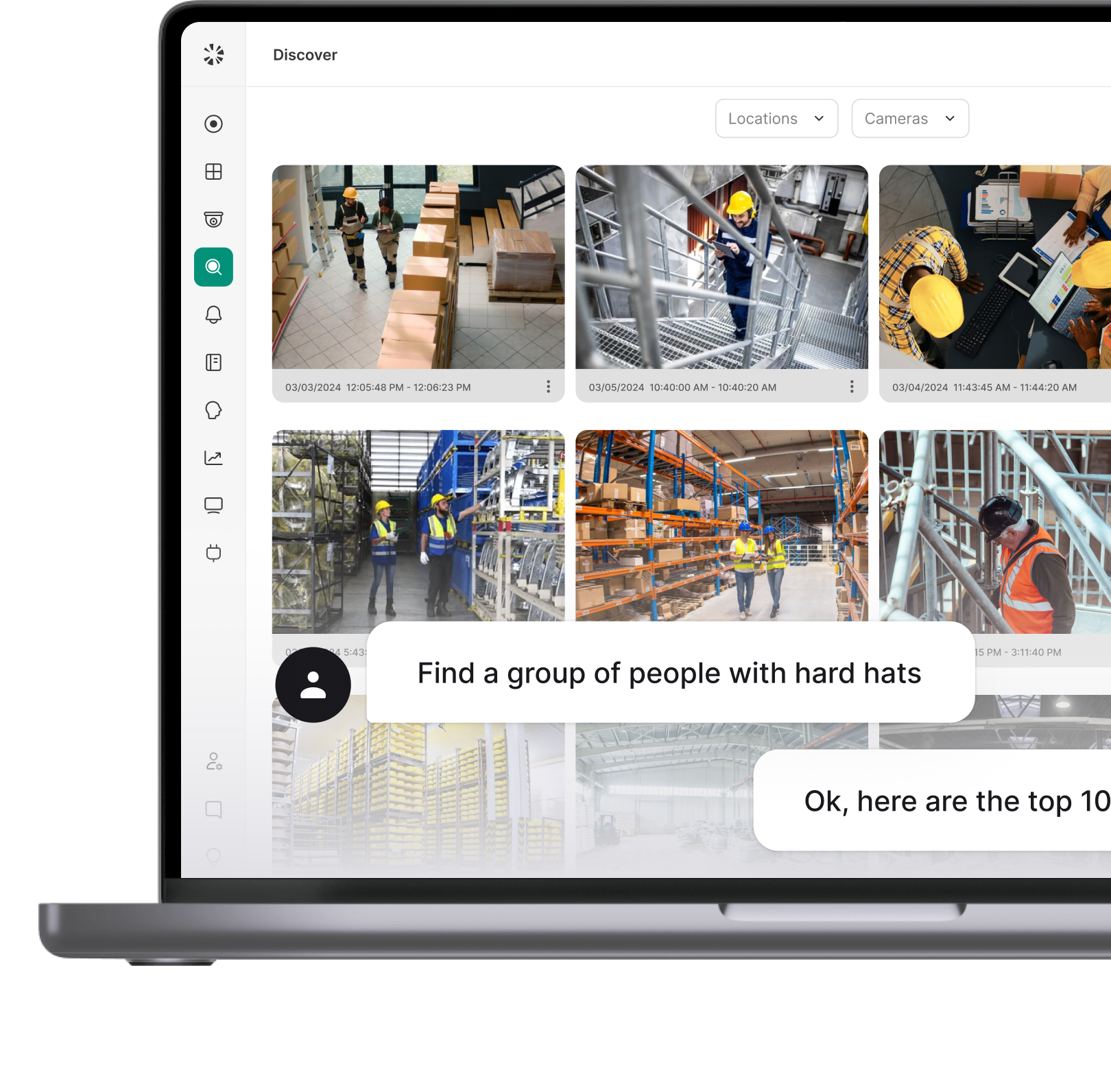
For districts evaluating Navigate360 alternatives, the most important thing Coram does is work with cameras already installed on campus. There's no hardware replacement requirement. The platform adds AI intelligence on top of existing infrastructure, which is the primary reason districts with established camera investments choose it over alternatives that require proprietary hardware. On top of that foundation, Coram delivers capabilities Navigate360 doesn't offer at all: real-time weapon detection, natural-language video search, and Journey Tracking, which follows a person's movement across multiple cameras during an investigation.
Coram is Alyssa's Law compliant, with native panic buttons, mobile triggers, real-time alerts, and direct 911 integration built into the same platform as the video layer. Where Navigate360 handles emergency management through planning, drills, and reunification workflows, Coram's approach centers on real-time detection and response speed, compressing the window between a weapon appearing on camera and a lockdown being initiated.
The platform is not a full Navigate360 replacement for districts that rely heavily on ALICE Training, behavioral threat assessment, or staff training programs. Coram does not offer training content. Districts that need visitor management as a standalone function will also find Coram's visitor capabilities more limited than dedicated platforms like Raptor.
Best for: Districts with existing cameras that need AI-native video intelligence and Alyssa's Law compliance without replacing infrastructure.
Strengths:
- Works with 1,000+ IP camera models — no rip-and-replace required, which is the most common reason districts choose Coram over alternatives that require proprietary hardware
- Real-time weapon detection, LPR, facial recognition, and suspicious activity alerts running on existing camera infrastructure
- Natural-language video search lets staff find any moment across hours of footage by describing what they're looking for, without calling IT
- Journey Tracking follows a subject's movement across multiple cameras, accelerating post-incident investigation
- Native panic buttons, mobile triggers, and direct 911 integration on the same platform as the video layer
- SOC 2 Type II and HIPAA certified; on-premises AI processing available for privacy-sensitive environments
- Deploys quickly — one customer with 100+ cameras reported being up and running in under 10 minutes
Limitations:
- No staff training content — ALICE, behavioral threat assessment, and curriculum-based safety programs require a separate vendor
- Visitor management is present but less full-featured than dedicated platforms like Raptor for complex K-12 workflows
- Newer platform relative to Raptor and Navigate360 — districts that prioritize peer references from large, long-tenured deployments may find the reference pool smaller
- Cloud-first architecture with local Coram Point hardware per site — districts with strict on-premises-only requirements should confirm the deployment model fits their infrastructure policy
Pricing: Not publicly listed. Contact Coram for a site-based quote.
Raptor Technologies
Raptor Technologies is a K-12 safety platform covering visitor management, emergency management, and panic alerting, deployed across more than 60,000 schools in North America and the United Kingdom.
Raptor built its reputation on visitor management, and that foundation still holds. The platform screens visitors against sex offender databases, custody restrictions, and custom watchlists while supporting badge printing, volunteer management, and real-time staff alerts. For districts where visitor accountability is the primary gap (particularly those dealing with custody disputes, restraining orders, or high-volume arrival and dismissal periods), Raptor's depth in this category is difficult to match.
On the emergency side, Raptor Emergency Management covers drill scheduling, compliance tracking, mobile-initiated emergency response, building maps, and real-time student and staff accountability from a centralized interface. It's built around compliance and operational safety workflows rather than AI-driven surveillance, which makes it a natural fit for districts that need a proven, peer-referenced platform rather than a newer one.
Raptor does not include native Alyssa's Law panic alerting in its core product. That requires the Raptor Badge Alert add-on, which extends the platform but adds cost. Districts in Alyssa's Law states should confirm the add-on meets their state's specific requirements before signing.
Best for: Districts prioritizing established K-12 visitor management with proven emergency management depth.
Strengths:
- Over 20 years of K-12-specific development, with 60,000+ schools as peer references
- Visitor screening covers sex offender databases, custody restrictions, and custom watchlists with badge printing and volunteer tracking built in
- SIS integration syncs authorized pick-up permissions in real time, flagging mismatches at the door
- Emergency management module covers drill scheduling, compliance tracking, and real-time student and staff accountability
- Mobile-initiated emergency response with building maps and centralized incident coordination
- Broad peer reference network — most district safety directors will have a comparable-size district they can call
Limitations:
- Alyssa's Law panic alerting requires the Badge Alert add-on — it's not included in the core platform
- No weapon detection or video analytics — AI surveillance requires a separate vendor
- Less suited to districts whose primary gap is emergency communication speed rather than visitor management depth
- Pricing compounds across campuses for multi-module deployments, similar to Navigate360
Pricing: Not publicly listed. One publicly documented district contract (a three-site emergency management deployment) ran approximately $9,300 for a 15-month subscription ($3,025 one-time, $6,285 recurring). District-level pricing scales with site count and modules; contact Raptor for a full quote.
CrisisGo
CrisisGo is a school safety communication platform focused on emergency alerting, panic response, and multi-hazard incident management, with Alyssa's Law compliance built into its core architecture.
Where Navigate360 takes a broad platform approach, CrisisGo is purpose-built for the moment an emergency begins. Its integration with RapidDeploy's Radius Mapping platform routes panic button alerts directly to 911 call takers with location data, supporting the law-enforcement notification pathway Alyssa's Law requires. Staff can trigger alerts from mobile devices, wearables, or desktops. The platform covers more than 400 scenario types, not just active shooter events but medical emergencies, severe weather, and other multi-hazard incidents.
CrisisGo does not include visitor management. Districts that need a visitor screening and accountability layer alongside Alyssa's Law compliance will need to pair it with a dedicated visitor platform.
Best for: Districts prioritizing Alyssa's Law compliance and fast, direct emergency communication with 911.
Strengths:
- Direct 911 integration via RapidDeploy routes panic alerts to call takers with location data, meeting Alyssa's Law's law-enforcement notification requirement
- Supports 400+ emergency scenario types across multiple hazard categories
- Multi-trigger options including mobile, wearable, and desktop activation
- Emergency planning and threat assessment tools integrated alongside the alerting layer
- District-wide safety protocol management from a centralized interface
- Focused platform scope means faster implementation than broader suites
Limitations:
- No visitor management — requires a separate platform for front-desk screening and accountability
- No video surveillance or weapon detection layer
- Narrower platform scope than Navigate360 — districts that need training, drill management, or reunification workflows will find gaps
- Smaller market presence than Raptor or Navigate360, which may limit the peer reference pool for larger districts
Pricing: CrisisGo publishes per-school pricing for independent schools with Veracross integration at $5 per student annually for enrollment above 500. District pricing for public K-12 is custom. Contact CrisisGo for a quote.
Kokomo24/7
Kokomo24/7 is a school safety platform combining visitor management, panic alerting, incident management, and mass notification into a single system, built to replace multi-vendor contracts with one.
The consolidation argument Kokomo makes is genuine. For districts currently managing separate contracts for visitor management, mass notification, and panic alerting, Kokomo brings those functions under one interface and one vendor relationship. The platform supports wearable, physical, and virtual panic buttons; emergency notifications via SMS, email, PA systems, voice calls, digital signage, and desktop alerts; and pre-configured emergency workflows with audit trails for accountability. According to Kokomo, districts using the platform report average cost savings exceeding 60% compared to their prior multi-vendor stacks, consolidating an average of 3.4 vendor solutions within the first three years.
Kokomo does not include Alyssa's Law compliance natively. That requires integration with a compliant panic alerting system. Districts in Alyssa's Law states should verify whether the integration path meets their state's specific technical requirements before selecting the platform.
Best for: Districts prioritizing vendor consolidation: visitor management, panic alerting, and mass notification under one contract.
Strengths:
- Single platform for visitor management, panic alerting, incident management, and mass notification — reduces vendor count and integration complexity
- Multi-channel mass notification reaches staff via SMS, email, PA, voice, digital signage, and desktop simultaneously
- Wearable, physical, and virtual panic button options
- Pre-configured emergency workflows with built-in audit trails for post-incident accountability
- Scales across campus counts without requiring separate vendor relationships per function
- Kokomo reports districts save an average of 60%+ when consolidating from multiple point solutions, replacing an average of 3.4 vendor contracts within three years
Limitations:
- Alyssa's Law compliance requires integration — it's not native to the core platform
- No AI video or weapon detection — camera-based threat monitoring requires a separate platform
- Less depth in any individual category (visitor management, emergency management) than dedicated platforms like Raptor or Everbridge
- Smaller brand recognition than Raptor or Navigate360 may require more internal justification during procurement
Pricing: Not publicly listed. Contact Kokomo24/7 for a quote.
Verkada Guest
Verkada Guest is a cloud-based visitor management platform built for K-12 environments, designed to operate within the broader Verkada physical security ecosystem.
Its value is highest for districts already running Verkada cameras and access control. The platform integrates with Clever and ClassLink to streamline guardian verification, enforce watchlists, and maintain compliance during arrivals and dismissals. SIS integration cross-references authorized pick-up permissions in real time, so if a student needs to be checked out early, the system verifies the person at the door is authorized and logs it automatically. The platform also includes sex offender screening, badge printing, and real-time visitor logs.
Alyssa's Law panic alerting is not built into Verkada Guest itself. It requires separate Verkada hardware: panic buttons and alerting infrastructure sold as distinct products. For districts evaluating Verkada Guest as a path to Alyssa's Law compliance, the full system cost includes hardware components beyond the Guest software license.
Best for: Districts already using Verkada cameras and access control that want to add visitor management without introducing a new vendor.
Strengths:
- Native integration with Clever and ClassLink for SIS-linked guardian verification and authorized pick-up enforcement
- Sex offender screening, badge printing, and real-time visitor logs built in
- Operates within the Verkada ecosystem — no additional vendor relationship for districts already on the platform
- Cloud-managed with centralized visibility across campuses
- Watchlist enforcement during sensitive arrival and departure windows
Limitations:
- Alyssa's Law panic alerting requires separate Verkada hardware — it's not included in Guest
- AI detection capabilities depend on Verkada's camera platform, not the Guest product itself
- Limited value for districts not already in the Verkada ecosystem — the integration advantage disappears without existing Verkada infrastructure
- Proprietary hardware model means districts must purchase Verkada cameras to access the full platform — existing non-Verkada cameras aren't compatible
Pricing: Not publicly listed. Contact Verkada for a system-level quote including hardware.
The Receptionist and Envoy
The Receptionist and Envoy are corporate visitor management platforms that some schools deploy for basic front-desk check-in.
Both are easier to set up and administer than Navigate360. That ease comes from a simpler scope. Neither platform was built for K-12 environments. Neither includes sex offender screening, custody alerts, SIS integration, or emergency accountability workflows. For a public district evaluating Navigate360 alternatives, they will not meet K-12 compliance or operational requirements.
For smaller private or charter schools that need basic visitor logging and badge printing without compliance overhead, they are a workable option. That is the extent of the use case.
Best for: Small private or charter schools needing simple visitor check-in without K-12 compliance requirements.
Strengths:
- Fast setup and low administrative overhead compared to full K-12 safety platforms
- Simple, clean interface designed for front-desk staff without safety technology experience
- Badge printing and host notification built in
- Cost-effective for organizations that genuinely need only basic visitor logging
Limitations:
- No sex offender screening, custody alerts, or watchlist enforcement
- No SIS integration — visitor records are not linked to student data
- No emergency accountability workflows — visitors logged at check-in have no connection to lockdown or reunification procedures
- Not Alyssa's Law compliant
- Not built for K-12 operational realities — public districts should not evaluate these platforms as Navigate360 alternatives
Pricing: Both offer subscription-based pricing. The Receptionist starts at approximately $99/month per location; Envoy's visitor management plans start around $179/month per location. Neither requires long-term contracts at entry tiers.
Visitu
Visitu is a K-12-specific visitor management platform covering ID scanning, sex offender screening, badge printing, and campus visitor tracking from a centralized dashboard.
The platform is built specifically for school visitor workflows, which separates it from corporate-origin alternatives. Visitor IDs are checked against national sex offender registries and district-specific watchlists, with immediate staff alerts when a potential threat is detected. Screening is fast and designed for the pace of K-12 arrival and dismissal periods.
Visitu is a visitor management platform, not a full K-12 school safety platform. It does not include panic alerting, emergency management, or Alyssa's Law compliance tools. Districts that need those capabilities alongside visitor management will need to pair Visitu with one or more other vendors.
Best for: Districts requiring K-12-specific visitor management at a lower price point than Raptor.
Strengths:
- Built specifically for K-12 visitor workflows, not adapted from a corporate platform
- Fast ID scanning against national sex offender registries and custom district watchlists
- Immediate staff alerts when a flagged visitor is detected
- Photo capture and badge printing at check-in
- Centralized dashboard with real-time campus visitor tracking
- Lower price point than Raptor for districts whose primary need is visitor screening
Limitations:
- No panic alerting or Alyssa's Law compliance tools
- No emergency management or reunification workflows
- No weapon detection, video analytics, or surveillance layer of any kind
- Narrower peer reference network than Raptor — fewer large-district references available
- Districts that need visitor management plus emergency management will need a second vendor
Pricing: Not publicly listed. Contact Visitu for a school or district-based quote.
CENTEGIX CrisisAlert
CENTEGIX CrisisAlert is a purpose-built wearable panic button platform that protects more than 15,000 locations and is Alyssa's Law compliant in 12 states.
Unlike app-based alternatives, CrisisAlert operates on private LoRaWAN and Bluetooth networks independent of Wi-Fi or cellular coverage, with no phone required and no app to keep updated. Badges require no daily charging, lasting over a year on a single battery. When a cyberattack takes down the school network (or when coverage is unreliable in parts of a building), CrisisAlert still works. Activating a badge triggers campus-wide strobes, screen takeovers on staff devices, and direct silent notification to 911, meeting the law-enforcement escalation requirement under Alyssa's Law.
CENTEGIX focuses specifically on the panic alerting and rapid emergency response layer. It does not include visitor management, AI video analytics, or broader school safety software functions.
Best for: Districts in Alyssa's Law states that need a proven wearable panic button with verified law enforcement integration and network-independent operation.
Strengths:
- Wearable badge operates on private LoRaWAN and Bluetooth — functions without Wi-Fi or cellular, including during cyberattacks that take the school network offline
- Battery lasts over a year without charging — no daily maintenance burden for staff
- Alyssa's Law compliant in 12 states with direct 911 silent notification
- Campus-wide strobes and screen takeovers triggered by a single badge press
- Deployed across 15,000+ locations — one of the largest peer reference bases in the panic alerting category
- No app required — the wearable is the trigger, which matters when staff don't have phones accessible
Limitations:
- No video surveillance, weapon detection, or AI analytics — districts evaluating an AI video layer need a separate platform
- Hardware-centric model means upfront equipment costs in addition to software licensing
- Network-independent operation is an advantage but also means the system operates on its own infrastructure that districts must maintain
- No staff training content or behavioral threat assessment tools
Pricing: Not publicly listed. One publicly documented district deployment reported a recurring annual cost of approximately $7,500 per campus, covering badges, beacons, and batteries. Contact CENTEGIX for a current per-building quote, as pricing varies by campus size and coverage requirements.
Everbridge
Everbridge Safety Connection is a critical event management platform adapted for K-12 use, covering mass notification, incident management, threat assessment, reunification tracking, and visitor management at enterprise scale.
Its K-12 offering is built on infrastructure that Everbridge has deployed across government, healthcare, and enterprise environments. That foundation matters for mass notification reliability. The platform reaches staff, students, and families via voice, text, email, and app push simultaneously, without the performance degradation that smaller platforms can show under load. For large multi-campus districts or county-wide systems, that reliability is the core value proposition.
The tradeoff is complexity and cost. Everbridge requires dedicated IT and operations staff to configure and maintain. Smaller districts will pay for capability they don't need and struggle with implementation timelines that assume more internal resources than they have. Native Alyssa's Law panic buttons and AI video are not included. Both require third-party integrations.
Best for: Large districts that need enterprise-grade mass notification with multi-channel reach and strong SIS integration.
Strengths:
- Multi-channel mass notification (voice, text, email, app push) reaches every stakeholder simultaneously at enterprise scale
- Incident management covers threat assessment, reunification tracking, and visitor management in a single interface
- Proven reliability across government, healthcare, and enterprise environments translates to K-12
- Strong SIS integration for student and family contact data at large district scale
- Handles multi-campus and county-wide deployments without performance degradation
Limitations:
- No native Alyssa's Law panic buttons — requires third-party integration
- No AI video or weapon detection natively — both require third-party integrations
- Complexity and cost calibrated for enterprise environments — smaller districts will pay for capability they don't need
- Requires dedicated IT and operations staff to configure and maintain effectively
- Longer implementation timelines than more focused alternatives
Pricing: Enterprise pricing, not publicly listed. Everbridge offers flexible payment structures including multi-year contracts. Contact for a district-level quote.
ZeroEyes
ZeroEyes is an AI gun detection platform that layers onto existing camera infrastructure and adds human verification before any alert fires.
Every detection is reviewed by the ZeroEyes Operations Center, staffed 24/7 by U.S. military and law enforcement veterans. If confirmed, alerts with weapon detail, visual descriptions, and last known location reach first responders and school staff in as little as 3 to 5 seconds. That verification layer reduces false positives (alerts that would otherwise send staff and law enforcement responding to non-threats, burning credibility and response capacity each time).
ZeroEyes holds a full U.S. Department of Homeland Security SAFETY Act Designation, the only AI gun detection platform with that certification. For districts where procurement requires documented federal certification, this is a hard differentiator.
ZeroEyes is not a full K-12 school safety platform. Visitor management, panic alerting, and emergency management workflows all require separate systems. Many districts pair ZeroEyes with CENTEGIX or CrisisGo for the panic alerting layer, rather than treating it as a standalone replacement for Navigate360.
Best for: Districts that need proven, human-verified AI gun detection layered onto an existing camera stack, with DHS-certified federal documentation for procurement.
Strengths:
- Human verification by 24/7 Operations Center staffed by military and law enforcement veterans — reduces false positives before an alert fires
- Alert with weapon detail, visual description, and last known location delivered to first responders in 3–5 seconds after confirmation
- Works with existing camera infrastructure — no hardware replacement required
- Only AI gun detection platform with a full DHS SAFETY Act Designation
- Focused platform scope means implementation is faster than broader suites
- Strong procurement documentation for districts that need federal certification evidence
Limitations:
- No visitor management, panic alerting, or emergency management — requires separate platforms for those functions
- Human verification adds reliability but means alerts are not instantaneous — the 3–5 second window assumes an operator is available and the detection is unambiguous
- Focused exclusively on gun detection — does not cover other threat types like suspicious behavior or cross-camera tracking across incident types
- Pairing with CrisisGo, CENTEGIX, or another platform for panic alerting adds vendor and contract complexity
Pricing: ZeroEyes publishes that most customers pay under $50 per camera per month, with volume discounts as camera count increases. Publicly documented district contracts range from approximately $27,500/year for a small two-school district monitoring 38 cameras to $38,280/year for a rural district monitoring up to 116 cameras. A one-time setup fee applies in most cases. Contact ZeroEyes for a site-specific quote.
How to Choose the Right Navigate360 Alternative for Your District
No single Navigate360 alternative covers every category equally. The right choice depends on district size, budget structure, and the specific gap driving the evaluation.
Single school or small district (1–5 buildings): Start with the weakest category. A visitor management gap points to Visitu or Raptor. An Alyssa's Law compliance deadline points to CENTEGIX CrisisAlert. A need for AI video on existing cameras points to Coram AI or ZeroEyes. Budget is usually the binding constraint at this scale, and a single focused solution almost always beats a full suite economically.
Mid-size district (6–15 buildings): Consolidation becomes more important than individual feature depth. Kokomo24/7 makes the strongest consolidation argument: visitor management, panic alerting, and mass notification under one contract, with documented cost savings. CrisisGo fits when Alyssa's Law compliance is the immediate driver and emergency communication depth matters more than visitor management.
Large district (15+ buildings): Everbridge handles enterprise-grade mass notification that reaches every channel simultaneously. Raptor covers visitor management and emergency preparedness at scale across many buildings. Coram AI adds an AI detection layer across multiple campuses without a hardware refresh.
Districts already running Verkada cameras and access control: Verkada Guest adds visitor management without introducing a new vendor relationship or integration layer.
The most useful framing for any evaluation: identify the one or two categories where Navigate360 isn't meeting your district's needs right now, and build the shortlist from there.
The Bottom Line on Navigate360 Alternatives
Navigate360 is strongest on emergency management, staff training, and Alyssa's Law compliance. The gaps driving districts to evaluate alternatives are specific: no native AI video, compounding per-module pricing, limited third-party integration, and the unresolved March 2026 data breach.
The 10 alternatives in this guide don't all compete with Navigate360 on the same ground:
- Coram AI: AI video on existing cameras, Alyssa's Law ready
- Raptor Technologies: Deepest K-12 visitor management
- CrisisGo: Alyssa's Law compliance with direct 911 routing
- Kokomo24/7: Vendor consolidation with documented cost savings
- Verkada Guest: Visitor management for Verkada ecosystems
- The Receptionist / Envoy: Basic check-in for private and charter schools
- Visitu: K-12 visitor screening at a lower price point
- CENTEGIX CrisisAlert: Purpose-built wearable panic button, network-independent
- Everbridge: Enterprise mass notification at large-district scale
- ZeroEyes: Human-verified AI gun detection, DHS certified
AI video intelligence is where the category is moving. According to an FBI study of active shooter incidents, nearly 70% ended within five minutes and 36% ended within two. Platforms that detect a weapon before law enforcement is called are compressing that window in ways that drill-and-reunification workflows alone cannot. If AI video isn't on your evaluation list, it's already on your board's agenda.




.png)