Eptura Visitor now costs many long-time Proxyclick customers 60 to 100 per cent more than they paid two years ago, and the renewal invoice is often the first sign anything has changed. Proxyclick built its reputation as an enterprise visitor management platform with strong compliance workflows and global deployments, but the acquisition that turned it into Eptura Visitor changed the pricing and the product roadmap at the same time.
If visitor records don't connect to cameras, door access, and incident response, the front desk stays disconnected from the security operation.
That's the deeper reason so many teams are now comparing Proxyclick alternatives. Some are responding to the Eptura rebrand itself, others to the pricing shift, and many simply want stronger physical security without adopting a broader workplace platform.
This guide compares seven Proxyclick alternatives, explains what changed with the Eptura rebrand, and evaluates each platform on security integration, screening depth, pricing, migration effort, and operational fit.
What Happened to Proxyclick (the Eptura Rebrand) + Why Teams Look for an Alternative
Condeco acquired Proxyclick in January 2022, and Eptura, a worktech platform built through a series of acquisitions including iOffice, SpaceIQ, ManagerPlus, and Serraview, acquired Condeco shortly after. By 2025, Proxyclick had officially become Eptura Visitor, and the product roadmap shifted from reception-focused to suite-driven.
For long-time Proxyclick customers, that shift showed up in two places: the renewal invoice and the support experience. Capterra reviewers describe price increases of 60 to 100 percent since the acquisition, and the pricing shift is the most documented reason customers cite for switching.
One reviewer put it plainly: "I am shocked and appalled that you increased the pricing 30% last year and now 60%, nearly 100% price increase in 2 years."
Proxyclick pricing was previously transparent and tiered. Eptura Visitor pricing is now custom, quote-based, requires a sales conversation, and carries a minimum one-year contract. Market estimates put a base Eptura Visitor setup at approximately $7,500 per year before implementation fees. What was once an affordable, scalable visitor tool became an enterprise procurement conversation.
How to Evaluate Proxyclick Alternatives
Security integration. The first question is whether visitor management connects to cameras and door access. Eptura Visitor integrates with leading access control systems, but visitor records and video still live separately. Ask vendors to be specific about which half they actually do: linking a check-in record to camera footage and provisioning a door credential at check-in are two different capabilities, and most platforms that claim "security integration" only do one.
Screening depth. Ask exactly which databases a platform checks. Many visitor systems screen against the public sex offender registry alone and describe that as a background check. The gap between a registry lookup and a broader criminal-records sweep is the single largest capability difference in this category, and it rarely shows up on a feature comparison page. Ask two follow-ups: whether the check is a live county-court search or a database sweep, and whether it runs on every guest or only those who present ID.
Data handling. Ask what each vendor stores and for how long. Some platforms retain the full ID document image and number indefinitely. For regulated buyers, and for anyone whose legal team reviews vendor contracts, what a system doesn't keep matters as much as what it screens.
Incident and audit value. When an incident occurs, can you see a visitor's check-in, door activity, and camera footage from one place? If investigations require switching between systems, the platform isn't truly integrated.
Evacuation and mustering. Any replacement should match Proxyclick's evacuation capabilities, including live occupancy, digital roll calls, and emergency notifications. Test the workflow under real conditions, and confirm whether it's part of the visitor product or a separately licensed module.
Offline behaviour. Ask what happens to check-in when the internet drops. Most platforms degrade to logging visitors retroactively, which means no usable record in the moment that mattered.
Fit vs. overkill. Decide whether you need a workplace suite or a security platform. If desk booking, space management, and workplace operations aren't priorities, paying for the broader Eptura Workplace ecosystem adds cost without improving security outcomes.
Pricing and packaging. Compare based on your actual deployment, not a generic entry price. The billing unit matters as much as the number: some vendors license per site, one licenses per kiosk, and a multi-entrance building prices very differently under each.
Migration effort. Migration is rarely about hardware and more about rebuilding workflows. Confirm data export, kiosk compatibility including minimum OS version on existing tablets, visitor flows, watchlists, and access control integrations before committing.
The Honest Decision Frame
If your priority is a polished, compliance-grade visitor platform inside a broader workplace suite and Eptura's pricing works for your budget, there may not be a reason to switch.
For security-first buyers where the separation between the front desk and the security stack is the actual problem, and where the suite context adds cost without adding capability, the options in this guide are where the answer lives.
Proxyclick Alternatives: Quick Comparison
Two notes on reading this table. First, only Verkada Guest currently provisions a door credential at check-in, and it does so only on Verkada hardware. Second, camera-agnostic and access-agnostic are separate questions: a platform can work with the cameras you own and still require its own door hardware, or the reverse.
1. Coram
Guest check-in that lives in the same platform as your cameras and your doors.
Coram is an AI-native physical security platform, and Coram Guest Management is its visitor product: an iPad kiosk that captures a guest's name, photo and ID, optionally collects a signed NDA, screens them against your blacklist and — where you enable it — against criminal records across all 50 states, notifies the host, and prints a badge. All of it inside the same dashboard and the same login your security team already uses for video surveillance, access control, and emergency management. It keeps working when the internet drops, and it's built to hold onto as little of a guest's identity documentation as the job allows.
Eptura Visitor keeps visitor records separate from camera footage and door access, even where it integrates with outside access control systems. Coram narrows that gap in two ways. Guest records are linked to camera footage, so a check-in and the video from that entrance sit on one screen instead of in two systems. And Guest Management is a module inside the same platform as Coram's video and access control products, sharing one user directory, one location model, and one audit trail rather than three vendor relationships.
Best for: Facilities and security managers leaving Proxyclick because the move into Eptura added workplace-suite overhead without adding security depth — particularly K-12 districts, mid-market corporate offices, banks, houses of worship, and construction or industrial sites with a safety-NDA-at-the-gate workflow.
Key capabilities:
- Eight-step iPad check-in covering welcome, guest info, host selection, photo, ID scan, legal agreement, consent, and confirmation, with a measured median completion time of 54 seconds
- Optional criminal background screening covering state criminal repositories, corrections and court records, arrest and warrant data, and sex-offender registries across all 50 US states, DC and territories. It is not a live county-court search. Screening is off by default and enabled per organisation, and it runs off a scanned ID, so guests who aren't asked for identification aren't screened
- On-device ID document verification for US and Canadian driver's licenses, passports, and national IDs, reading the barcode or machine-readable zone on the iPad itself, matching the name against what the guest typed and confirming the document isn't expired, in under two seconds
- Blacklist screening with a Pending Approval workflow: a flagged guest sees a neutral 15-second "additional verification" message rather than a refusal, so nothing escalates in the lobby, while admins are notified by email and SMS and approve or deny from the dashboard with the reason and their identity logged. Severity tiers run Low to Critical, and the system auto-denies at three hours. Matching is on email, phone number, or ID document hash
- Deliberate data minimisation: the ID document image is never stored, and while the document number is transmitted for verification, the backend never writes it — only a one-way hash and the last four digits are kept for display. Dates of birth are never persisted. Guest photos are stored, encrypted at rest per tenant
- Offline-first kiosk: the full check-in flow keeps working through an outage, with photos, IDs, signatures and consent stored locally in encrypted storage and synced in order on reconnect. Blacklist screening still runs offline against a locally cached list refreshed roughly hourly, with a server-side re-check on sync. Badges can't print offline, and the host is notified when sync completes rather than at the moment of check-in
- NDA or legal agreement signing on the kiosk: admins upload one PDF for the organisation, every guest signs on the iPad, and a signed copy is emailed to the recipients you configure. Off by default
- AirPrint badge printing to any compatible label printer, Brother QL-820NWB recommended, with auto-print, manual, remote, and auto-on-approval options
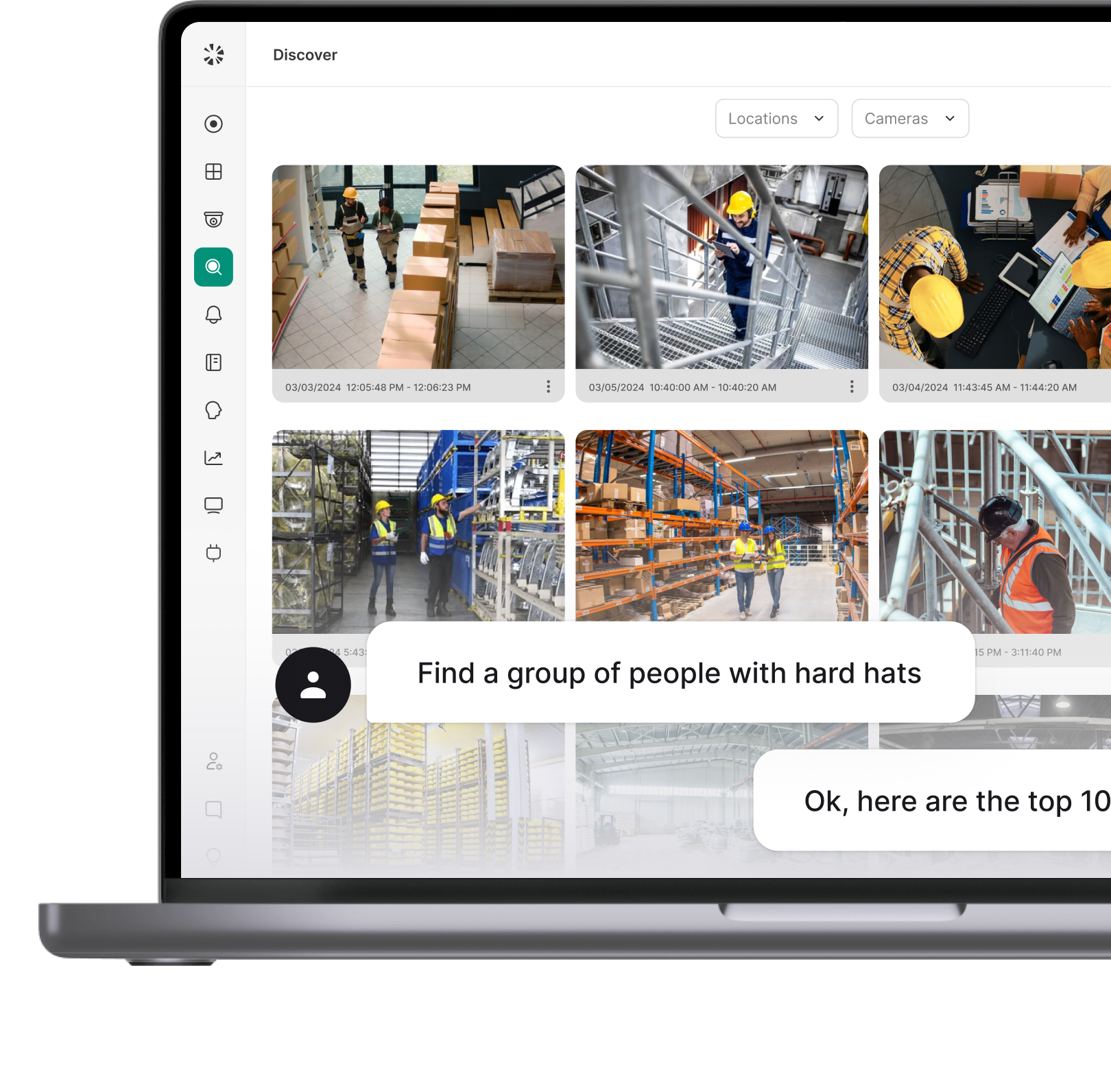
- Guest records linked to camera footage from the moment of check-in for visual verification and incident review
- Works with the ONVIF-compatible IP cameras already installed, so consolidating doesn't require replacing your video infrastructure
- Returning-guest recognition, so repeat visitors don't re-enter everything from scratch
- Guest log searchable across guest name, email, phone, company, and host name, with filters for date range, device, and status
- One web dashboard for guest logs, kiosk status, blacklist, and screening policy across every entrance and every site, licensed per site with unlimited iPads and unlimited admin and regular users at that site
Limitations, stated plainly:
Guest check-in does not issue a door credential or unlock a door. Guest Management and Coram Access Control run on the same platform and share the same dashboard, login, users, and locations, but the two are not wired together at the point of check-in. The workflow is: guest checks in, host is notified by email and SMS, host comes to the lobby to escort or unlock. If provisioning a door credential at check-in is a hard requirement, Verkada Guest does that inside a Verkada environment and you should weigh it seriously.
Blacklist matching runs on email address, phone number, or ID document hash — not on name. If your Proxyclick watchlist is name-based, budget time to rebuild it around identifiers, and note there's no CSV import, so entries go in by hand.
Other gaps worth knowing: no Microsoft 365 or Entra ID host directory sync, no CSV export of the guest log, no per-kiosk configuration, and no multi-language screens. The kiosk is English-only, and all iPads in an organisation share one configuration. Badge design isn't customizable, and there's no plastic or hard-badge printing. The guest log searches on name, email, phone, company and host, but not on document number.
Guest Management doesn't detect tailgating or multiple people entering on one check-in. Coram does offer tailgating detection, but at the door through Access Control rather than at the kiosk. Criminal screening is optimised for US jurisdictions; OFAC, sanctions-list, and international criminal records are scoped separately rather than included by default.
Roll call and mustering workflows sit in Coram Emergency Management rather than Guest Management. The two share a platform, so during an incident your team can see who checked in and is still on site, but if formal evacuation roll calls driven by the visitor log are a requirement, scope that against EMS before you switch.
The kiosk requires an iPad running iOS 26 or later, iPad only. Older tablets aren't supported, so if you're planning to reuse the hardware currently running Proxyclick, check OS eligibility first. Coram doesn't sell iPad hardware. Exactly one camera links to each iPad — a fixed server-side limit, not a setting you can raise.
Coram doesn't publish visitor management price tiers online, so a number involves a conversation rather than the self-serve pricing Sign In App or The Receptionist list publicly. And Guest Management is one module within a broader security platform rather than a standalone product, so organizations that only want a lobby check-in tool may find it more platform than they need. That said, it doesn't require Coram cameras or Coram access control to run.
Where Coram wins: on screening breadth against registry-only competitors when you turn it on and collect ID, on data posture for regulated buyers, on offline reliability, on camera-agnosticism, and on site-based licensing when a building has more than one entrance.
2. Verkada Guest
The strongest security-platform alternative, if you're already invested in Verkada.
Verkada Guest is a visitor management module inside Verkada's Command platform, connecting check-in to the same cameras, access control, and alarms Verkada customers already run. Unlike Eptura Visitor, it isn't designed around workplace operations, which makes it one of the more compelling options for organizations already standardized on Verkada infrastructure.
Best for: Organizations using Verkada cameras and access control that want visitor management integrated into their existing security environment.
Key capabilities:
- Touchless check-in, photo capture, and badge printing
- Visitor activity linked to camera feeds and door events
- Remote door unlock from the Command platform, and temporary time-bound credentials provisioned at check-in
- Watchlist enforcement with instant host notifications
- K-12 integrations with Clever and ClassLink
Limitation: The platform delivers its full value only inside the Verkada ecosystem. Organizations with mixed camera and access control infrastructure won't get the same integration depth, and if you're not already on Verkada you're committing to their hardware before the visitor integration pays off. Pricing starts around $3,600 per site annually before hardware, which can exceed both pre-acquisition Proxyclick pricing and several other options on this list.
3. Envoy
The familiar workplace alternative with many of the same trade-offs.
Envoy is a workplace-experience platform that pairs visitor management with desk booking, meeting room scheduling, and delivery management. For many teams evaluating Proxyclick alternatives, Envoy feels like the easiest transition: both platforms prioritize visitor experience, support enterprise deployments, and extend beyond visitor management into workplace operations. If your goal is to replace Eptura Visitor with another polished workplace platform, Envoy is a natural shortlist.
Best for: Organizations leaving Proxyclick because of the Eptura transition, not because they need deeper physical security integration.
Key capabilities:
- Pre-registration, custom sign-in flows, NDA signing, and badge printing
- Emergency notifications and evacuation management
- Desk booking, meeting room scheduling, and delivery management
- Large integrations marketplace spanning Microsoft, Google, Slack, Okta, and SCIM
- Multi-site management from a single dashboard
Limitation: Envoy follows the same workplace-first model as Eptura Visitor. It's a pure guest product with no native cameras, no native access control, and no integrated incident review — access control runs through third-party partners, so IT still manages two vendor relationships to connect visitor activity to doors. Watchlist and blocklist screening typically comes through a third-party service rather than being the product's centre of gravity, and the security features that matter most to IT often sit in the highest tier. Envoy licenses per location, the same billing unit as most platforms here, so the comparison is a head-to-head on price and capability rather than licensing structure. Concede the UX polish; the differentiation is platform depth.
4. iLobby (FacilityOS)
The enterprise compliance choice when regulation, not convenience, drives the decision.
iLobby (FacilityOS) is a compliance-focused visitor and contractor management platform built for regulated industries like manufacturing, healthcare, and critical infrastructure. Not every team evaluating alternatives is looking for a lighter platform: some need stronger compliance, contractor governance, and audit workflows than Proxyclick was designed to provide. That's where iLobby stands out.
Best for: Manufacturing, critical infrastructure, healthcare, and government organizations where compliance, contractor management, and audit readiness are operational requirements.
Key capabilities:
- Visitor, contractor, delivery, and emergency management modules
- Compliance workflows, document signing, and audit trails
- Global denied-party and contractor compliance screening
- Centralized governance across multiple sites
- Built-in emergency management and evacuation tools
Limitation: iLobby solves compliance exceptionally well but introduces another enterprise platform with its own cost and complexity, and it runs on proprietary kiosk hardware rather than a standard iPad. It's also the one vendor on this list that licenses per kiosk rather than per site — publicly around $199 per month per kiosk on Visitor OS, escalating on the Enhanced and Enterprise tiers — so a building with a main lobby, a loading dock, and an employee entrance carries three licenses instead of one. Visitor records still operate separately from cameras and video, making it a strong compliance platform rather than the most integrated option here.
5. Sign In App / SwipedOn
The practical choice when simplicity matters more than platform depth.
Sign In App and SwipedOn are digital visitor sign-in platforms built for simple, affordable check-in rather than physical security integration. Not every Proxyclick replacement needs to be another enterprise platform, and many teams are simply reacting to post-acquisition pricing. Both platforms deliver straightforward visitor management, quick deployment, and predictable monthly pricing. Both now operate under the same parent company, Sign In Solutions, following a 2024 acquisition, and pricing across the two is converging toward a shared tier structure.
Best for: Organizations leaving Proxyclick because of pricing or platform complexity, where the goal is a dependable digital sign-in experience rather than a broader security platform.
Key capabilities:
- Visitor check-in, badge printing, photo capture, and NDA signing
- Host notifications via email, SMS, Slack, and Microsoft Teams
- Employee in/out tracking and evacuation lists
- Active Directory sync and basic compliance reporting
- SwipedOn advertises unlimited devices per site
Limitation: These platforms are designed as digital logbooks, not physical security systems. Visitor records don't connect to cameras or door events, making them a cost-effective choice but not the strongest option for organizations prioritizing security integration.
6. The Receptionist
A focused visitor platform that doesn't try to be anything else.
The Receptionist is an iPad-based visitor management platform focused on a polished front-desk check-in experience for small to mid-sized offices. Some teams don't need another enterprise platform: they need a system that's easy to deploy, easy to manage, and predictable to budget. The Receptionist strips away workplace-suite complexity and focuses on minimal administration.
Best for: Small to mid-sized organizations leaving Proxyclick because of platform complexity or pricing, where a straightforward visitor experience is the priority.
Key capabilities:
- iPad-based visitor check-in with badge printing and photo capture
- NDA signing and exportable visitor logs
- Two-way host messaging from the kiosk
- Broadcast notifications to everyone currently checked in
- Transparent pricing starting at $60 per location per month
Limitation: The Receptionist is a standalone lobby visitor management system. It doesn't connect visitor activity to cameras, access control, or incident investigations. For organizations trying to strengthen physical security rather than simplify check-in, it handles the front desk well but not the broader security workflow.
7. HID SafeVisitor / SAFE
Built for identity verification first, visitor management second.
HID SafeVisitor is an identity verification and screening platform that manages visitor credentials, background checks, and compliance documentation for regulated facilities. Among the platforms here, it stands apart by focusing on who a visitor is before they enter the building. Rather than expanding into workplace operations like Eptura Visitor, HID prioritizes identity verification, background screening, and credential management for organizations where compliance and controlled access are the primary requirements.
Best for: Healthcare, government, financial services, and other regulated facilities where identity verification and compliance outweigh visitor experience.
Key capabilities:
- Background screening and sex offender registry checks
- Credential issuance using RFID, QR codes, and temporary badges
- Compliance documentation for regulated industries
- Integration with HID access control systems
- Contractor and recurring visitor verification workflows
Limitation: HID is purpose-built for identity assurance, not unified physical security. Visitor records remain separate from camera footage and incident workflows, making it a specialist platform rather than the most complete option on this list. If your priority is stronger screening, it's one of the best choices. If it's connecting visitor management to cameras and doors, you'll need a broader security platform.
How to Choose the Right Proxyclick Alternative
Each scenario below maps to a specific reason teams end up looking for a Proxyclick alternative. Find the one that matches your situation.
Scenario 1: Visitor Records Need to Live With Your Cameras and Doors
Two platforms here run visitor management inside a security platform rather than beside one, and they trade off differently.
Coram works with the ONVIF-compatible IP cameras you already own, links every check-in to footage from that entrance, and puts guest activity in the same dashboard, login, and audit trail as its video and access control products. There's no camera or door hardware commitment required to start. What it doesn't do is issue a door credential at check-in.
Verkada Guest does issue that credential and supports remote unlock from Command, but only inside the Verkada ecosystem. If you're already running Verkada cameras and access control, that's the natural path. If you're not, you're buying a hardware platform before the visitor integration delivers its value.
So the question is which half of the gap matters more: a unified record and investigation trail on the infrastructure you already own, or automated door provisioning on infrastructure you'd need to adopt.
Scenario 2: Screening Depth Is the Real Requirement
If your concern is who is walking through the door rather than how the lobby feels, ask each vendor to name the databases they query rather than accepting "background check" as an answer. Most visitor systems in K-12 and mid-market check the public sex offender registry and stop there.
Coram covers state criminal repositories, corrections and court records, arrest and warrant data, and sex-offender registries across all 50 US states, DC and territories — the registry is one category inside a broader result rather than the whole check. It is not a live county-court search, so treat it as a broad database sweep rather than a real-time court lookup. Screening is off by default and runs off a scanned ID, which means it only covers guests you actually ask for identification. On-device document verification confirms the name matches and the ID isn't expired, and no document image or full document number is retained. HID SafeVisitor is the other strong answer here, built around identity assurance and credential management for regulated facilities. Coram's search is US-only; OFAC, sanctions, and international records are scoped separately.
Scenario 3: The Pricing Shocked You, but the Platform Itself Was Right
If post-acquisition pricing or the shift to Eptura Workplace is the main concern, but the workplace-first approach still fits your operations, Envoy is the closest alternative. If your facilities team actively uses workplace features beyond visitor management, staying with Eptura Visitor may still be the right call.
Scenario 4: Your Facility Is Regulated and Needs Genuine Compliance Depth
iLobby is the honest answer when the switch is about needing more compliance infrastructure, contractor workflows, regulatory documentation, and audit trails, not less platform complexity. It's heavier and more expensive than most options here, and its per-kiosk licensing compounds in multi-entrance buildings, but it's the only platform on this list built specifically for that level of compliance depth in manufacturing and critical infrastructure environments.
Scenario 5: You Just Need a Simpler, Cheaper Logbook
Sign In App, SwipedOn, or The Receptionist. All three replace the Proxyclick check-in layer cleanly at a fraction of the post-acquisition cost. None connect to cameras or access control, and for teams where check-in is an administrative function rather than a security one, that's the right trade-off.
The Bottom Line on Proxyclick Alternatives
The visitor management decision comes down to whether the front desk operates as part of your security system or sits next to it. Eptura Visitor, Envoy, and most of the platforms on this list keep it next to it: a separate log, a separate login, a separate vendor, and a manual cross-reference every time something goes wrong.
Coram runs guest check-in inside the same platform that manages cameras and access control. A check-in, the camera footage from that entrance, and the door activity around it share one dashboard, one user directory, and one audit trail, so an investigation is a single search rather than three exports. Optional criminal screening goes past the sex-offender registry into state repositories, court and corrections records, and arrest and warrant data. Check-in itself doesn't unlock a door, so if automated door provisioning at the kiosk is central to your workflow, weigh that before you shortlist.
If closing the gap between the front desk and the security stack is what's driving your search, schedule a demo to see how Coram compares against your current deployment.




.png)