Most emergency platforms still assume that sending the alert is the hardest part.
It isn’t.
For teams managing dozens or hundreds of locations, the real friction shows up after the message goes out. Who actually saw it. What’s happening on the ground. Which sites are impacted. What actions are already in motion. And how quickly leaders can move from awareness to coordinated response.
That gap is why many organizations feel stuck. The alerts work. The incidents don’t resolve any faster.
As environments become more distributed and incidents more dynamic, emergency management has quietly shifted from broadcasting messages to orchestrating response. Platforms built around mass notification and critical event management weren’t designed for this reality. Newer systems are.
This comparison breaks down how AlertMedia, Everbridge, and Coram approach emergency management at a structural level where traditional platforms still excel, where they introduce operational drag, and how modern, cloud-first systems are reshaping visibility, automation, and scalability during real incidents.
If you’re weighing long-term fit instead of just alert speed, you’re in the right place. Read on to know more.
TL;DR
- AlertMedia is best when your top priority is fast, reliable, multi-channel communication to large, distributed teams.
- Everbridge is built for organizations that need strict governance, structured escalation, and audit-ready incident management.
- Coram focuses on real-time detection, visual verification, and live coordination within a single operational system.
- The biggest differences appear after alerts are sent—in visibility, coordination, and how response scales across locations.
- The right platform depends on whether your biggest risk is reach, control, or real-time situational awareness during live incidents.
What Emergency Management Platforms are Designed To Do?
Emergency management platforms are designed to orchestrate response, alongwith delivering alerts. Their role is to help organizations manage data, people, tasks, and communications while incidents are actively unfolding.
In practice, that means supporting:
- Situational awareness as conditions change
- Coordinated response across teams and locations
- Clear ownership of actions during incidents
- Recovery and post-incident accountability
These platforms were originally built for government agencies, utilities, and transportation organizations managing large public safety events. Today, enterprises, campuses, healthcare systems, and distributed organizations face similar coordination challenges often with fewer dedicated response resources and more complex environments.
As a result, platforms are no longer evaluated only on notification speed. They’re evaluated on how well they:
- Track evolving conditions in real time
- Connect communication to execution
- Reduce manual coordination during incidents
- Scale response across internal and external stakeholders
All platforms don’t approach this problem the same way. Some remain communication-centric. Others treat orchestration, visibility, and automation as the foundation. That distinction drives the real differences between AlertMedia, Everbridge, and Coram.
How AlertMedia vs Everbridge vs Coram Approach Emergency Management
While all three platforms support emergency response, they differ in how they handle visibility, coordination, and scale during live incidents. The distinctions below explain why.
AlertMedia Overview
AlertMedia is primarily an emergency communication and risk intelligence platform built around fast, multi-channel alerting. Its core strength lies in helping organizations notify employees quickly through SMS, voice, email, and mobile apps, supported by continuous threat monitoring and location-based targeting.
The platform is well suited for teams that prioritize reliable outbound communication, acknowledgment tracking, and employee safety notifications across common emergency scenarios.
AlertMedia focuses heavily on ease of use and operational consistency for alerting workflows, with threat intelligence feeding into when and how alerts are triggered.
Where AlertMedia shows limits is beyond notification. Incident coordination, live operational visibility, and response workflows typically rely on manual processes or external systems once alerts are sent.
Everbridge Overview
Everbridge is a critical event management (CEM) platform designed to support large, complex organizations managing a wide range of physical and operational risks. Its model emphasizes early threat detection, broad notification reach, and post-incident analysis across global operations.
The platform supports extensive use cases from public safety and infrastructure resilience to enterprise business continuity using risk intelligence, automation rules, and analytics layered across the event lifecycle.
Everbridge is often chosen by organizations that require formalized processes, reporting depth, and multi-stakeholder coordination at scale.
That breadth comes with operational complexity. Configuration, administration, and day-to-day use often require dedicated teams, making the platform better suited for organizations with mature emergency management functions rather than lean or rapidly scaling teams.
Coram Overview
Coram is a cloud-first emergency management platform built around real-time visibility and live incident coordination rather than notification alone. Its approach centers on detecting incidents, triggering alerts, and managing response inside a single operational environment.
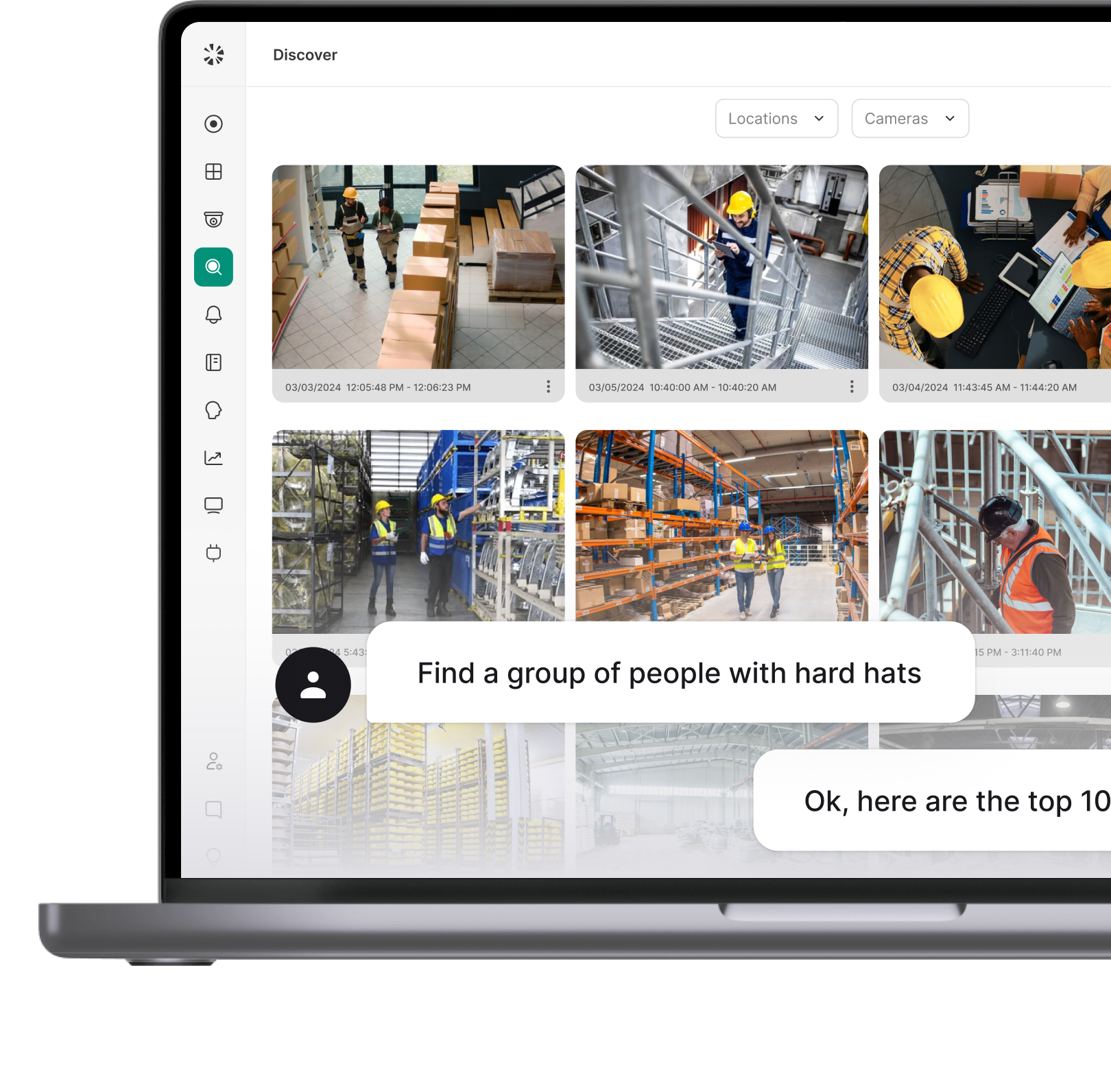
Unlike traditional platforms, Coram connects alerts directly to live context including cameras, access control, chat, and location data so teams can verify incidents and coordinate actions as they unfold.
Response workflows, communication, and resolution are handled within the same system, reducing handoffs and manual escalation.
Coram is designed for organizations managing multiple sites, campuses, or distributed environments that need fast deployment, lower administrative overhead, and operational clarity during active incidents alongwith message delivery.
AlertMedia vs Everbridge vs Coram: Feature Comparison Table
While all three platforms support emergency response, they differ in where they focus during a live incident. AlertMedia and Everbridge are built primarily around risk intelligence and mass communication, with response coordination layered on top.
Coram approaches emergency management from the opposite direction starting with real-time visibility and live coordination, then triggering communication as part of the response.
The table below compares how each platform handles core emergency management capabilities in practice.
Communication and Alerting Workflows During Live Incidents
How a platform behaves in the first few minutes of an incident matters more than how many channels it supports.
When an incident hits, three questions decide whether response stays clean or turns chaotic: What triggers the alert, who gets notified, and where coordination actually happens.
The workflows below break down how each platform handles those moments in practice.
AlertMedia
Workflow in 30 seconds: AlertMedia is built for fast outbound communication with clear targeting, reliable multi-channel delivery, and response tracking.
Trigger: Most incidents start from a human decision or a risk signal. AlertMedia’s threat intelligence and monitoring help teams identify what’s happening and decide when to initiate outreach.
Notify: Alerts go out across SMS, voice, email, mobile app, desktop alerts, and collaboration channels. Pre-built templates speed up message creation, and the AI assistant supports drafting, translation, and channel-specific optimization when time is tight.
Coordinate: Two-way messaging captures safety confirmations and help requests, and admins can track who responded in real time. AlertMedia can centralize updates using incident pages, but active coordination and task execution typically continue in other systems or in human-led workflows.
Fit and strain: AlertMedia performs well when the priority is fast, targeted communications with strong response visibility. It can feel limited when teams need a single place to verify events, coordinate responders, and manage actions during an evolving incident.
Everbridge
Workflow in 30 seconds: Everbridge is built for structured incident communications at enterprise scale, with templated workflows, escalation logic, and broad reach.
Trigger: Events may start from operators, predefined incident templates, or risk intelligence inputs. The platform supports early awareness through risk intelligence and can feed alert workflows when threat levels cross thresholds.
Notify: Messages are delivered across multiple channels with two-way acknowledgment and escalation paths. Everbridge’s approach is designed to reduce missed notifications by routing communications through configured contact paths and confirmation rules.
Coordinate: Everbridge emphasizes orchestration through dashboards and command-style visibility. Teams can standardize incident communications using templates and workflows, and the platform supports consistent execution when multiple groups need to be mobilized with clear roles and escalation timing.
Fit and strain: Everbridge is a strong fit for organizations that require formalized workflows, auditability, and large-scale mobilization. It can feel heavy when teams want quick rollout, low admin overhead, and simple day-to-day operation across many sites.
Coram
Workflow in 30 seconds: Coram is built around real-time detection and live coordination, where alerts and response happen inside the same system with visual context.
Trigger: Coram can trigger incidents from real-time video analytics, sensors, and panic buttons. That reduces reliance on someone noticing an issue and manually drafting an alert before response begins.
Notify: Alerts can be delivered via SMS, email, and push notifications, with high-priority options that bypass Do Not Disturb. Messages can be tied to location, role, and scenario, and can include live camera context so responders see what’s happening immediately.
Coordinate: Response happens inside a shared command environment with chat, live video access, and centralized updates. Coram can also trigger automated actions like lockdowns through access control integrations. All actions and communications are logged with timestamps and supporting evidence, which simplifies review after the incident.
Fit and strain: Coram fits teams that want one operational layer for detection, alerting, coordination, and post-incident evidence, especially across multi-site environments. It’s less aligned with buyers who only need mass notification without video-led verification or integrated response workflows.
The real difference between these workflows:
All three platforms can send alerts. The difference is what happens next.
AlertMedia and Everbridge place the center of gravity on communication and escalation, with coordination layered on top. Coram ties alerting to live verification and response execution, which changes how quickly teams move from notification to action, especially when incidents evolve minute by minute.
AlertMedia vs Everbridge vs Coram Multi-Site Scalability
Scaling emergency management is not just about reaching more people. It’s about how fast new sites come online, how much configuration overhead grows with each location, and whether response workflows stay consistent without becoming rigid.
This section looks at how each platform behaves as organizations expand from a handful of sites to dozens or hundreds.
AlertMedia: Scaling Communication Across Locations
Expansion happens through directory syncs, dynamic groups, and location-based targeting. Adding a site is primarily a data exercise, not a technical deployment.
Message delivery remains reliable across regions. Targeting improves as data quality improves.
What changes as you scale: Incident handling after alerts depends heavily on local teams and external tools. As locations increase, response consistency becomes a process challenge rather than a platform-enforced one.
Scaling reality: AlertMedia scales communication reach cleanly, but operational coordination scales unevenly unless internal standards are tightly managed.
Everbridge: Enterprise-Grade Scale With Central Control
Sites are added through structured configuration: incident templates, escalation paths, roles, and permissions. The model assumes central ownership.
Response logic, escalation timing, and auditability remain uniform across regions. Governance does not dilute with growth.
What changes as you scale: Administrative effort increases with every location. Training, configuration upkeep, and platform ownership become non-negotiable.
Scaling reality: Everbridge scales best when organizations want command-and-control consistency, even if that consistency comes with operational weight.
Coram: Scaling Through Visibility and Automation
Sites are added by connecting existing cameras, access control, and directories into a shared cloud environment. No new hardware footprint is required.
Detection, alerting, verification, and coordination all live in the same interface. Response workflows do not fragment as locations increase.
What changes as you scale: Visibility expands rather than complexity. Central teams gain more context, not more configuration.
Scaling reality: Coram scales through automation and shared visibility, reducing dependence on local interpretation during live incidents.
Where scale actually diverges:
The takeaway buyers usually miss
At low scale, all three platforms perform similarly. At high scale, they diverge sharply. One expands communication reach, one enforces centralized control, and one collapses detection and response into a single operational layer.
The right choice depends on whether scale introduces more coordination, more governance, or more visibility gaps in your environment.
Which Platform Is the Right Fit?
Most teams try to choose an emergency management platform by comparing features. That approach breaks down fast, because all three platforms can send alerts, track acknowledgments, and escalate incidents. The real difference shows up only when pressure is high and multiple things go wrong at once.
Instead of asking “what features exist”, the better question is “what kind of failure your organization is trying to prevent”.
Decision lens: Your primary failure risk
Some organizations fail because messages don’t reach people fast enough. Others fail because too many systems are involved once the alert is sent. Others fail because leaders can’t see what’s actually happening while an incident unfolds.
Each platform is built to prevent a different type of failure.
When AlertMedia is the right fit
AlertMedia fits organizations where the biggest risk is communication delay or message reach. If your priority is making sure employees receive clear, targeted alerts quickly across regions, time zones, and work environments, this platform does that reliably.
It works best when local teams already know how to act once notified, and the organization doesn’t require a centralized operational command layer during incidents. The platform strengthens communication discipline, but assumes response coordination happens elsewhere.
When Everbridge is the right fit
Everbridge fits organizations where the biggest risk is loss of control or auditability. If incidents must follow defined escalation paths, approvals, and documented workflows, especially in regulated or public-sector environments, this platform enforces that structure.
It performs best when a central team owns emergency management as a formal function. The tradeoff is complexity: scale comes with configuration effort, training, and operational ownership that not every organization wants to maintain.
When Coram is the right fit
Coram fits organizations where the biggest risk is lack of real-time visibility and coordination. If leaders need to verify incidents visually, coordinate responses live, and act across sites without switching tools, Coram brings those steps into one system.
It works especially well in environments where seconds matter and detection must happen before someone manually triggers an alert. Instead of relying on human reporting alone, response begins with automated signals and shared context.
A reality check most buyers overlook
If your incidents are mostly informational, almost any platform will feel adequate. The differences show up when incidents are physical, fast-moving, or involve multiple teams acting at once. That’s where the response model matters more than alert speed alone.
So the decision comes down to what you’re actually trying to prevent when things go wrong.
- If you’re looking for fast, targeted communication and reliable message delivery across locations, go with AlertMedia.
- If you’re looking for strict control, defined escalation paths, and audit-ready incident management, go with Everbridge.
- If you’re looking for real-time visibility, automated detection, and live coordination across sites, go with Coram.
Where the Differences Actually Matter
AlertMedia, Everbridge, and Coram all solve the same problem at a surface level. The difference is how they solve it once an incident is already in motion.
Some platforms prioritize making sure messages get out fast. Others focus on enforcing structure and accountability as incidents unfold.
Coram approaches the problem differently by combining detection, alerting, and live coordination into a single operational layer, reducing the gap between knowing something is wrong and acting on it.
The right choice depends less on feature checklists and more on how your organization actually experiences emergencies.
If response breaks down at the point of communication, coordination, or visibility, that failure pattern should drive the decision.
Teams that align their platform to their real-world incident behavior tend to gain confidence over time. Teams that don’t usually discover the mismatch during their first serious event when there’s no room to adapt.
This comparison exists to help you make that decision before that moment arrives.




.png)