Envoy is good at what it is: a polished front-desk experience that makes visitor check-in feel professional.
But when you need to know who's in the building, pull footage after something happens, or lock down doors fast, a check-in app starts feeling like a gap in your security stack rather than part of it.
That's usually when teams start looking for an Envoy alternative. Envoy's modular pricing compounds fast: Visitors Premium starts at $4,344 to $4,740 per location per year, and Reservations and Emergency Notifications stack on top of that. Add features you don't use, like desk booking, parking, and workplace maps, and the pricing conversation with your budget holder gets harder every renewal cycle.
If you're a facilities or physical security manager who needs visitor management tied to cameras and door access, not just a check-in log, Coram is the strongest Envoy alternative.
This guide covers seven Envoy alternatives organized by what they actually do well, who they're built for, and where each one falls short, so you can shortlist the right option for your environment.
Why Teams Look for an Envoy Alternative and How to Evaluate One
Four patterns show up again and again when security and facilities teams start evaluating a move away from Envoy.
Pricing Scales Quickly Across Locations and Modules
What looks reasonable at one location can become expensive at scale. Envoy prices most modules separately:
- Visitors Premium starts at $4,344 per location annually,
- Deliveries at $3,000 per location,
- Reservations at $60 per resource,
- Screens at $144 per device, and
- Emergency Notifications at $24 per user.
Multiply that across multiple sites, meeting rooms, and users, and the total cost can look very different from the initial evaluation. It's one of the most common themes in discussions about Envoy visitor management pricing, particularly among multi-location organizations.
Workplace Features You May Not Need
Envoy has expanded well beyond visitor management into workplace operations, covering desk booking, room scheduling, parking management, emergency notifications, and space planning.
For workplace and facilities teams, that breadth can be valuable. For security teams focused on lobby operations, visitor screening, incident response, and evacuations, many of those features add cost without addressing the core security use case.
Visitor Data Lives Separately from Cameras and Access Control
A visitor record confirms someone checked in. It doesn't automatically connect that visit to camera footage, door activity, or incident investigations.
When a security team needs to verify where a visitor went, what happened during a visit, or which doors were accessed, they often end up switching between multiple systems. That separation becomes most visible when an incident report needs to be completed quickly and accurately.
Limited Physical Security Depth
Features such as SSO, blocklist screening, ID scanning, access control integrations, and compliance-focused workflows are generally reserved for higher-tier plans.
For organizations that use visitor management primarily as a security tool, the capabilities that matter most often come with a significant price increase. At larger deployments, operational friction and integration limitations can become a bigger concern than the check-in experience itself.
How to Evaluate Envoy Alternatives
These six questions cut through vendor marketing and get at what actually matters for a security-first buyer.
- Security Integration: Does visitor check-in connect to live cameras and door access, or does it remain a standalone record? The strongest Envoy competitors tie visitor activity directly to video footage and access events, giving security teams a complete picture of what happened, not just who signed in.
- Incident and Audit Value: When an incident occurs, how quickly can you reconstruct a visitor's time on-site? If staff have to switch between visitor records, camera systems, and access control logs, the workflow isn't truly integrated. The best platforms bring those records together in a single audit trail.
- Evacuation and Mustering: Can you generate an accurate, real-time roster of everyone currently on-site in seconds? For security and facilities teams, evacuation accountability matters far more than a polished lobby experience.
- Pricing Model: One of the most common concerns around Envoy visitor management pricing is how costs scale across locations, users, and add-on modules. Before comparing vendors, model the total cost at your expected site count, including features you may need later, not just the entry-tier package.
- Migration Effort: Ask whether the platform supports data migration from the Envoy visitor management system, whether existing kiosk hardware can be reused, and how much configuration is required before go-live. Migration complexity often becomes clear only after the switch begins.
- Scope Match: The most important question is also the simplest: are you buying a visitor management tool, a workplace platform, or a security platform? The right Envoy alternative depends on which problem you're actually trying to solve.
The Decision Framing
Strip away the modules and the marketing, and the choice comes down to one fork.
- If your priority is physical security (cameras, doors, incident records, evacuations), you need a platform built around that.
- If your priority is workplace experience (desk booking, hybrid coordination, occupancy data), Envoy may still be the right fit, or there are lighter alternatives that do it cheaper.
Envoy Alternatives
Here's how the seven alternatives stack up before the full breakdown below.
1. Coram AI
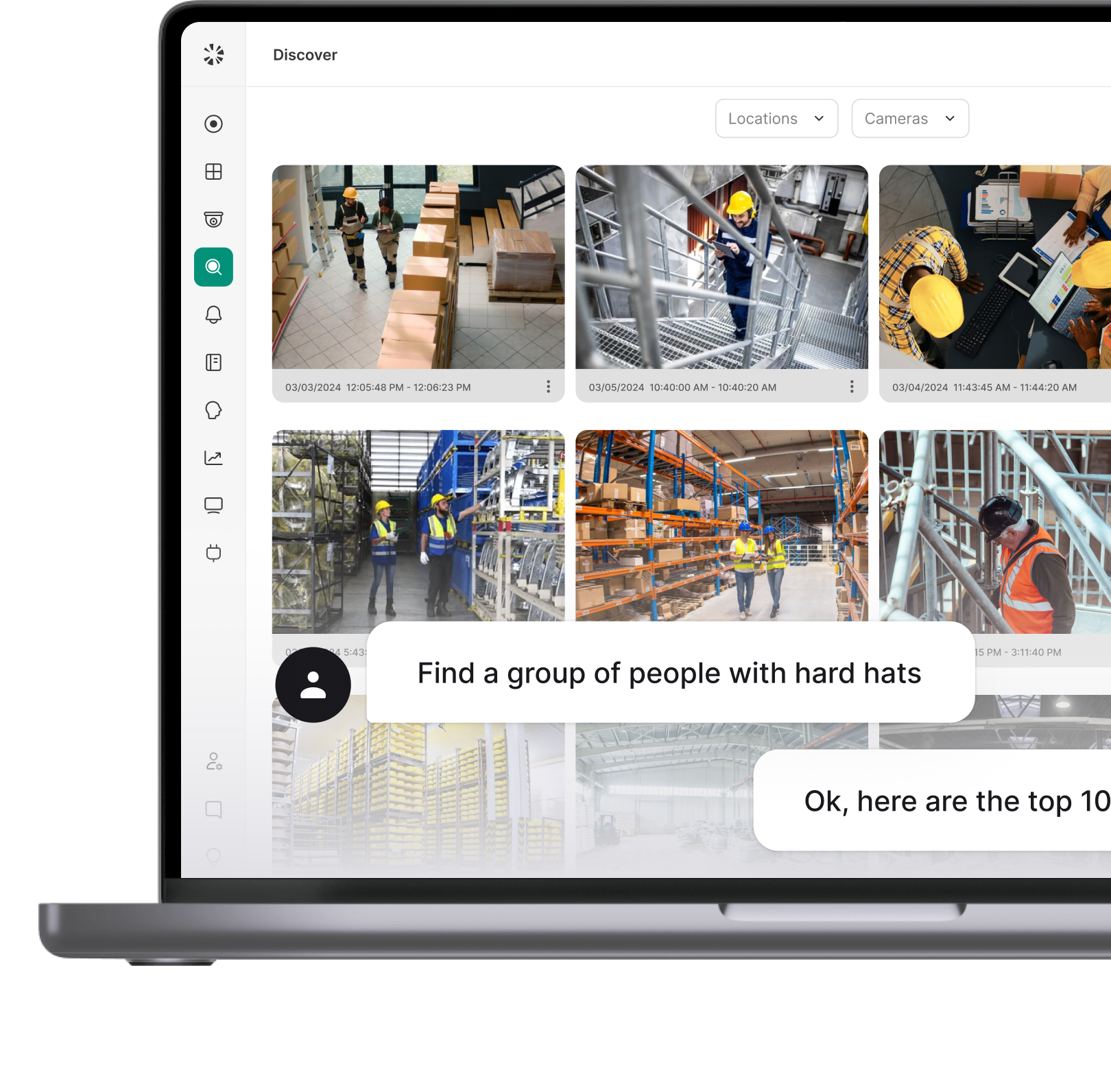
Coram is an AI-native security platform that adds visitor check-in, screening, and badging to the same system running your cameras and access control.
Visitor activity isn't logged and forgotten. Every check-in connects directly to live video and the doors a visitor can open, so a security team reviewing an incident pulls one record instead of three. That's the core difference from Envoy: Envoy treats visitor management as its own product line, sold separately from any video or access control system you already run. Coram treats it as one layer of a platform that also handles AI video surveillance, cloud access control, and emergency management, accessible from a single dashboard across every site. For a security-first buyer, that's the gap Envoy can't close without a separate integration project.
Best for: Facilities and security teams that need visitor activity tied directly to camera footage and door access, not a standalone log.
Strengths:
- Visitor check-in, kiosk, and pre-registration run through the same platform as camera and door management, so there's nothing extra to configure.
- Auto-issued, time-bound access credentials control exactly which doors a visitor can open, and those credentials expire automatically when the visit ends.
- Visitor events link directly to camera footage, so verifying what happened during a visit takes one search instead of cross-referencing two systems.
- Exportable, time-stamped audit logs cover check-in, access, and footage together for incident review and compliance reporting.
- Multi-site visibility runs from one dashboard, useful for organizations managing visitor activity across several locations.
- Works with existing iPad or Android kiosk hardware, so there's no forced hardware swap to get started.
Limitations:
- Built to work best as part of the full platform alongside video and access control; teams that want a lightweight, standalone check-in tool without that broader integration may find it more than they need.
- Kiosk-level protections like password- or network-locked views aren't yet available.
- Pricing isn't published, so budget-holders need a sales conversation to model exact costs across sites.
Pricing: Contact Coram for pricing.
2. Verkada Guest
Verkada Guest is visitor management built natively into the Verkada security platform, connecting check-in directly to Verkada cameras and access control.
Verkada Guest is the closest security-platform alternative to Coram on this list. Visitor check-in connects directly to Verkada cameras and access control, and visitor activity shows up in the same Command dashboard that runs the rest of the security stack, the same one-system approach Coram takes. The difference from Coram is hardware. Coram works with cameras and access control you already have installed. Verkada Guest only delivers that same connected experience if you're already running Verkada hardware, or willing to invest in it. For organizations with mixed or existing non-Verkada cameras, that's a meaningfully different starting cost than Coram's approach.
Best for: Teams already running Verkada cameras and access control who want visitor management natively connected to that existing investment.
Strengths:
- Touchless check-in, photo capture, and badge printing cover the core visitor workflow without added hardware.
- Visitor footage is viewable directly from the visitor log, so reviewing what a guest did during a visit doesn't require switching systems.
- Hosts and security teams can remotely unlock doors for specific guests from inside the same dashboard.
- Watchlist enforcement and host notifications run automatically at check-in.
- K-12 deployments integrate with Clever and ClassLink for guardian verification and roster management, a notable advantage for school districts.
Limitations:
- Visitor management and video correlation are tightly coupled to Verkada hardware, so organizations without it need to invest in the full ecosystem before getting the connected experience.
- Pricing starts around $3,600 per site annually before factoring in the required camera and access control hardware.
- Mixed or existing non-Verkada camera fleets don't get the same native integration Coram offers out of the box.
Pricing: Starting around $3,600 per site annually, plus required Verkada hardware.
3. Sign In App / SwipedOn
Sign In App and SwipedOn are cloud-based digital sign-in tools built for simple, budget-conscious visitor logging without camera or access control integration.
Not every switch away from Envoy is about security integration. Some teams want a cleaner, cheaper sign-in tool without modular pricing or iPad-only hardware dependency, and Sign In App and SwipedOn solve exactly that problem. Both are now part of Sign In Solutions, alongside The Receptionist, with pricing aligned across all three products. Where they differ from Envoy is cost and simplicity, not security depth: there's no camera or access control tie-in, so if the reason you're evaluating alternatives is that visitor data sits in a silo from your security stack, switching here doesn't close that gap. It replaces one logbook with a better, cheaper one.
Best for: Offices where visitor check-in is administrative rather than a security function.
Strengths:
- Visitor sign-in, photo capture, badge printing, an evacuation list, and AD sync cover the core workflow, with same-day setup for most offices.
- Host notifications go out via email, SMS, Slack, or Teams.
- Employee in/out tracking runs alongside visitor management in the same system.
- Compliance basics, including NDA signing, digital agreements, and audit logs, are built in.
- Migration from Envoy is straightforward since both are cloud-based with minimal hardware dependency.
Limitations:
- Neither platform connects visitor data to cameras or access control systems.
- Security teams that need to reconstruct a visitor's footprint during an incident still have to cross-reference a separate camera or access system.
- Feature depth beyond check-in, like workplace operations or AI-driven analytics, is limited compared to broader platforms.
Pricing: Tiered plans, generally well below Envoy's Premium tier.
4. Eptura Visitor (formerly Proxyclick)
Eptura Visitor, formerly Proxyclick, is an enterprise visitor management platform built for deep compliance workflows and multi-language, multi-site deployments.
Eptura Visitor, acquired from Proxyclick by Condeco, is the closest direct competitor to Envoy on workplace and regulatory features. It's built for organizations that need deeper compliance, more workflow customization, and multi-language support across global sites, depth Envoy doesn't match at the same tier. It still carries the same workplace-experience focus a security-first switcher may be trying to leave, though. Visitor data lives separately from cameras here, just as it does in Envoy, so the gap that pushes most security teams toward alternatives in the first place doesn't close with this switch.
Best for: Large enterprises that need compliance depth and multi-language support more than camera or access control integration.
Strengths:
- Visitor and employee data syncs with access control systems, issues unique QR codes for condition-based access, and tracks real-time building occupancy.
- Watchlist screening and ID verification are built into the core workflow.
- 30+ language support covers international deployments that Envoy doesn't address as well.
- A visual workflow builder handles complex visitor types and contractor flows.
- Emergency management and evacuation tools are included.
- Hosted on Microsoft Azure with regional data hosting available for organizations with data residency requirements.
Limitations:
- Pricing increased significantly after the Condeco acquisition, and some users have reported looking for alternatives rather than accepting the new rates.
- Visitor data still lives separately from cameras and access control, the same structural gap Envoy has.
- Configuration complexity is higher than lighter alternatives, given the workflow depth.
Pricing: Custom, sales-led pricing.
5. Greetly
Greetly is a fully white-labeled digital receptionist platform built for teams that want customization and a lower price than Envoy.
Greetly's core argument is customization and price. It's fully white-labeled, runs on both iPad and Android, and is more flexible than Envoy's iPad-only kiosk setup, starting at a fraction of Envoy's Premium tier cost. DHL, the Dallas Cowboys, and the US Air Force use it, and G2 named it Best ROI in its category. Where it falls short of Coram and Verkada Guest is security depth. Greetly handles the front-desk experience well, but camera and access control integration aren't part of what it does.
Best for: Offices that want a professional, fully branded check-in experience with strong customization, where security platform integration isn't the primary requirement.
Strengths:
- Unlimited users, check-ins, and notifications are included on every plan.
- Visitor self-check-in, badge printing, NDA and waiver e-signatures, photo capture, and evacuation notifications cover the core security-adjacent workflow.
- Host notifications go out via text, email, Slack, Teams, Google Chat, or voice call, more channel flexibility than most competitors on this list.
- The platform is 100% white-labeled to match a company's brand.
- Multi-location management is included rather than gated to a higher tier.
Limitations:
- It's a visitor-only point tool, with no native camera integration and only basic third-party access control connections.
- Security teams that need visitor events linked to footage and door access won't get that from Greetly.
- Teams expecting Coram- or Verkada-level native security tie-in will need to look elsewhere.
Pricing: Starting at $64 per month.
6. HID SafeVisitor / SAFE
HID SafeVisitor is a screening-focused visitor management platform built on HID Global's credentialing background for regulated environments.
HID SafeVisitor comes from HID Global's credentialing heritage, which makes it the natural fit for environments where identity verification and background screening are the primary procurement drivers: healthcare, K-12, government, and high-security facilities among them. Where Envoy and most platforms on this list treat screening as a feature, HID treats it as the core product. That focus comes at the cost of breadth. The platform doesn't unify with video surveillance the way Coram or Verkada Guest do, and visitor records and camera footage still live in separate systems here, much like they do in Envoy.
Best for: Regulated environments where verifying who someone is before they enter matters more than what they do after check-in.
Strengths:
- Identity screening goes deep, including sex offender registry checks.
- Credential issuance ties directly to verified identity.
- Compliance documentation is built for regulated industries out of the box.
- Integration with HID access control hardware is native.
- Background check workflows cover contractors and recurring visitors.
Limitations:
- The platform doesn't unify with video surveillance, so visitor records and camera footage stay in separate systems.
- The UX is less modern than cloud-native alternatives on this list.
- Pricing is custom and enterprise-oriented, which can be slower to evaluate than transparently priced competitors.
Pricing: Custom, enterprise-oriented.
7. The Receptionist
The Receptionist is an iPad-based visitor check-in platform known for two-way host communication and straightforward setup.
The Receptionist has been running lobbies since 2013, handling check-in, badges, and host notifications cleanly. Its standout feature is two-way communication: hosts can reply to check-in alerts from their phone, and those replies appear directly on the kiosk screen, cutting down on lobby wait times in a way most platforms on this list don't replicate. Like Envoy, it's built for workplace experience rather than security integration. There's no camera or access-control tie-in here either, so if disconnected visitor data is the reason you're leaving Envoy, The Receptionist doesn't solve that problem. It's a better version of the same kind of tool.
Best for: Small to mid-sized offices that want a reliable, professionally designed check-in kiosk at a predictable cost.
Strengths:
- Hosts can reply to check-in alerts from their phone, with replies appearing on the kiosk screen in real time.
- Badge printing, photo capture, NDA signing, and exportable visitor logs cover the core workflow.
- Broadcast notifications can reach everyone currently checked in at once, useful for building-wide announcements.
- Pricing is transparent and tiered based on employee count, a contrast to Envoy's modular, per-feature billing.
- Customer support is consistently mentioned by name in reviews, a strong reputation for a platform at this price point.
Limitations:
- Hardware is iPad-only, with no Android or web kiosk option.
- It's a standalone log with no camera or access control integration, so it doesn't address the security gap that drives most switches away from Envoy.
- Feature scope stays narrow, badge and notification focused, without the workplace-operations breadth Envoy offers.
Pricing: Starting at $630 per year for the Core plan.
How to Choose Between These Envoy Alternatives
The right call depends on one distinction: whether you're replacing a workplace check-in tool or building visitor management into your physical security stack.
Scenario 1: If Visitor Data Needs to Connect to Cameras and Doors
Coram is the strongest Envoy alternative for this use case. It works with cameras already installed, ties visitor events to footage and door access, and doesn't require a hardware platform commitment before the integration works.
Verkada Guest does the same thing, but only if your building already runs Verkada cameras. If it doesn't, you're buying a hardware ecosystem, not just a visitor tool.
Scenario 2: If Pricing Is the Driver, Not Security Depth
Sign In App, SwipedOn, or The Receptionist: all three are clean, well-reviewed logbooks at a fraction of Envoy visitor management pricing. None of them connect to cameras or access control, and they don't try to. For offices where check-in is an administrative function rather than a security one, any of the three works.
Scenario 3: If You Want Envoy's Workplace-Experience Depth from a Different Vendor
Eptura Visitor offers stronger compliance workflows, 30+ language support, and better enterprise governance than Envoy. Pricing increased post-acquisition, so run the five-year comparison before committing.
Scenario 4: If Screening and Identity Verification Are the Primary Requirement
HID SafeVisitor is built for regulated environments, including K-12, healthcare, and government, where who someone is before they enter matters more than what they do after check-in.
Scenario 5: If Customization and Branding Matter More than Security Integration
Greetly works on both iPad and Android, more hardware flexibility than Envoy's iPad-only kiosk setup, and it's fully white-labeled starting at $64 per month.
The honest summary: If you're leaving Envoy because visitor data lives in a silo from your security stack, only Coram and Verkada Guest close that gap. Everything else on this list is a better or cheaper version of the same silo.
How Coram Approaches Visitor Management
If the reason you're evaluating Envoy alternatives is that visitor data lives in a separate system from your cameras and doors, the fix isn't a better check-in app. It's a platform where check-in, cameras, and access control operate together from the start.
That's what Coram is built around. Visitor management is one layer of a unified security platform that also runs AI video surveillance, cloud access control, and emergency management: one system, one log, one dashboard across every site you manage.
If that's the gap you're trying to close, it's worth seeing how Coram maps to your specific camera infrastructure and location count.
Request a demo built around your actual setup.




.png)