Most state school-security mandates written for public districts don't bind private schools, but private schools face requirements from four other directions: accreditation standards, insurance carriers, applicable state statutes, and any federal programs they accept. Funding eligibility is determined primarily by 501(c)(3) status and risk profile. Requirements vary significantly by state, so verify them with your state education department and legal counsel.
If you're the one figuring out private school security requirements, you've probably spent time reading guidance that wasn't written for you.
The federal safety frameworks reference "LEAs."
The grant eligibility tables say "school systems."
The state mandate summaries describe what public districts must do.
And somewhere in all of it, the question you actually need answered goes unanswered: "What applies to us?"
Private schools operate in a genuinely different regulatory environment than public districts. Most state mandates written for districts don't bind private schools. That's not a loophole; it's the structure. But it doesn't mean there are no requirements.
Accreditation bodies, insurance carriers, liability exposure, and the federal programs you may already participate in all create obligations that exist entirely independent of state education law.
This guide explains which requirements apply, how planning changes when there's no district office, bond funding, or dedicated safety staff behind you, and which funding pathways are built specifically for nonpublic schools, including some that public schools can't access.
What Safety Requirements Actually Apply to Private Schools
Unlike public school districts, private schools aren't automatically covered by every new state school safety law. Whether a requirement applies depends entirely on how the legislation defines the schools it governs. That's why private school security requirements can look very different from one state to another.
Four different sources typically shape what applies to your campus:
- State mandates,
- Accreditation and association standards,
- Insurance carrier requirements, and
- State-specific statutes such as Alyssa's Law or drill requirements.
Understanding which source creates the obligation is often more important than the requirement itself, because each operates differently.
State Mandates: Why Most Don't Apply, and Where They Do
Most security mandates set through state education law are written for public school districts, not private or nonpublic schools. Whether a requirement applies isn't determined by the topic; it's determined by who the legislation covers. That's why two schools in different states may face very different legal obligations for the same security issue.
Why Most State Mandates Don't Apply
Private schools operate under a different legal and governance structure than public school districts. As a result, many state education laws are drafted using terms such as:
- School district
- Local Education Agency (LEA)
- Public school
Unless the legislation specifically includes private or nonpublic schools within its definitions, those requirements generally do not extend beyond the public education system.
This is why private schools shouldn't assume a new school safety mandate automatically applies to them, or automatically ignore it either. The answer depends on the wording of the statute itself.
Where State Mandates Do Apply
Some states explicitly extend selected school safety requirements to private and nonpublic schools.
For example:
Illinois' School Safety Drill Act (105 ILCS 128) requires qualifying public and private schools to conduct emergency drills, maintain written records, and follow the state's prescribed drill schedule.
Other states have adopted similar approaches for specific requirements, such as behavioral threat assessment teams, emergency planning, or panic alert systems, by directly naming nonpublic schools within the legislation.
These examples show that school security law for nonpublic institutions is set one state at a time, not by a single national standard.
How to Check Whether a Requirement Applies
Whenever a new school safety law is introduced, use the same review process before updating your private school safety plan:
- Read the statute's definitions section to see which schools it covers.
- Check whether private or nonpublic schools are specifically included.
- Review any implementation guidance issued by your state education department.
- Confirm compliance obligations with legal counsel before making policy or operational changes.
Spending a few minutes verifying a law's scope can prevent unnecessary compliance work while making sure requirements that genuinely apply to your school aren't overlooked.
Accreditation and Association Requirements
For many independent and faith-based schools, accreditation (not state law) is the biggest driver of campus safety expectations. In practice, accreditation standards often function as the closest equivalent to a regulatory requirement, yet they're rarely discussed in conversations about private school security.
What Accreditors Typically Expect
Although every accrediting organization has its own standards, most look for evidence that safety planning is documented, regularly reviewed, and actively managed.
That often includes:
- A documented private school safety plan
- Regular emergency plan reviews
- Staff safety training
- Emergency drill records
- Periodic security audits or risk assessments
- Leadership oversight of campus safety planning
The focus isn't usually on whether a school has purchased a specific security product. Instead, accreditors want evidence that the school has a structured process for identifying risks, responding to emergencies, and continuously improving safety practices.
Association Standards Matter Too
Many private schools also follow guidance from religious and independent school associations on emergency planning and campus security. Although these aren't statutory requirements, they often shape accreditation, governance, and operational expectations, making them de facto compliance standards.
Insurance Carrier Requirements
Insurance requirements often become the fastest driver of campus security improvements because they directly affect coverage, premiums, and renewals. Today's insurance carriers increasingly expect schools to demonstrate that reasonable security measures are in place, not simply state that they have them.
Depending on the carrier and policy, schools may be asked to document:
- Controlled or single-point entry procedures
- Visitor screening processes
- Camera coverage at key entrances
- Written emergency response plans
- Annual drill documentation
- Staff safety training
- Periodic security assessments
These expectations can differ significantly from one insurer to another, so it's worth reviewing policy requirements regularly rather than assuming last year's list still applies.
Why It Matters
Unlike grants, which are competitive and optional, insurance renewals happen on a fixed timeline. If a carrier identifies gaps in security documentation or campus procedures, addressing those recommendations often becomes a business necessity rather than a discretionary improvement.
Before each renewal, request your carrier's current security expectations in writing. Those requirements frequently become the practical benchmark for campus safety, regardless of whether state law requires the same measures.
Alyssa's Law and Drill Statutes: Where They Reach Nonpublic Schools
Questions about Alyssa's Law and emergency drill requirements create some of the biggest areas of confusion for private school administrators because there isn't a single national answer.
Whether these laws apply depends entirely on the language of each state's legislation.
Before assuming a requirement applies, review four things:
- Does the statute specifically include private or nonpublic schools?
- Is compliance mandatory or voluntary?
- Are implementation requirements different for private schools?
- Is funding available to private schools, or only to public districts?
Some states extend these requirements to both public and nonpublic schools, while others limit them to public school districts or charter schools. Even where Alyssa's Law has been enacted, implementation requirements and funding eligibility can vary significantly.
Rather than relying on summaries or national overviews, review the statute itself and any implementation guidance issued by your state education department. For compliance questions, confirm your obligations with legal counsel before making operational decisions.
Note: Requirements referenced in this article were reviewed for accuracy in August 2026. State statutes, implementation guidance, and funding eligibility change over time. Always verify current requirements before relying on any specific obligation.
Why Private School Security Planning Is Structurally Different
Private school security planning isn't simply a smaller version of district planning. Independent and nonpublic schools operate under a different governance structure, funding model, staffing reality, and decision-making process. Most school security guidance assumes a district office, dedicated IT teams, facilities staff, and public funding. Many private schools have none of those resources.
Understanding these structural differences is the foundation for building a plan that's practical, sustainable, and tailored to a single-campus environment.
No District, No Bond Measure, No IT Department
Many independent schools operate with a remarkably small leadership team. The Head of School, Director of Operations, or Business Manager often manages facilities, technology, compliance, risk management, and security, all without a district office, dedicated IT department, or full-time security staff.
Instead of separate departments, one person may be responsible for:
- Coordinating a security audit
- Managing facility maintenance
- Overseeing technology purchases
- Handling insurance renewals
- Preparing reports for the board
- Coordinating with local police and emergency responders
This also changes what makes a security solution practical. Systems that require dedicated servers, complex infrastructure, or full-time IT administration often create more operational burden than value for a single-campus school.
For many private schools, solutions that work with existing infrastructure, require minimal day-to-day administration, and can be managed through a browser are far more realistic than systems designed for large public districts with dedicated IT teams.
Tuition-Funded Budgets and the Board Conversation
Public districts typically fund major security projects through capital budgets, bonds, or state appropriations. Private schools rarely have those options.
Every security investment competes directly with priorities such as:
- Financial aid
- Faculty salaries
- Classroom improvements
- Deferred maintenance
- Technology upgrades
- Campus expansion
Because of that, the board conversation is fundamentally different.
Rather than asking, "Can we improve security?", trustees usually ask:
- What specific risk does this address?
- Is the investment supported by a documented assessment?
- What happens if we delay it?
- Does it affect insurance or accreditation?
- Can the project be phased over multiple budget cycles?
For that reason, a private school security audit often becomes the most valuable planning document a school can produce. It converts general concerns into prioritized findings, estimated costs, assigned responsibilities, and implementation timelines, giving the board concrete information instead of broad requests.
Schools can then phase improvements over multiple budget cycles based on risk, budget, and operational priorities.
A practical sequence often looks like this:
- Secure primary entrances and improve visitor screening
- Strengthen emergency communication and response procedures
- Expand camera coverage where needed
- Integrate access control, emergency management, and other systems over time
This phased approach aligns more naturally with tuition-funded budgets while allowing schools to improve security without disrupting other institutional priorities.
Shared and Multi-Use Campuses
Many independent, faith-based, and parochial schools don't control their campuses exclusively.
A school may share buildings with a church or synagogue, rent facilities to community organizations, or host evening and weekend events that bring hundreds of additional visitors onto campus. Those operating realities make access management considerably more complex than they are in a typical public-school environment. Many of the same issues show up in church security planning.
Common shared-campus challenges include:
- Multiple organizations using the same entrances
- After-hours community events
- Religious services outside school hours
- Athletic leagues and community programs
- External vendors and facility rentals
- Volunteers, contractors, and temporary staff moving through campus
Because different groups use the same buildings throughout the week, access policies cannot remain static.
An entrance that functions as a secured school entry on Monday morning may need to accommodate hundreds of visitors during a weekend service. Likewise, visitor procedures appropriate during instructional hours may not work for evening events or community programs.
For many private schools, the goal isn't simply restricting access: it's managing different levels of access at different times while maintaining accountability across every user group.
A well-designed private school safety plan should clearly define:
- who can access each building,
- when access changes,
- how visitors are screened,
- how temporary credentials are issued,
- and how schools coordinate with partner organizations sharing the campus.
Planning around these operational realities is what separates a strategy built for a shared campus from one simply adapted from a public-district guide.
Building a Private School Security Plan
A private school safety plan should begin with understanding risk. Before deciding what to buy or what to upgrade, schools need a clear picture of where their vulnerabilities are.
That assessment becomes the foundation for every future decision, from budgeting and board discussions to insurance reviews and funding opportunities.
Start with a Threat and Vulnerability Assessment
A threat and vulnerability assessment serves two purposes. First, it identifies the gaps that matter most to your campus. Second, it creates the documentation many funding programs expect before considering an application.
For example, the Nonprofit Security Grant Program (NSGP) requires applicants to demonstrate documented vulnerability. A school that applies without a formal assessment is unlikely to be competitive. The same assessment that strengthens a grant application also becomes the foundation of a stronger overall safety plan, so one document serves both purposes.
The PASS Safety and Security Guidelines for K-12 Schools (7th edition) provide one of the most widely recognized frameworks for conducting a campus security audit. The framework evaluates security across five layers:
- District-wide
- Digital infrastructure
- Campus perimeter
- Building perimeter
- Classroom/interior
Using a consistent framework helps schools document findings objectively, prioritize improvements based on risk, and create evidence that is useful for board presentations, insurance reviews, and future funding applications.
Who conducts the assessment matters just as much as the framework itself. Internal walkthroughs often identify operational issues, while outside reviewers notice risks that staff may overlook because they're familiar with the campus. Many local law enforcement agencies will participate in campus walkthroughs at no cost, offering practical feedback on emergency access, radio coverage, response routes, and building layout. Schools may also qualify for free security assessments through CISA's regional Protective Security Advisors.
A well-executed assessment should produce:
- Prioritized vulnerabilities
- Risk level for each finding
- Recommended mitigation measures
- Estimated implementation costs
- Assigned ownership
- Suggested implementation timeline
That gap list becomes the roadmap for what comes next. It guides budgeting, board discussions, insurance conversations, and grant applications long after the assessment itself is complete.
Single Point of Entry and Visitor Screening
For most campuses, a single controlled point of entry combined with consistent visitor-screening procedures delivers the greatest security improvement for the lowest relative investment.
Many schools can significantly improve campus security without major construction by focusing on practical operational changes such as:
- Locking secondary exterior doors during school hours
- Directing all visitors to the main entrance
- Maintaining clear sightlines from the reception area
- Creating a secure vestibule or controlled waiting area where practical
- Ensuring trained staff are always present at the primary entrance
Technology supports the process; it doesn't replace it.
An effective visitor screening process should answer five questions every time someone arrives:
- Who is entering the campus?
- Why are they visiting?
- Who are they meeting?
- Has their identity been verified?
- When did they leave?
The workflow matters more than the technology itself. A sophisticated visitor management kiosk cannot compensate for inconsistent screening practices, while a school with a simple sign-in process and disciplined front-office procedures often achieves stronger outcomes.
Faith-based and independent schools frequently face an additional challenge: balancing hospitality with security. Many campuses welcome parents, volunteers, clergy, and congregants throughout the day. Rather than treating every visitor the same, many schools establish different procedures for credentialed regular visitors and first-time or unscheduled visitors, allowing routine access while maintaining appropriate screening for unknown individuals.
Communication and First-Responder Coordination
An effective safety plan doesn't stop at preventing incidents; it also defines exactly how the school responds when something happens.
Unlike public school districts, many private schools don't have long-established relationships with local law enforcement, fire departments, or emergency management agencies. Building those relationships should be part of the planning process, not something that happens during an emergency.
Inviting first responders to participate in campus walkthroughs provides valuable operational insight that internal teams often miss, including:
- Emergency vehicle access routes
- Radio coverage gaps
- Building numbering and wayfinding
- Secondary entry points
- Reunification locations
Every communication plan should answer three practical questions:
- How is an emergency reported?
- Who receives the first alert?
- How is information shared with staff, first responders, and families?
The first sixty seconds of an incident often determine how effectively a school responds. Many schools now use panic alert systems or wireless panic buttons that allow staff to discreetly notify designated personnel and emergency responders without relying on a phone call. Where Alyssa's Law applies to nonpublic schools, these capabilities may also support compliance with state requirements.
Mass notification should also be evaluated separately from emergency alerts. Schools should verify that public address systems, text alerts, radios, and other communication channels reach every occupied area of campus, including athletic facilities, portable classrooms, playgrounds, and parking areas, and document any gaps that require alternative procedures.
What to Phase, and in What Order
Few schools can implement every improvement at once. The most effective strategies prioritize investments based on risk, operational impact, and available funding.
Phase 1: Secure the Main Entry
Begin with controlled entry and visitor screening.
For most schools, this provides the greatest improvement at the lowest cost while immediately strengthening how visitors are screened and tracked. Even before adding technology, consistent entry procedures, visitor verification, and documented screening processes create meaningful operational improvements.
Phase 2: Strengthen Emergency Communication
Once entry procedures are established, focus on emergency communication. This includes:
- Panic alert capabilities
- Mass notification systems
- Staff communication procedures
- Coordination with local first responders
Strong communication ensures the school can respond quickly if preventive measures fail.
Phase 3: Improve Camera Coverage
Camera systems should support (not replace) earlier security measures. Prioritize coverage for:
- Primary entrances
- Secondary entrances
- Parking areas
- Main circulation spaces
Schools that can work with existing IP cameras often reduce implementation costs while expanding coverage gradually over multiple budget cycles.
Phase 4: Integrate Security Systems
The final phase connects individual security tools into a coordinated system.
Electronic access control, camera systems, emergency management, and guest management work more effectively when information flows between them instead of operating independently. Integration also improves reporting, simplifies administration, and reduces operational complexity for schools without dedicated IT teams.
Each phase should produce measurable outcomes before moving to the next. A documented improvement plan gives school boards, insurance carriers, and future grant reviewers clear evidence that improvements are being made strategically rather than reactively.
How Private and Nonpublic Schools Actually Get Funded
Funding for private school security works differently from public-school funding. Eligibility isn't determined simply because an organization is a school. Instead, most programs evaluate the school's legal structure, registration status, and documented risk.
Understanding why a school qualifies or doesn't is far more valuable than memorizing grant names or application deadlines, which change regularly.
Note: Funding information in this section was reviewed in August 2026. Program requirements, deadlines, and eligibility criteria change over time. Always verify current guidance before applying.
The Eligibility Architecture: What Actually Determines Access
Most school safety grants for private schools are built around three eligibility factors.
1. 501(c)(3) Status
For most federal nonprofit security funding, 501(c)(3) status is the first eligibility requirement.
Programs such as FEMA's Nonprofit Security Grant Program (NSGP) are available to eligible nonprofit organizations, not schools as a category. This means many independent, faith-based, and nonprofit schools qualify because of their organizational structure, while for-profit private schools generally do not.
This is also why a private school can sometimes access funding that a public school district cannot. Public districts are government entities, whereas NSGP was specifically created for nonprofit organizations.
2. Accreditation or State Registration
Several state funding programs require applicants to be an accredited or state-recognized nonpublic school before they can apply.
Accreditation or registration often serves as the administrative proof that a school is operating legally within the state's education framework. Schools that allow their accreditation or registration to lapse may become ineligible before the application itself is even reviewed.
Maintaining that accreditation may also determine eligibility for state security grants down the line.
3. Demonstrated Risk Profile
Many security funding programs prioritize organizations that can demonstrate a documented security risk rather than simply stating a need.
For example, NSGP requires applicants to submit a threat and vulnerability assessment showing why additional security measures are justified. A strong assessment typically includes:
- Identified campus vulnerabilities
- Documented security gaps
- Previous incidents or credible threats (where applicable)
- Recommended mitigation measures
The stronger and more evidence-based the assessment, the stronger the funding application becomes.
These three factors explain why some private schools qualify for funding that public school districts cannot, while also being ineligible for programs designed exclusively for school districts or local education agencies (LEAs). Eligibility depends on organizational structure instead of simply on operating a school.
NSGP: The Primary Federal Pathway
For many nonprofit and faith-based schools, FEMA's Nonprofit Security Grant Program (NSGP) is the primary federal funding opportunity for private school security improvements.
Although each state administers its own application process, the program generally requires applicants to:
- Hold current 501(c)(3) status
- Maintain an active SAM.gov registration
- Demonstrate elevated risk of a terrorist or other extremist attack through a documented threat and vulnerability assessment
- Apply through their State Administrative Agency (SAA), usually the state's homeland security or emergency management office
NSGP funding typically supports physical security improvements such as:
- Access control systems
- Security cameras
- Protective barriers
- Entry hardening
- Visitor screening equipment
- Emergency communication technologies
One important point many schools overlook is that SAM.gov registration takes time. Schools should complete or renew their registration well before grant applications open rather than waiting until deadlines approach.
Likewise, the threat assessment should be treated as an ongoing planning document, not something created solely for a grant application. The same assessment supports board planning, insurance discussions, and future security investments.
For more information about eligibility and current application guidance, see our guide to the Nonprofit Security Grant Program and our breakdown of how nonprofits win a security grant.
State Programs That Explicitly Include Nonpublic Schools
Alongside federal funding, many states operate security programs specifically for independent, religious, and nonpublic schools.
Rather than maintaining a single national model, states typically follow one of three approaches:
- Dedicated nonpublic school funding programs
- Nonprofit security programs administered through the state's homeland security agency
- Separate nonpublic funding tracks within broader school safety initiatives
The key takeaway isn't the name of a particular grant; those change regularly. But many states maintain funding pathways specifically designed for nonpublic schools, rather than expecting them to compete within public-school programs.
For example:
- Pennsylvania school safety grants for private schools are available through school safety and security funding administered by the Pennsylvania Commission on Crime and Delinquency (PCCD) for eligible nonpublic schools.
- Michigan has included eligible nonpublic schools within recent statewide school safety appropriations.
- Georgia has aligned funding opportunities with security requirements created under Ricky and Alyssa's Law.
These examples illustrate the broader pattern rather than providing a complete list. Before applying, check your state's Department of Education, Homeland Security agency, or nonpublic school office for the latest guidance.
Foundation and Private Funding
Government grants are only one funding source. For many independent schools, private funding plays an equally important role in supporting long-term security improvements.
Common funding sources include:
- Community foundations
- Family foundations
- Corporate giving programs
- Alumni giving
- Parent fundraising initiatives
- Donor-designated capital gifts
Unlike public districts, private schools often have greater flexibility to combine philanthropic support with institutional budgeting. Projects such as secure entry vestibules, access control upgrades, security assessments, or emergency communication systems are often easier to fund when tied to a documented campus assessment rather than presented as general security improvements.
What Grant Money Will and Won't Cover
Most security grants support one-time capital improvements rather than ongoing operating expenses.
Commonly funded
- Entry control and access control hardware
- Security cameras
- Emergency notification and panic alert systems
- Guest management technologies
- Physical security assessments
- Security planning and training
- Building hardening improvements
Common exclusions
- In-house security staff salaries (NSGP does allow contracted security personnel, within the limits set in each year's funding notice)
- Ongoing software subscription fees
- Previously completed projects
- General-purpose technology unrelated to security
- Organizations that don't meet nonprofit eligibility requirements
One important consideration for modern schools is software licensing. Many cloud-managed security platforms rely on recurring subscription models, while grant programs have historically focused on purchasing physical equipment. Some funding programs now allow multi-year software licensing, while others still fund only the hardware component.
Before submitting an application, review the program's allowable cost guidance to understand exactly what can and cannot be included in the project budget.
The Grant Application Timeline for Private Schools
Applying for school safety grants for private schools is rarely a last-minute process. Most competitive applications require months of preparation, from completing a security audit to collecting vendor quotes and obtaining board approval.
Plan Earlier Than You Think
The biggest mistake private schools make is waiting until a grant opens before starting the process. By then, there often isn't enough time to complete a security assessment, obtain board approval, gather documentation, and prepare a competitive application.
Even if your school doesn't plan to apply this year, maintaining an up-to-date safety plan, documenting improvements, and completing regular assessments will put you in a much stronger position when funding opportunities become available.
Where Coram Fits
At most private schools, campus safety is managed by the same person overseeing facilities, operations, compliance, and budgets. That reality shapes what "the right platform" even means here: it's less about a feature checklist and more about whether one administrator can deploy it, run it day-to-day, and trust it without a dedicated team behind them.
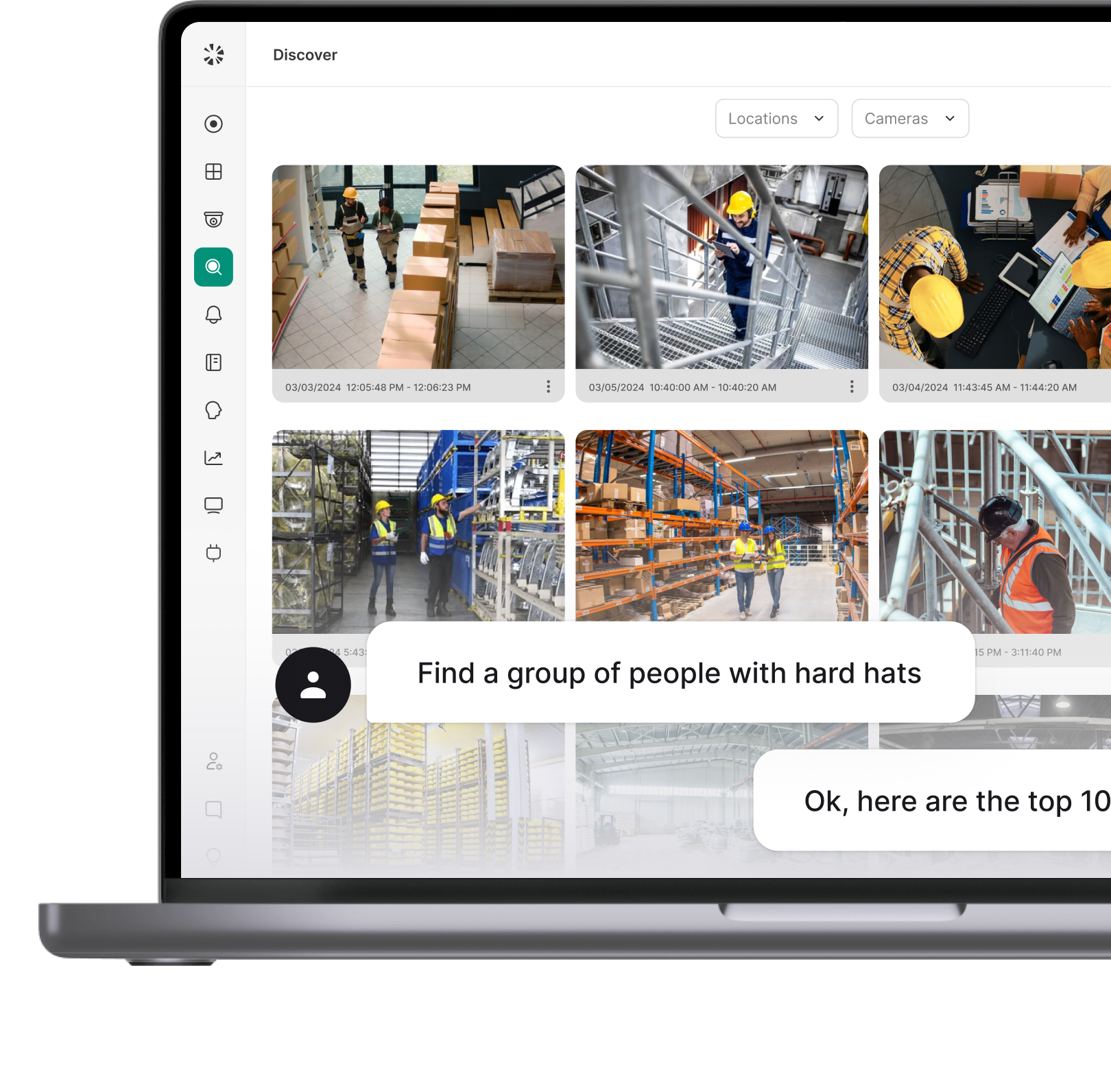
Coram is an AI-native, unified physical security platform that combines Guest Management, Video Security, Access Control, and Emergency Management in one browser-based system. A single administrator can manage visitors, doors, cameras, and emergency workflows from one login.
For private schools, that starts with infrastructure. Coram works with the IP cameras a school already has and with existing readers, locks, and wiring, so schools don't have to rip out equipment they've already paid for to add AI-driven security. That matters most where budgets are tuition-funded and every dollar competes with financial aid, salaries, and maintenance.
From there, the platform covers the rest of what this guide has walked through:
- Guest Management supports a controlled single point of entry, with iPad check-in, ID verification, screening against a criminal-record database and the school's own flag list, and host notifications by email and SMS.
- Emergency Management gives staff wearable panic buttons that activate with two presses in quick succession, and Automatic Dispatch can route an alert to 911. Schools can also run and document drills from the same interface.
- Browser-based administration means staff can run the system without a dedicated IT department. Video records to a Coram Point appliance on site, and the platform is managed from the cloud.
This is especially useful for independent and parochial schools running a single campus. Schools that share facilities with a church or community organization can also manage different access schedules through time-based permissions while keeping centralized oversight.
One important distinction: Coram can be a fundable purchase, but it doesn't determine grant eligibility or administer grants. Depending on the program, eligible categories may include Guest Management, access control, video security, and Emergency Management. Allowable costs should always be confirmed with the administering agency before applying.
If your school wants to strengthen security without replacing existing infrastructure or adding operational complexity nobody has time to manage, Coram is built for exactly that environment.
Pricing: Contact Coram for a demo and pricing based on your campus configuration.
What to Do Next
Private school security isn't about following every public-school mandate. It's about understanding what applies to your school, identifying your biggest risks, and building a plan that fits your campus, budget, and resources.
Once you have that clarity, decisions around funding, technology, and implementation become much easier.
Start with a threat and vulnerability assessment. It provides the foundation for your safety plan, strengthens future funding applications, and helps prioritize improvements based on actual risk.
When you're ready to evaluate technology, explore how Coram's unified platform supports Guest Management, Video Security, Access Control, and Emergency Management on a single campus, and book a demo to walk through it against your own campus.




.png)