Choosing the right video surveillance platform is a foundational decision for modern security, IT, and operations teams. Yet with distinct philosophies and architectures, selecting the optimal partner is more complex.
Rhombus, Verkada, and Coram each take a very different approach to modern physical security, from fully unified ecosystems to open, AI-first platforms that support intelligence on existing infrastructure.
This comparison explores how these three platforms stack up: architecture, intelligence, integration, and ideal use cases. If you’re evaluating a new system or planning a migration from legacy surveillance, this guide will help you confidently identify which platform fits your business, team structure, and long-term security strategy.
Rhombus vs Verkada vs Coram
Verkada takes a vertically integrated, closed-loop path: purpose-built cameras, sensors, and access controllers all natively speak to one cloud OS, delivering a tightly coupled “single-pane” experience that minimizes integration work and simplifies scale.
Rhombus emphasizes an open, cloud-managed platform that supports third-party hardware and provides cloud connectors (Relay) to bring legacy cameras and systems into its console. It protects your premises while adding cloud analytics.
Coram is an AI-first, open-platform specialist that delivers advanced detection, smart search, and other physical security solutions on top of existing IP cameras and access solutions. It prioritizes modern AI-powered detection and response without requiring full hardware replacement.
Rhombus Systems Overview
- Core Positioning and Target Customers
Rhombus Systems is positioned as a modern, cloud-managed physical security platform for enterprises that have outgrown legacy, fragmented systems. It replaces on-site servers and disconnected tools with a single, easy-to-manage cloud console, allowing organizations to monitor and manage security across multiple locations without added complexity.
This makes it attractive to companies that want stronger security without the operational burden of traditional infrastructure. The Rhombus platform is built on unification and intelligence. It combines video surveillance cameras, access control, environmental sensors, and AI-powered analytics into one system, giving IT and security teams full visibility from a central dashboard.
Rhombus primarily serves enterprise organizations with distributed locations and lean IT or security teams, as well as regulated industries like manufacturing, education, healthcare, retail, and real estate.
- Key Strengths (Simplicity, Cloud-Native Approach)
Rhombus Systems are built on a cloud-first architecture designed to remove the friction and maintenance issues associated with legacy security systems. By eliminating on-site servers and recording hardware, the platform reduces IT overhead while making deployments faster and cleaner.
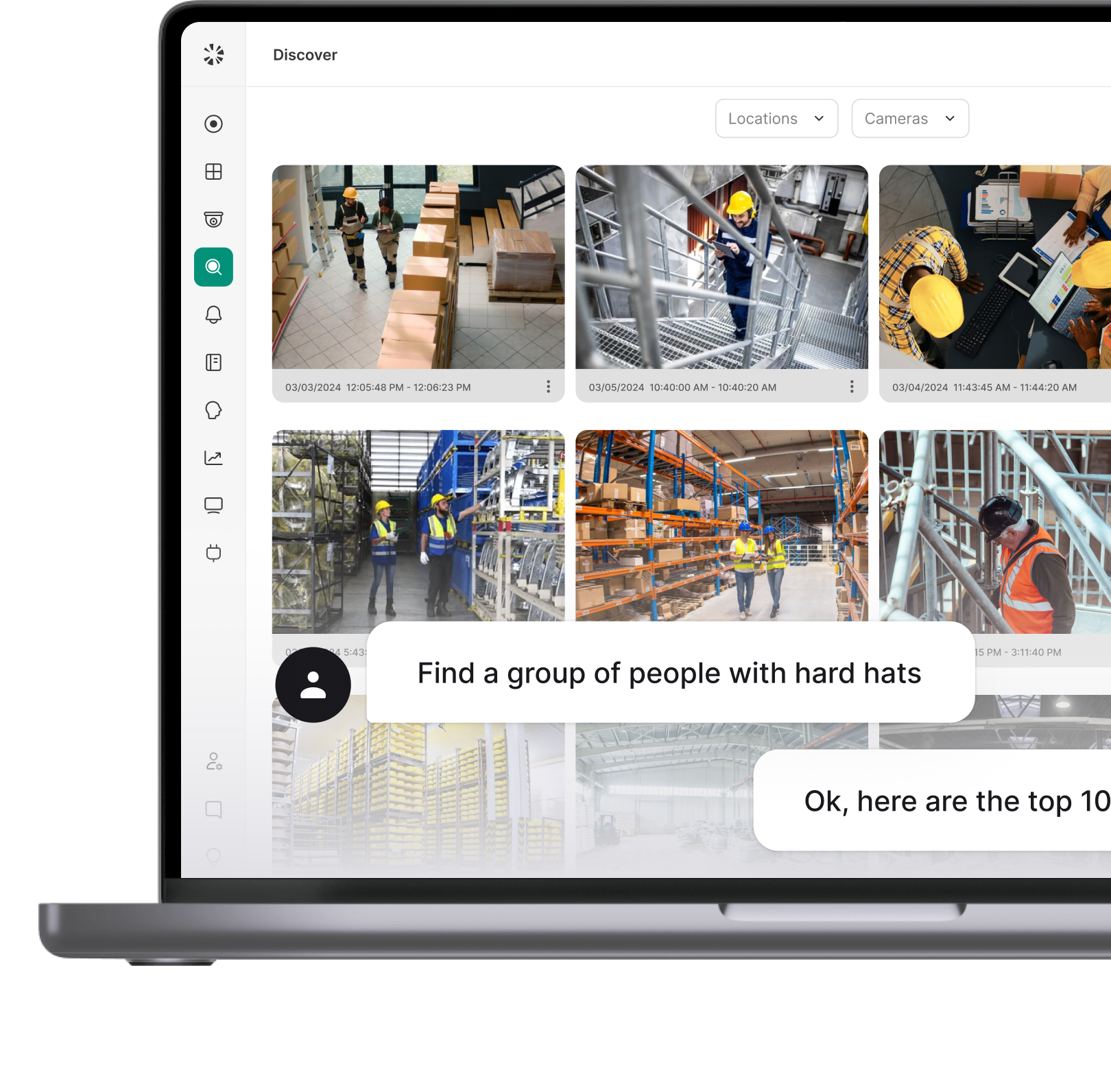
Another major strength is its AI-driven intelligence. Rhombus enables fast, targeted searches using attributes like clothing color, vehicle type, or license plate details. Advanced recognition capabilities help track individuals, detect vehicles, and flag unusual behavior automatically.
Real-time alerts add a proactive layer to security, notifying teams the moment something suspicious happens. Equally important is the platform’s ease of use, reliability, and compliance readiness.
The interface is intuitive enough for teams to start using it immediately, whether on desktop or mobile, and updates happen automatically in the background to keep systems secure and current.
- Typical Use Cases
Rhombus Systems is widely used in K–12 schools and large campuses where proactive safety is essential. Its AI analytics help staff identify unusual activity or unauthorized individuals as events unfold, while environmental sensors discreetly detect smoking or vaping in restrooms and trigger instant alerts.
During emergencies, live footage can be shared quickly with first responders, helping schools coordinate a fast response. In commercial real estate, retail, and manufacturing settings, Rhombus simplifies security across complex, high-traffic spaces.
Property managers can monitor multiple buildings from a single console, while AI-powered search tools cut investigation time when incidents occur. Healthcare facilities, construction sites, and other specialized environments rely on Rhombus for secure, flexible monitoring.
Healthcare teams can access encrypted video feeds while maintaining strict patient privacy, and environmental sensors help protect sensitive spaces.
Verkada Overview
- Platform Philosophy and Ecosystem Approach
Verkada’s platform philosophy is built around the idea of a modern, cloud-first operating system for physical security for enterprise-level complexity. It delivers a single, software-driven experience where every security function is managed from one centralized interface.
Devices handle processing locally, which improves reliability during outages, reduces bandwidth use, and keeps sensitive data from constantly streaming to the cloud. Verkada is designed for speed, scale, and proactive security.
Deployments are plug-and-play, making it easy to implement across multiple locations with minimal IT effort. At the same time, privacy is built into the design, with features that limit unnecessary exposure while maintaining full auditability and control.
Verkada’s ecosystem approach follows an integrated, closed-loop model where all devices are built to work together seamlessly. Sensors, cameras, and access control systems share intelligence automatically, allowing events to trigger instant video context without manual setup.
- Strengths in Hardware-Software Integration
Verkada’s biggest advantage comes from owning the entire security stack, from the physical devices to the cloud software that manages them. It designs its cameras, sensors, and access controllers alongside the Command platform. This way, Verkada removes the friction that usually comes with mixing hardware and software from different vendors.
This vertical integration eliminates the need for on-site servers, simplifies installation, and ensures every device is unified.
- Where Verkada Fits Best?
Verkada is best suited for organizations that want a premium, cloud-native, all-in-one security platform with minimal integration effort. It works particularly well for mid-market and enterprise companies that prefer to standardize on a single vendor rather than manage multiple systems.
Coram Overview
- Open-Platform, AI-First Positioning
Coram isan AI-first security platform that provides modern video intelligence for any IP camera. Its strategy favors an open, standards-friendly architecture (ONVIF/RTSP support, hybrid modes).
This way, customers can adopt advanced AI features without a forklift upgrade of legacy hardware. That combination of plug-and-play openness and purpose-built AI tooling is designed to speed investigations and deliver real-time alerts automatically.
- Unified Video, Access Control, and EMS Vision
Coram bundles video, cloud access control, and a mobile-first emergency-management system into a single dashboard so detection, alerting, and response live in the same workflow.
Events detected by AI (weapons, smoke, slips, unauthorized presence, and more) can trigger EMS, send out alerts, and share live video and messages with responders. This collapses the usual hand-offs between systems and results in faster responses during incidents.
- Ideal Customer Profiles
Coram is aimed at organizations that want modern AI security without replacing their entire camera hardware:
- K–12 and higher-education campuses
- school districts, mid-market enterprises
- large venues and
- distributed facilities (warehouse, manufacturing, retail) are among its ideal customer profiles.
It’s a good fit for operations leaders who need quick deployment, centralized incident workflows, and stronger emergency coordination. Coram is also perfect for multi-site businesses where budget or operational constraints make full rip-and-replace impractical.
Rhombus vs Verkada vs Coram – Video Surveillance System Table
This table breaks down how Rhombus, Verkada, and Coram compare regarding video surveillance capabilities. It highlights key differences in architecture, data storage, AI analytics, and more. Use it to quickly see which platform aligns best with your security and operational needs.
How Do Verkada and Rhombus Approach Integrated Security Differently?
Verkada and Rhombus both offer cloud-based physical security, but they take fundamentally different paths to integration. Verkada is built as a closed, unified ecosystem where every security component is designed to work together.
Cameras, access control, sensors, alarms, and intercoms are all native to a single cloud platform hosted on Amazon AWS. Because everything is purpose-built for one system, devices communicate automatically and firmware updates roll out across the entire network simultaneously. Administrators manage all locations from a single interface.
This unified model makes Verkada appealing for organizations that want to standardize on one vendor and eliminate integration complexity. Security and IT teams don’t need to configure how devices communicate with each other; they avoid juggling multiple systems or update schedules.
The trade-off, however, is that the ecosystem works best when organizations fully commit to Verkada hardware and software across their security stack. Rhombus takes a more flexible, open approach to integrated security. It works as a unifying layer that integrates Rhombus hardware, existing security cameras (via Rhombus Relay), and third-party systems.
Organizations can bring legacy cameras into the cloud using Rhombus Relay, integrate popular access control platforms, and connect with 50+ marketplace integrations. This modular model is ideal for organizations that want to modernize security gradually and choose the best tools for each function rather than being locked into a single vendor.
What Are the Hardware Differences Between These Platforms?
Verkada’s Hardware Ecosystem
Verkada's latest security camera models (the CH53-E, CH63-E, and CY63-E multisensors) have been updated for better image clarity and easier setup. The AF64 reader combines access control and video in one device, minimizing required hardware.
Verkada’s Hardware Portfolio:
- Access Control: AF64 (unified: door controller, reader, 5.5″ touchscreen, 5MP camera)
- AL54 Wireless Locks (Cloud-managed)
- BP32 Wireless Alarm Panel (Compact)
- Intercoms & Communication: TA43 Series (Audio intercom units)
- Mobile/Temporary Deployments: MT81 Cloud-Managed Security Trailer (Supports six devices, solar-powered)
- Sensors & Environmental Monitoring: QM11, QC11, QT11 (Next-gen wireless sensors)
- Motion, entry, and environmental sensors
- Surveillance Cameras: CH53-E (5MP multisensor)
- CH63-E (4K multisensor)
- CY63-E (PTZ variant)
- CR63-E (Remote camera with LTE for areas lacking power/internet)
Verkada Advantage: An integrated ecosystem built for smooth compatibility and robust, enterprise-level security.
Rhombus’s Hardware Ecosystem
Rhombus provides four dedicated camera models, each suited to specific use cases, and also accommodates existing third-party infrastructure.
Rhombus Hardware Portfolio
- Access Control: DC20 (4-door cloud-managed controller)
- DR20 (Intelligent reader: card, mobile, remote unlock, wave-to-unlock)
- DR40 (Video intercom with doorbell and real-time video)
- Third-Party Camera Support (Rhombus Relay): Relay Core N100 (Up to 10 existing cameras, no licensing for streaming)
- Relay Core N500 (Up to 50 existing cameras)
- Relay Lite (Free to existing Rhombus customers)
- Surveillance Cameras (Native Rhombus):R360S (360° fisheye with 12.5MP and de-warping)
- R540 (Bullet camera for perimeter monitoring)
- R545 (Long-range telephoto for license plate recognition)
- R150 (Ultra-compact for tight spaces)
- R600 Multisensor (For expansive spaces like schools/public areas)
- Environmental Monitoring: E50 Environmental Sensor (Temperature, humidity, air quality)
- Audio, motion, entry, and panic sensors
Rhombus Advantage: The ability to upgrade existing camera systems without replacing the hardware.
Rhombus vs Verkada vs Coram - Access Control Table Comparison
Here’s a side-by-side look at how each platform approaches access control. The table focuses on various features across environments. It helps you evaluate which system fits your organization’s access and compliance requirements.
Final Verdict – Which Platform is Right for You?
Choose Verkada if you want the simplest, unified enterprise experience and are prepared to standardize on one vendor for cameras, access, and sensors.
Pick Rhombus if you need an open, scalable cloud platform that preserves existing investments and supports a phased migration to cloud intelligence.
Opt for Coram when the priority is fast, modern AI-powered threat detection and unified access and emergency solutions while keeping your existing IP camera intact.




.png)