VSaaS (video surveillance as a service) is a subscription model for video management delivered through the cloud. The provider handles storage, software updates, and remote access. On hybrid architectures, recording continues locally when the internet drops. The term covers three architectures: camera-to-cloud, gateway, and hybrid. Each behaves differently during an outage and costs differently over five years.
A door gets forced open at 2am at one of your sites. You open the access control system to see whose badge was used. You open the video platform to pull the clip. You check the visitor log for anyone still signed in. You check whether an emergency alert went anywhere at all. Four systems, one incident, and no answer until someone stitches it together by hand the next morning.
One IT director put it more directly than we could: "I have enough interfaces in my life."
Moving video to the cloud does not fix that, though VSaaS is often sold as though it does. VSaaS is a delivery model. The label tells you the video is stored and managed off-site through a subscription. It says nothing about whether recording continues when the internet goes down, what happens to the cameras already mounted on your walls, or how the bill changes when retention goes from 90 days to 365.
Two questions cut through most of it. Where is footage recorded, and where is it managed? The answers determine your migration cost, your outage behavior, and what you keep if you leave.
What VSaaS Covers
One platform might record everything in the cloud. Another depends on an on-site gateway. A third keeps recording locally and uses the cloud only for management. All three are sold as VSaaS.
Camera-to-Cloud: Recording Straight to the Cloud
Cameras stream footage directly to the cloud, so there is no recorder or gateway to install and maintain. Most camera-to-cloud platforms require cloud-compatible or vendor-approved cameras, which usually rules out reusing an existing fleet. Recording depends more heavily on the connection, though many cloud cameras buffer locally until connectivity returns.
Best fit: smaller deployments, greenfield sites, and organizations that want a fully cloud-managed environment and are buying cameras anyway.
Gateway VSaaS: Bridge and Appliance-Based
An on-site appliance sits between your cameras and the cloud, collecting their streams and connecting them to the service. If replacing working IP cameras is not on the table, this gets you cloud management without starting from zero.
The trade is a component you still own and maintain. Software updates, capacity planning, and hardware health do not disappear because management moved to the cloud, and the gateway enters your replacement cycle alongside everything else. Because cameras depend on the appliance to reach the cloud, the question most buyers forget to ask is what keeps working if that gateway goes offline. Get the answer in writing.
Hybrid VSaaS: Edge Recording, Cloud Management
Recording happens locally at the site. The cloud handles management, long-term retention, and analytics on top of it. Local recording keeps working through an outage, and cloud management still gives one view across every site.
This is the architecture most multi-site buyers land on, and it is the one Coram runs. For a deeper breakdown of when each model makes sense, see cloud NVR vs traditional vs hybrid systems.
VSaaS vs VMS vs NVR: How the Approaches Compare
A VMS is the software that lets you view live video, manage cameras, control permissions, and search recordings. VSaaS describes how that software reaches you, which is why a cloud-based VMS is also VSaaS. An NVR or DVR records on hardware you buy, own, and eventually refresh. Neither is automatically better: if you need everything on-premises, an NVR still fits, and if you are managing many sites, VSaaS removes most of the hardware work. For the term itself, see the VMS glossary entry.
How VSaaS Pricing Works
VSaaS is usually advertised as a per-camera subscription, and that number is only part of the cost. The final price moves with camera resolution, retention period, AI features, frame rate and image quality, and whether storage is cloud or hybrid.
Retention is the biggest driver. Keeping footage for 365 days takes far more storage than keeping it for 90, so vendors tier licensing or hardware to match. Local retention tiers vary: Coram Point models publish 30, 60, or 90 days of local recording, with longer horizons handled through cloud retention. If your compliance requirement is a year, raise it on the first call.
What the headline number usually excludes:
- Gateway or bridge hardware if you are keeping existing cameras
- Camera or channel licenses
- Longer retention tiers
- Premium AI features
- Extra user seats on some platforms
- Bandwidth and data transfer
- Renewal increases at term end
Verkada is the one vendor in this category that publishes list prices, which makes it a useful benchmark: cameras run roughly $699 to $5,299, software licenses roughly $1,500 to $5,400 per year, priced separately from each other. Coram does not publish dollar figures. What we do publish is the shape: a per-camera video license on 1, 3, 5, or 10-year terms, premium IP cameras included at no cost if you do not already have cameras, and outright ownership of the Coram Point edge server. You buy the box; you do not rent it.
Five-Year Cost vs an On-Prem NVR Refresh
The two cost shapes are different, not just different sizes. On-prem concentrates spend at the start and again at refresh. VSaaS spreads it across software, storage, and cloud services.
The variable that swings the five-year number hardest is cameras. A serviceable 5MP dome costs around $140. Its proprietary equivalent, bought because the platform requires it, runs $1,200 to $2,000. Multiply that gap by a two-hundred-camera estate and the architecture question stops being technical.
The Questions That Separate Platforms
Cloud management, remote access, and subscription pricing are table stakes. The differences show up in recording, storage, camera compatibility, and exit. Bring these to the vendor call.
Camera compatibility determines your migration cost. Find out which brands and models are supported, whether advanced camera features survive integration, whether unsupported cameras must be replaced or can be phased out, and what happens to your cameras if you switch platforms later. The more you keep, the lower the migration.
Recording continuity depends on where video lives during an outage. Some platforms keep recording locally, others rely on camera buffering. Ask where recording continues, how long it lasts without internet, what happens when local storage fills before the connection returns, and whether recordings sync automatically afterward. If your sites need continuous recording, get the specific limitation in writing.
Upstream bandwidth varies by resolution and compression. Plan for roughly 2 to 5 Mbps per 1080p camera and 8 to 16 Mbps for 4K, depending on codec, frame rate, and scene motion. Verkada publishes 3 Mbps per camera for its 3MP models and 4.5 Mbps for its 6-series, which is a useful reference point. Ask for the number for your camera models at your settings.
Storage location affects compliance and data residency. Confirm where recordings live and whether you can choose the region. Then separate two things vendors often blend: which security standards the platform is audited against, such as SOC 2 Type II, and whether the cameras and appliances in your deployment are free of NDAA Section 889 covered equipment. The first is a third-party audit. The second is a procurement restriction on hardware sourcing, satisfied by self-attestation, not a certificate. No platform is "NDAA certified."
Retention pricing compounds quickly. Ask how pricing changes at 30, 90, and 365 days, whether different cameras can carry different retention, and whether longer retention moves you into another licensing tier.
Exit costs matter as much as entry costs. Ask how footage exports, whether export fees apply, what happens to metadata and audit logs, and how long recordings stay available after the contract ends. Then ask the question buyers tend to raise only after signing: if we stop paying, do the cameras still function?
That answer varies more than most buyers expect. Verkada and Avigilon Alta disable RTSP when a contract lapses, which leaves the hardware on the wall and the streams inaccessible. Coram leaves RTSP live regardless of subscription status. Your cameras work with us, and they stay yours if you leave.
Where VSaaS Stops
Cloud-managed video makes day-to-day management simpler. Teams access footage remotely, manage multiple sites from one place, and stop driving to a site to pull a clip or reboot a recorder.
What it leaves in place is the fragmentation described at the top of this page. Door events, visitor records, alerts, and footage still live in separate systems, so every real investigation is a manual reconciliation across four tools. Value Store It hit exactly this wall across 30 self-storage sites, running fifteen separate applications before consolidating.
This is the shift behind the current wave of buying. Instead of managing video, access, visitors, and emergency response as separate systems, buyers are asking for one platform where those events connect. Coram is an AI native unified physical security platform that unifies Video Security, Access Control, Guest Management, and Emergency Management in one system. It connects to existing IP cameras over ONVIF or RTSP across 150+ camera brands. Recording stays local on the Coram Point edge server while the cloud handles management.
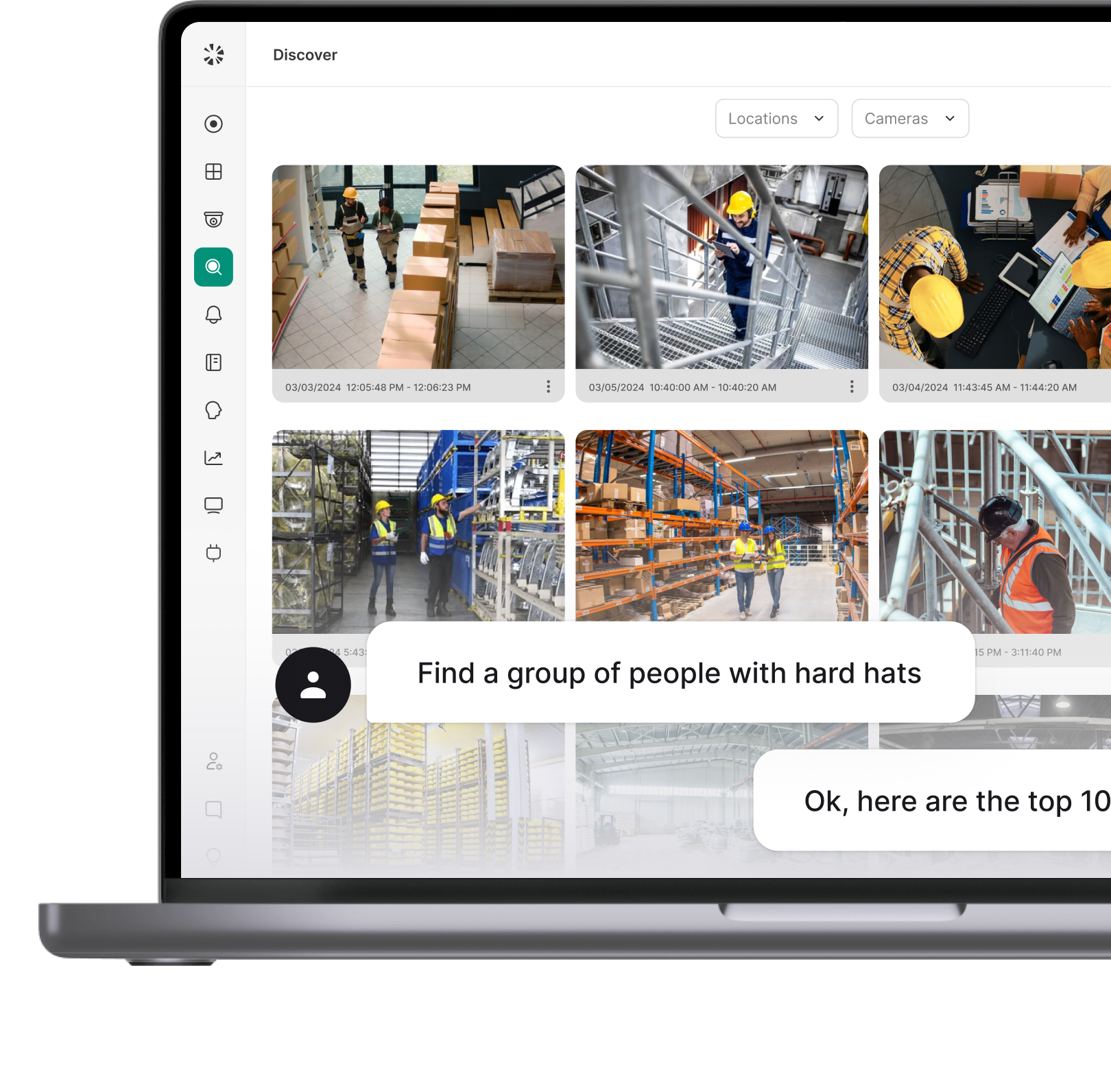
What that buys operationally: door events pair automatically with video. A guest's check-in links to their camera clip. Discover answers natural language questions about footage. Deep Investigation runs the longer automated reviews nobody has time to do by hand. Coram is SOC 2 Type II audited and HIPAA compliant, with a 4.9 out of 5 G2 rating.
The VSaaS Vendor Landscape in 2026
Two notes on the table above. Brivo and Eagle Eye Networks merged in December 2025. The AI video capabilities now in the Brivo portfolio came from Eagle Eye's pre-merger roadmap: gun detection shipped in October 2025, about eleven weeks before the merger was announced. Arcules is Milestone Systems' cloud video platform; Milestone has been part of the Canon Group since 2014, and Arcules merged back into Milestone in mid-2024.
For a platform-by-platform comparison with capabilities, pricing posture, and where each one breaks down, see best cloud-based VMS platforms.
Which Architecture Fits
Multiple sites and an existing camera fleet you want to keep. Hybrid, recording locally with cloud management. This is the scenario Coram is built for.
A new site, low camera count, no on-site IT. Camera-to-cloud keeps deployment simple. Verkada is a strong option here, and for an organization starting from zero there is nothing to integrate: cameras, storage, and software arrive as one decision.
Data residency or regulatory requirements. Hybrid with local retention, so you control where footage sits. Coram and Arcules both support local recording with centralized cloud management.
An on-prem VMS at headquarters, expanding to branches. Hybrid at HQ with cloud-managed edge sites. Arcules is a natural fit if XProtect is already running. Brivo Eagle Eye works if you are also consolidating access control across a mixed camera fleet.
What to Do Next
The label on the box will not tell you which VSaaS approach fits your sites; the architecture will. Match it to how your team already operates, how much of your camera fleet you want to keep, and how you expect to recover from an outage. If your NVRs are approaching end of life or an incumbent license renews this year, that timing is the cheapest moment to make the decision.
If connected security operations are part of your roadmap, book a demo to see how Coram handles video, access, visitors, and emergency response in one system.




.png)