Kastle Systems works until it doesn't. The fully managed model is attractive early: someone else handles the hardware, the monitoring, and the maintenance, and your team doesn't have to think about it. The problem surfaces when you need to grow, integrate, or change anything. Every expansion requires a quote. Every adjustment goes through the vendor. Every new site adds to a contract you can't model in advance. For IT Directors managing security across multiple locations, that dependency becomes an operational bottleneck.
This guide covers seven Kastle Systems alternatives that give you more control: over your hardware, your budget, and your timeline. Each entry explains what the platform does, where it fits, and when it makes more sense than Kastle for your specific situation.
Why Teams Move On from Kastle Systems
Kastle doesn't publish pricing, which means you can't model costs ahead of a budget cycle. Every expansion (a new location, an upgraded feature set, an additional access point) requires going back to sales. That slows down internal approvals and makes multi-year planning harder than it should be.
The managed model compounds this. Most operational decisions stay with the vendor, so routine changes depend on Kastle's timeline, not yours: adjusting access permissions, modifying monitoring workflows, and integrating with other systems all require vendor coordination. Teams that want to move faster or operate more independently find this structure difficult to work around.
Hardware is the third constraint. Many Kastle deployments still rely on older Wiegand-based access control, which has known limitations around encryption and scalability. Upgrading to newer standards often means reworking significant parts of the existing setup, which delays adoption and increases cost.
Kastle Systems Competitors: Side-by-Side Comparison
Note: HID Global addresses the access control and credentialing layer only, not a full Kastle replacement for video surveillance or managed monitoring.
7 Kastle Systems Competitors Worth Evaluating
These platforms are compared on the factors that matter most when leaving a managed model: hardware flexibility, pricing visibility, AI and detection capabilities, and how much operational overhead lands on your team.
1. Coram
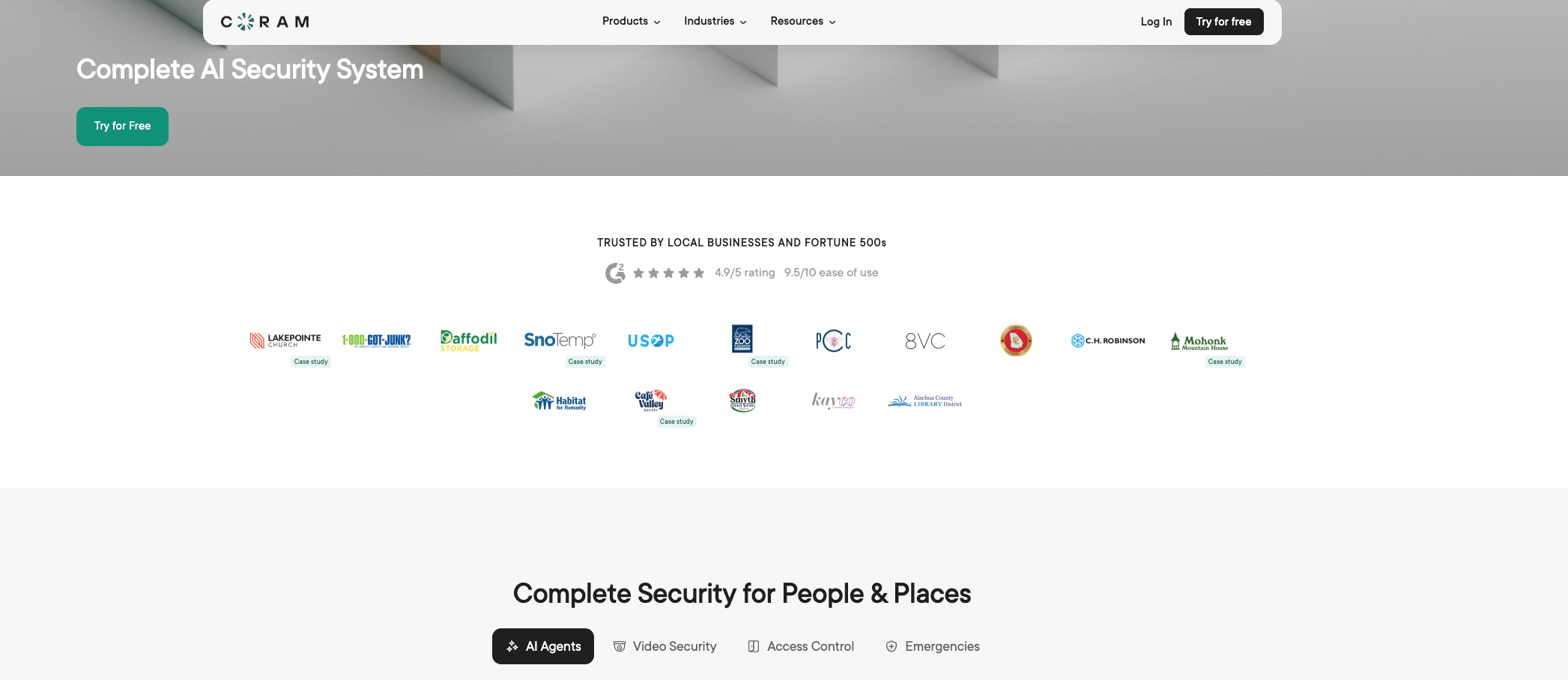
Coram is an AI-native physical security platform that connects to existing IP cameras and manages video surveillance, access control, and emergency management from one dashboard. No hardware replacement required.
That last point is what separates Coram from most alternatives when you're leaving Kastle. Kastle's managed model handles operations for you, but it does so through a closed ecosystem. Coram gives you that operational unity (one interface for detection, alerts, and investigation) while working with the cameras you already have rather than requiring a hardware refresh. For organizations with significant existing infrastructure, that difference determines whether a migration is feasible or prohibitively expensive.
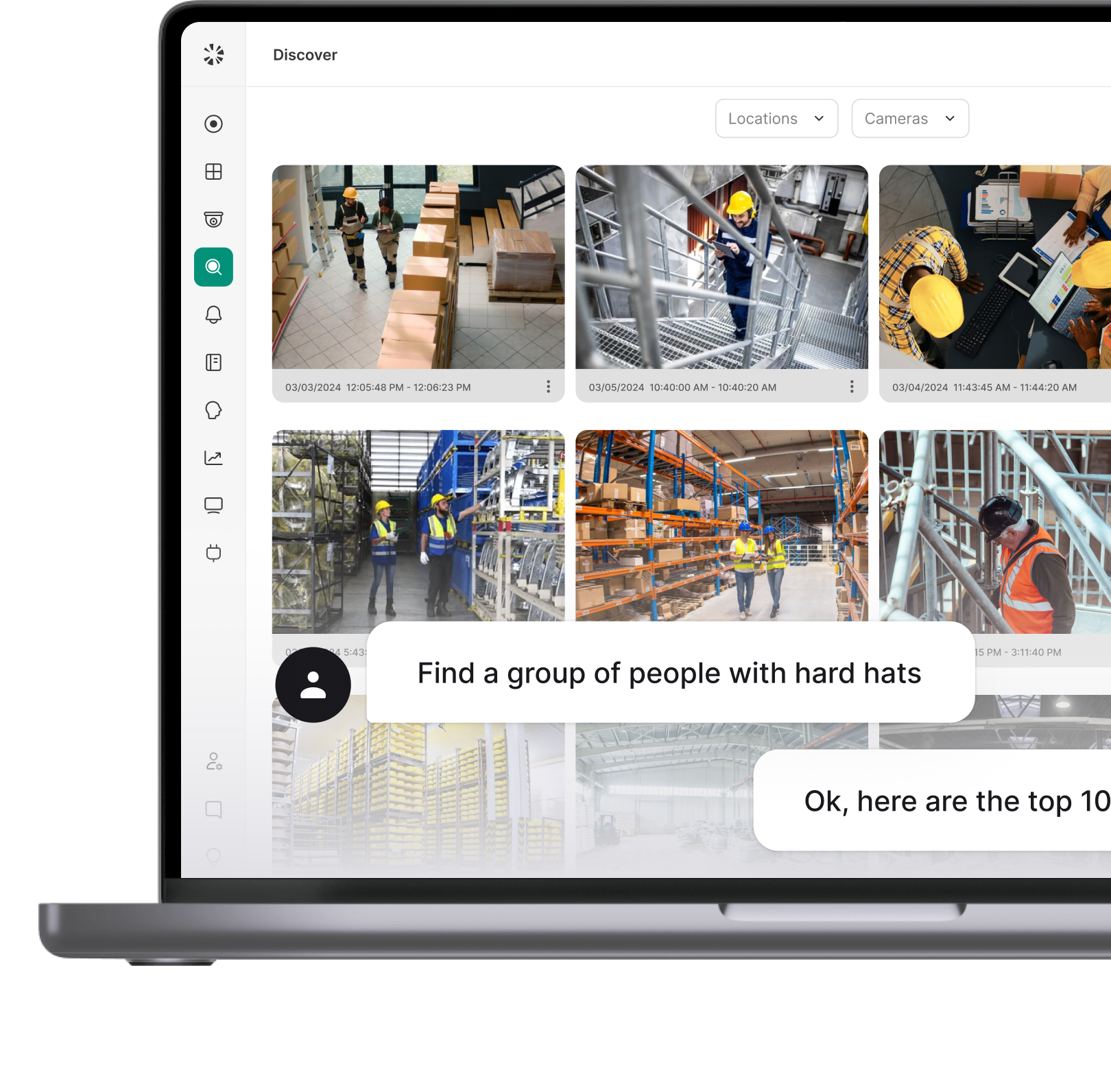
The platform detects incidents in real time across video, access logs, and sensor data, and surfaces alerts automatically with the relevant video context attached. Natural language video search lets any team member find footage by describing what happened rather than scrubbing through hours of recordings. AI agents can be configured in plain English to detect specific events: firearms, slip-and-fall incidents, PPE violations, and unauthorized access, without requiring custom engineering. The access control module supports existing Wiegand and OSDP readers, so Kastle hardware doesn't necessarily need to be replaced; it can be connected to Coram instead. Emergency management, visitor management, and lockdown coordination are all included in the same login.
Best for: IT Directors managing multiple locations with existing IP camera infrastructure who want to move off a managed model without a full hardware replacement. Strong presence in K-12 school districts, healthcare, warehouses, and enterprise campuses.
Strengths:
- Works with 1,000+ ONVIF-compatible IP camera models; no hardware replacement required
- AI-native detection for firearms, intrusions, slip-and-falls, PPE violations, and plain-English custom alerts
- Natural language video search across all camera feeds
- Unified platform: video surveillance, access control, and emergency management in one login
- Supports existing Wiegand and OSDP access control readers
- SOC 2 Type II and HIPAA certified; G2 4.9/5, 9.5/10 ease of use, 9.6/10 ease of administration
Limitations:
- AI detection requires tuning in the early stages; first few weeks involve configuration work
- Newer platform with a shorter track record than legacy VMS vendors
Pricing: Quote-based.
Kastle vs. Coram
Kastle manages your security operation for you. Coram puts that control back in your hands, with stronger AI, a unified platform, and no requirement to replace the cameras you already own. For organizations that want to own and operate their security stack without rebuilding it from scratch, Coram is the most direct path off a Kastle managed contract.
2. Brivo
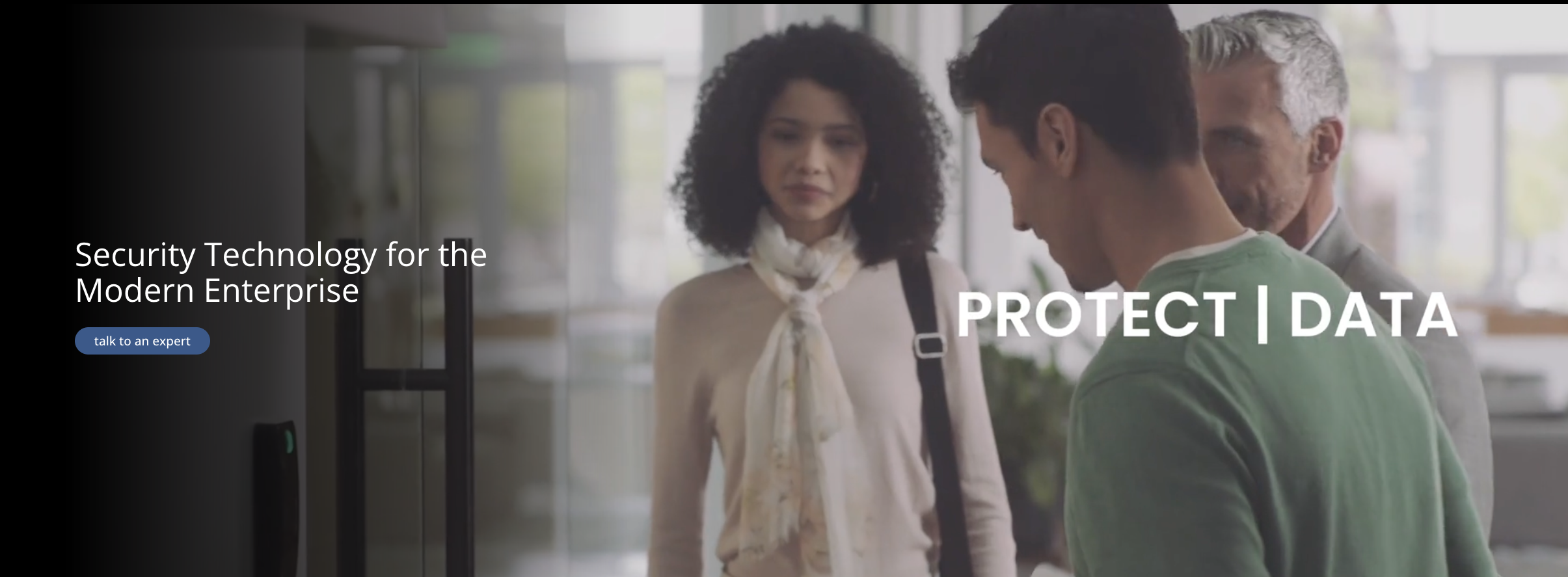
Brivo is a cloud-managed physical security platform covering access control, video surveillance, visitor management, intrusion detection, and monitoring, all under one interface. Its merger with Eagle Eye Networks added a full video layer to what was previously an access-control-focused platform, including AI capabilities like gun detection, face match, license plate recognition, and precision person and vehicle detection.
That makes Brivo a more direct Kastle competitor than it was even a year ago. Where Kastle handles operations through a managed service model, Brivo gives internal teams direct control: access policies, user permissions, video review, and location configurations are all managed through your team rather than routed through the vendor. The open API supports integration with existing IT systems, from directory services to building automation tools.
Best for: Organizations that want a full-platform Kastle replacement across access control, video, and AI detection, with direct internal control rather than a managed service model. Works well for distributed teams managing multiple sites with consistent connectivity.
Strengths:
- Full platform covering access control, video surveillance, visitor management, intrusion detection, and monitoring in one interface
- AI video capabilities including gun detection, face match, license plate recognition, and precision person and vehicle detection
- Direct internal control over access policies, permissions, and configurations without routing through a vendor
- Open API for integration with existing IT systems and building automation
- Scales well for distributed teams managing multiple sites or properties
Limitations:
- Cloud-only architecture means functionality degrades during internet outages
- Slower performance reported during periods when updates are delayed or infrequent
Pricing: Quote-based, typically including hardware costs, installation, and an ongoing monthly subscription for cloud access.
Kastle vs. Brivo
Kastle handles operations for you through its managed service model. Brivo gives your team direct control over the same categories of security (access, video, detection, and monitoring) without routing every change through a vendor. For organizations that want to own their security operation and move at their own pace, Brivo is a strong full-platform alternative.
3. Verkada
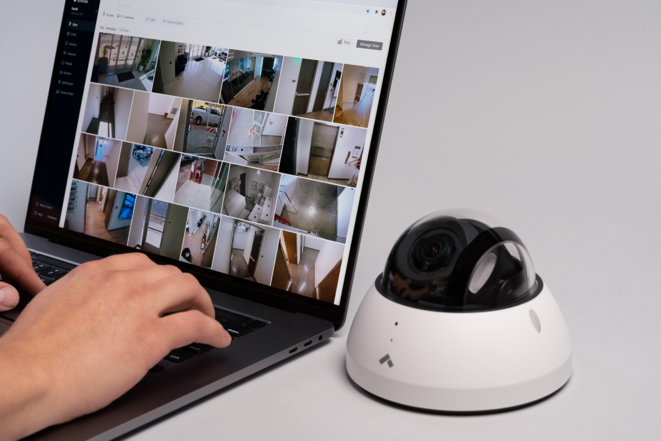
Verkada is a cloud-managed physical security platform covering video surveillance, access control, alarms, and environmental sensors through a single interface called Verkada Command. All hardware is proprietary: cameras, access controllers, and sensors are Verkada devices, which gives the platform its simplicity but also its primary constraint.
Verkada modernizes your security operation, but only if you're willing to buy new cameras. That's the critical difference from both Kastle and Coram. Kastle manages everything for you on its own hardware; Verkada gives you direct cloud control, but still requires you to replace your existing cameras with Verkada-branded devices. For organizations with substantial camera infrastructure, that hardware cost is the deciding factor.
Where Verkada earns its position is in deployment simplicity and UX polish. The plug-and-play hardware setup, on-device storage with cloud backup, and adaptive video quality make it a strong fit for organizations standardizing from scratch across new locations. The AI analytics are capable, particularly for motion-based detection and person identification, though accuracy is optimized for Verkada cameras specifically.
Best for: Mid to large organizations standardizing security across new or recently built locations, where existing camera infrastructure isn't a constraint and budget allows for a full hardware refresh.
Strengths:
- Cloud-managed unified platform covering video, access control, alarms, and environmental sensors
- On-device storage with cloud backup; recording continues during connectivity drops
- Plug-and-play deployment with no on-premises server infrastructure required
- Polished UX; single dashboard for all locations and device types
- AI analytics for motion detection and person identification
Limitations:
- Proprietary hardware lock-in; existing cameras cannot be reused
- Higher upfront cost ($499–$3,000+ per camera) plus mandatory annual cloud licensing (~$219/camera/year)
- Connectivity issues can affect reliability during critical operations
Pricing: Per-device hardware purchase plus mandatory annual cloud licensing per camera.
Kastle vs. Verkada
Kastle manages your security for you. Verkada gives you direct control, but requires buying their cameras to get it. For organizations leaving Kastle specifically because of vendor lock-in, trading one closed ecosystem for another is worth scrutinizing. Verkada is the right choice when you're standardizing from scratch and want a tightly integrated, self-managed platform. If you have existing cameras you want to keep, it isn't.
4. Rhombus
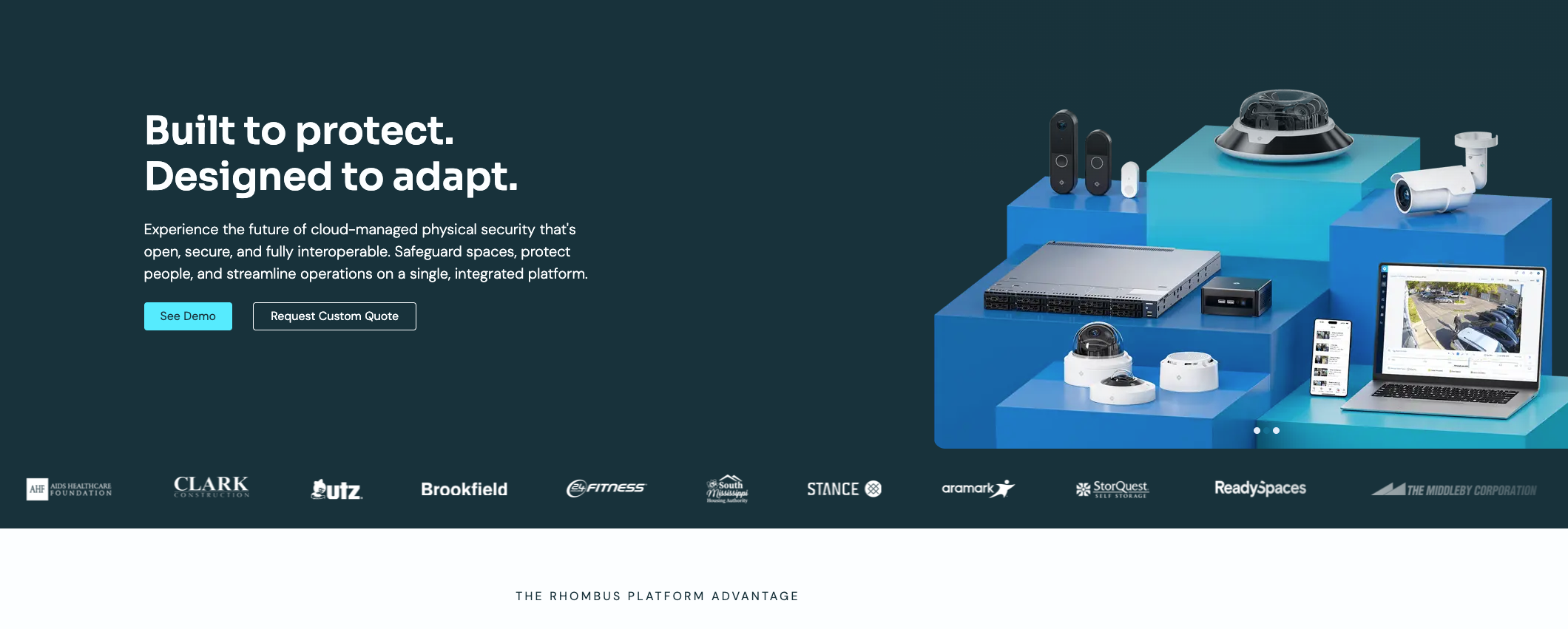
Rhombus is a cloud-managed security platform built on a hybrid cloud-edge architecture, which means cameras and controllers continue operating locally during internet outages while still syncing to the cloud when connectivity is restored. The platform supports multiple camera types, IoT sensors, and includes built-in alarm monitoring with live agent verification.
Compared to Kastle, Rhombus shifts operational control back to your team while reducing the infrastructure overhead of a fully on-premises system. Its hardware interoperability is better than Verkada's: Rhombus works with some existing camera types, which can reduce the cost of switching. That said, the platform skews toward its own hardware for full feature support, and some users report slower loading times and processing in larger deployments.
Best for: Mid-sized organizations that want a flexible, cloud-managed system with hybrid offline capability and prefer not to replace all existing hardware.
Strengths:
- Hybrid cloud-edge architecture keeps the system running locally during internet outages
- Better hardware interoperability than Verkada; works with some existing camera types
- Built-in alarm monitoring with live agent verification
- Unified platform covering cameras, access control, IoT sensors, and alarms
- No on-premises server infrastructure required
Limitations:
- Skews toward proprietary hardware for full feature support; partial replacement may still be required
- Slower loading times and processing reported in larger deployments
- Requires more active management than a fully managed service
Pricing: Quote-based, including hardware and subscription fees.
Kastle vs. Rhombus
Kastle removes operational responsibility from your team entirely. Rhombus gives that responsibility back, with more flexibility in how you build and manage the system. For teams leaving Kastle because of vendor dependency, Rhombus is a reasonable step toward self-managed operations. The right question before evaluating it is whether your team has the bandwidth to own what Kastle currently handles for you.
5. Alarm.com
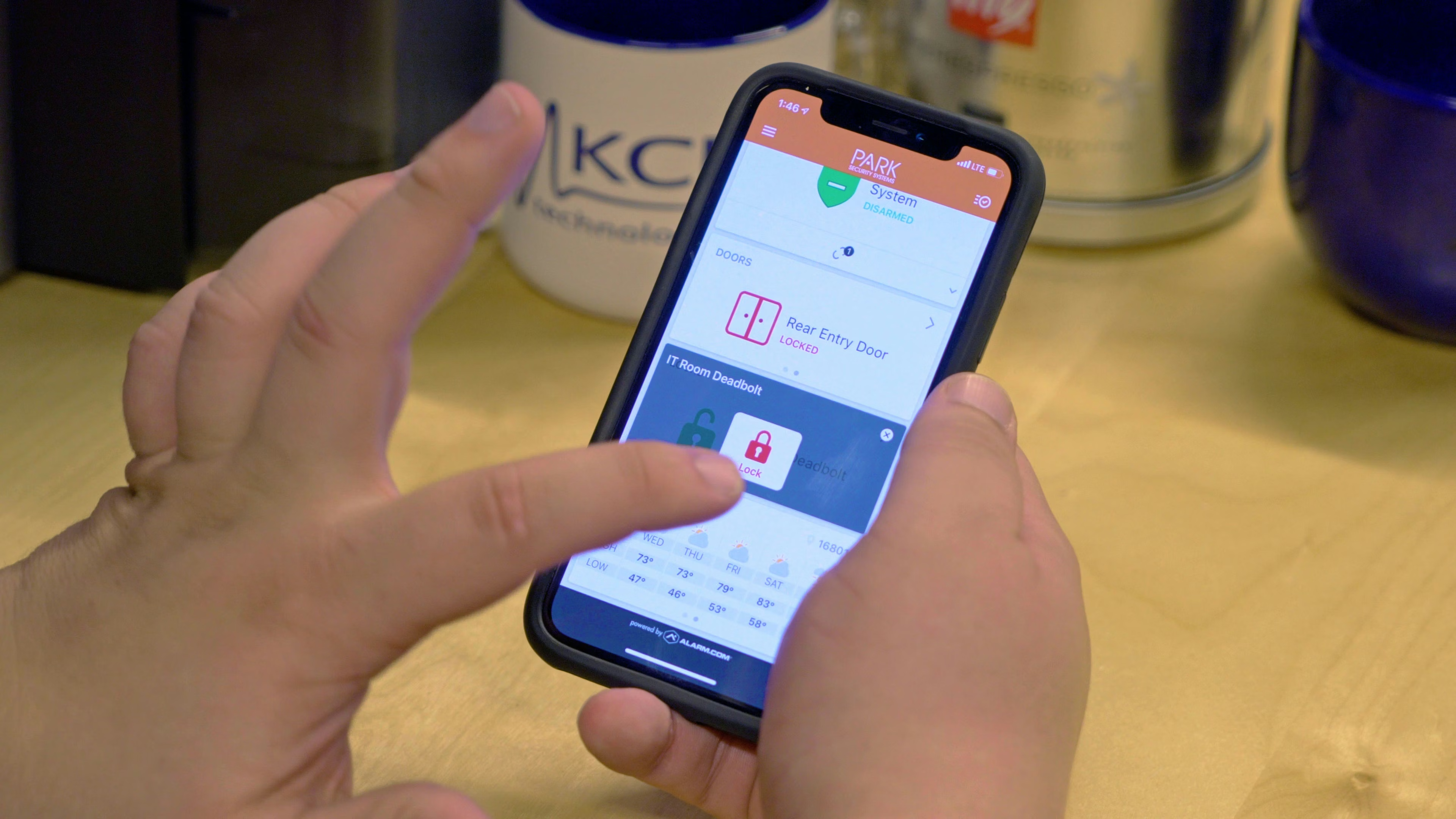
Alarm.com is a cloud-based physical security platform covering intrusion detection, video surveillance, access control, and gunshot detection, with additional capabilities around fleet management, energy monitoring, and perimeter protection. It serves small and medium businesses, light commercial properties, and multi-location operations, and is delivered through an authorized dealer network rather than directly.
That dealer model is worth understanding before evaluating Alarm.com as a Kastle alternative. Kastle manages your security operation through its own service team; Alarm.com manages it through a network of third-party dealers who handle installation, configuration, and ongoing support. You get more self-service control over alert workflows and automation once the system is deployed, but setup and changes still run through a partner rather than your internal team. The platform's feature depth in enterprise video management and multi-site access control doesn't match Coram, Verkada, or Genetec, which matters for organizations replacing Kastle at enterprise scale and matters less for smaller facilities where monitoring and fast response are the priority.
Best for: Small to mid-sized commercial properties, retail locations, and light industrial facilities where real-time alerting, intrusion detection, and gunshot detection are the primary requirements.
Strengths:
- Covers intrusion detection, video surveillance, access control, and gunshot detection in one platform
- Alarm verification workflow confirms alerts via video before dispatching a response, reducing false alarms
- Extended capabilities including fleet management, energy monitoring, and perimeter protection
- Strong fit for SMB and light commercial environments
Limitations:
- Delivered through third-party dealers; setup and changes run through a partner, not your internal team
- Feature depth in enterprise video management and multi-site access control is limited compared to full-platform alternatives
- Scaling costs compound as the number of monitored points increases
Pricing: Custom quote, including hardware, licensing, and monitoring service fees.
Kastle vs. Alarm.com
Both platforms use a partner or vendor model for operations rather than giving your team direct control. The difference is market positioning: Kastle is built for enterprise and commercial environments; Alarm.com is built for SMB and light commercial. If you're leaving Kastle because of the managed model itself, Alarm.com doesn't solve that problem. If you're leaving because Kastle is too large and complex for your actual footprint, Alarm.com may be a better fit.
6. Genetec
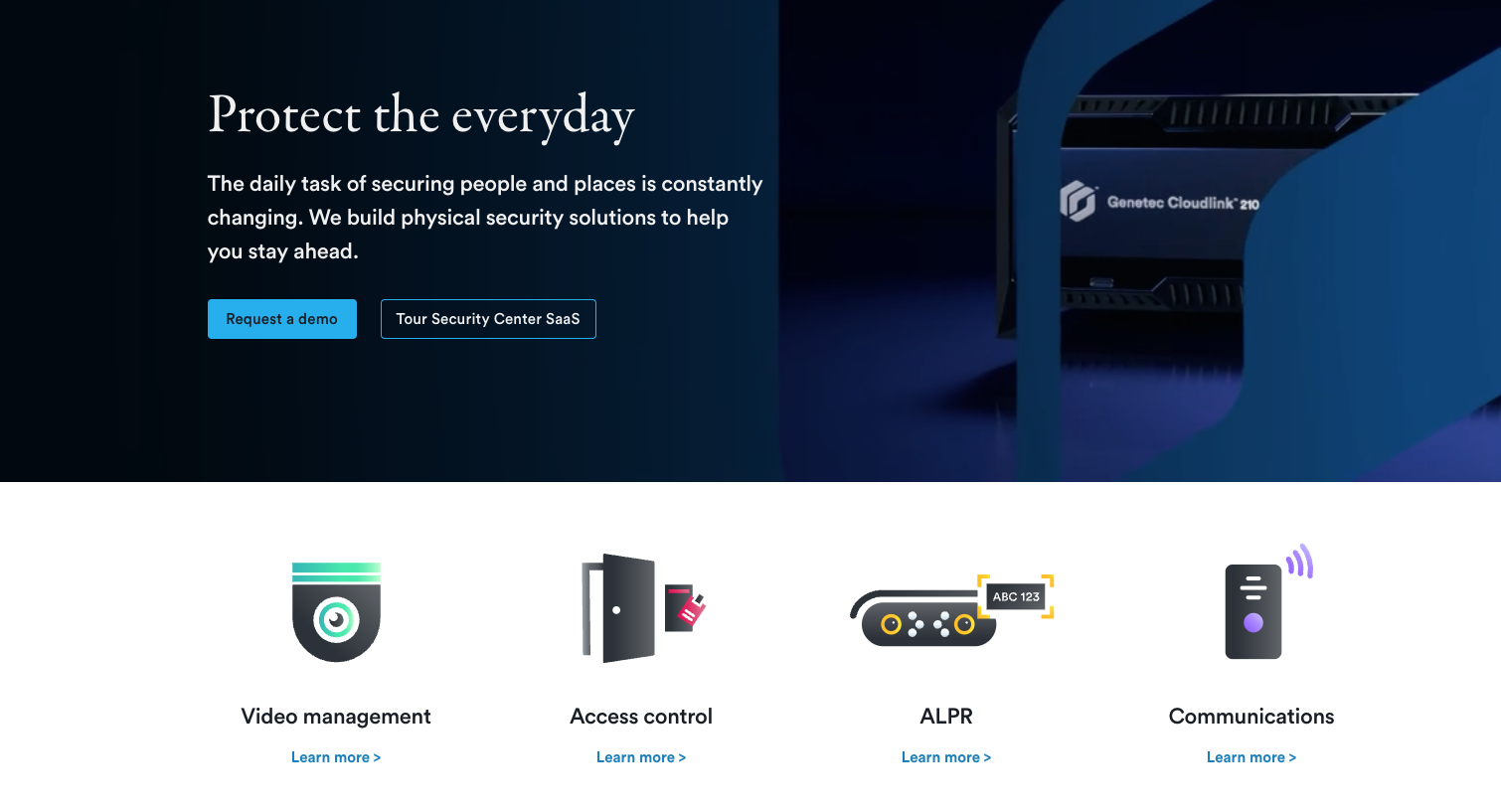
Genetec Security Center is an enterprise-grade unified security platform covering video management, access control, license plate recognition, and communications. Deployments run through certified partners and integrators who handle setup, customization, and ongoing system management.
Genetec's open architecture is its defining characteristic: it supports hardware from hundreds of manufacturers and integrates with a large ecosystem of third-party applications. That openness gives large, complex organizations significant flexibility in how they design and expand their security infrastructure, far more than Kastle's closed managed model allows. The tradeoff is that flexibility requires expertise to exercise. Genetec is built for environments with dedicated security engineers or experienced integrators, not for lean IT teams managing security alongside a broader portfolio.
Best for: Large enterprises, government organizations, and multi-site operations that need a highly customizable, open-architecture platform and have the internal resources or integrator relationships to manage it.
Strengths:
- Open architecture supporting hardware from hundreds of manufacturers and 1,000+ third-party integrations
- Unified platform covering video management, access control, LPR, and communications
- Strong federation capabilities for managing multiple sites from a centralized interface
- Built-in event management and automation for connecting video, access, and alerts into coordinated workflows
- Proven at enterprise and government scale
Limitations:
- Requires dedicated security engineers or experienced integrators to deploy and manage effectively
- Steeper learning curve as camera counts, users, and locations increase
- Higher total cost of ownership than cloud-native alternatives
Pricing: Subscription-based. Access control starts at approximately $99 per connection per year (Standard) or $149 (Premium); video and intrusion modules typically run $149–$199 per connection per year, with final pricing through certified partners.
Kastle vs. Genetec
Kastle manages your security operation for you. Genetec gives you complete ownership of it, at the cost of needing the internal expertise or integrator relationships to run it well. For organizations leaving Kastle because of vendor dependency and with the resources to take on that complexity, Genetec is the most capable open-architecture alternative on this list.
7. HID Global
HID Global is an identity-first access control provider with a hardware portfolio covering smart card readers, mobile credentials, biometric authentication, and controllers. Where most platforms on this list offer a complete security system, HID focuses specifically on the credential and identity layer: how people authenticate to enter spaces, whether through cards, mobile devices, or biometrics.
HID's depth in credential management and its integration with digital identity systems (IAM, SSO, FIDO-based authentication) makes it a strong choice for organizations where identity governance is the primary concern. It's a different kind of alternative to Kastle than the others on this list. Kastle manages your entire access control operation; HID gives you precise control over the credential and hardware layer, but leaves video management, alerting, and monitoring to other systems. That modularity is the appeal for organizations with specific authentication requirements, and it's also the limitation for anyone looking for an end-to-end system replacement.
Best for: Organizations where identity-centric access control is the priority and authentication flexibility across card types, mobile, and biometrics matters more than a unified video and security platform.
Strengths:
- Deep credential ecosystem covering smart cards, mobile access, and FIDO-based authentication
- Wide hardware portfolio (readers, controllers, biometrics) supporting different deployment models
- Strong integration with identity and access management (IAM) systems, connecting physical and digital access
- High flexibility in authentication standards and hardware selection
Limitations:
- Access control and credentialing only; no video management, AI detection, or monitoring
- Not a full Kastle replacement; video surveillance and managed monitoring require separate systems
- Pricing varies across hardware, credentials, and software, making total cost harder to estimate upfront
Pricing: Custom, based on the combination of hardware, credentials, and software components. Hardware is typically purchased through distributors or certified partners.
Kastle vs. HID Global
HID Global addresses one piece of what Kastle does (access control and credentialing) with significantly more flexibility and depth than a managed service model allows. It isn't a full Kastle replacement. For organizations whose primary frustration with Kastle is specifically around credential management, authentication standards, or physical identity governance, HID is worth evaluating alongside a separate video and monitoring platform.
How to Choose a Kastle Systems Alternative
The right starting point is identifying which Kastle friction is actually costing you the most.
If pricing opacity is the problem, the answer isn't necessarily a platform with published pricing, since most enterprise security platforms are quote-based. The better question is whether you can model costs by a predictable unit (per camera, per door, per site) without going back to sales every time. Genetec's per-connection pricing and Verkada's per-device licensing both give you that structure, even if the numbers are still negotiated.
If vendor dependency is the problem, look at how much operational control shifts to your team after deployment. Brivo and Rhombus give you direct cloud management across the full platform. Genetec gives you full system ownership, with the engineering overhead that implies. Coram sits in between: you own the system, but the platform is designed to be managed by a lean IT team rather than a dedicated security engineering staff.
If hardware lock-in is the problem, particularly if you have significant existing camera infrastructure, the field narrows quickly. Coram is the only platform on this list built explicitly around camera-agnostic deployment. Rhombus has some hardware flexibility; every other platform on this list either requires proprietary hardware or works best with it.




.png)