A typical procurement cycle for plant access control starts the same way: a customer audit lands, an insurance underwriter asks pointed questions, or a contractor walks through a door they should never have been near. The Facilities Manager spends two weeks pulling vendor brochures. By week three, every brochure says the same five things, and none of them answer the question that actually matters.
The question is which vendor will still be working at 6:55 a.m. on a Monday when 340 people try to badge in through three turnstiles in nine minutes, while a third-party HVAC tech tries to enter the chiller room with a contractor pass that expired forty minutes ago.
Plant environments break access control systems built for offices. The hardware fails in washdown areas. The contractor flow collapses under volume. The audit export doesn't match what a C-TPAT auditor needs. The OT/IT segmentation question gets raised after procurement, and the whole evaluation starts over.
This guide is structured to keep that from happening. It covers the manufacturing access control criteria that matter most: zone-by-zone access requirements, deployment trade-offs across cloud, on-prem, and hybrid architectures, and the cost components most plants miss. For foundational concepts on industrial access control categories and components, the existing Industrial Access Control guide covers the ground floor. This piece is the buyer's framework that sits on top.
TL;DR
- Office access control vendors lose at the plant in three places: hardware durability, contractor workflow volume, and compliance export depth.
- Twelve evaluation criteria convert vendor demos from feature parades into real comparisons.
- The zone-by-zone view below — perimeter, dock, production floor, hazardous storage, server room, quality lab, visitor entry — maps directly into RFP requirements.
- Cloud, on-prem, and hybrid each win in specific manufacturing scenarios. The right choice follows from topology and IT/OT policy, not vendor preference.
- Coram fits where the requirement includes unified video and access on one platform, multi-site cloud visibility, and compatibility with existing reader infrastructure.
Why Manufacturing Access Control Breaks Office-Grade Systems
Manufacturing access control is the combination of hardware, software, and policy that governs who enters which zones of a production facility, under what conditions, and with what audit trail. The breakdown when office-grade systems are used is operational, and it shows up in the runbook within ninety days of deployment. Seven factors separate plant environments from the conditions those systems are built for.
1. The Workforce Is a Moving Population
A 500-person plant typically has 380 full-time employees, 60 to 90 temp workers cycling weekly through staffing agencies, 40 to 70 contractors across maintenance, calibration, sanitation, and capital projects, plus drivers, regulators, and visitors. Credential lifecycles for each group differ in duration, scope, and revocation triggers. Office buildings deal with roughly one population: employees plus a thin visitor layer. Plants deal with five.
2. Identity Is Necessary. Certification Is the Requirement.
Access on a production floor often depends on whether someone is forklift-certified, confined-space-trained, LOTO-authorized, hot-work permitted, or HAZWOPER-current. The system has to enforce the certification at the reader in real time, not just the identity.
Most office-grade systems were built around badge-and-time, with role assignments handled in HR. They were never designed to ask, at the moment of access, whether a person's confined-space training is current. Plants that buy office-grade systems end up running certification enforcement on paper or in a separate spreadsheet, which fails the first OSHA inspection that pulls the records.
3. The Physical Environment Kills the Wrong Hardware
A reader rated IP54 mounted on the exterior of a paint booth fails within months. The same reader on a fish processing line, where the floor gets sanitized with high-pressure water and chlorine three times per shift, fails within weeks. Cold storage at -20°C, foundry floors radiating ambient heat into the 50°C range, and dust loads in woodworking operations all require hardware spec'd for the conditions. The IP rating, the temperature range, and the corrosion resistance on the spec sheet are what matter; the marketing brochure rarely surfaces them.
4. The OT/IT Boundary Is Now an Evaluation Gate
Manufacturing IT teams in 2026 are far more conservative about what touches the production network than they were in 2022. Ransomware incidents targeting industrial organizations rose sharply through 2024, and access control systems that need to sit on the OT network now get challenged by IT during procurement.
The pattern most plants are converging on: cloud-managed access control sitting in the IT network, with edge controllers handling local door decisions, and clearly defined integration points where data has to cross into OT. Vendors that can't answer the topology question precisely don't get to the shortlist.
5. Compliance Is Layered
Pharma carries FDA 21 CFR Part 11: electronic records and signatures, tamper-evident audit trails. Food carries FSMA. Defense carries ITAR and EAR. Cross-border carriers carry C-TPAT. Customer-mandated SOC 2 and ISO 27001 show up in nearly every supply contract. OSHA spans all of it.
The access audit export has to satisfy each framework without manual stitching. "Has audit logging" on a vendor's data sheet means nothing until the export format clears your auditor's review.
6. Shift Change Is a Load Test the Office World Never Runs
Most office access control sees evenly distributed load across a two-hour morning window. A plant at shift change sees three hundred-plus people moving through four to six entries in an eight-to-ten-minute window. The math is entries per minute, not employees per facility.
If a reader takes 1.8 seconds to grant access and the entry has four lanes, the theoretical ceiling is 133 entries per minute. Real-world throughput is usually half that, once you account for credential fumbles, mobile app load times, and the inevitable expired-badge swap at the front of the line. Office systems queue. Plants don't have the luxury.
7. The Dock Is a Separate Problem
Loading docks generate the highest theft incidents, the highest workers' comp claims, and the highest contractor footprint of any zone in a typical plant. Access control at the dock isn't just door unlock. It's carrier verification at check-in, dock door state tied to WMS, driver escort enforcement, after-hours lockdown, and a paired video clip on every dock event that an investigator can pull from one console when a pallet count comes up short on Tuesday morning.
The 12 Evaluation Criteria for Manufacturing Access Control
Each criterion below is framed as a question to put in front of vendors during evaluation. The wording is designed to be pasted into an RFP and force a specific answer instead of a brochure response.
Zone-by-Zone: What Access Control Has to Do Across the Facility
Use this table during the site walk-through and RFP build. Each zone carries different operational realities, different threat profiles, and different adjacent systems that have to talk to access control. Pulling it into the procurement document keeps the vendor conversation specific.
Deployment Models: Cloud, On-Prem, Hybrid
Each model has legitimate manufacturing use cases. Connectivity, topology, IT/OT policy, and existing infrastructure drive the decision more than vendor preference does.
1. Cloud-Managed Access Control
Best fit: multi-site manufacturers needing fleet-wide visibility, mid-market plants without dedicated security IT headcount, and plants modernizing from end-of-life on-prem systems where upgrade economics favor a clean cutover.
The trade-off is dependence on reliable connectivity. Most cloud-managed systems handle short outages through local edge caching, but any IT team will want a clear picture of sustained-outage behavior and where credential changes queue. Ask for the offline operation spec in writing: how long does the local cache hold, what changes queue and reconcile on reconnect, and what happens to anti-passback state across an outage.
2. On-Prem Access Control
Best fit: air-gapped facilities (defense, certain pharma), plants with strict data-residency requirements, sites with chronically unreliable connectivity, and legacy infrastructure where a capital refresh isn't justified in the current cycle.
The trade-offs are real: on-site servers to maintain, manual patch cycles, cross-site visibility that requires separate integration work, and hardware refresh cycles that need budget planning. Vendor roadmap risk is also real. Several historically on-prem access control vendors are migrating investment to cloud platforms, which puts on-prem customers on a slow path to end-of-life support. Get the three-year on-prem roadmap in writing before signing.
3. Hybrid
Best fit: most mid-to-large manufacturers in practice. The cloud management plane handles credentials, policies, schedules, and reporting on the IT side. Edge controllers at each plant handle local door decisions and continue operating during connectivity loss.
The architectural complexity is in the management plane-to-edge controller relationship. The vendor has to answer clearly what runs where during an outage, and how the platform reconciles state when connectivity returns. Specifically: can the controller make access decisions for the local cardholder population without phoning home, and how does it handle a credential revoked during an outage when the cardholder shows up at the reader before reconnect.
Manufacturing Access Control Costs and Procurement Timeline
Tell finance what the project actually costs before the RFP goes out. That conversation is the difference between a project that ships on time and one that gets cut at the quarterly review.
Realistic Timelines
- Single plant retrofit: 3 to 6 months from RFP issue to go-live, assuming the install can be sequenced around an existing shutdown window.
- Multi-site rollout: 9 to 18 months for 5 to 15 plants, depending on site complexity and the order in which plants come up.
- Greenfield installs on a new plant: typically tracks the plant's overall construction schedule, with access control commissioned in the final 60 to 90 days before production start.
Shutdown calendars compress everything. Most plants prefer hardware installation during summer or holiday shutdowns to avoid production disruption, which puts every plant in the region on the same installer calendar simultaneously. Booking installer capacity nine to twelve months out is realistic for a coordinated multi-site project.
Cost Components Most Plants Underestimate
The visible cost in a vendor quote covers readers, controllers, software licensing, and installation labor. The costs that surface later:
- Cabling and electrical work for new readers and controllers, especially where existing pathways aren't usable.
- Door hardware upgrades where older doors need replacement locks, strikes, or REX devices to work with the new system.
- Credential migration when existing cards aren't compatible with new readers, including the labor cost of reissuing cards to the entire workforce and the active contractor population.
- IT integration time for HRIS sync, AD or SCIM provisioning, and audit log export to SIEM or compliance reporting platforms.
- Training and runbook development for security operations, IT, and the front-desk team that handles contractor and visitor flow daily.
Hidden Cost Trap: Hardware Lock-In
Some platforms only work with the vendor's own readers and controllers. The first install looks cost-competitive. The second refresh forces a hardware swap because the platform doesn't support third-party hardware, and the switching cost is now the entire installed base. Hardware-agnostic systems with OSDP support preserve flexibility for the next five to ten years. Ask explicitly during evaluation and get the OSDP version support listed in writing.
Hidden Cost Trap: Per-Door Licensing
Some vendors price cloud-managed access control per door per month. For a multi-building plant with 100+ doors across four sites, the per-door math over a five-year window often exceeds the total hardware cost. Model five-year TCO under both per-door and per-site pricing structures before signing. Ask the vendor to produce the math for your specific door count.
Funding Angle
Finance approves access control upgrades more readily as compliance capex than as security opex. A customer audit requirement from a large retailer, a defense prime, or an automotive OEM frequently unlocks budget that pure security justifications can't reach. The same is true after a meaningful incident: theft, OSHA citation, or an insurance underwriting finding. Worth a conversation with finance before building the business case.
Common Pitfalls to Avoid
These are the failure modes that show up consistently across plant access control projects that miss the target.
Choosing a System Designed for Offices
The hardware fails in the plant environment within months. Shift-change throughput collapses. Contractor workflow becomes a manual nightmare on day one and never recovers. Verify with reference customers in your specific vertical — food, pharma, automotive, defense, plastics — before signing.
Underestimating Contractor Workflow
Contractor management is roughly five times the operational workload of employee management in most plants. If the vendor's contractor flow looks like an afterthought in the demo, your security team and front desk own the gap from day one.
Skipping the OT/IT Conversation
Bring the IT Director and the OT or controls engineer into the vendor evaluation in week one. Segmentation or architecture concerns raised at procurement time restart the evaluation. Raising them after contract signature is worse.
Not Pairing Access Events with Video
Every incident investigation in a plant pulls video and access logs together. When those live in separate systems with no automated pairing, investigators spend hours stitching them every single time. Over a year of incidents, the labor cost alone often exceeds the gap in platform pricing.
Buying into a Closed Hardware Ecosystem
If the vendor only works with their own readers and controllers, the next refresh is forced. OSDP support and hardware portability protect future budget flexibility and prevent vendor leverage at renewal.
Treating the Audit Trail as a Checkbox
"Has audit logging" is not the same as "generates an export your auditor will accept." Pull a sample export against your actual compliance framework before purchase. If the auditor sends it back, the platform isn't ready for your environment.
Buying on Demo Polish Instead of Edge Behavior
The demo runs on a perfect network with controlled credential populations. Ask the vendor to walk through specific failure scenarios: internet drops at 2 a.m., a contractor's credential is revoked while they're mid-shift, a reader fails on the second shift entry. The answers separate platforms built for plants from platforms built for office buildings.
How Coram Fits Into This Evaluation
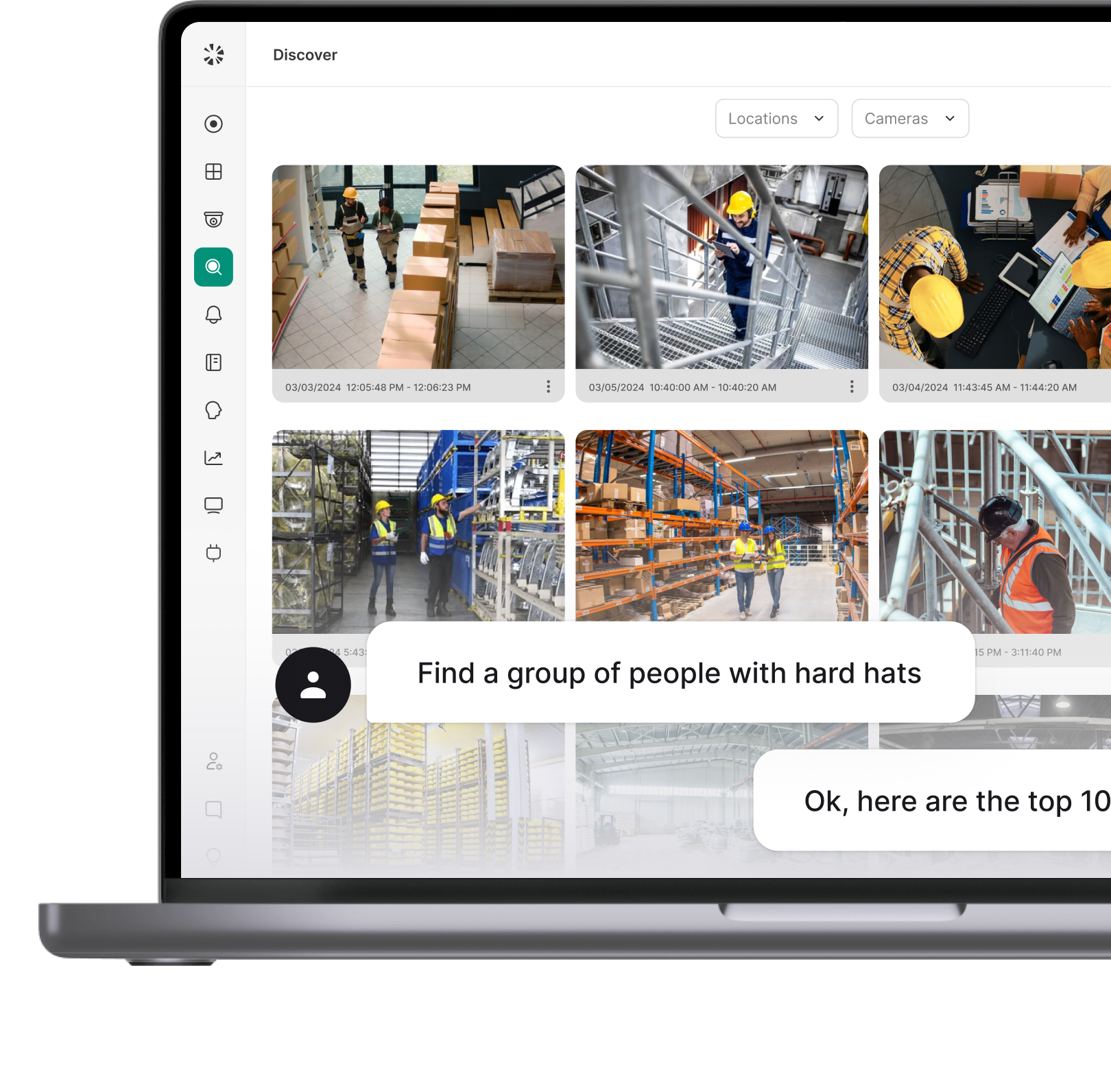
Coram is an AI-native physical security platform that manages video surveillance, access control, and emergency management from a single dashboard, connecting to existing camera and reader infrastructure. On manufacturing access control evaluations, its architecture maps directly to several of the twelve criteria above.
Coram works with existing Wiegand and OSDP readers and is compatible with over 1,000 IP camera models. Retrofitting a plant doesn't require replacing the reader and camera infrastructure already in place, which changes the economics of a multi-site modernization project substantially. Hardware replacement across a fleet is often the budget line that kills the initiative before it starts.
Where Coram Has Clear Strength
Camera and video integration is built into the platform's architecture, not added on. Every access event pairs automatically with a video clip; investigators search by credential, door, or time and retrieve footage without leaving the console. For dock theft investigations, OSHA audits, and any incident that requires pulling access and video together quickly, the unified architecture eliminates the manual stitching that separate systems require.
Multi-site fleet management runs on a cloud-managed dashboard that handles credentials, schedules, and policies across plants from a single pane. Policy changes propagate centrally without per-site reconfiguration, so IT teams managing five or fifteen facilities don't absorb the overhead of maintaining site-by-site configurations on a lean staff.
AI detection adds a proactive layer that most access control platforms don't offer. Real-time alerts for unauthorized access attempts, loitering at sensitive zones, and other configurable detection scenarios mean the system flags issues as they develop rather than after someone pulls the footage.
Local edge controllers store credentials and continue making access decisions during network outages, with battery backup for power loss. The offline behavior is demonstrable, not theoretical. Coram's G2 rating is 4.9/5, with a 9.5/10 ease-of-use score, which is relevant for plants where the access control system is managed by IT staff who also own the network, the devices, and the helpdesk.
Badge, mobile (smartphone Bluetooth and app), and biometric credentials are supported in parallel, with per-user access levels configurable down to the door and time window. Contractor and visitor management sits on the same platform, with pre-registration, visitor screening, and visit-to-video event linking.
Where to Verify During Your Evaluation
The honest answer for any vendor at this stage: pull the spec sheet and confirm against your specific zones. For Coram, three areas warrant direct verification before purchase:
- IP rating and environmental durability (criterion 2). Confirm published IP ratings and operating temperature ranges for Coram's door readers against your specific zone conditions — washdown areas, cold storage, and any hazardous-location classifications.
- Specific compliance certifications (criterion 8). If you carry FDA 21 CFR Part 11, ITAR, FSMA, or C-TPAT requirements, request a sample audit export against your specific framework before purchase.
- OT-network deployment patterns (criterion 6). Coram is cloud-managed by default, which fits the IT-side deployment pattern most manufacturing IT teams prefer in 2026. If your site requires an air-gapped or OT-resident deployment, that's an early conversation with Coram's team.
If you want to run Coram against the twelve criteria for your specific facility, book a demo and bring your zone list.




.png)