Genetec Security Center is a capable platform. After nearly three decades in the market, it has earned its position in government agencies, airports, and enterprise campuses where dedicated security teams and established integrator relationships make the complexity manageable. For a specific deployment profile, it remains the most full-featured option available.
That profile doesn't describe every organization. Teams managing security across distributed sites with lean IT staff often find that Genetec's depth works against them: configuration changes require partner involvement, operational costs scale faster than the feature set justifies, and the partner-only sales model adds friction before a single camera is deployed. None of those are reasons to dismiss Genetec. They are reasons to know what else exists before signing.
This guide covers the seven Genetec alternatives that matter in 2026: what each platform actually does well, where each falls short, and how to figure out which one fits your environment. Genetec serves 42,500+ customers across 159 countries. That footprint is worth understanding before deciding whether to stay or switch.
TL;DR
- Genetec remains the strongest option for large, complex deployments with dedicated security teams and deep integrator relationships.
- Coram is the strongest alternative for teams that want unified AI video and access control without replacing existing camera infrastructure.
- Milestone XProtect suits deployments where teams want full hardware flexibility and deep integration control on premises.
- Verkada and Rhombus are the right choices for fast, cloud-managed deployments with minimal IT overhead.
- Brivo (which acquired Eagle Eye Networks in late 2025) covers cloud-managed video and access with strong legacy camera compatibility, particularly in commercial real estate.
- Bosch BVMS fits enterprises already embedded in its hardware ecosystem that need maximum system resilience.
Why IT Teams Look Beyond Genetec Security Center
Genetec's friction points are structural, not incidental. Four patterns come up consistently when security and operations teams evaluate alternatives.
The partner-only sales model. Genetec sells exclusively through certified channel partners. There is no direct quote, no self-serve trial, and no vendor-direct negotiation. For teams that want to evaluate a platform before involving an integrator, or who prefer faster procurement cycles, this creates overhead before a single camera is deployed.
Deployment and operational complexity. Security Center is a mature, modular platform, and that depth comes with real configuration overhead. Organizations without a dedicated integrator on retainer often find themselves underutilizing the system because configuration requires partner involvement, dependent on that partner for changes a cloud-native platform would handle in minutes, and running operational costs that exceed what the feature set justifies for their use case.
Cost structure at mid-market scale. Genetec's licensing is device- and module-based, and pricing scales quickly. Mid-market organizations that don't need ALPR, intrusion management, or multi-site federation frequently end up paying for capabilities that never get used.
A cloud architecture still built on on-premises roots. Genetec has made real progress with Security Center SaaS and the Cloudlink appliance line. But teams fully standardized on cloud infrastructure sometimes find the hybrid model adds management overhead rather than reducing it.
None of these disqualify Genetec for the right deployment. They are legitimate reasons to know what the alternatives actually offer.
Genetec Alternatives at a Glance
7 Best Genetec Alternatives in 2026
The platforms below are ordered by how directly they address the most common reasons organizations move off Genetec.
1. Coram
Coram is an AI-native physical security platform that connects to any existing IP camera and manages video surveillance, access control, and emergency management from a single cloud dashboard.
Coram doesn't require new cameras. It works with any ONVIF-compatible IP camera, which means the hardware already in place carries over without a rip-and-replace. For organizations with years of camera infrastructure invested, this is the detail that changes the budget conversation. Genetec also supports a wide range of third-party cameras, but its deployment model still requires significant on-premises server infrastructure and integrator involvement to manage. Coram removes both dependencies.
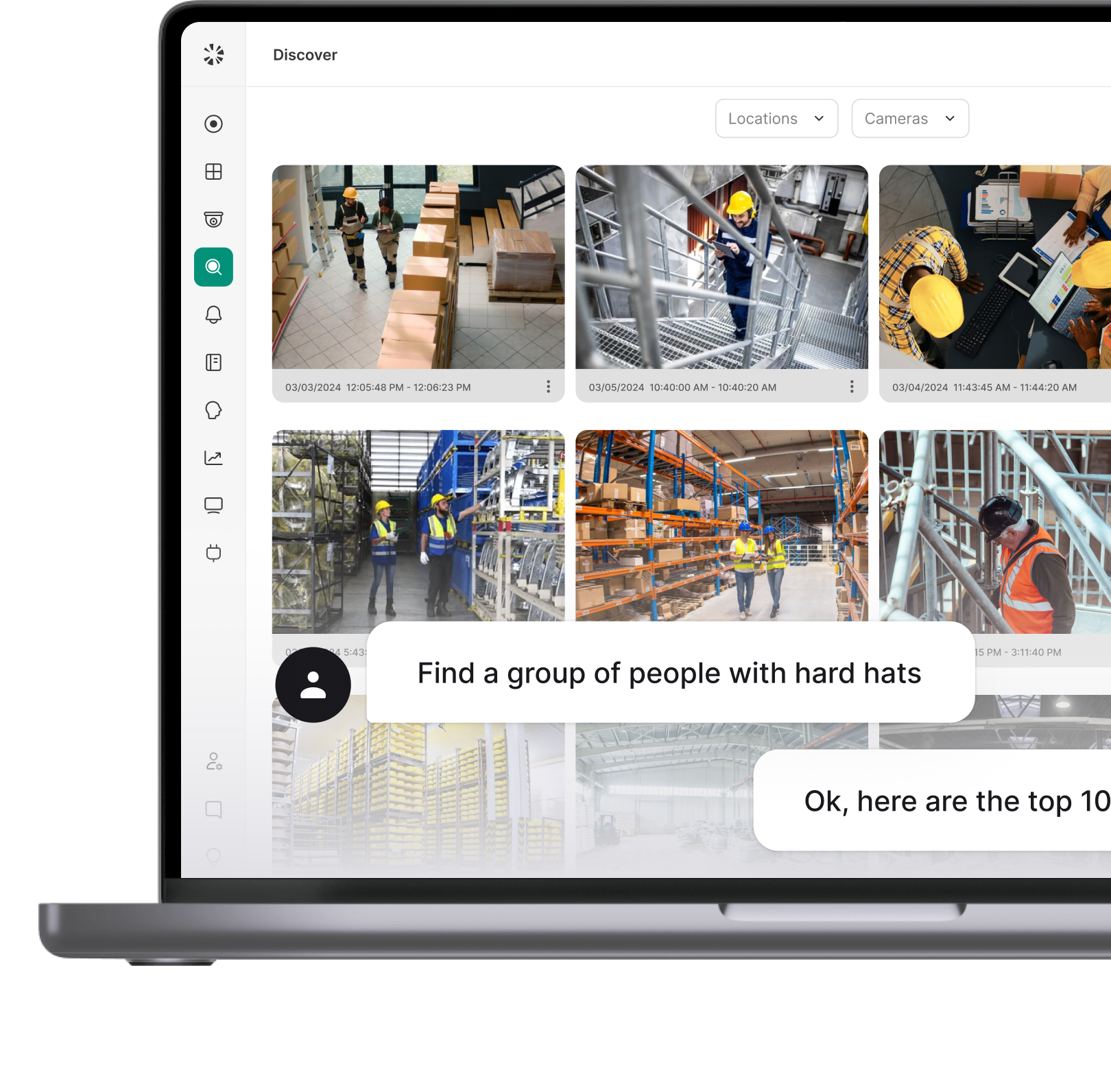
Coram and Genetec also differ fundamentally in how AI works within the platform. Genetec's AI capabilities are largely add-on modules or partner integrations. Coram builds them into the base platform: natural language video search, weapon detection, slip-and-fall detection, tailgating alerts, and license plate recognition are all included without additional licensing. A security operator can search "person in a red jacket near the loading dock at 6am" across every camera on every site from one interface.
The platform also unifies video and access control as a single data layer rather than two products sharing a dashboard. Door events surface linked video automatically. AI search runs across both systems simultaneously. For teams managing multiple sites with lean staff, that unification reduces the number of vendor relationships, logins, and support contracts to maintain.
Best for: Security and operations teams at mid-to-large organizations who want unified AI video and access control without replacing existing camera infrastructure or managing separate vendor relationships.
Strengths:
- Works with any ONVIF-compatible IP camera. Existing hardware carries over without replacement, which changes the cost calculus significantly on larger deployments.
- Natural language video search runs across all cameras and access logs from one interface; operators find specific events without pulling footage manually.
- Weapon detection, slip-and-fall detection, tailgating alerts, and license plate recognition are included in the base platform, not sold as add-on modules.
- Video, access control, emergency management, and visitor management run from a single cloud dashboard across unlimited sites.
- SOC 2 Type II and HIPAA certified, covering compliance requirements in healthcare and education deployments.
- Deploys in hours, not weeks; one customer with 100+ cameras reported being up and running in ten minutes.
Limitations:
- Founded in 2022 and Series A-funded. Shorter enterprise track record than Genetec, Milestone, or Avigilon.
- Pricing is quote-based; no published per-camera rates.
Pricing: Quote-based. Free trial available.
2. Milestone XProtect
Milestone XProtect is an open-platform video management system deployed across enterprise and government environments worldwide, built on hardware flexibility and a deep third-party integration ecosystem.
Milestone's durability comes from hardware flexibility. If your organization needs a VMS that works with nearly any camera or device from any manufacturer, and you want to integrate specialized analytics, access control, or business intelligence tools from third-party vendors without hardware lock-in, XProtect is where most large IT teams start. It supports over 14,000 cameras and devices from more than 700 manufacturers.
Milestone's position relative to Genetec is a matter of ecosystem philosophy rather than architecture. Both are on-premises platforms with similar infrastructure requirements. Milestone positions itself as the integration-neutral option: it doesn't push proprietary hardware or manufacturer relationships the way some platforms do. For organizations that want to build around best-of-breed third-party tools rather than commit to one vendor's ecosystem, that openness has real value.
The tradeoff is the same one that applies to any on-premises platform at this tier: IT teams own the infrastructure. Server maintenance, storage management, hardware replacement cycles, and software updates are internal responsibilities. Native AI is limited; meaningful analytics require third-party licensing through integrations like BriefCam. Multi-site deployments require federated management through Milestone Interconnect, with each site typically needing its own recording server.
Best for: Large enterprises and system integrators who need a flexible, on-premises VMS that supports a wide range of third-party devices and custom integrations, and who have the IT resources to own the infrastructure.
Strengths:
- Supports 14,000+ cameras and devices from 700+ manufacturers through ONVIF compatibility and manufacturer device packs. That's the broadest hardware compatibility in the category.
- Multiple licensing tiers (Essential+, Express+, Professional, Expert, Corporate) let organizations scale without switching platforms as their deployment grows.
- Strong forensic search capabilities, including the Rapid REVIEW feature for accelerated footage review across large libraries.
- Extensive third-party integration marketplace for analytics, access control, and business intelligence tools.
Limitations:
- On-premises architecture means IT teams own server maintenance, storage management, and hardware replacement cycles. The infrastructure burden is the same as Genetec.
- Native AI capabilities are limited; advanced analytics require additional third-party licensing, typically through integrations like BriefCam.
- Multi-site deployments require federated management through Milestone Interconnect, with each site typically requiring its own recording server.
Pricing: One-time license per tier, plus per-camera device licenses. Infrastructure costs (servers, storage, Windows licensing) are additional. Care Plus maintenance runs approximately $23–$50 per camera per year.
3. Avigilon (Motorola Solutions)
Avigilon is an AI-powered video surveillance and access control platform, now part of Motorola Solutions, available in two configurations: Avigilon Unity for on-premises deployments and Avigilon Alta for cloud-native video and access control.
Appearance Search is the product's most distinctive capability: it locates a specific person or vehicle across an entire site in near real-time by searching across access logs and video simultaneously. For enterprise security teams running investigations across large campuses, that capability reduces what used to take hours to minutes. Alta's cloud-native architecture supports fully remote management with no on-site servers, which separates it architecturally from Genetec's on-premises roots.
Avigilon beats Genetec in cloud deployment speed and AI search performance on its own hardware. Where the equation shifts is third-party camera compatibility: Avigilon's AI features are optimized for Avigilon cameras, and mixing in third-party hardware limits what the analytics can do. Organizations with significant existing camera infrastructure from other manufacturers should factor that in before committing. Genetec's broader device support is a meaningful advantage in those environments.
Best for: Enterprise security teams that want AI-powered video analytics at scale, particularly organizations already in the Motorola Solutions or Avigilon hardware ecosystem.
Strengths:
- Appearance Search locates a specific person or vehicle across an entire site in near real-time by searching access logs and video simultaneously.
- Alta's cloud-native architecture supports 100% remote management with no on-site servers required.
- Patented Triple Unlock technology delivers 99.9% unlock reliability for access control, including offline operation during network outages.
- NDAA-compliant hardware, which matters for government and federally funded deployments.
Limitations:
- AI features are optimized for Avigilon cameras; integrating third-party cameras or access readers requires more configuration and limits analytics performance.
- Alta's AI capabilities require thoughtful system design to deliver value; organizations without integration expertise often underutilize the platform.
- Pricing is quote-based and typically positions at the higher end of the market.
Pricing: Quote-based through Avigilon's certified partner network.
4. Verkada
Verkada is a cloud-managed physical security platform covering video, access control, alarms, and environmental sensors through a single browser-based dashboard, built around proprietary hardware with on-device processing and storage.
Verkada's appeal is deployment speed. Cameras connect to the network and appear in the dashboard within minutes, with no NVRs or local servers required. For multi-location organizations, school districts, retail chains, and healthcare networks that need to roll out security quickly across many sites without heavy IT involvement, that matters. Natural language video search and up to 365 days of local footage storage on-device are included in standard licenses.
The hardware model is the constraint. Verkada cameras work exclusively with Verkada Command; integrating third-party cameras is very limited. That means organizations with existing camera infrastructure face a genuine rip-and-replace decision rather than a software migration. Camera hardware ranges from approximately $500 to $3,000+ per unit, and an annual cloud license is required per device. At scale, the total cost of ownership climbs quickly. Genetec's partner-only model creates procurement friction. Verkada's closed hardware ecosystem creates a different kind of lock-in.
Best for: Multi-location organizations, school districts, retail chains, and healthcare networks that need fast deployment across many sites and prefer a fully managed, vendor-controlled experience, and are willing to standardize on Verkada hardware to get it.
Strengths:
- Cameras connect to the network and appear in the dashboard within minutes, with no NVRs or local servers required.
- Up to 365 days of local footage storage on-device, with encrypted thumbnails synced to Verkada's cloud.
- Natural language video search is included in standard licenses.
- Unified dashboard manages video, access control, alarms, and environmental sensors across all locations.
Limitations:
- Closed hardware ecosystem: Verkada cameras work exclusively with Verkada Command, and integrating third-party hardware is very limited. Existing cameras don't carry over.
- Camera hardware ranges from approximately $500 to $3,000+ per unit, with an annual cloud license required per device; total cost of ownership escalates quickly at scale.
- Organizations with strict data sovereignty requirements may find Verkada's cloud-hosted storage model incompatible with their policies.
Pricing: Hardware cost plus annual subscription per device. Cameras start at approximately $199/year per camera for the subscription component. Full system pricing is quote-based.
5. Rhombus
Rhombus is a cloud-managed physical security platform with a cloud-edge architecture: cameras handle local processing and storage while the platform manages video, access control, and IoT sensors centrally without NVRs.
Rhombus is built for teams that want a system they can install quickly and hand off to non-technical staff to run. The cloud-edge model means footage processes and stores on-camera, reducing bandwidth dependency while keeping management centralized. Built-in AI features (facial recognition, license plate recognition, and people analytics) are included without additional licensing. Users consistently cite fast installation in reviews, and the per-camera annual licensing model is predictable.
The platform is still maturing in areas where Genetec and Milestone have years of depth: emergency management, advanced access control workflows, and enterprise-scale integrations. Organizations replacing Genetec and expecting equivalent configuration control will find the gap real. Rhombus is well-suited for mid-market teams that want a cloud-native platform that keeps improving and doesn't require dedicated infrastructure expertise to run. It's less suited for complex enterprise environments that need deep customization.
Best for: Mid-market organizations and multi-location businesses that want cloud-native simplicity with built-in AI analytics and can accept a platform still developing its enterprise depth.
Strengths:
- Cloud-edge architecture processes and stores footage on-camera, reducing bandwidth dependency while keeping management centralized.
- Built-in AI features (facial recognition, license plate recognition, and people analytics) are included without additional licensing.
- Fast installation; users consistently cite minimal configuration time in reviews.
- Per-camera annual licensing is predictable and scales with deployment size.
Limitations:
- Purpose-built for Rhombus hardware; integrating third-party cameras is limited compared to open-platform alternatives. Existing cameras don't carry over.
- Platform depth in emergency management and advanced access control workflows is still developing compared to more mature enterprise platforms.
- Per-camera annual renewals add up at higher camera counts, and some users flag this as the deployment scales.
Pricing: Subscription-based per camera, bundling hardware, software, and cloud services. Quote-based for exact figures.
6. Brivo
Brivo is a cloud-managed physical security platform covering access control and video surveillance from a single interface, formed by the merger of Brivo and Eagle Eye Networks in late 2025.
Brivo brought deep cloud access control with an established footprint in commercial real estate and multi-tenant buildings. Eagle Eye brought cloud video management and broad legacy camera compatibility. The combined platform covers video and access under one cloud-managed system, without the on-premises infrastructure requirements Genetec carries. Organizations already running Brivo for access control gain a video layer without adding a separate vendor relationship.
The integration is still in progress. The combined platform experience varies depending on which product line a deployment relies on, and the bridge devices required to connect existing cameras to the cloud add hardware cost and a dependency point to the architecture. AI analytics depth is still developing compared to platforms that have invested longer in AI-native capabilities. The platform has no native emergency management, and its cloud-only architecture means functionality degrades during internet outages. For sites where connectivity isn't guaranteed, that's a meaningful operational risk.
Best for: Organizations with mixed camera infrastructure that want to move to a cloud-managed model without replacing existing equipment, and teams in commercial real estate or multi-tenant environments where Brivo's access control footprint is already established.
Strengths:
- Broad camera compatibility supports existing IP cameras from most manufacturers, reducing hardware replacement costs during a cloud migration.
- The hybrid deployment option balances cloud convenience with on-premises control for organizations with data retention or compliance requirements.
- The merger with Eagle Eye Networks added cloud video management to Brivo's established access control platform, particularly strong for commercial real estate and property management use cases.
- Per-camera subscription pricing is transparent and scales predictably.
Limitations:
- Cloud-only architecture means functionality degrades during internet outages. A meaningful risk for sites where connectivity isn't reliable.
- Bridge devices are required to connect existing cameras to the cloud, adding hardware cost and a single dependency point to the architecture.
- No native emergency management capability; less AI depth than platforms built AI-first from the start.
- The merger integration is still in progress; the combined platform experience may vary depending on which product line a deployment relies on.
Pricing: Per-camera subscription based on resolution and retention period. Bridge hardware ranges from approximately $500 to $2,000 depending on camera capacity.
7. Bosch Security Systems (BVMS)
Bosch Video Management System (BVMS) is a modular, on-premises VMS built for mission-critical environments where system resilience and continuity under component failure are non-negotiable.
BVMS earns its place in airports, metro systems, and critical infrastructure through an iSCSI-based architecture that records directly from cameras to storage, eliminating server bottlenecks. The system maintains operation even when management and recording servers fail simultaneously, a capability that matters in environments where downtime carries real consequences. Metadata-based forensic search runs faster than raw video search, letting investigators locate events across multiple cameras simultaneously. The Enterprise edition scales to 200,000 cameras across 10,000 sites.
Bosch delivers what it promises, but only within its own ecosystem. Third-party camera support exists, but the strongest performance comes from Bosch cameras. Cloud management capabilities are limited; BVMS is fundamentally an on-premises platform, and that won't change. For teams evaluating it as a Genetec alternative, the honest comparison is this: BVMS has deeper resilience architecture for critical infrastructure, but it requires the same level of integrator expertise and IT ownership as Genetec, and less cloud flexibility. It's the right answer for a narrow set of use cases.
Best for: Large enterprises and critical infrastructure operators that require maximum system resilience, detailed forensic search, and deep integration with Bosch camera and access hardware.
Strengths:
- iSCSI direct-to-storage architecture eliminates recording server bottlenecks and maintains operation through multiple simultaneous component failures.
- Metadata-based forensic search locates events across multiple cameras faster than raw video review.
- Scales from a few cameras to 200,000 cameras across 10,000+ sites in the Enterprise edition.
- Deep integration with Bosch cameras, Bosch Access Management System, and IVA Pro analytics modules.
Limitations:
- Optimized for Bosch hardware; third-party camera support exists but limits the platform's performance and analytics depth.
- Cloud management capabilities are limited. BVMS is an on-premises platform, and organizations standardizing on cloud infrastructure should plan accordingly.
- Configuration depth and IT-centric architecture require experienced security integrators; this is not a platform suited for self-managed deployment.
Pricing: Tiered licensing (Viewer, Lite, Plus, Professional, Enterprise). BVMS Viewer is free for up to 10,000 sites for basic monitoring. Professional and Enterprise pricing is quote-based through Bosch's partner network.
How to Choose the Right Genetec Alternative
Four variables determine which platform fits your environment. Working through them in order narrows the field quickly.
Start with your deployment model. If your organization is standardizing on cloud infrastructure, Milestone and Bosch require an honest assessment of whether you want to own on-premises server infrastructure long-term. If data sovereignty or strict retention requirements apply, fully cloud-hosted platforms like Verkada may need additional compliance review before they're viable.
Factor in your existing cameras. Hardware replacement is one of the highest hidden costs in any platform migration. Coram, Milestone, and Brivo work with existing ONVIF-compatible cameras. Verkada and Rhombus require their own hardware, which changes the budget math significantly for larger deployments.
Be honest about your team's operational capacity. Genetec, Milestone, and Bosch deliver the most configuration flexibility, but they also require the most expertise to deploy and maintain well. Teams without a dedicated security integrator or in-house VMS administrator tend to underutilize these platforms. Cloud-native platforms from Coram, Verkada, and Rhombus reduce that dependency significantly.
Decide how important unified video and access control is. If access control is a future requirement rather than an immediate one, this factor shifts. If you need both now, prioritize platforms where a door event automatically surfaces linked video, not just a linked tab in a separate module. How tightly those two systems are actually integrated determines how much your team will use them together day to day.
Switching from Genetec: What to Plan For
Moving off Genetec is a real project. Knowing what carries over and what requires planning prevents surprises mid-migration.
Most ONVIF-compatible cameras work with alternative platforms without modification. If your camera infrastructure uses standard ONVIF protocols, hardware replacement is generally not required. Wiegand and OSDP access control readers also carry over to most modern platforms, though confirming reader compatibility for your specific hardware before signing is worth the step.
Genetec-specific integrations (custom SDK workflows, PSIM connections, or integrations with Genetec modules like AutoVu ALPR) don't have direct equivalents on every alternative platform. Mapping each integration to its replacement before starting a migration prevents surprises mid-project.
Plan for a parallel-run period of four to eight weeks on larger deployments. Running both systems simultaneously during cutover protects operational continuity and gives security teams time to validate the new platform against live conditions before decommissioning the old one.
Integrator relationships are often more embedded than they appear on paper. If your current Genetec deployment relies on a certified partner for configuration changes, firmware updates, or incident response, factor in whether your new platform changes that dependency or simply transfers it. Credential migration (moving user databases, access schedules, and permission sets to a new access control platform) also takes longer than most IT teams estimate the first time.
The Right Platform for Your Environment
The alternatives in this guide are genuinely capable systems. The right choice depends more on your deployment profile than on any single feature comparison.
Genetec remains the strongest option for large, complex environments with dedicated security teams and deep integrator relationships. Milestone and Bosch serve the same tier for teams that want maximum hardware flexibility or mission-critical resilience.
For mid-to-large organizations that want cloud-native deployment, AI-driven intelligence, and unified video and access control without managing separate systems or replacing existing cameras, Coram is built for that environment. Book a demo.




.png)