LenelS2, formerly Lenel, is Honeywell's enterprise access control brand. Its portfolio includes OnGuard, a feature-rich on-premises platform; NetBox, a browser-based access control system; and Elements, a cloud-based access control and video platform. Along with LenelS2 controllers and readers, these support organizations with demanding, multi-site security environments.
Running Lenel access control comes with three practical questions: what you actually have, what it costs to keep running, and whether it still fits your organization. This guide answers all three, plus the Lenel access control alternatives worth evaluating if it doesn't.
Lenel is deeply established across enterprise and government environments for good reason: it handles complex access control needs and long-running deployments well. That track record means replacing it isn't automatically the right move, and it isn't the assumption behind this guide.
The better starting point is understanding what you have and what keeping it actually involves: the product lines, the real cost structure, and the operational overhead your team absorbs. From there, you can weigh the three real paths (stay with LenelS2, migrate to another platform, or run a phased transition) and, if migration makes sense, what you can reuse, what has to change, and what the process actually looks like.
What Lenel Access Control Actually Is
Whether you're new to Lenel or inherited the system, the first step is figuring out which part of the LenelS2 lineup you're actually running. "Lenel" can refer to several different systems, and they're not deployed the same way.
OnGuard, NetBox, and Elements: Which One Do You Have?
The easiest place to start is the management software:
- OnGuard: OnGuard is a feature-rich access control system designed for complex enterprise deployments. It is traditionally associated with on-premises deployments and integrates with other security, business, and building systems.
- NetBox: LenelS2 NetBox is a browser-based access control and event monitoring system. You manage it through a web browser rather than a traditional installed client.
- Elements: LenelS2's cloud-based access control and video platform for organizations that want cloud management or need to replace aging servers and software.
- OnGuard Cloud: LenelS2 also lists OnGuard Cloud as a cloud-based option that delivers OnGuard functionality as a single-tenant SaaS solution hosted on AWS.
If you're unsure which one you have, check the name and version shown in the management interface, your system documentation, or the software running on the security server.
The Hardware Layer: Lenel Controllers, Readers, and Credentials
The software is only one part of a Lenel access control system. The doors themselves depend on the hardware installed throughout your buildings, which can include:
- LNL controllers and interface modules that connect the access control system to doors and readers.
- Readers that accept physical cards, mobile credentials, or other credential types.
- Credentials such as cards, fobs, and mobile credentials that determine who can access which doors.
For example, the LNL-1320 is a dual reader interface module that supports common reader protocols including Wiegand and OSDP. BlueDiamond is LenelS2's reader and credential platform, supporting both physical and mobile credentials. This hardware layer removes the need to replace everything at the door just because you're changing the software.
What can stay depends on the specific readers, credentials, controllers, wiring, and replacement platform involved. Compatibility needs to be checked before assuming any particular Lenel hardware can be reused.
Who Owns LenelS2 Now?
LenelS2 is a Honeywell brand. The current LenelS2 lineup spans OnGuard, OnGuard Cloud, NetBox, and Elements. That ownership can influence your evaluation, because product support, updates, end-of-life notices, and the future direction of the platform all sit within the current Honeywell and LenelS2 product structure. Before you budget a refresh, check your specific version and controller models against the current LenelS2 lifecycle notices. Support dates drive the timing of this decision more than anything else on this page.
What Lenel Access Control Costs to Keep Running
If you already have Lenel access control in place, the ongoing cost goes beyond the software license. Understanding the total cost of ownership means accounting for the servers and infrastructure behind the system, software maintenance, integrator services, and the cost of replacing aging equipment when it reaches the end of its useful life. If you're building a budget from scratch, it helps to start with what drives access control pricing across the category before pricing your specific refresh.
Licensing and Software Maintenance
Your Lenel costs can include software licensing, maintenance, upgrades, and support. The exact structure depends on your deployment and agreement, so there's no reliable per-door figure to apply across every Lenel system. When reviewing what you currently spend, look at:
- Software licensing and maintenance
- Updates and upgrades
- Additional doors or system capabilities
- Support and services included in your agreement
The useful number isn't just what you pay for the software, but what you spend to keep the system supported and make changes as your access control needs grow.
Server and Infrastructure Overhead
For an on-premises deployment, your team also has to maintain the infrastructure that runs the system. That includes servers and storage, operating system and database dependencies, security patches and updates, backups and recovery, and server maintenance and monitoring.
Also, make sure you're clear about who handles each responsibility. Your IT team may manage the servers and backups, while your security team or integrator handles the Lenel application.
Integrator Dependency
For many organizations, the integrator is part of the ongoing operating cost. Certain system changes and specialized work require a certified LenelS2 dealer or integrator. That affects both cost and speed. A routine change may involve:
- Scheduling work around the integrator's availability
- Paying for service or configuration work
- Coordinating between IT, security, facilities, and the integrator
- Waiting for outside support when something needs to be changed or fixed
If your team handles most changes internally, this is less of a concern. If you depend heavily on an integrator, it becomes a significant part of the system's ongoing cost.
The Refresh-Cycle Question
Servers reach replacement age. Operating systems and database environments fall out of support. Panels approach the end of their useful life, often on a different schedule than the software. That's when you have to decide where the next round of investment should go. You have three choices:
- Stay with LenelS2: Refresh the infrastructure and continue with your existing system.
- Migrate to another platform: Use the refresh as an opportunity and move to a different architecture.
- Take a phased approach: Keep existing sites on Lenel while moving new or refreshed sites to another platform.
A refresh doesn't mean you should migrate. It gives you a practical point to compare the cost of continuing with Lenel against the cost and effort of changing platforms, which is really a question of weighing cloud against on-premise for the next five to seven years rather than a verdict on your current software.
Why Organizations Start Looking at Alternatives
Lenel can be working perfectly well and still reach a point where you need to reconsider the setup around it. Four reasons come up most often, and the first one is usually what starts the conversation.
Server and Operating System End-of-Life
Most Lenel evaluations don't begin with dissatisfaction with the software. They begin with a support date. A Windows Server or SQL Server version falls out of support, a controller line hits end of life, or the security server that has run quietly for eight years needs replacing. At that point access control stops being a security line item and becomes an infrastructure spend that has to be justified.
That's the trigger, and it's worth naming clearly because it changes the question you're answering. You're not asking "is Lenel good software?" You're asking "we have to spend money on this system either way, so which direction should the money go?" The refresh-cycle section above covers how to compare the two spends. The three reasons below are what tip that comparison one way or the other.
Integrator Lock-In and Change Costs
Adding doors, changing access rules, troubleshooting the system, or making larger configuration changes often requires outside help. The cost isn't only the integrator's fee. It's also the time spent requesting, scheduling, approving, and testing each change. That's manageable for a single site. It rarely stays manageable across fifteen.
Multi-Site Management Overhead
Different servers, configurations, credentials, access rules, and upgrade schedules to keep track of. A change that's straightforward at one location takes real coordination when the same requirement exists across several sites. This is where your current architecture matters. If your team spends more time coordinating systems between locations than managing access itself, it's worth looking at other approaches.
Fragmentation Between Access, Video, and Everything Else
A door event usually needs to be reviewed alongside video. Security teams also need information from visitor management, emergency systems, or other building systems. When those systems operate separately, your team moves between different interfaces and pieces together related events manually.
LenelS2 has an answer to part of this. Elements brings access control and video verification into a single web portal, so if you're already running Elements, the gap is narrower than it looks from the outside. The questions worth asking are how much of your estate that portal actually covers, whether it extends to visitor management and emergency communication, and whether the AI detection you want can run on the cameras you already own. A separate-system setup isn't wrong either. Many established organizations built their security environment this way over years of good decisions. But when you're already funding a major refresh, it's the right moment to ask how much of the manual stitching you're willing to keep paying for.
Your Three Real Options
There are three practical paths if you're reassessing your Lenel setup: stay with LenelS2, migrate to another platform, or run a phased transition. The right one depends on your infrastructure, IT resources, site count, and how much change your organization can realistically take on.
Stay and Upgrade Within LenelS2
Staying with LenelS2 is a legitimate option, especially if your current system handles complex enterprise or government requirements well. If the system, integrations, and existing workflows are working, there may be little reason to replace them. LenelS2 also offers cloud options such as Elements and OnGuard Cloud, so staying doesn't necessarily mean keeping the same deployment model.
Migrate to a Cloud-Native Platform
Migration to a cloud-native platform is worth evaluating if you manage multiple sites, have a small IT team, or are already facing server and infrastructure refreshes. A cloud-native platform reduces the amount of on-site infrastructure your team maintains, though the term covers a wide range of architectures. It's worth understanding what cloud-native means across vendors before you compare quotes, because some designs still assume a server in every building.
Run Hybrid During a Phased Transition
You can also move gradually instead of replacing Lenel everywhere at once. New or refreshed sites move to the new platform while existing sites stay on Lenel until they reach their refresh point. This lets you validate the new system before expanding the rollout, and avoids forcing a full replacement while the existing system is still working.
Lenel Alternatives Compared
A Lenel security system replacement can mean very different things depending on the platform you choose. The comparison below shows the main differences at a glance, with LenelS2 included as the baseline you're comparing against. For wider context on who else operates in this category, see the wider access control vendor landscape.
Each entry below covers where that platform beats Lenel and for whom, along with its capabilities, trade-offs, and pricing.
1. Coram Access Control
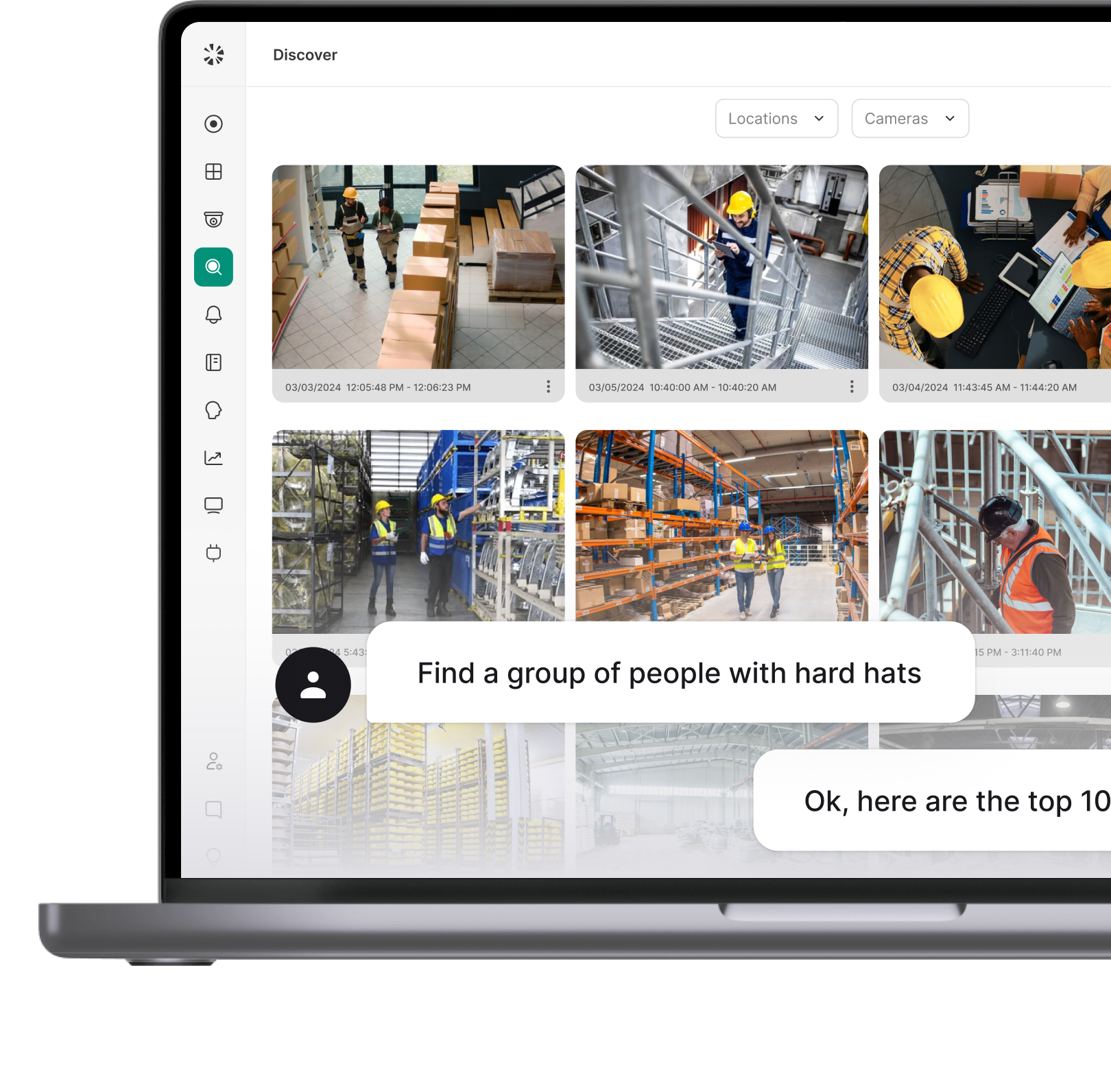
Coram Access Control is a cloud-managed access control system that works with existing readers, locks, and wiring where compatible. Leaving Lenel doesn't mean replacing your door hardware. Access Control is part of Coram's AI native unified physical security platform, alongside Video Security, Guest Management, and Emergency Management, so door events, video, visitors, and emergency communication sit in one system and one audit trail instead of separate tools.
Where Lenel requires a certified integrator and on-prem servers for most changes, Coram Access Control runs from a cloud dashboard your own team manages, and local hardware keeps doors operating through a network outage. If you're already on Elements, you have access and video in one portal already. The difference is the rest of the platform: AI native detection on cameras you already own, no dependency on a single hardware line, and emergency coordination in the same system rather than a separate tool. That matters most for organizations facing a Lenel infrastructure refresh, and for lean IT teams running multiple sites without dedicated security engineering staff.
Best For
Multi-site organizations that want to modernize aging on-premises access control without replacing all their existing door infrastructure. Rated 4.9/5 on G2 with a 9.5/10 ease-of-use score, which matters when the people administering the system are a two-person IT team rather than a security engineering group.
Capabilities
- Reuse compatible readers, locks, and wiring instead of replacing door infrastructure when moving off Lenel
- Access control continues operating locally during network disruptions, so a temporary internet outage doesn't stop normal door operations
- Door events and video live in the same platform and audit trail, so investigating an incident doesn't mean switching between systems
- Emergency Management in the same platform, so a door event can trigger a coordinated response instead of a phone tree
- AI native detection that runs on existing IP cameras rather than requiring new hardware at every site
- SOC 2 Type II audited and HIPAA compliant, relevant for organizations moving off Lenel in regulated environments
Trade-Offs
Coram is newer than LenelS2 for deep enterprise and government PACS workflows, so organizations with well-established Lenel-specific processes should evaluate its fit carefully. The third-party integration ecosystem also doesn't yet match the depth of Lenel's, so map your existing integrations before committing to a timeline.
Pricing
Contact the team or book a demo for a free trial.
2. Genetec Security Center (Synergis)
Genetec Synergis is the access control module inside Genetec Security Center, built on open architecture. It integrates with Genetec's own Omnicast video management, AutoVu license plate recognition, and Sipelia intercom management, along with third-party systems.
Where it wins against Lenel is for organizations that want to stay in an on-prem-capable, integrator-supported model but need a more open hardware ecosystem and tighter native ties to video and license plate recognition than LenelS2 currently offers. It doesn't reduce the operational overhead a cloud-native platform would, but it broadens what you can build on top of it. If Genetec is your main contender, our guide to how Lenel and Genetec compare directly goes deeper on the head-to-head than this page does.
Best For
Organizations that need enterprise-scale access control across multiple sites and want flexibility around hardware and integration.
Capabilities
- Open architecture with broad third-party device and reader support, useful for organizations with mixed hardware after years on Lenel
- Native integration with Genetec's own video, license plate recognition, and intercom systems
- Strong track record in high-security and government verticals, similar territory to Lenel's core base
- Highly customizable configuration for complex, multi-site security programs
Trade-Offs
Like Lenel, Genetec is infrastructure-centric and typically requires dedicated security engineering staff to administer well. Synergis's broad hardware compatibility also doesn't guarantee every existing Lenel component carries over. Your specific readers, controllers, locks, credentials, and integrations need to be checked against Genetec's supported device list before planning a migration.
Pricing
Pricing depends on the deployment and is provided through Genetec or its partners.
3. Brivo
Brivo is a cloud-native access control platform for managing multiple locations remotely from a central dashboard, without maintaining dedicated on-site access control servers. Since merging with Eagle Eye Networks, Brivo has added a full video layer, including AI capabilities such as gun detection, face match, and license plate recognition.
The case for it over Lenel is for organizations that want out of the on-prem server model entirely and don't need Lenel's depth of configuration. Teams manage doors, users, credentials, and access policies without the infrastructure or integrator dependency that comes with an OnGuard deployment.
Best For
Multi-site organizations that want centralized cloud management and less on-site infrastructure to maintain.
Capabilities
- Cloud-native architecture removes on-site access control servers and the maintenance that comes with them
- Access and video in one platform since the Eagle Eye Networks merger, including AI detection for guns, faces, and license plates
- Open API for integrating with existing IT systems
- Scales across distributed sites without adding a server room at each location
Trade-Offs
Brivo may not offer the same depth of customization as Lenel for complex environments. If your current deployment relies on highly specific rules, workflows, or integrations, confirm Brivo can reproduce them before switching.
Pricing
Contact Brivo for pricing.
4. Verkada
Verkada Access Control is a hybrid-cloud system built for centralized management across multiple sites. It also connects access control with Verkada Video Security, so teams can see video alongside door events and investigate activity from the same platform.
It pulls ahead of Lenel when you want cloud-based management and minimal server infrastructure, and you're willing to standardize on Verkada hardware to get there. That's a different trade-off than Lenel's open, integrator-supported hardware model.
Best For
Multi-site organizations that want cloud-based management, minimal server infrastructure, and access control closely integrated with video.
Capabilities
- Hybrid-cloud management with minimal on-site server infrastructure to maintain
- Access control tightly integrated with Verkada Video Security for combined investigation in one platform
- Centralized administration across sites from a single dashboard
- Published hardware pricing, unusual in this category and useful for early budgeting
Trade-Offs
Verkada is more tightly tied to its own hardware and cloud platform than Lenel's broader enterprise ecosystem. Existing readers can be reused in many cases, but the transition may still require Verkada controllers rather than being a software-only change.
Pricing
Verkada publishes hardware MSRP, with access control licenses priced separately for most controllers. Current examples include $899 for the AC12, $1,999 for the AC42, and $5,999 for the AC62.
5. Avigilon (Alta and Unity)
Avigilon, part of Motorola Solutions, splits access control across two suites: the cloud-native Alta Access and the on-premises Unity Access, formerly Access Control Manager. Both come with readers, credentials, controllers, and wireless locks.
It beats Lenel most clearly for organizations that want a single vendor spanning both cloud and on-prem deployment models, with access control tied closely to video and strong AI detection, without fully committing to one architecture the way Lenel's on-prem-first design assumes.
Best For
Organizations that want flexible deployment options and strong integration between access control and video, with mobile access and centralized management across sites.
Capabilities
- Choice between cloud-native Alta Access and on-premises Unity Access, useful for organizations not ready to commit to one deployment model
- Strong integration between access control and video, backed by Motorola's AI detection capabilities
- Mobile access and centralized management across sites
- Support for wireless locks, which can reduce wiring work during migration at some doors
Trade-Offs
Because Alta and Unity are separate suites, the right migration path depends on which one you choose and how closely you need to reproduce your existing Lenel environment. Avigilon's strongest AI features are also optimized for its own cameras, so third-party hardware can limit analytics performance.
Pricing
Quote-based.
How a Lenel Migration Actually Works
Before you plan the cutover, you need a clear inventory of the system you're replacing. That means understanding the hardware, credentials, cardholder data, access rules, integrations, and dependencies around your Lenel deployment. Here's what that inventory covers.
What You Can Usually Keep
You may be able to reuse parts of the existing door infrastructure, but compatibility has to be checked for all access control system components:
- Existing readers may be reusable if the new platform supports their communication protocol and credential format.
- Locks, door hardware, and existing wiring can often remain if they meet the new platform's requirements.
- Existing credentials may be retained when the new system can read and manage their format.
All of these checks need to be confirmed before assuming your current badge population will carry over.
What Has to Change
The management layer is the part you're replacing. Depending on the target platform, the access control software, controllers, and credential setup may all change. The main questions are:
- Do the existing panels work with the new platform?
- Can the current readers and locks remain?
- Will existing credentials still work?
- Which integrations need to be rebuilt?
- Which access rules and schedules need to be recreated?
Don't treat a reader migration and a credential migration as the same thing. A reader may be compatible while the credential format isn't.
Exporting Cardholder Data and Credential Mapping
The cardholder database is usually one of the more important parts of the migration. Before the cutover, you need to understand exactly what data can be exported and how it will map to the new system. That typically includes:
- Cardholder names and identifiers
- Badge and credential information
- Access levels
- Schedules and time zones
- Door and site assignments
- Active and inactive credentials
OnGuard supports cardholder, badge, and access-level management, including bulk access-level assignment and reporting. It also supports multiple credential technologies and card formats, which is why credential mapping needs to be handled deliberately.
A Realistic Phased Sequence
For a multi-site organization, moving everything at once is rarely the only option. A phased migration gives you a chance to prove the new setup before expanding it. A practical sequence looks like this: pilot building, validate, expand by site, decommission.
Start with one representative site. Run the new system alongside the existing environment long enough to validate doors, credentials, schedules, integrations, reporting, and daily operations. Once those are working as expected, move the next sites in planned groups.
How long the parallel period lasts depends on the site and migration complexity. The important thing is to define the cutover criteria before you start, and not keep both systems running indefinitely.
What to Budget Time For
Data and configuration cleanup takes longer than most migration plans assume, so give your team time for:
- Reconciling active cardholders and credentials
- Removing outdated or duplicate records
- Rationalizing access levels and schedules
- Mapping credentials to the new system
- Rebuilding integrations
- Testing doors and access rules
- Training administrators and operators
- Running the old and new systems in parallel during cutover
Large OnGuard environments add their own complications: multiple regions, synchronized databases, shared cardholder records, and integrations into other business systems. Inventory the current environment first, confirm compatibility with the target platform, then migrate site by site.
Questions to Ask Before You Commit
Before choosing a migration path, get upfront clarity on these questions, which can affect cost, timing, and risk:
- What happens to your existing credentials? Can current cards, fobs, or mobile credentials be reused, or will they need to be replaced?
- How long will the old and new systems run in parallel? Know when testing starts, when the cutover happens, and when the old system can be decommissioned.
- Who owns the cutover? Confirm who will handle the technical work, testing, user communication, and issue resolution.
- What's the rollback plan? If the new system doesn't work as expected, know how you'll return to the existing system without disrupting access.
- Which integrations need to be rebuilt? Identify connections to video, visitor management, intercoms, alarms, and other systems before migration begins.
- What exactly does the data export contain? Confirm whether cardholders, credentials, access levels, schedules, and other required records can be exported and imported into the new platform.
Once these points are clear, you can compare migration paths with a much better understanding of the work and risk involved.
What to Do Next
The right path here isn't about which platform has the most features. It's about how much operational overhead you're willing to keep paying for, and whether your next infrastructure refresh is the moment to change that.
If reusing your existing door hardware while cutting the servers, patching, and integrator dependency behind it matters to you, Coram is worth evaluating alongside the other platforms in this guide. Book a demo to walk through what a phased migration would look like across your specific sites, which hardware you'd keep, and where the cutover risk actually sits.




.png)