

The award notice lands in JustGrants, someone forwards it to the superintendent, and for about an hour it feels like the hard part is over. It isn't. The money isn't in the district's account. The window to accept it has already started. The quotes in your application are months old, and the board still has to approve the purchase.
In FY2025, the COPS Office made 211 SVPP awards from 1,609 applications, according to its 2025 SVPP fact sheet. And grants carry far more of the load in schools than in the corporate world: among the 85 K-12 leaders in Coram's State of K-12 Physical Security 2026 survey, around 29% fund security through state or federal safety grants, against under 5% of corporate buyers.
Many of this year's recipients will be running SVPP for the first time. The FY2026 guide gave additional consideration to applicants the program didn't fund in FY2023 to FY2025.
This guide walks through what comes next, in the order districts run into it. It draws on the COPS Office's own award documents and on our conversation with Seth McDaniel, Chief of Police at Commerce ISD in Texas, who has led his district through a federal school safety grant from award to installation.
TL;DR
- Accept the award in JustGrants within 45 days of the award letter.
- Funds arrive as reimbursement or short-term advances, never as a lump sum.
- Re-price every quote before the board approves anything.
- Budget lines are fixed, and moving money between them has limits.
- Banned camera brands, license plate readers and facial recognition are off-limits.
{{cta-component}}
The Money Isn't in Your Account Yet
An SVPP award is a commitment of federal funds, and it becomes money only after a few administrative steps. Funds stay locked until your Authorized Representatives sign the award, your budget receives final clearance and any special conditions on your award are satisfied.
Start in JustGrants.
Your Entity Administrator assigns the roles the award needs:
- a Financial Manager,
- a Grant Award Administrator and
- two Authorized Representatives.
Both representatives then review and electronically sign the award package within 45 days of the date on the award letter.
(If you need more time, ask your COPS Office grant manager before the window closes. The COPS Office posts each year's award documents on its SVPP award page.)
To draw funds, the district also enrolls in the Treasury's ASAP payment system, which requires every DOJ award recipient to sign in with ID.me multi-factor authentication. None of these steps is hard, but each involves a different person, and one missing login can stall the sequence.
Plan the Cash Before You Plan the Install
SVPP covers up to 75% of allowable costs, with a federal share of up to $500,000, and the district contributes at least 25% as a cash match paid during the award period. Federal funds are drawn down in one of two ways: as reimbursement after the district pays, or as an advance for costs it's about to pay. Under DOJ rules, an advance has to be spent within 10 days of the drawdown, so neither route puts the full award in your account up front.
That still makes timing a budget question. The 25% match comes from the district's own funds unless the COPS Office waived it in writing, and reimbursement means fronting costs until the drawdown clears. Microgrants of $100,000 or less don't require a match at all. A district without reserves may need to schedule purchases into the next budget year. Only costs incurred on or after the start date in your award package count, so nothing bought before then is covered.
Two habits protect the cash. First, don't pay for equipment before it's delivered. Second, remember that spending every dollar against the approved lines leaves no cushion for surprises. A detailed installation scope reduces the risk of unexpected costs, which is where the next section starts.
Scope the Installation Down to the Last Cable Drop
Overruns often start with installation work nobody wrote down, not with the hardware.
Picture this scenario. The estimator walks the buildings with your team and writes a quote. Weeks later a different crew arrives, working evenings while the buildings are empty, and runs cable to every door instead of the doors in the quote, to future-proof the building. The district gets an invoice for work nobody approved, and the grant can't pay it.
Prevent it in three steps:
- Walk every building with the crew that will do the work, not only the person who wrote the estimate.
- Put the scope in writing: which doors, which cable drops, how many cameras and where. Anything outside that list needs your written sign-off before it's done.
- Agree on network setup with your platform vendor before cameras go up. Settling details like IP addressing early beats reconfiguring hundreds of devices later.
Be honest about the timeline. Implementation takes months, not weeks, and the school calendar decides when crews can work in occupied buildings.
One compliance clock runs during this phase. The FY2025 Award Owner's Manual requires recipients to notify local law enforcement and fire agencies of the award and the planned school safety improvements within 90 days of accepting it.
Check Every Camera Brand Against the Federal Ban
Before you decide which existing cameras stay on the new system, check the brand on every one.
Federal rules bar award funds from buying, or paying for services that use, telecommunications or video surveillance equipment from Huawei, ZTE, Hytera, Hikvision or Dahua, including their subsidiaries and affiliates. The ban, in 2 CFR 200.216, covers services as well as hardware. Your district certifies compliance when it accepts the award and again with its payment requests and financial reports.
If your district has cameras from a banned brand, decide early which cameras will connect to the grant-funded system, because award funds can't pay for services that run on covered equipment. If replacement makes sense, our guide to replacing Hikvision for NDAA compliance walks through the options.
The FY2026 SVPP application guide also lists technology the program won't fund, including license plate readers and associated software, biometric technology including facial recognition, body-worn cameras and vape detection systems. If a proposal depends on any of these, it doesn't belong in your grant budget.
One more check: SVPP can't pay for an item or service that another Department of Justice award already funds.
Keep the Reporting Clock Running for 36 Months
Accepting the award starts a reporting cycle that runs for the life of the grant, and the COPS Office enforces it. If a quarterly financial report is late, the payment system rejects drawdown requests until it's filed. Late or incomplete reports can also affect future funding.
Two more dates matter. The FY2026 notice of funding opportunity sets a 36-month period of performance, expected to start October 1, 2026, with a no-cost extension available if you request it before the end date. And the FY2026 guide requires comprehensive school safety assessments for every school in the funded project during that 36-month period, unless they were completed in the previous three years. The assessments themselves are an allowable cost under the award.
Where Coram Fits
Coram covers more of what SVPP pays for than a single-product vendor, on one AI physical security platform. Four of the grant's named equipment categories map to it:
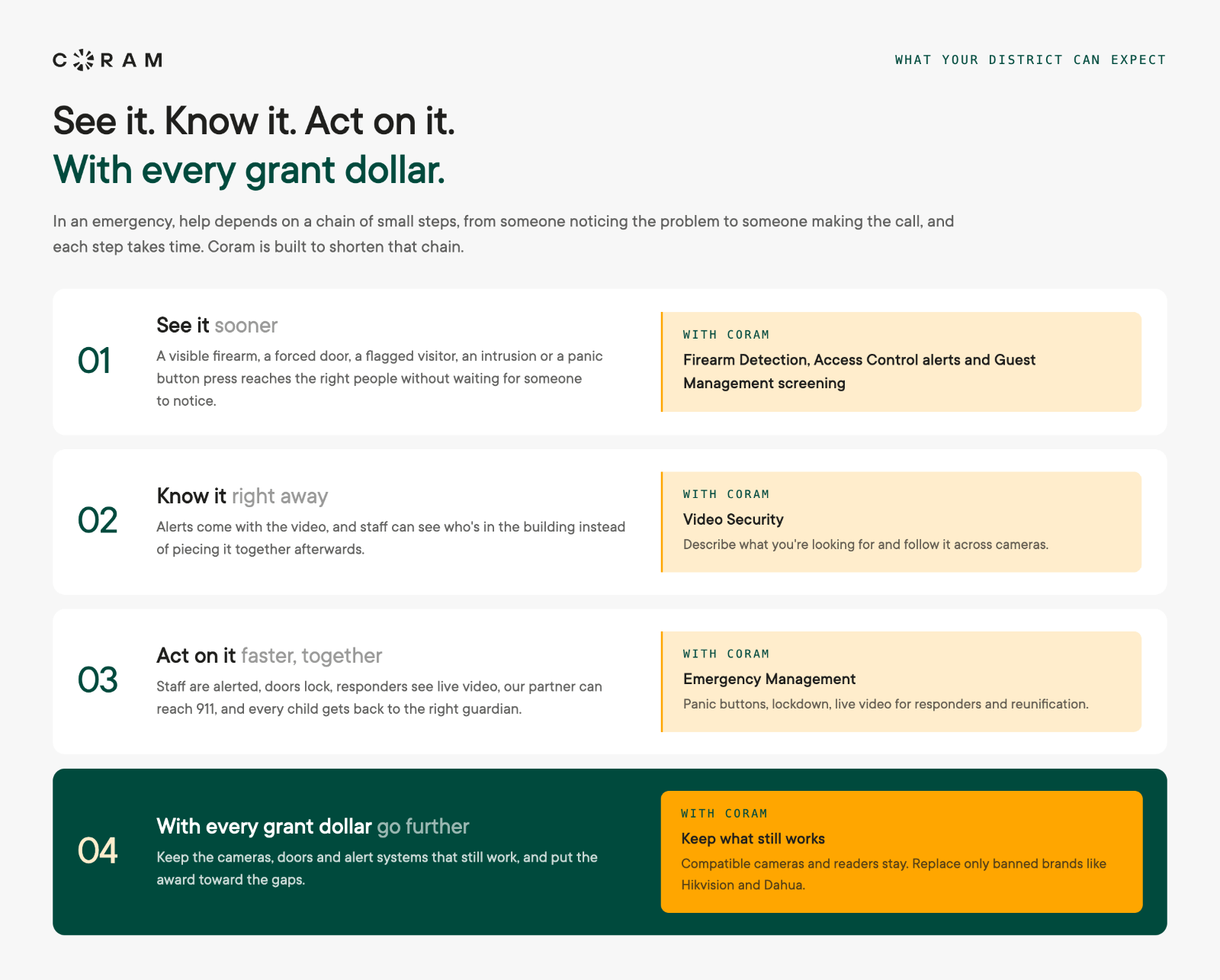
The way it comes together is simple: see it, know it, act on it, with every grant dollar.
- See it sooner. A forced door triggers an alert with the video attached, and Guest Management screens visitors against national criminal databases before they're inside.
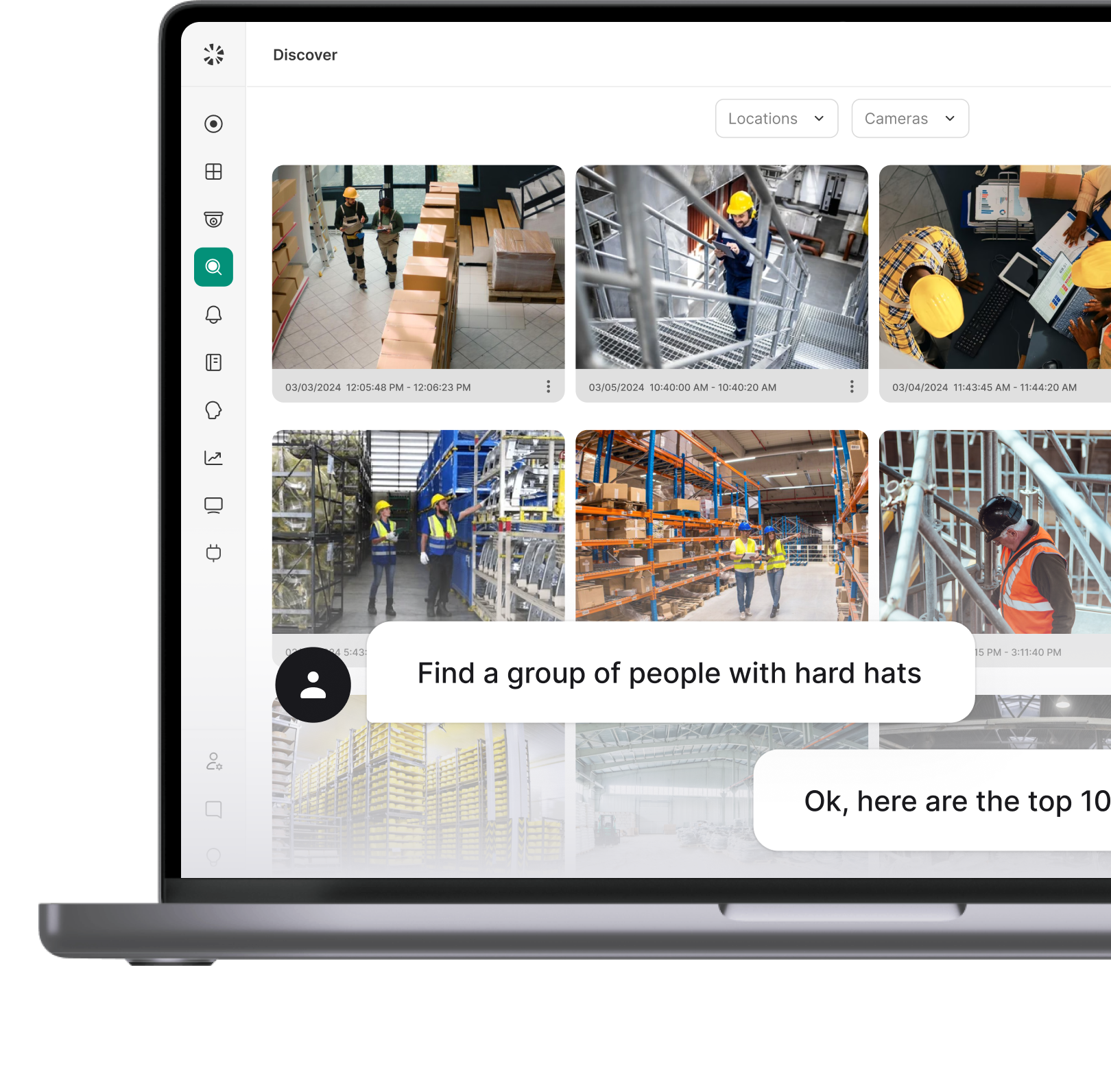
- Know what's happening. Alerts arrive with the video, and staff can find footage by describing what happened instead of reviewing hours of it.
- Act on it faster. One press of a panic button alerts staff, starts a lockdown and shares live video with responders, and our partner can reach 911. Reunification is built in, and drill mode lets schools practice the full response without calling 911, with a report for drill requirements.
- Make every grant dollar go further. Keep the compatible cameras, readers, wiring and locks that still work, and replace only banned-brand cameras.
Emergency Management is the closest match to the grant's own language.
One of SVPP's five purpose areas, set in federal law, is "acquisition and installation of technology for expedited notification of local law enforcement during an emergency." Panic alarms carry weight at the state level, too: 13 states have laws that require or allow schools to use them, according to Stateline, and the requirements vary by state.
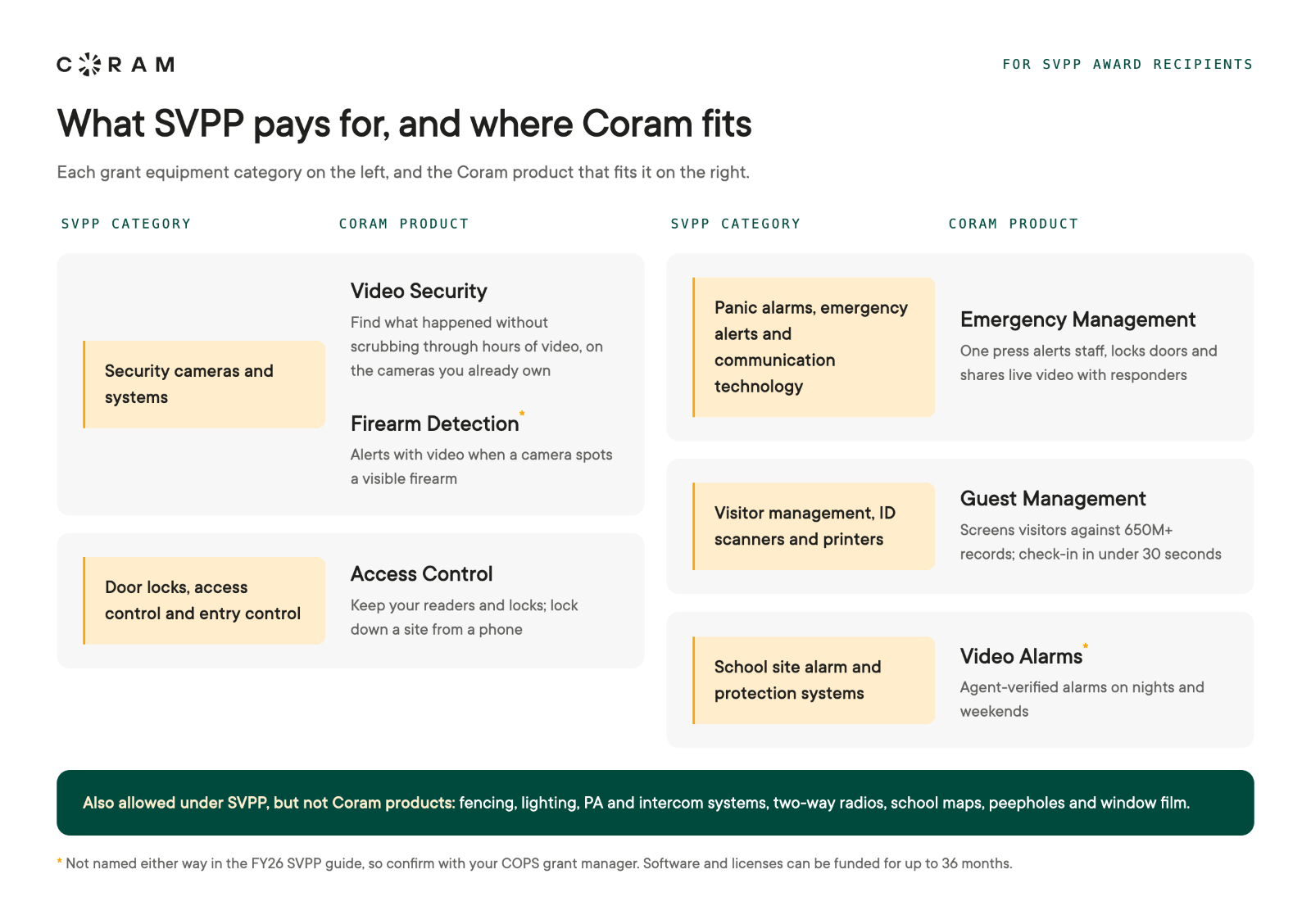
Price the years after the grant, too. SVPP can pay for software and prepaid maintenance, but for no more than 36 months, paid in full within the award period. Ask every vendor what licenses, storage and support cost after that.
{{cta-component}}
Before Anyone Installs Anything
Start with the step that can't wait: confirm your two Authorized Representatives in JustGrants and get the award signed inside the 45-day window. Program rules change from one fiscal year to the next, so check every requirement here against your own award package. If you're already planning for the next cycle, start with how to write a winning school safety grant application.
FAQ