In October 2025, the FCC voted to close the two remaining loopholes that had kept Hikvision equipment flowing into the US market, extending restrictions beyond new models to previously authorized devices and covered components. For many US organizations, that decision turned Hikvision replacement from a future discussion into an active procurement issue.
If you're evaluating Hikvision alternatives, you're likely doing it for one of four reasons: NDAA Section 889 compliance, the FCC restrictions, a cybersecurity track record that's difficult to defend internally, or you've simply outgrown what Hikvision offers. Possibly all four.
This guide compares the 11 strongest Hikvision competitors: what each does best, who it's actually for, how to choose among them, and how to migrate without replacing every camera you already own.
Why Organizations Are Leaving Hikvision
Four pressures are driving Hikvision departures in 2026. They often overlap, with most organizations dealing with more than one at the same time.
The FCC Ban and NDAA Section 889
NDAA Section 889 restricts Hikvision in federal environments, but the FCC restrictions go further, limiting the sale and import of Hikvision equipment across the entire US market. After the FCC's October 2025 action, millions of Hikvision listings disappeared from major retailers, making long-term expansion and replacement part replacement increasingly difficult.
Cybersecurity Track Record
Cybersecurity concerns add a separate layer of pressure. In March 2026, CISA added CVE-2017-7921 to its Known Exploited Vulnerabilities catalog after confirming active exploitation in the wild. Previous Hikvision vulnerabilities have received scores of 10.0 out of 10.0 from the US Department of Homeland Security, the worst possible rating.
Federal Contractor Disqualification Risk
For federal contractors, the exposure is broader than direct federal purchases. If your organization holds or seeks government contracts, you cannot use Hikvision equipment anywhere in your operations, including in areas unrelated to government work. One audit finding can disqualify an entire contract.
Aging Architecture
There's also a practical infrastructure problem. Organizations can no longer reliably expand existing Hikvision deployments. Mixing brands creates compatibility issues, fragmented video management system (VMS) environments, and growing operational overhead for IT and security teams.
What to Look for in a Hikvision Replacement
Seven criteria separate the right Hikvision alternative from the wrong one. These filters apply throughout this comparison, and they'll usually narrow the field before the demo stage.
NDAA and FCC compliance is the first filter. Get written compliance documentation from every vendor before they make your shortlist. NDAA Section 889 affects federal environments; FCC restrictions affect the broader US market.
Cybersecurity posture matters as much as camera quality. Look for SOC 2 Type II certification, TLS encryption, MFA enforcement, role-based access control, and a published patch cadence. These are the table stakes Hikvision's track record makes impossible to overlook.
AI capabilities have become a meaningful differentiator. Basic motion detection is no longer enough. Evaluate whether the platform supports weapon detection, natural-language video search, license plate recognition, or facial search, and whether those tools are native or third-party add-ons.
Hardware lock-in vs. open IP camera support is the infrastructure question that determines your migration path. Camera-agnostic platforms with ONVIF support offer more flexibility. Proprietary ecosystems often create long-term dependence on a single vendor's hardware and pricing model, which is part of why organizations are leaving Hikvision in the first place.
Cloud vs. on-prem vs. hybrid storage has no universal right answer. Pure cloud works well for multi-site visibility. On-prem suits air-gapped or bandwidth-constrained environments. Hybrid is where most mid-market deployments land. Model your retention requirements across a five-year horizon before committing to any storage architecture.
Multi-site management and scalability expose a system's real limits. A platform that works cleanly at one location often shows its weaknesses at ten. Evaluate centralized management, cross-site permissions, and proactive system health monitoring before scaling.
Total cost of ownership including migration is what most per-camera comparisons miss. Full-stack replacement carries a 15–25% incremental hardware cost plus 10–20% incremental install labor. For a 32-camera deployment, expect a total incremental cost of $20,000–$35,000 over a spec-matched Hikvision replacement. Factor in VMS licensing, implementation, annual maintenance, and any camera-agnostic bridge appliance before comparing five-year economics.
How Hikvision Alternatives Compare at a Glance
11 Best Hikvision Competitors in 2026
The platforms below cover the full range of Hikvision replacement scenarios, from software-layer compliance fixes to full hardware refreshes to enterprise VMS deployments.
Coram
Coram is an AI-native physical security platform that connects to any existing IP camera and manages video surveillance, access control, and emergency management from a single cloud dashboard.
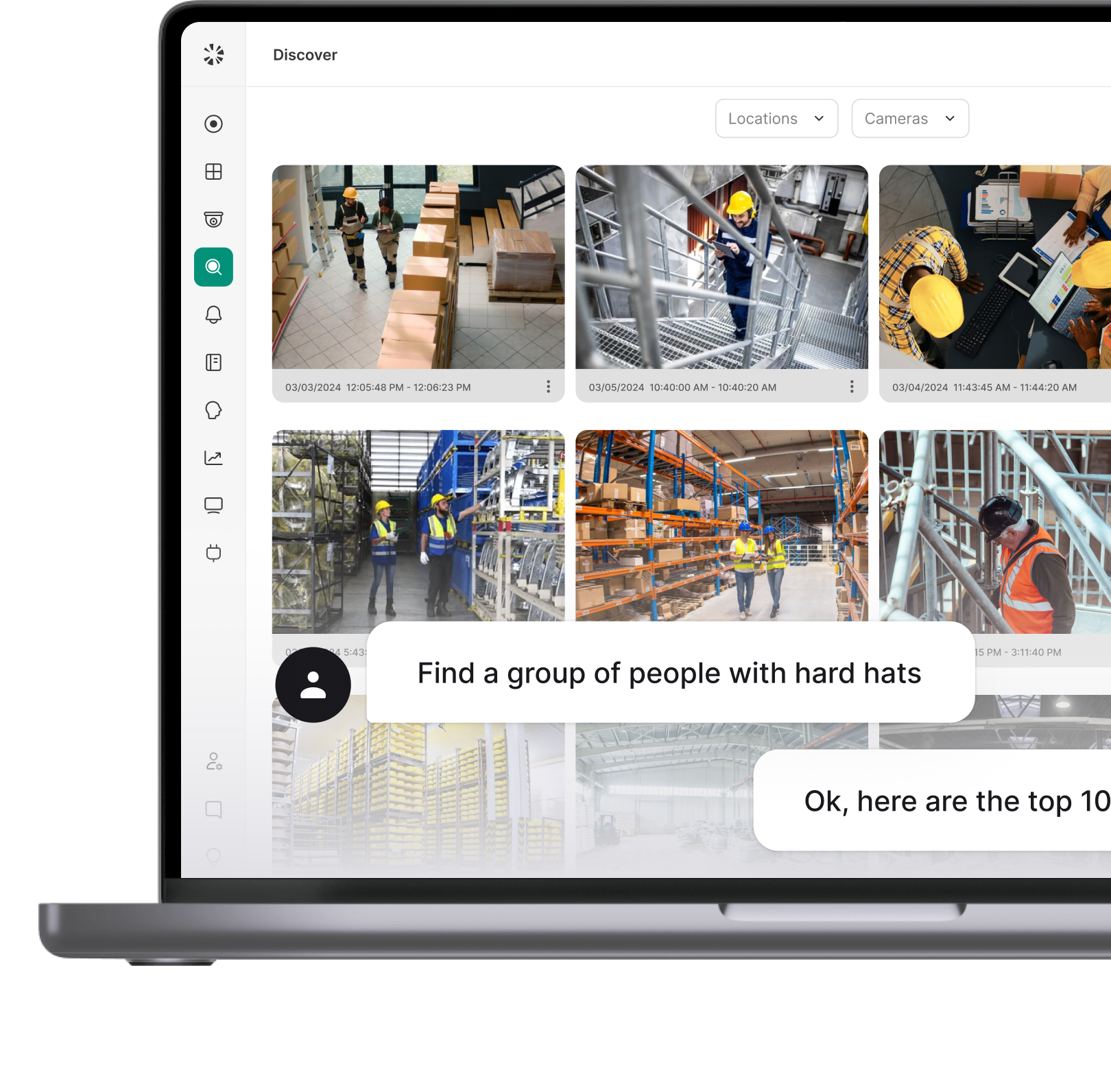
Where most Hikvision alternatives require you to choose between keeping your existing cameras and gaining AI capabilities, Coram does both. Its Coram Point bridge appliance connects to 1,000+ IP camera models via ONVIF, which means organizations can close the NDAA and FCC compliance gap at the software layer on day one, without waiting for a phased hardware migration to finish. The AI capabilities (weapon detection, natural-language video search, license plate recognition, cross-camera Journey Tracking, and facial recognition) run on cameras you've already paid for, not on proprietary hardware you'd have to buy.
That matters in the Hikvision replacement context because the most common barrier isn't budget for new software. It's the capital cost of replacing hundreds of cameras at once. Coram's architecture eliminates that constraint. Organizations can migrate their camera hardware gradually over 12–24 months, swapping Hikvision units for Hanwha or Axis hardware as budget allows, while remaining compliant and operationally capable from day one.
Beyond video, Coram includes access control, an emergency management system with panic buttons and real-time lockdown coordination, and visitor management, all under one login. For IT Directors managing security alongside a full stack of other systems, the reduction in vendor surface area is operationally significant. Coram is SOC 2 Type II audited, HIPAA certified, and supports TLS encryption, SSO, and MFA, a direct contrast to Hikvision's documented vulnerability profile.
Best for: Organizations with existing IP cameras that need to close the NDAA and FCC compliance gap immediately without replacing infrastructure.
Strengths:
- Works with 1,000+ IP camera models including Axis, Hanwha, and Dahua via ONVIF. No rip-and-replace required to get started.
- Closes the NDAA and FCC compliance gap at the software layer on day one, allowing hardware migration to proceed on a budget-aligned timeline.
- AI capabilities are native to the platform. Weapon detection, natural-language video search, LPR, facial recognition, and cross-camera Journey Tracking run on existing cameras without third-party analytics licenses.
- SOC 2 Type II audited and HIPAA certified, with TLS encryption, SSO, and MFA. A security posture that stands in direct contrast to Hikvision's track record.
- Unified platform covering video, access control, emergency management, and visitor management from a single login, reducing vendor and integration overhead.
- Designed for lean IT teams: deploys in minutes, with one customer reporting a 100+ camera deployment up and running in under 10 minutes. Rated 4.9/5 on G2 with 9.5/10 for ease of use and 9.6/10 for ease of administration.
Limitations:
- Newer platform than legacy VMS incumbents. Organizations requiring the deepest custom integration ecosystem may find Milestone or Genetec more mature.
- Cloud-first architecture means on-premises-only deployments in fully air-gapped environments require configuration; not a pure on-prem VMS.
- Pricing is not publicly listed; organizations will need to engage sales for a quote.
Pricing: Not publicly listed. Contact Coram for a site-specific quote.
Avigilon (Motorola Solutions)
Avigilon Alta is a cloud-native physical security platform combining video surveillance, access control, and AI analytics, built and supported under the Motorola Solutions brand.
Avigilon's primary advantage in the Hikvision replacement context is procurement confidence. Motorola Solutions is a publicly traded US company with long-term government contracts. Its NDAA documentation is thorough, its support infrastructure is enterprise-grade, and its vendor stability is not in question. For government agencies, defense contractors, or organizations in regulated industries where vendor provenance matters as much as product capability, that backing carries real weight.
The platform supports object detection, anomaly detection, facial recognition, and license plate recognition natively. It allows cloud deployment or hybrid use with existing cameras, which gives it more flexibility than Verkada on the hardware side. Where Avigilon differs from Coram is in orientation: it's built for dedicated security teams and enterprise procurement cycles, not for lean IT generalists managing security alongside other infrastructure. The AI capabilities are strong, but the top-tier analytics are optimized for Avigilon cameras. Third-party hardware limits what the AI can do.
Best for: Enterprise and government deployments where NDAA documentation, vendor stability, and unified security under the Motorola Solutions brand are primary requirements.
Strengths:
- Motorola Solutions backing provides enterprise-grade support, long-term vendor stability, and procurement confidence for government and regulated-industry buyers.
- Native AI analytics including object detection, anomaly detection, facial recognition, and LPR, ready without third-party licenses.
- Supports hybrid deployments with existing cameras alongside Avigilon proprietary hardware.
- Strong centralized management for multi-site enterprise environments.
- NDAA compliance is thoroughly documented, a meaningful advantage for organizations that require written provenance.
Limitations:
- AI analytics perform best on Avigilon cameras; third-party camera support exists but limits some advanced detection capabilities.
- Higher price point than mid-market alternatives, better suited to enterprise budgets than cost-sensitive mid-market organizations.
- More complex to deploy and administer than Coram or Verkada; built for dedicated security teams rather than lean IT generalists.
- Hardware ecosystem steers toward Avigilon cameras over time, creating a similar lock-in dynamic to the one organizations are leaving Hikvision to escape.
Pricing: Not publicly listed. Enterprise pricing, contact Avigilon for a quote.
Verkada
Verkada is a cloud-first physical security platform that combines proprietary cameras, cloud storage, AI analytics, and centralized management into a single integrated system with no separate NVR or gateway required.
Verkada's architecture makes it the simplest Hikvision replacement for organizations starting from scratch. Cameras, storage, and AI ship as a single unit. Person detection, occupancy analytics, license plate recognition, and crowd detection are ready out of the box, without configuration or third-party licenses. Multi-site visibility is one of its strongest operational advantages. A single dashboard covers every location, and non-technical staff can operate it without IT involvement.
The constraint is hardware lock-in. Verkada cameras only work within Verkada's ecosystem, and Verkada's ecosystem only works with Verkada cameras. For organizations replacing Hikvision, that means replacing every camera, not just the management layer. That's a meaningful capital cost difference compared to camera-agnostic platforms like Coram. It also recreates a version of the proprietary dependency they're trying to leave behind. Verkada is the right call when the existing camera infrastructure has no value worth preserving: new deployments, complete facility refreshes, or organizations that have already decided to replace everything.
Best for: New deployments and complete facility refreshes where simplicity and centralized cloud management are the priority and hardware lock-in is an acceptable tradeoff.
Strengths:
- Purpose-built hardware and software integration means setup is genuinely fast. No NVR, no gateway, minimal configuration.
- AI features including person detection, LPR, occupancy analytics, and crowd detection are included and ready without additional licensing.
- Polished, intuitive interface designed for non-technical operators, one of the lowest day-to-day IT overhead options on this list.
- Strong multi-site management with centralized visibility across unlimited locations.
- NDAA-compliant with thorough documentation.
Limitations:
- Proprietary hardware lock-in: Verkada cameras only work with Verkada software, and all existing non-Verkada cameras must be replaced, a full capital outlay upfront.
- Higher per-camera hardware cost than Hanwha, Uniview, or Rhombus; 10-year licensing model means long-term commitment.
- No support for existing camera infrastructure; camera-agnostic migration is not possible.
- Hybrid storage and on-premises options are limited compared to platforms like Milestone or Genetec.
Pricing: Hardware ranges from $500–$3,000+ per camera depending on model. Annual software licensing runs $199–$1,799 per camera; multi-year terms (3, 5, or 10 years) reduce the per-year cost. Pricing is not published publicly, so contact an authorized Verkada partner for a quote.
Hanwha Vision (Wisenet)
Hanwha Vision is a South Korean camera manufacturer and VMS provider offering NDAA- and TAA-compliant hardware with model-level equivalents for most of the Hikvision product line.
For organizations whose primary need is like-for-like camera replacement (same image quality, similar specs, similar price) Hanwha is the most direct path. Most Hikvision camera models have a close Hanwha equivalent, typically at a 15–25% migration premium. That's a known, plannable cost, not an open-ended one. Manufacturing is split between South Korea and Vietnam, which supports both NDAA and TAA compliance, relevant for organizations in government or government-adjacent procurement contexts.
Hanwha's Wisenet WAVE VMS includes built-in cybersecurity improvements at no additional licensing cost. Where Hanwha differs from Coram is in what it prioritizes: hardware replacement over software upgrade. If your organization's plan is to replace cameras first and worry about AI and cloud management later, Hanwha is the right choice. If the plan is to get compliant quickly while keeping existing cameras operational, Coram is the better starting point, and Hanwha cameras can be phased in as the hardware migration progresses.
Best for: Organizations replacing Hikvision hardware at scale, prioritizing spec-matched NDAA-compliant cameras at the lowest migration premium.
Strengths:
- Model-level equivalents for most Hikvision SKUs, with a predictable 15–25% migration premium. The most direct hardware replacement path on this list.
- NDAA- and TAA-compliant through South Korean and Vietnamese manufacturing.
- Wisenet WAVE VMS is included at no additional licensing cost and includes built-in cybersecurity improvements over Hikvision's platform.
- Competitive image quality and pricing, better value than Axis for cost-sensitive deployments where premium cybersecurity architecture isn't required.
- Open ONVIF compatibility for VMS integrations with Genetec, Milestone, and others.
Limitations:
- Hanwha cameras require replacement of existing hardware. There's no bridge appliance or software-layer compliance fix.
- AI capabilities are more limited than Coram or Avigilon; advanced analytics on edge models are available but not the core value proposition.
- Cloud management is less mature than cloud-native competitors like Verkada or Coram.
- Less name recognition in enterprise procurement than Axis or Motorola/Avigilon, which may require more internal justification.
Pricing: Hardware ranges from $200–$3,000+ per unit; most commercial deployments land at $400–$1,200 per camera before installation, with installed cost typically running $700–$1,500 per camera including labor and mounts. Wisenet WAVE VMS uses one-time per-camera licensing with no annual renewal, a meaningful TCO advantage over subscription-based competitors.
Axis Communications
Axis Communications is a Swedish camera manufacturer offering NDAA-compliant surveillance hardware built around a security-first architecture, with ARTPEC chipsets, Edge Vault, Trusted Platform Module, and FIPS 140-2 certification.
Axis sits at the premium end of the Hikvision alternative market. It's the choice for organizations where cybersecurity posture is the primary evaluation criterion, not cost or deployment simplicity. Edge Vault provides hardware-level key storage and cryptographic operations; signed firmware prevents unauthorized software from running on the device; TPM provides hardware-based integrity attestation. These aren't features Axis markets as differentiators. They're the baseline architecture. No other manufacturer on this list matches that security foundation.
ONVIF compatibility means Axis cameras work with virtually every enterprise VMS, including Genetec, Milestone, Avigilon, and Coram. Swedish manufacturing and Canon ownership provide the cleanest geopolitical provenance of any camera on this list. The tradeoff is cost: Axis typically commands a significant premium over Hanwha or Hikvision. For government agencies, critical infrastructure operators, and regulated industries where a future audit requires defensible security decisions, that premium is usually justifiable. For mid-market organizations replacing cameras primarily to close an NDAA compliance gap at the lowest cost, Hanwha is a more proportionate choice.
Best for: Government agencies, critical infrastructure operators, and regulated-industry deployments where cybersecurity architecture is a primary requirement and budget supports a premium.
Strengths:
- ARTPEC chipsets, Edge Vault, TPM, and FIPS 140-2 certification provide the strongest cybersecurity architecture of any camera manufacturer on this list.
- Signed firmware and secure boot prevent unauthorized software from running, a direct response to the backdoor vulnerabilities in Hikvision's history.
- Swedish manufacturing and Canon ownership provide clean geopolitical provenance; minimal regulatory risk.
- Open ONVIF compatibility supports integration with any enterprise VMS.
- NDAA-compliant; well-documented for government procurement.
Limitations:
- Significant cost premium over Hanwha or Hikvision, not the right fit for budget-constrained mid-market replacements.
- Axis cameras are hardware only; a separate VMS (Genetec, Milestone, Coram, etc.) is required for management, AI, and multi-site oversight.
- Axis Camera Application Platform (ACAP) for AI analytics requires separate licenses and configuration. AI is not turnkey the way it is with Coram or Avigilon.
Pricing: Premium tier; Axis does not publish list prices. Expect a significant per-camera premium over Hanwha or Hikvision equivalents. Contact an authorized Axis reseller for a project-specific quote.
Brivo (with Eagle Eye Networks)
Brivo is a cloud-managed physical security platform covering access control, video surveillance, visitor management, and intrusion detection, with AI video capabilities delivered through its merger with Eagle Eye Networks.
Brivo and Eagle Eye Networks merged in 2025, combining Eagle Eye's camera-agnostic cloud VMS with Brivo's access control platform. The resulting platform provides direct organizational control over a full physical security operation (video, access, visitor management) through a single cloud interface, without the managed service model some competitors require. AI capabilities added post-merger include gun detection, face match, license plate recognition, and precision person and vehicle detection.
Where Brivo differentiates from Hikvision is in openness and direct control: it works with existing ONVIF cameras, has an open API for IT system integrations, and doesn't require organizations to hand off their security operations to a managed service provider. For organizations replacing Hikvision's management layer while keeping existing cameras, Brivo operates similarly to Coram in principle, though with less AI depth, no emergency management module, and no natural-language video search. The access control integration is Brivo's clearest advantage over pure VMS alternatives: organizations that need video and door control unified under one platform will find fewer integration complications with Brivo than with video-only platforms that require separate access control vendors.
Best for: Multi-site organizations that need cloud-managed video and access control unified under one platform, with direct organizational control and open API integrations.
Strengths:
- Full-platform coverage across video surveillance and access control from a single cloud interface. No separate VMS and access control vendors to manage.
- Works with existing ONVIF cameras; camera-agnostic deployment reduces hardware replacement costs.
- Open API supports integration with existing IT systems, HR platforms, and third-party analytics tools.
- AI capabilities post-merger include gun detection, face match, LPR, and precision detection, more than either platform offered independently.
- Direct organizational control model, no managed service dependency.
Limitations:
- Cloud-only architecture means functionality can degrade during internet outages; no local processing fallback.
- Less AI depth than Coram. No natural-language video search, no emergency management system, no cross-camera Journey Tracking.
- Hardware compatibility is broad but not as camera-agnostic as Coram's 1,000+ model support; works best with Brivo and Eagle Eye compatible hardware.
- Merger integration is relatively recent (2024/2025); some platform capabilities may still be in consolidation.
Pricing: Not publicly listed; contact Brivo for a quote.
Genetec Security Center
Genetec Security Center is an enterprise unified physical security platform combining video surveillance, access control, license plate recognition, and communications natively, built for large, complex environments with dedicated security engineering teams.
Genetec's architecture is genuinely unified, not a bundle of point solutions with shared branding. Video, access control, LPR, and analytics operate natively within the same platform without middleware integration. For large enterprise environments (airports, campuses, healthcare networks, government facilities) that depth of integration reduces operational complexity and centralizes security operations in a way that no combination of Hikvision hardware and patchwork VMS could match.
The tradeoff is significant infrastructure overhead. Genetec requires substantial on-premises server investment, dedicated security engineers to deploy and administer it, and procurement timelines that don't align with organizations trying to move quickly on compliance. It's built for organizations where security is a dedicated function with its own staffing and budget, not for distributed, lean-IT environments. For those organizations, it remains one of the strongest enterprise security platforms available. For IT Directors managing security as one of many responsibilities, Coram covers most of the same functional ground with a fraction of the deployment and administrative overhead.
Best for: Large enterprise and government deployments with dedicated security teams, complex multi-system integration requirements, and the budget and staffing to support an on-premises platform at scale.
Strengths:
- Genuinely unified architecture: video, access control, LPR, and analytics operate natively without middleware, not a bundled collection of integrations.
- AutoVu ALPR and KiwiVision analytics provide enterprise-grade LPR and AI natively.
- NDAA-compliant and cyber-hardened; designed for high-security environments including government and critical infrastructure.
- Works with existing cameras through ONVIF and broad device support, useful for organizations migrating Hikvision NVRs without replacing cameras.
- Deep integration ecosystem for enterprise environments with complex third-party requirements.
Limitations:
- Infrastructure-heavy: requires significant on-premises server investment that legacy VMS competitors like Milestone share but cloud-native platforms avoid.
- Designed for dedicated security engineering teams, not appropriate for lean IT environments managing security as one function among many.
- High total cost of ownership across licensing, hardware, implementation, and ongoing maintenance.
- Deployment timelines are measured in months, not days. Not suitable for organizations that need to close compliance gaps quickly.
Pricing: Enterprise licensing; not publicly listed. Contact Genetec or an authorized partner for a quote.
Rhombus
Rhombus is a cloud-managed physical security platform combining proprietary cameras, built-in AI, and hybrid storage that keeps footage locally and in the cloud simultaneously.
Rhombus positions itself as the mid-market alternative to Verkada: similar cloud simplicity, more deployment flexibility, and a lower long-term infrastructure cost. Hybrid storage is a meaningful differentiator: footage stays locally on the camera and in the cloud simultaneously, which provides resilience that pure cloud systems lack. AI features including person detection, LPR, occupancy analytics, anomaly detection, and environmental sensors are included without additional configuration. Hardware is manufactured in Taiwan, NDAA- and TAA-compliant, and backed by a 10-year warranty. The platform holds SOC 2 Type II attestation and supports HIPAA-aligned workflows, with security architecture built on zero-trust principles and AES-256 encryption.
Rhombus's primary architecture is proprietary cameras, but Rhombus Relay (a cloud connector) allows organizations to bring legacy cameras into the Rhombus console without replacing them. Full AI feature capability requires Rhombus cameras; Relay extends visibility to existing hardware at reduced functionality. For organizations replacing Hikvision and starting fresh with new cameras, Rhombus offers a strong cloud-native platform with 50+ native integrations and no NVR required. For organizations that need full AI capability on every existing camera, Coram's 1,000+ model support is the more complete solution.
Best for: Mid-market organizations deploying new cameras and seeking cloud simplicity with hybrid storage at a lower price point than Verkada.
Strengths:
- Hybrid storage keeps footage locally and in the cloud simultaneously, more resilient than pure cloud-only architectures.
- SOC 2 Type II certified, NDAA- and TAA-compliant, with zero-trust architecture, AES-256 encryption, and HIPAA-supportive workflows. A stronger compliance posture than Verkada's documentation.
- AI features including person detection, LPR, occupancy analytics, and environmental sensors are included without additional licensing.
- 10-year hardware warranty on Rhombus cameras, among the longest in the industry.
- Rhombus Relay connector allows legacy cameras to be managed from the Rhombus console, providing a partial migration path for organizations that can't replace all hardware immediately.
- 50+ native integrations and an open API support connection to existing IT systems.
Limitations:
- Full AI feature set requires Rhombus proprietary cameras; Relay-connected legacy cameras have reduced functionality.
- Smaller ecosystem and less platform depth than Genetec or Milestone for complex enterprise environments.
- Less AI depth than Coram. No natural-language video search, no emergency management module, no cross-camera Journey Tracking.
- Subscription-based pricing with per-device fees; total cost scales with camera count and retention requirements.
Pricing: Subscription-based, per-device pricing. Contact Rhombus for a quote.
Milestone XProtect
Milestone XProtect is an open-platform video management system supporting thousands of third-party devices, with deployments ranging from small-business environments to large-scale enterprise and government installations.
Milestone's primary strength is openness. It integrates with 14,000+ devices and 1,000+ third-party applications, meaning organizations can replace Hikvision NVRs without replacing existing cameras and can connect to virtually any analytics, access control, or operations platform their environment requires. Perpetual licensing is available, which matters for organizations that have policy constraints against recurring SaaS subscriptions or that need to model predictable long-term costs.
Where Milestone differs from Coram is in the AI layer. Milestone's native analytics cover motion detection and basic events; advanced AI capabilities like weapon detection or natural-language search require separate integrations, most commonly BriefCam, under its own license. For organizations whose primary need is VMS replacement rather than an AI upgrade, that's an acceptable tradeoff. For organizations that need both, it adds integration complexity and cost. Milestone is also infrastructure-heavy: it runs on on-premises servers, requires IT overhead to deploy and maintain, and is not designed for fast rollouts.
Best for: Complex multi-vendor environments that need maximum hardware flexibility, perpetual licensing, and deep integration with third-party systems.
Strengths:
- Broadest device compatibility on this list, supporting 14,000+ devices and 1,000+ third-party integrations, making it the most flexible replacement for mixed Hikvision environments.
- Perpetual licensing available with no mandatory subscription, which matters for organizations with long-term cost predictability requirements.
- Scales from small deployments to thousands of cameras across multiple servers and sites.
- NDAA-compliant; widely deployed in government and critical infrastructure environments.
- Strong ecosystem for organizations that need to connect video to access control, analytics, or operations platforms they already use.
Limitations:
- Advanced AI analytics require BriefCam integration under a separate license. It is not a turnkey AI platform.
- Infrastructure-heavy: on-premises server requirements create deployment overhead that cloud-native platforms avoid.
- Not designed for centralized remote management of distributed sites in the way Coram or Brivo are, better suited to single-site or hub-managed architectures.
- High implementation complexity; deployment timelines are longer than cloud-native alternatives.
Pricing: Per-device licensing model; perpetual licenses available with no mandatory annual renewal, plus optional Milestone Care support contracts. Subscription licensing also available. Pricing varies significantly by edition (Express+, Professional+, Expert, Corporate) and camera count. Contact a Milestone partner for a project quote.
Uniview
Uniview is a Chinese camera manufacturer offering NDAA-compliant surveillance hardware at price points competitive with Hikvision, with approximately 95% of its product line meeting NDAA requirements.
Uniview occupies the budget-replacement segment of the Hikvision alternative market. For organizations whose primary driver is NDAA-compliant hardware at the lowest possible cost, and whose existing Hikvision cameras have no remaining value worth preserving, Uniview provides model-level equivalents with basic AI capabilities at pricing that's difficult to match elsewhere.
The tradeoffs are real. Uniview's software quality, mobile applications, cloud management, and support depth lag behind premium platforms. NDAA compliance applies to approximately 95% of Uniview products, not 100%, which means compliance verification at the model level is required before specifying. For organizations where cybersecurity posture is a primary concern, not just NDAA checkbox compliance, the manufacturing origins and security architecture aren't as defensible as Axis or Hanwha. Uniview is the right choice in a narrow context: cost-constrained, private-sector, non-government deployments where NDAA compliance is required and budget is genuinely the binding constraint.
Best for: Budget-constrained organizations replacing Hikvision hardware in non-government, private-sector environments where NDAA compliance is required and platform depth is secondary.
Strengths:
- Lowest price point for NDAA-compliant hardware on this list, competitive with Hikvision on matched specs.
- No mandatory subscription costs; core AI functions including person and vehicle detection work reliably across supported models.
- Approximately 95% of Uniview products are NDAA-compliant, a meaningful compliance story for cost-sensitive buyers.
- Simple deployment for organizations that don't need cloud management or advanced AI.
Limitations:
- Software quality, mobile applications, and support depth lag behind Axis, Hanwha, Avigilon, and cloud-native platforms.
- NDAA compliance applies to approximately 95% of products, not the full line. Verify each model before specifying.
- Limited cloud management capabilities compared to any cloud-native platform on this list.
- Less defensible cybersecurity architecture than Axis or Hanwha for organizations that need to demonstrate security posture, not just check the NDAA box.
Pricing: Hardware pricing is competitive with Hikvision on matched specs, generally in the $100–$400 per camera range for standard models. No mandatory subscription or VMS licensing fees for core functionality.
Dahua
Dahua is a Chinese surveillance manufacturer offering a broad hardware and software portfolio with enterprise AI capabilities, subject to NDAA and FCC compliance restrictions that make it unsuitable for US federal, government-adjacent, or federally contracted deployments.
Dahua is included here because it comes up in Hikvision replacement conversations, not because it resolves the compliance problem. It faces the same regulatory barriers as Hikvision under NDAA Section 889 and FCC restrictions. For any organization evaluating Hikvision alternatives because of NDAA or FCC compliance obligations, Dahua is not a valid alternative.
For private-sector organizations with operations entirely outside US federal scope, and with no federal contracts or government-adjacent work, Dahua remains a cost-effective option in international deployments. The AI capabilities (facial recognition, LPR, perimeter detection) are enterprise-grade and competitively priced globally. But for the audience most likely reading this article in 2026, it introduces many of the same procurement and cybersecurity concerns they are trying to leave behind.
Best for: Non-US federal, private-sector, global deployments with no government or NDAA exposure.
Strengths:
- Enterprise AI capabilities including facial recognition, LPR, and perimeter detection at competitive global pricing.
- Broad product line covering cameras, NVRs, access control, and analytics.
- Cost-effective for international deployments where NDAA compliance is not a requirement.
Limitations:
- NDAA Section 889 and FCC restrictions prohibit use in US federal environments and restrict sale and import in the broader US market.
- Introduces the same geopolitical and cybersecurity liability as Hikvision, not a compliance upgrade for affected organizations.
- Not suitable for any organization that holds or seeks US government contracts.
Pricing: Competitive with Hikvision globally.
Which Hikvision Alternative Should You Pick?
Two questions determine the right answer before anything else: what's driving your evaluation, and what is your existing infrastructure situation?
If compliance is the immediate driver and you have existing cameras, start with Coram. It closes the NDAA and FCC gap at the software layer without touching hardware, and allows camera replacement to proceed over 12–24 months at a pace that aligns with your budget.
If you're replacing cameras and need the closest spec-for-spec substitute, Hanwha Vision is the most direct match. Model-level equivalents exist for most Hikvision SKUs at a 15–25% migration premium, with NDAA and TAA compliance and Wisenet WAVE VMS included.
If cybersecurity posture is the primary concern, choose Axis Communications. Edge Vault, TPM, signed firmware, and FIPS 140-2 certification provide the strongest hardware security architecture on this list. Budget for the premium.
If you're deploying new cameras from scratch, Verkada is the simplest option. Rhombus if you want hybrid storage, a stronger compliance posture, and a lower price point. Both are primarily proprietary; Rhombus Relay adds partial legacy camera support, but full AI requires Rhombus hardware. Factor long-term lock-in into the decision before signing.
If you need video and access control unified under one platform, Brivo covers both natively after the Eagle Eye Networks merger, without a managed service dependency.
If you manage a large, multi-site operation with complex integration requirements, Genetec for a genuinely unified enterprise platform with dedicated security team support. Milestone if maximum hardware flexibility and perpetual licensing are the priority.
If budget is the binding constraint, Uniview provides NDAA-compliant hardware at the lowest price point. Verify each model before specifying. Approximately 95% of the line is NDAA-compliant, not all of it.
If you're entirely outside US federal scope, Dahua remains capable and cost-effective for global private-sector deployments. For any US federal, government-adjacent, or federally contracted organization, it's not an option.
How to Migrate from Hikvision Without Replacing Everything
The most effective migrations follow a consistent sequence: replace the management layer first, harden what remains, prioritize by risk, and phase the hardware over time.
Step 1: Replace the Head-End First
The most cost-effective migration starts with replacing the NVR or VMS server with an open-platform NDAA-compliant system that supports ONVIF standards. Coram, Genetec, Milestone, and Brivo all support RTSP and ONVIF streams from existing Hikvision cameras. Your cameras keep recording while the compliance and management gap closes on day one. Camera replacement can then proceed over 12–24 months, spreading capital expenditure while immediately improving core recording security.
Step 2: Isolate Existing Cameras on the Network
If an immediate rip-and-replace isn't in the budget, harden the existing system by completely isolating the camera network from the internet. Do not allow port forwarding for remote viewing. Use a secure VPN for any remote access. Ensure your firewall strictly blocks outbound traffic originating from cameras or the NVR. This mitigates immediate cyber risk while the migration plan takes shape.
Step 3: Prioritize by Risk, Not by Convenience
Start replacement at highest-exposure locations: entrances, server rooms, cash-handling areas, and any camera feeding into a system that handles sensitive data. Low-traffic interior cameras can wait. The goal is to reduce compliance exposure and cyber risk at the perimeter first.
Step 4: Account for NVRs, Not Just Cameras
Hikvision NVRs are also NDAA-blocked. Full compliance requires replacing cameras and NVRs. Keeping the Hikvision NVR while replacing cameras doesn't close the compliance gap.
Step 5: Budget Realistically
Full-stack replacement carries a 15–25% incremental hardware cost plus 10–20% incremental install labor. For a 32-camera deployment, expect a total incremental cost of $20,000–$35,000 over a spec-matched Hikvision replacement. Model that number across your full camera count before committing to a timeline or vendor.
The Bottom Line on Hikvision Replacement in 2026
The question for most US organizations in 2026 isn't whether to migrate from Hikvision. It's how fast and in what direction.
For organizations with existing camera infrastructure, the most practical path is to close the compliance gap at the software layer first and phase the hardware migration over time. Coram handles that directly. For organizations replacing cameras entirely, Hanwha provides the closest hardware match and Axis provides the strongest security architecture. At enterprise scale, Genetec and Milestone cover the complex integration requirements that cloud-native platforms weren't built for.
The right choice comes down to three things: your compliance timeline, whether you're keeping existing cameras or starting fresh, and what your budget looks like over the next 24 months.




.png)