Raptor Technologies acquired SchoolPass in 2023, and the integration is now largely complete. The SchoolPass question in 2026 is no longer what happened to the product. It's a renewal decision: do you want your visitor check-in, carline, and dismissal data inside a private-equity-backed safety roll-up, or on infrastructure you control?
The reasons schools shop for SchoolPass alternatives have sharpened. Verified IT reviewers on Software Advice report slower support and stability issues with the scanner and badge-printer service since the Raptor acquisition, with one reviewer noting the product felt more reliable years ago.
Raptor is also an active acquirer, rolling up SmartPass, PayK12, and others under Thoma Bravo and JMI Equity ownership, so the roadmap follows portfolio priorities over any single school's request. The product is still solid. Its direction is owned by someone else now, and renewal is when that starts to matter.
Replacing it is harder than swapping a sign-in kiosk. SchoolPass was never only visitor management; its differentiator was carline and dismissal automation built on license plate recognition, RFID toll tags, and GPS. A real replacement for a K-12 visitor management system has to account for your SIS, camera infrastructure, access control, and dismissal workflow at once. Pick the wrong category, and you stitch three vendors together to do what one product used to.
If you're consolidating visitor management with your camera and access infrastructure rather than re-buying point tools, Coram is the strongest fit. If you need the deepest K-12-specific screening and don't mind a standalone vendor relationship, Raptor VisitorSafe remains the category leader, though moving deeper into Raptor doesn't solve a Raptor-responsiveness concern.
TL;DR
- SchoolPass was absorbed into Raptor in 2023. The 2026 trigger to shop is degraded support, stability complaints, and a roadmap set by a PE-backed roll-up.
- SchoolPass's hard-to-replace feature was carline and dismissal automation (LPR, RFID, GPS). Most alternatives replace check-in and leave dismissal uncovered.
- The market splits into four categories: dedicated K-12 VMS, camera and access-native platforms, kiosk-first general VMS, and broader school-safety suites. The category decision matters more than the vendor inside it.
- Coram fits IT teams consolidating visitor management, video, and access control onto one platform. Raptor VisitorSafe remains the deepest K-12-specialized standalone.
- Watch hidden line items: Raptor prices SIS integration as a separate per-building add-on, not part of the base license.
How to Evaluate K-12 Visitor Management and Dismissal Platforms
The fastest way to make this decision badly is to line up nine vendors and compare feature checklists. The better approach is to decide which category of platform you actually want first, then compare inside it. The categories price, deploy, and integrate so differently that cross-category feature comparison produces a false equivalence.
The Four Categories of Platforms Competing for This Slot
The SchoolPass replacement market is really four markets wearing one search term.
1. Dedicated K-12 Visitor Management Suites
Built for schools from the start. Deep sex offender database coverage, custody alerts, volunteer screening, and SIS sync. Raptor VisitorSafe, School Gate Guardian, and Visitu live here. Worth knowing: several of these have historically licensed their screening data from the same upstream sources, so the "best screening" claim is often less differentiated than the marketing implies.
2. Camera and Access-Native Platforms
Visitor management is one module of a unified physical security platform that also runs the cameras and door access. This is the consolidation play, and it's where the conversation has moved for IT teams managing a separate vendor for every function. Coram and Verkada Guest sit here.
3. Kiosk-First General-Purpose VMS
Originally built for corporate lobbies, sold into schools as a sub-vertical. Polished kiosk UX, thinner K-12 screening underneath. Lobbytrack and LobbyGuard are examples.
4. Broader School-Safety and Operations Suites
Visitor management as one feature inside a wider safety, communications, or operations product. Navigate360, SchoolStatus, and Kokomo24/7 sit here. The trap is comparing a dedicated K-12 VMS against a platform module on screening depth alone, or comparing a platform against a point tool on price alone. Decide the category first.
Five Things an IT Director Should Evaluate
These are the five criteria that decide the outcome for the person who has to integrate, secure, and maintain the system.
1. SIS Integration Depth, and How It's Priced
The headline question is whether the platform syncs parent, student, and authorized-pickup data with Blackbaud, PowerSchool, Veracross, or Senior Systems by real-time API, scheduled batch, or manual CSV. The question underneath it is what that sync costs. Raptor, for example, prices SIS integration as a separate add-on in the range of roughly $100 to $200 per building per year, on top of the base license. A platform that bundles SIS sync into the core product can quietly come out cheaper at the district level even if its sticker price looks higher.
2. Infrastructure Consolidation, and What You Can Reuse
The real question is not "does it have cameras" but "does it duplicate hardware I already own." If you've already deployed cameras and door readers, a platform that absorbs visitor management as another module avoids a fourth vendor, a fourth dashboard, and a fourth support contract. If you're running an older camera fleet, ask specifically whether the platform can work with existing IP cameras or forces a hardware refresh, because that single answer can swing total cost by tens of thousands of dollars.
3. Screening Scope, and Where the Data Actually Comes From
Sex offender screening against NSOPW and all 50 state registries is table stakes. The variables that separate serious products are update frequency, whether the check runs locally or against a live service, and whether custom watchlists support custody flags, banned individuals, and severity levels. Ask vendors who supplies their screening data; in K-12, more products share an upstream source than the category likes to admit.
4. Dismissal and Carline: The Part Everyone Underestimates
This is the SchoolPass-specific landmine. Replacing SchoolPass means replacing carline LPR, RFID toll-tag detection, parent-app dismissal changes, bus boarding, and the SIS-connected attendance record that tracks a student from arrival to pickup. Most visitor management products cover none of this. Map your actual dismissal process before you shortlist, because it will eliminate most of the market instantly.
5. Total Cost of Ownership and Admin Burden
Beyond per-school versus per-district licensing, account for hardware (kiosks, badge printers, LPR cameras), SSO and MDM integration, training (Raptor's runs $500 to $2,000 per rollout), and the ongoing cost of keeping yet another standalone SaaS product patched and connected. Consolidation's real return is fewer integration seams to babysit, not just a lower license fee.
Quick Comparison of the Top 9 SchoolPass Alternatives
The 9 Best SchoolPass Alternatives in 2026
Here's how each platform stacks up as a SchoolPass replacement, and who it's best suited for.
1. Coram: Best for IT Teams Consolidating Visitor Management with Cameras and Access Control
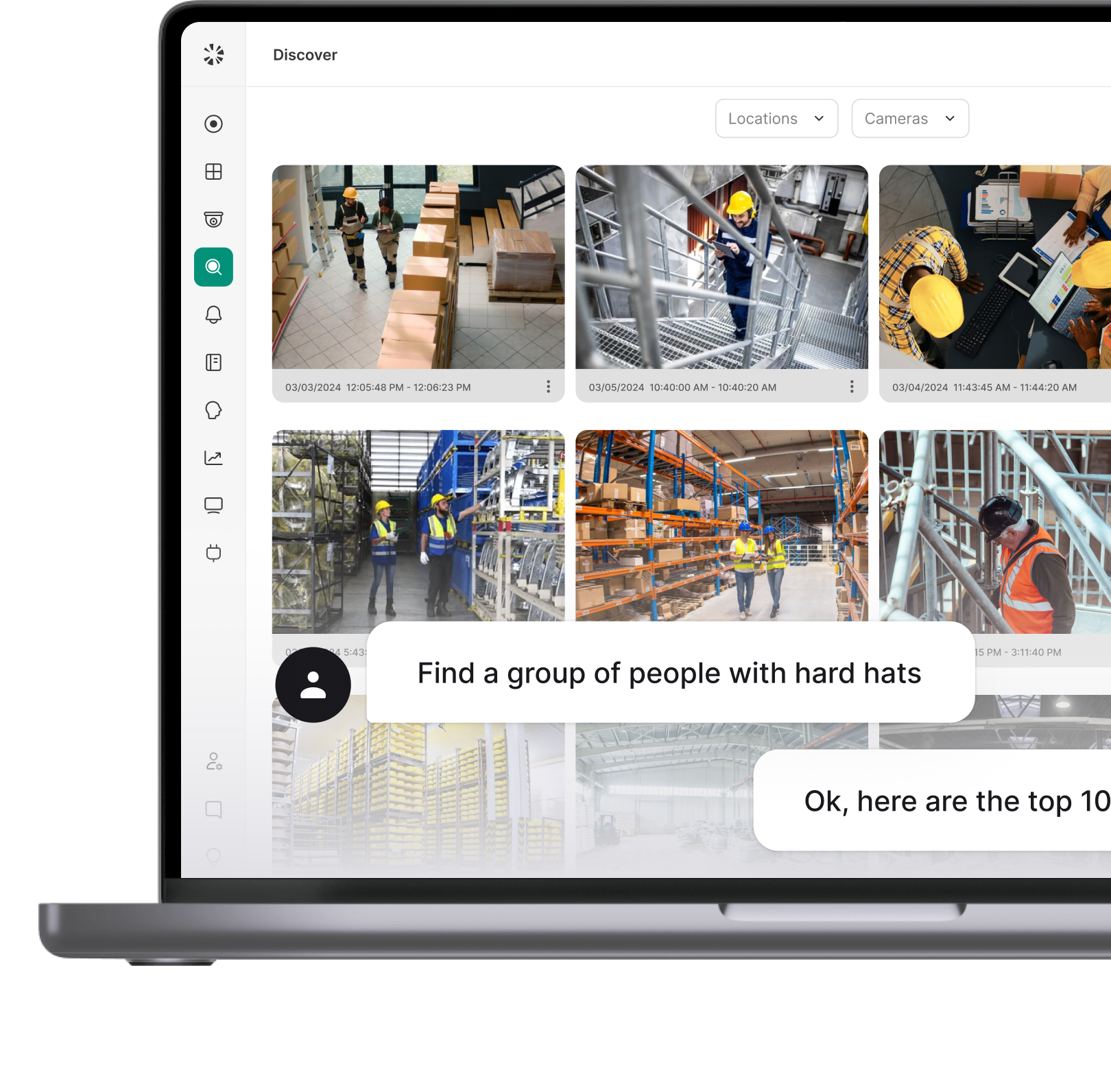
Coram is an AI-native physical security platform that manages video surveillance, access control, and visitor management from a single dashboard, connecting to any existing IP camera without a hardware swap. For IT teams evaluating SchoolPass alternatives, that camera-agnostic architecture is the starting point: Coram's Guest Management runs on the same platform as the cameras and access control already covering the building.
The consolidation argument is direct. A flagged visitor triggering a check-in hold, a camera watching the door, and the access event at the next badge reader all live in the same view under one login. During an actual incident, a custody dispute, or an unauthorized-entry situation, that single pane is the difference between answering "who is on my campus right now" in seconds versus toggling between three vendor portals. That's the gap SchoolPass never closed, because it was always a point product sitting alongside your cameras, not connected to them.
Where Coram doesn't map cleanly to SchoolPass is dismissal. Coram runs LPR cameras on the same platform as Guest Management, but it's not a packaged carline product. The full parent-app and bus-boarding workflow that SchoolPass built needs to be scoped directly for your district. For schools where dismissal is the primary requirement, Raptor's DismissalSafe is the closer match. For schools where the priority is pulling visitor management off its own vendor relationship and onto the same platform as cameras and access control, Coram is the stronger fit.
Best for: IT directors at K-12 or independent schools who run, or are evaluating, a unified physical security platform, where visitor management would otherwise be a third separate buy.
Key capabilities:
- Identity verification with optional driver's license scanning that validates the document and checks against criminal and sex offender registries in under two seconds, storing only the result and last four digits, under one cloud-based access control dashboard
- Blacklist screening with severity levels from Low to Critical, instant admin notifications, and auto-deny on timeout after three hours
- Branded iPad check-in in under 30 seconds, with offline mode that syncs when connectivity returns
- Guest logs and access events in one view alongside camera feeds, across every site
Limitations:
- Not a packaged carline or dismissal product; LPR is available on the platform, but the full parent-app and bus workflow requires direct scoping
- K-12 screening is configurable rather than purpose-built; dedicated suites like Raptor offer deeper out-of-the-box K-12 custody and watchlist workflows
- Newer platform with a smaller K-12 install base than Raptor; some districts will want a longer reference list before committing
Pricing: Quote-based, scaled by site count and module mix. See Coram's Guest Management page for details.
2. Raptor VisitorSafe: Best for Districts Wanting the Most-Deployed K-12 VMS
Raptor VisitorSafe is the most widely deployed K-12 visitor management system in North America, used across tens of thousands of schools, with screening depth that leads the category. If platform consolidation isn't the priority and you want the most-vetted, most-deployed K-12 product on the market, this is the default answer, and a defensible one.
The honest complication is the one this article opened with. Raptor owns SchoolPass. DismissalSafe, Raptor's carline product, is the former SchoolPass engine, now paired with a Flock Safety LPR partnership. Moving to VisitorSafe plus DismissalSafe keeps you inside the same company, the same support org, and the same roll-up roadmap. The product breadth is real. So is the fact that it doesn't address a Raptor-responsiveness concern.
Best for: Districts that prioritize breadth of screening and a long deployment track record over consolidation, and that don't already run a unified physical security platform.
Key capabilities:
- ID scanning with all-50-states sex offender registry screening
- Custody alerts tied to student records
- Badge printing and volunteer management
- Emergency management module
- DismissalSafe with Flock LPR for carline (the former SchoolPass engine)
Limitations:
- Visitor management only; cameras and access control require separate vendor relationships
- SIS sync is a separately priced add-on, not part of the base license
- Verified IT reviewers have reported multi-day support waits and instability in the local service that drives the ID scanner and badge printer since the acquisition
Pricing: Roughly $550 to $750 per building per year for VisitorSafe, plus $100 to $200 per building per year for SIS integration, plus $500 to $2,000 for training.
3. Verkada Guest: Best for Schools Already Standardized on Verkada Cameras
Verkada Guest is the visitor management module inside Verkada's proprietary hardware ecosystem. For a school already committed to Verkada cameras and access control, it's the path of least resistance and keeps visitor data in a platform IT already administers.
The trade-off is the same thing that makes it convenient. Verkada Guest deepens a commitment to Verkada's closed ecosystem, where cameras and readers tie to ongoing license costs over a 10-year lifecycle. The consolidation benefit is real if you're already all-in; the lock-in cost is real if you're not. On K-12-specific screening and custody workflows, it's lighter than the dedicated suites. For schools not yet on Verkada cameras, there's no reason to start here for visitor management alone.
Best for: Schools already standardized on Verkada cameras that want check-in inside the same platform.
Key capabilities:
- ID scanning and watchlist screening
- Real-time visitor tracking tied to Verkada camera feeds
- Badge printing and cloud-based admin
Limitations:
- Proprietary hardware lock-in deepens with adoption
- Lighter K-12 screening depth than dedicated suites
- Pricing scales with the overall Verkada footprint
Pricing: Quote-based, scaling with overall Verkada deployment.
4. Navigate360: Best for Districts Wanting a Broader Safety Platform
Navigate360 treats visitor management as one piece of a wider K-12 safety platform spanning behavioral threat assessment, emergency preparedness drills, training, and mental health resources. Districts buy it for the breadth; visitor management is a supporting module.
That breadth is the appeal and the constraint. A district standardizing its entire safety program on one vendor gets coherence across drills, threat assessment, and reporting. The front-office check-in experience receives less focused investment than a dedicated VMS would give it, and there's no dismissal coverage. For IT teams whose primary goal is replacing SchoolPass check-in functionality, Navigate360 is a lateral move to a heavier platform where visitor management isn't the headline.
Best for: Districts wanting one vendor across drills, threat assessment, training, and visitor management, where front-office depth is a secondary concern.
Key capabilities:
- Visitor check-in and behavioral threat assessment
- Emergency preparedness drills and staff training
- Mental health resources
Limitations:
- Visitor management is not the primary product; front-office workflow depth lags dedicated tools
- No carline or dismissal coverage
Pricing: Custom.
5. Visitu: Best for Smaller Schools Wanting a Focused K-12 Campus Safety Platform
Visitu is a K-12-native platform covering visitor management, emergency alerts, broadcast messaging, and student attendance tracking. It's broader than a pure VMS but narrower than the full-safety-suite players, which makes it a reasonable fit for smaller schools that want K-12-specific workflows without buying a platform they'll only use a third of.
The footprint is smaller than Raptor's, integration depth is shallower than the camera-native platforms, and there's no native camera or access control story, so visitor management stays a standalone function in your stack. For a school replacing SchoolPass check-in and dismissal tracking, Visitu covers the check-in side cleanly but doesn't touch LPR or carline.
Best for: Smaller schools wanting K-12-specialized visitor management with emergency alerts and attendance, without platform overhead.
Key capabilities:
- ID scanning, watchlist screening, and badge printing
- SIS integration for parent and student data
- Emergency alerts and broadcast messaging
- Student attendance tracking
Limitations:
- Smaller deployment base than Raptor
- No native camera or access control integration
- No carline or LPR coverage
Pricing: Quote-based.
6. Lobbytrack: Best for Schools Wanting Strong Kiosk UX
Lobbytrack came out of the corporate office world and has been adapted for schools as a sub-vertical. The kiosk experience is polished and the self-service flow is well-tested, built for high-traffic corporate lobbies before it was sold into K-12.
That heritage is the limitation in a school context. The K-12 specialization that dedicated suites build their entire product around — deep sex offender coverage, custody alert workflows, and SIS-connected pickup lists — is thinner here. For a school replacing SchoolPass whose front-office risk profile is low and whose priority is a smooth parent experience, it can work. For one where custody and screening drive the workflow, it will feel underpowered.
Best for: Schools that want a clean kiosk experience and don't need deep K-12 screening or dismissal.
Key capabilities:
- Self-service kiosk check-in, ID scanning, and badge printing
- Basic watchlist support
Limitations:
- Not K-12-specialized; thinner sex offender coverage and custody workflows than dedicated K-12 products
- Limited SIS integration and no dismissal or carline coverage
Pricing: Tiered subscription.
7. School Gate Guardian: Best for Schools Focused on Screening and Custom Watchlists
School Gate Guardian leans hardest into the screening and custom-watchlist side of the workflow. Schools with heavy custody-alert volume or unusual banned-visitor situations sometimes choose it specifically for that depth. It handles tardy and early-dismissal tracking alongside the screening core, and it integrates with access control systems where relevant.
Outside that lane, it stays narrow on purpose. There's no camera platform, no broader safety suite, and dismissal coverage stops at tardy tracking rather than full carline. Schools replacing SchoolPass primarily for its check-in and screening function will find it adequate; those replacing it for carline will not.
Best for: Schools where the front-office workflow is dominated by custody alerts, custom watchlists, and tardy or early-dismissal tracking.
Key capabilities:
- Sex offender screening, custom watchlists, and custody alert flags
- Tardy and early-dismissal tracking
- Approved pickup lists and volunteer hours tracking
Limitations:
- Visitor management only; no camera or access control platform
- No full carline workflow beyond tardy tracking
Pricing: Quote-based.
8. Kokomo24/7: Best for Districts Wanting Visitor Management Within a Holistic Safety Platform
Kokomo24/7 bundles visitor management with incident reporting, anonymous tip lines, panic-button solutions, and case management. Districts already on the Kokomo platform for other safety functions can add visitor management as an additional module rather than introducing a new vendor relationship, which is where the product's consolidation case is strongest.
As a standalone SchoolPass replacement, the pitch is weaker. Visitor management is one module among many, so the kiosk and screening experience takes a back seat to the incident and case workflows where Kokomo invests most. For districts evaluating it specifically for front-office check-in, that ordering matters.
Best for: Districts already using Kokomo24/7 for safety management who want to consolidate visitor management onto the same platform.
Key capabilities:
- Visitor check-in and pre-registration
- Incident reporting, anonymous tip line, and case management
- Panic-button solutions (physical, virtual, and wearable options)
- Mass communication across SMS, email, PA systems, and digital signage
Limitations:
- Visitor management is one module among many; kiosk and screening depth are secondary to incident reporting and case workflows
- Weakest fit as a SchoolPass replacement if visitor management is the primary driver
Pricing: Custom.
9. SchoolStatus: Best for Districts Prioritizing Family Engagement and Attendance
SchoolStatus is built around family communication, attendance analytics, and chronic absenteeism, with visitor management as a supporting module. Buying it primarily for visitor management is a stretch; the fit is for a district with a family-engagement and attendance strategy where visitor check-in is a secondary benefit.
For IT teams replacing SchoolPass, the front-office and screening workflow is shallower here than a dedicated VMS would provide. If visitor management is a top-three requirement in this procurement, SchoolStatus isn't leading with it.
Best for: Districts whose top priority is chronic absenteeism and family communication, with visitor management secondary.
Key capabilities:
- Family communication tools and attendance analytics
- Behavioral and assessment data
- Visitor management as a supporting module
Limitations:
- Not a visitor-management-first product; lighter front-office and screening depth than dedicated VMS options
Pricing: Custom.
How to Choose Between These Options
The decision comes down to which side of the platform-versus-point-product line you're on, and whether carline is in scope. A few scenarios make it concrete.
You Already Run a Unified Physical Security Platform
Coram and Verkada Guest are the two real options. Coram, if you want platform flexibility, the ability to work with existing cameras, and an open posture. Verkada Guest, if you're already deep in Verkada hardware and content to stay.
Your Priority Is the Deepest K-12 Screening
Raptor VisitorSafe. The screening leads the category, and the install base is unmatched. Go in clear-eyed that you're choosing the parent company of the product you may be leaving, and price the SIS add-on into the comparison.
You're a Smaller School That Wants One Thing Done Well
Visitu or School Gate Guardian. Both are focused K-12 products that handle the core workflow without platform overhead.
You're a District Wanting Safety, Threat Assessment, and Visitor Management from One Vendor
Navigate360 or Kokomo24/7, accepting that visitor management is a supporting module rather than the headline.
You Specifically Need to Replace SchoolPass for Dismissal and Carline
This is the narrowest and most important category, and it eliminates most of this list. Raptor's VisitorSafe plus DismissalSafe with Flock LPR is the true like-for-like, with the caveat that it keeps you inside Raptor. Coram covers the camera and LPR layer on a platform you control, though the full parent-app and bus-boarding workflow needs to be scoped directly. Every other vendor here covers check-in and leaves carline largely uncovered.
Say the dismissal point out loud before you start demos. Most VMS products replace check-in and stop. The single biggest reason SchoolPass customers struggle to find a clean alternative is that carline, RFID, bus boarding, and parent-app dismissal changes were the hard part, and almost nobody else built all of it. Map your real dismissal process first, and let it cut the shortlist before a single sales call.
The Right Answer Depends on What Else Is in Your Stack
Replacing SchoolPass is rarely about replacing a check-in kiosk. It's the moment to decide whether visitor management stays a point product or becomes part of a consolidated platform alongside cameras and access control, and whether you want your dismissal and visitor data owned by a roll-up or by infrastructure you control. The answer depends on what's already in your stack and where you want to be at your next renewal.
For IT teams pulling visitor management, video, and access control onto a single platform, Coram is built for exactly that shape of deployment, with guest check-in, camera footage, and access events correlated under one login. Book a Coram demo to see how Guest Management works alongside cameras and access control on one dashboard.




.png)